Why Wire-Free Robot Lawn Mowers Are Taking Over in 2026
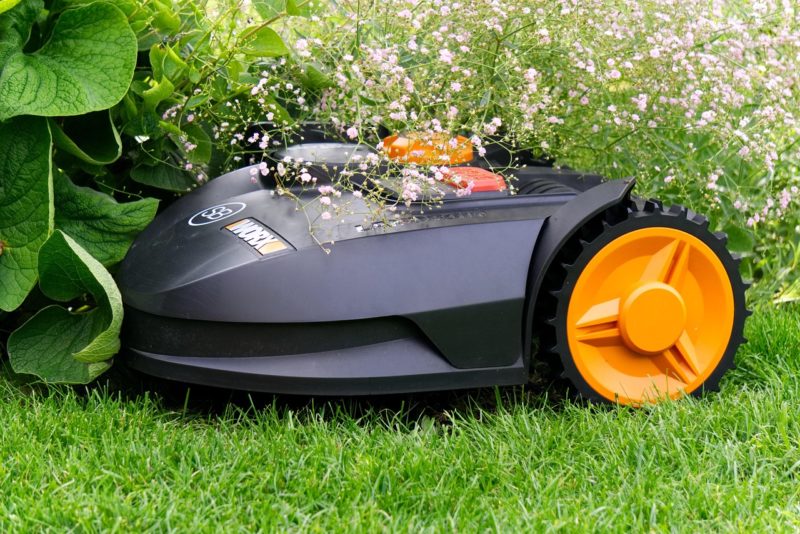
For the first decade of the wire-free robot lawn mower category, getting one meant digging up your lawn. A perimeter wire had to be buried around the property boundary, connected to a base unit, and tested for continuity before the robot could operate. It worked, but it was a half-day installation project. There was also an ongoing maintenance commitment whenever the wire broke under a garden fork or a hard winter.
In 2026, that requirement is gone. The best robot lawn mower without perimeter wire now handles everything the wire used to do—boundary definition, zone management, obstacle avoidance—through sensors and software. Therefore, there is no ground work, no infrastructure, no wire to maintain. Here’s why the shift happened. Here’s also what it means in practice.
What the Wire Was Actually Doing
The perimeter wire served one function: giving the robot a signal it could detect to know when it was approaching the edge of its operating area. The robot would cruise forward until its sensor detected the wire frequency, then turn and continue in a different direction, staying inside the loop.
It was a simple, reliable system for a flat, open lawn with no internal complexity. The problems emerged everywhere else. Internal garden beds required secondary wire loops. For instance, re-configuring the boundary for seasonal changes required physical relocation of the wire. Also, a single break anywhere in the loop disabled the system entirely until found and repaired.
The wire was never a navigation system. It was a boundary alarm. A genuinely capable wire-free robot lawn mower needs more than an alarm: it needs to know exactly where it is, where the obstacles are, and how to plan a coverage route that finishes the whole lawn efficiently. However, wire technology couldn’t provide any of that. It needed to be replaced, not improved.
RTK GPS: The First Wire-Free Generation
The first successful wire-free robot lawn mowers used RTK GPS (Real-Time Kinematic GPS), a high-precision variant of satellite positioning that achieves centimeter-level accuracy by comparing signals between a fixed base station and the mower. Boundaries were defined digitally through an app rather than physically through buried infrastructure.
RTK solved the installation problem. It introduced a different one: the base station. A permanent outdoor receiver unit, powered and mounted in clear sky view, was required for the system to function. Properties with heavy tree canopy, adjacent buildings, or complex topography experienced signal degradation. This was particularly true near the boundaries where accuracy matters most.
For open, flat suburban lawns with good sky visibility, RTK worked well. However, for a significant proportion of residential properties with mature trees, enclosed rear gardens, or dense neighbouring structures, it was an improvement over wire but not a complete solution.
LiDAR: The Technology That Completes the Transition
LiDAR (Light Detection and Ranging) doesn’t rely on satellite signal. It uses laser pulses to build a real-time 3D map of the surrounding environment, firing hundreds of thousands of measurements per second to create centimeter-accurate spatial awareness from sensors onboard the mower itself. So, there is no satellite. There is no base station. There is also no dependency on what’s above the robot rather than around it.
Dreame’s OmniSense 3.0 combines 3D LiDAR with AI vision to produce a navigation system that maps the lawn during an initial setup walk and navigates the complete mapped area on every subsequent run. The AI vision component adds object recognition to the LiDAR geometry: the system identifies what it’s seeing, not just where it is. As a result, a garden hose, a child’s toy, and a garden gnome are treated differently from a fixed fence post. This is because the robot understands context rather than just shape.
If you’re comparing the current generation against older wire-based models, the full robot lawn mower range shows how much the category has moved. The feature differences between a wired entry-level model and a current LiDAR-equipped mower are not incremental. Instead, they’re a different category of product.
What Wire-Free Navigation Changes for the Setup Process
With a wire-based system, installation looked like this: purchase wire, calculate the perimeter length, buy sufficient wire, mark the boundary route, stake or bury the wire, connect to the base unit, test for continuity, troubleshoot any breaks, and then begin the mapping process.
With OmniSense 3.0, setup is an app-guided boundary walk. You walk the perimeter of the lawn once with the mower following, or drive it around the edge in manual mode. The system records the boundary from sensor data in real time. Internal obstacles, no-go zones, and multi-zone sections are configured in the app without any physical modification of the property. Total setup time for most residential properties is under 30 minutes.
The practical consequence is that boundaries become software rather than infrastructure. For example, excluding a section for garden renovation is a tap in the app. Extending the boundary after new turf is laid takes a short re-mapping walk. Additionally, creating a no-go zone around a newly planted bed takes 30 seconds. None of these required physical ground work with a wired system.
Edge Precision: The Problem Wire Technology Couldn’t Solve
Wire-based mowers left an unmowed strip along boundaries. The robot detected the wire signal and turned before reaching the fence. This meant a 3 to 6 inch fringe of uncut grass remained along every edge. For most users, this meant running a string trimmer after every robot session to finish the job. Therefore, this significantly reduced the time-saving value of the automated mowing.
EdgeMaster 2.0 in the Dreame A3 AWD Pro series trims within 1.18 inches (3 cm) of fences and borders. That margin is close enough that follow-up trimming is optional for most residential installations rather than mandatory. Importantly, the robot knows exactly where the fence is in three-dimensional space, not just where a wire signal starts. This is what enables the precision that wire navigation structurally could not achieve.
Slope Performance Without Wire Complications
Wired perimeter systems and slope handling interacted poorly. Running wire along a steep slope required careful installation to keep it at a consistent depth. Also, slope movement and frost heave damaged buried wire faster on inclined terrain than on flat ground. Consequently, the wire-based approach added installation complexity to sloped properties that were already the hardest to mow.
Wire-free navigation removes that complexity entirely. The Dreame A3 AWD Pro series handles slopes up to 80% (38.7°) with all-wheel drive traction. The LiDAR map also accounts for the robot’s changing orientation on sloped terrain to maintain boundary accuracy across gradients. The hard parts of sloped-lawn automation were the slope, not the navigation. So, removing the wire dependency means the two challenges are now separate, not compounded.
Security: A Solved Problem for Wire-Free Robot Lawn Mowers
A robot operating unattended in a front or side yard is a theft opportunity. Wire-based mowers had limited security: a PIN code, and occasionally a tilt sensor that raised an alarm when lifted. However, neither was a serious deterrent.
Dreame’s Garden Guardian system layers multiple protections. 4G eSIM tracking reports the mower’s location independently of the home Wi-Fi network, so a stolen mower is trackable even off the property. Lift-detection alerts trigger immediately when the mower is picked up. AirTag compatibility adds a second tracking layer. As a result, the combination changes the risk calculation for opportunistic theft in a way that a simple PIN code never did.
The Remaining Case for Wire-Based Systems
Entry-level wired robot mowers remain cheaper than their wire-free counterparts. For a very simple rectangular lawn with no obstacles, good visibility, and no need for zone flexibility over time, a wired entry-level model represents the lowest cost of entry to automated mowing.
Beyond that narrow use case, the wire’s disadvantages outweigh its cost advantage for most buyers. Installation cost in time or professional fees, ongoing maintenance risk, inflexibility for boundary adjustment, and the string trimmer follow-up all add back costs that the lower purchase price doesn’t fully offset. The wire-free premium pays for itself, typically within the first season or two of operation.
The Bottom Line
Wire-free robot lawn mowers are taking over in 2026 because the technology that replaces the wire is genuinely better in every respect that matters for typical residential use: simpler setup, flexible boundary management, superior edge precision, and more reliable performance across the range of conditions real yards present. The perimeter wire was a workaround for a problem that sensors and software now solve cleanly. It did its job for a decade. That decade is over.
Would you like to receive similar articles by email?

Paul Tomaszewski
Paul Tomaszewski is a science & tech writer as well as a programmer and entrepreneur. He is the founder and editor-in-chief of CosmoBC. He has a degree in computer science from John Abbott College, a bachelor's degree in technology from the Memorial University of Newfoundland, and completed some business and economics classes at Concordia University in Montreal. While in college he was the vice-president of the Astronomy Club. In his spare time he is an amateur astronomer and enjoys reading or watching science-fiction. You can follow him on LinkedIn and Twitter.


You May Also Like

Is Your Home to Blame for Poor Cellular Signal?
What Is a Wi-Fi 7 Mesh Router? Benefits and Coverage