Why Wildfire Behavior Can Change Without Warning
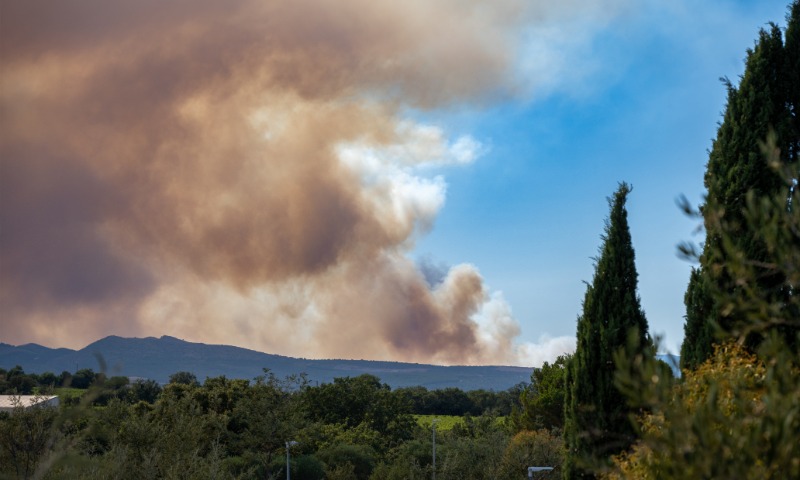
Wildfires have an unsettling ability to rewrite the rules in a hurry. A fire that appears to be creeping along the ground can become far more active after a wind shift, while flames moving across one hillside may behave completely differently after reaching the next drainage.
Whether you’re a hunter, camper, hiker, or simply someone who spends time in wildfire country, that unpredictability matters. Several factors working together shapes fire behavior, and those factors rarely remain perfectly steady.
Understanding why wildfire behavior can change without warning makes it easier to appreciate why fire crews constantly reassess conditions—and why outdoor travelers should never assume that a distant or slow-moving fire will stay that way.
Wildfire Behavior Is a Moving Target
The National Wildfire Coordinating Group (NWCG) defines fire behavior as the way a fire reacts to fuel, weather, and topography. Those three ingredients create the basic fire environment, but each contains variables of its own.
Think of it less like following a recipe and more like cooking while somebody keeps changing the ingredients, burner temperature, and cookware. A wildfire can encounter thicker vegetation. Wind can increase or turn. A slope can become steeper. Fuels can become more receptive to burning as conditions dry. Sometimes several of those changes happen close together.
That’s why yesterday’s behavior—or even behavior from earlier in the day—doesn’t guarantee what a fire will do next.
Wind Can Quickly Rewrite the Situation
Wind is one of the biggest reasons why wildfire conditions can change so rapidly. The NWCG notes that wind is highly variable and can be strongly influenced by terrain. Wind can push flames toward unburned vegetation, help dry fuels, and transport burning material. A change in wind direction can also send the active portion of a fire toward an area that previously seemed less threatened.
Local terrain complicates things further. Air moving through valleys, over ridges, and around slopes doesn’t necessarily behave like the wind at a nearby weather station. Daily heating and cooling can also produce local slope and valley winds that change as the day progresses.
For anyone recreating outdoors, the lesson is simple: calm conditions at breakfast don’t promise calm conditions at 3 p.m.
Terrain Can Give Fire an Advantage
Mountains may make for excellent views, but they also add another layer of complexity to wildfire behavior. Fire spreads more effectively uphill because flames and rising heat preheat the vegetation above the fire. As a slope becomes steeper, this effect can become more significant.
Now, picture a fire entering a steep drainage on a windy afternoon. The combination of slope, vegetation, and wind can produce much different behavior from the behavior the same fire displayed earlier on flatter ground.
Terrain can also influence wind direction and speed. Ridges, canyons, saddles, and drainages may channel air in ways that aren’t obvious to someone looking at a regional weather forecast.
This is one reason why you can’t judge an approaching wildfire by distance alone. The landscape between you and the fire matters.
Fuels Aren’t the Same Everywhere
A wildfire also reacts to whatever is available to burn. Grass, brush, forest litter, downed branches, and standing trees don’t all burn the same way. Fuel moisture matters, too: imagine flames moving from a relatively sparse area into continuous dry vegetation. The available fuel has changed, so the fire behavior can change with it.
Vegetation is also rarely uniform across a landscape. A hiking route can pass through open meadows, dense timber, brushy slopes, and previously burned areas within a few miles. From a fire’s perspective, those transitions can mean more opportunities to spread.
Embers Can Put Fire Where You Don’t Expect It
The visible flame front isn’t always the whole story. Wildfires can produce burning embers that travel with the wind and ignite new fires beyond the main fire’s edge, a process known as spotting.
That matters because a road, trail, clearing, or other break between you and the main fire doesn’t automatically mean fire can’t appear on your side of it. A spot fire can establish itself ahead of the primary front when an ember lands in receptive fuel.
Spotting behavior depends on factors such as the source of the embers, how far the wind transports them, and whether they land somewhere capable of igniting.
Changing Fire Behavior Changes Firefighting Decisions
All this variability explains why wildfire crews don’t simply choose one strategy at the beginning of an incident and stick with it. Firefighters continually evaluate current fire behavior, terrain, the weather, and the many other factors we mentioned above. A direct approach may be reasonable under one set of circumstances, while changing conditions might require crews to reposition or use a different tactic.
Therefore, wildland fire containment strategies need to adjust as fire conditions shift. That flexibility isn’t indecision—it’s part of working around a hazard that refuses to remain static.
Outdoor Travelers Need To Think Ahead, Too
You don’t have to understand fire behavior at a professional level to make smarter decisions outdoors. Before heading into wildfire-prone country, check current fire activity, closures, restrictions, and official fire-weather information for the area you plan to visit. Resources such as the National Weather Service and current incident information are also good to check before you leave town.
Knowing your exit options also helps. A single access road, narrow canyon, or remote trail can leave little room for improvisation if conditions deteriorate.
Pay attention to changing weather once you’re outside, too. Increasing wind, growing smoke, falling ash, official alerts, or newly announced closures are definitely not invitations to squeeze in another hour on the trail.
Don’t Try To Outsmart a Changing Fire
One of the most dangerous assumptions around wildfire is that what you see now is what you’ll be dealing with later. Wildfire behavior responds to a constantly changing combination of wind, terrain, fuel, and moisture. Add spotting and highly localized conditions, and a fire can become a very different problem.
That’s ultimately why wildfire behavior can change without warning—or at least seem to. The fire is actually responding to an environment that’s changing around it.
For outdoor travelers, the practical takeaway isn’t to become amateur fire analysts—it’s to respect uncertainty. Check conditions before leaving, follow closures and evacuation instructions, keep an exit plan in mind, and be willing to change your plans. The mountains, forests, and trails will still be there for another trip. When wildfire conditions are moving faster than your comfort level, making that trip another day is a pretty good outdoor skill in its own right.
Would you like to receive similar articles by email?

Danuta Smoluk
Danuta Smoluk is a teacher with over three decades of experience teaching both children and adults. She specializes in teaching the Polish language to English-speakers. She has a master's degree in primary and early childhood education from WSP Słupsk (currently Pomeranian University in Słupsk) and had her degree validated by University of Toronto. Aside from education, she also has an interest in real estate and home improvement. She has planned and supervised many house renovations. She loves interior design, cooking, and gardening.

You May Also Like
Sustainable Practices in Mining: How Modern Mining Pumps Reduce Environmental Impact

What Do Dolphins Eat?