Why Is Venus the Hottest Planet?
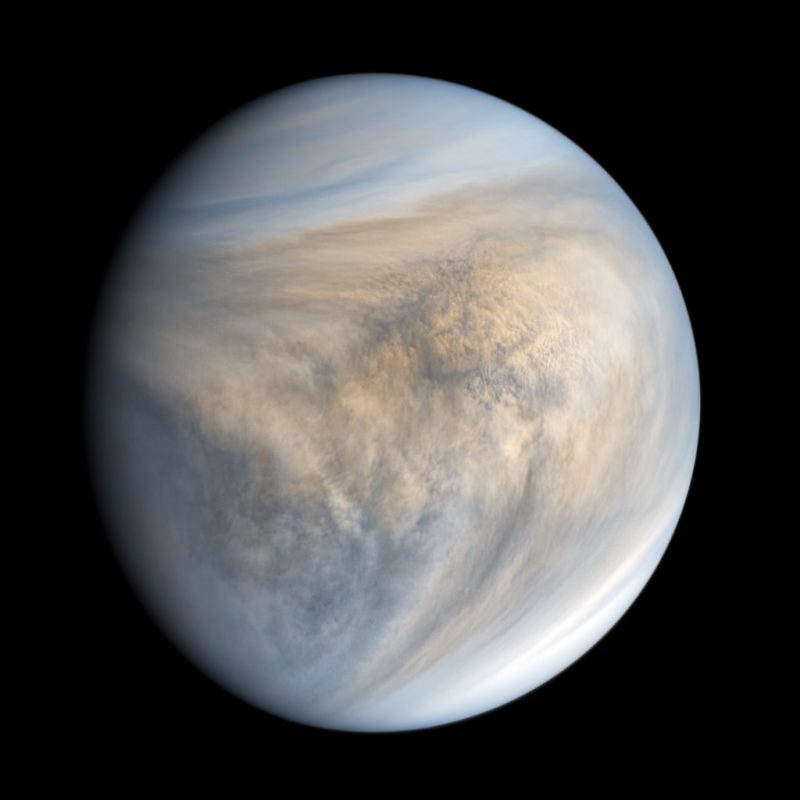
Have you ever wondered why Venus is considered the hottest planet in our solar system?
In this article, we will explore why Venus is so hot and understand why it even surpasses Mercury in terms of temperature. We will delve into the factors that contribute to Venus’s intense heat. Moreover, we will discover what makes this planet stand out.
What is the temperature on Venus?
Venus’s average surface temperature of 464 °C is hotter than the surface of any other planet in our solar system. This extreme heat is comparable to the temperature of molten lead. In fact, it is capable of melting most metals.
Why is Venus hotter than Mercury?
Many might assume that the planet closest to the Sun, Mercury, would be the hottest in our solar system. Surprisingly, this is not the case. Venus, the second planet from the Sun, actually holds the title for the hottest planet. The average surface temperature on Venus is a scorching 464 °C, while Mercury’s average temperature—when averaging between its extremely hot days and freezing nights—is a much milder 167 °C.
Even the maximum daylight temperature at the equator on Mercury is still lower than on Venus, at 427 °C. Mercury’s temperature fluctuates wildly between day and night due to its lack of a significant atmosphere. This lack of atmosphere prevents it from retaining heat.
Mercury also lacks a strong atmospheric heat-trapping system. On the other hand, Venus has an extremely dense atmosphere that distributes and retains heat far more efficiently across the entire planet.
Why is Venus so hot?
Atmospheric composition
One of the primary reasons for Venus’s extreme heat is its thick atmosphere composed mainly of carbon dioxide. It is so dense that the surface pressure is about 92 times greater than Earth’s. This dense blanket of greenhouse gases traps heat from the Sun, creating a runaway greenhouse effect. The greenhouse effect occurs when these gases absorb and re-radiate the Sun’s heat back towards the planet’s surface, preventing it from escaping into space. As a result, the temperature on Venus continues to rise.
In addition, Venus is surrounded by thick clouds of sulfuric acid droplets, which reflect most incoming sunlight. This makes Venus extremely bright (high albedo). However, despite this reflectivity, the heat that does reach the lower atmosphere becomes trapped beneath the dense CO₂ layer.
At the surface, the extreme pressure causes CO₂ to behave in a supercritical state. As a result, this further enhances heat retention and makes the environment even more extreme.
Runaway greenhouse effect
The runaway greenhouse effect on Venus is unique and plays a significant role in its extreme heat. Unlike Earth, where a balance is maintained between the absorption and release of heat, Venus has experienced an amplification of the greenhouse effect. The excess carbon dioxide in its atmosphere acts as an insulating layer. Consequently, this leads to a staggering increase in temperature.
Some scientists believe Venus may once have had oceans, and as they evaporated, water vapor—a powerful greenhouse gas—contributed to the runaway process.
Atmospheric circulation and heat distribution
Venus rotates extremely slowly (one rotation takes about 243 Earth days), but its atmosphere circulates much faster, distributing heat around the planet. As a result, Venus has relatively uniform surface temperatures. There is little difference between day and night.
Geological activity
Recent research suggests that Venus may still be geologically active today. Radar data from past missions has shown possible evidence of relatively recent volcanic flows, indicating that volcanic resurfacing may still occur.
This potential activity could contribute gases such as CO₂ and sulfur compounds back into the atmosphere. Therefore, it helps maintain its dense greenhouse environment.
Conclusion
Venus’s status as the hottest planet in our solar system can be attributed to its dense carbon dioxide atmosphere, which creates a runaway greenhouse effect. These factors make it hotter than even Mercury, the closest planet to the Sun. Understanding the reasons that make Venus so hot not only expands our knowledge of planetary science. It also highlights the delicate balance necessary for maintaining habitable conditions on Earth.
Future missions such as NASA’s VERITAS and DAVINCI+, and ESA’s EnVision, now planned for the 2030s with evolving timelines, aim to further investigate Venus’s history, atmosphere, and geology. So the next time you gaze up at the night sky, spare a thought for the blazing temperatures that make Venus one of the most extreme environments in our cosmic neighborhood.
Would you like to receive similar articles by email?

Paul Tomaszewski
Paul Tomaszewski is a science & tech writer as well as a programmer and entrepreneur. He is the founder and editor-in-chief of CosmoBC. He has a degree in computer science from John Abbott College, a bachelor's degree in technology from the Memorial University of Newfoundland, and completed some business and economics classes at Concordia University in Montreal. While in college he was the vice-president of the Astronomy Club. In his spare time he is an amateur astronomer and enjoys reading or watching science-fiction. You can follow him on LinkedIn and Twitter.


You May Also Like

What Experiments Did Scientists Conduct on the ISS?

Draconid Meteor Shower Guide