What Is the New General Catalogue of Nebulae and Clusters of Stars? (NGC)
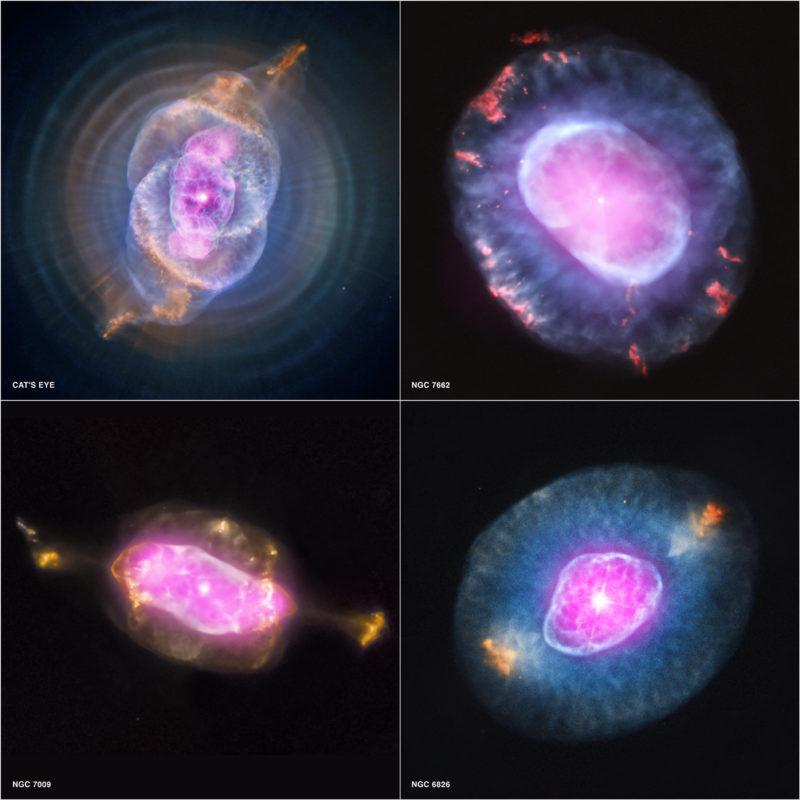
The New General Catalogue is a catalog of astronomical objects in the sky, including galaxies, nebulae, and star clusters. Created by John Louis Emil Dreyer in 1888, the NGC index is still used by astronomers today primarily as a naming and historical reference system rather than a primary scientific dataset.
What Is the New General Catalogue?
The New General Catalogue of Nebulae and Clusters of Stars (NGC) is a comprehensive astronomical catalog of deep-sky objects. This catalog contains information on various celestial bodies. For example, it covers nebulae, galaxies, and star clusters.
It was first compiled by Danish astronomer John Louis Emil Dreyer in 1888 as an extension to the original General Catalogue (GC) created by John Herschel.
The NGC includes 7,840 objects and provides positional and descriptive information about each object, such as its coordinates and how it appeared through telescopes of the time. Many physical characteristics (such as distances and compositions) were determined later with modern instruments. However, some original entries also contained positional inaccuracies, duplicate listings, or misclassifications. These were corrected in later studies.
Each object in the NGC is assigned a unique identifier consisting of the letters “NGC” followed by a number. For example, the well-known Andromeda Galaxy is designated as “NGC 224.”
At the time the catalog was created, many galaxies were classified as “nebulae” because their true nature was not yet understood—a distinction clarified in the 20th century following events like the Great Debate of 1920.
The NGC remains an essential resource for studying nebulae and star clusters, particularly for historical reference and amateur astronomy. Professional astronomers now also rely on modern catalogs and surveys, such as the Principal Galaxies Catalogue (PGC), Sloan Digital Sky Survey (SDSS), 2MASS, and Gaia. Furthermore, they use databases like the SIMBAD Astronomical Database. They also use the NASA/IPAC Extragalactic Database for precise astrophysical data.
The Precursors to the NGC
The precursors to the NGC are the Catalogue of Nebulae and Clusters of Stars (CN) and the General Catalogue of Nebulae and Clusters of Stars (GC).
William Herschel, a German-British astronomer, published the Catalogue of Nebulae and Clusters of Stars in 1786, with the assistance of his sister Caroline Herschel, who was also an astronomer. It originally contained 1,000 entries. However, it was later expanded to a total of 2,500 entries.
Then in 1864, John Herschel (William’s son) expanded the catalog into the General Catalogue of Nebulae and Clusters of Stars (GC). It contained 5,079 entries.
Finally, the Royal Astronomical Society asked astronomer John Louis Emil Dreyer to compile a new version of the catalog. He did so in 1888 as the New General Catalogue (NGC).
The Index Catalogue as an Expansion to the NGC
Dreyer didn’t stop at the NGC. In 1895 he published the Index Catalogue of Nebulae and Clusters of Stars (IC) and a part two in 1908. It serves as a supplement to the NGC and comprises approximately 5,386 additional objects (about 1,520 in the first volume and 3,866 in the second) known as the IC objects.
Together, the NGC and IC contain over 13,000 entries, often collectively referred to as the “NGC/IC objects.”
Later efforts to improve accuracy led to revised versions of the catalog, such as the Revised New General Catalogue and NGC 2000.0, which corrected positions, classifications, and earlier errors.
The Importance of Astronomy Catalogs in Research
Astronomy catalogs are an essential resource for conducting astronomical research. The New General Catalogue of Nebulae and Clusters of Stars (NGC) is one such catalog that has become a valuable tool for astronomers. With its comprehensive list of astronomical objects, including nebulae, star clusters, and galaxies, the NGC provides a useful cataloging system and naming standard for studying the sky.
The organizational structure of the NGC, developed by John Dreyer in the late 19th century, has stood the test of time and remains a trusted tool for astronomical research today. Thanks to Herschel’s pioneering work on cataloging nebulae and Dreyer’s subsequent expansion of this catalog into the NGC, astronomers continue to benefit from this invaluable resource in their quest for understanding the universe around us.
For amateur astronomers, NGC designations are still widely used in star charts, astronomy apps, and telescope guides when locating deep-sky objects.
That said, modern astronomical research typically draws on digital surveys and more detailed catalogs, while still using NGC/IC identifiers for consistency and tradition. Other important catalogs, such as the Messier Catalogue and the Uppsala General Catalogue, complement the NGC in both historical and scientific contexts.
Conclusion
The New General Catalogue (NGC), crafted by John Louis Emil Dreyer in 1888, remains a vital astronomical guide. It was born from the pioneering work of William, Caroline, and John Herschel. This catalog of 7,840 celestial objects endures as a trusted resource for astronomers. Additionally, it contains over 13,000 entries when combined with the Index Catalogue.
Its meticulous organization and detailed insights continue to fuel our ongoing exploration of the cosmos. This is a testament to the enduring significance of precise cataloging in unraveling the universe’s mysteries. Today, while modern databases provide far more detailed scientific data, the NGC remains an essential naming system and observational reference. It bridges historical astronomy with contemporary research.
Read more about some notable objects from the NGC: NGC 281, NGC 891, NGC 1850, NGC 2237, NGC 2336, NGC 2359, NGC 2903, NGC 4565, NGC 6355, NGC 6523, NGC 6530, NGC 6888, NGC 6960, NGC 6992, NGC 7000, NGC 7023, NGC 7380, NGC 7469, NGC 7496, NGC 7822.
Would you like to receive similar articles by email?

Paul Tomaszewski
Paul Tomaszewski is a science & tech writer as well as a programmer and entrepreneur. He is the founder and editor-in-chief of CosmoBC. He has a degree in computer science from John Abbott College, a bachelor's degree in technology from the Memorial University of Newfoundland, and completed some business and economics classes at Concordia University in Montreal. While in college he was the vice-president of the Astronomy Club. In his spare time he is an amateur astronomer and enjoys reading or watching science-fiction. You can follow him on LinkedIn and Twitter.


You May Also Like
Why Your Kids Will Live on Mars

NGC 4565: The Needle Galaxy