What Is the Artemis Program? NASA’s Mission to Return Humans to the Moon
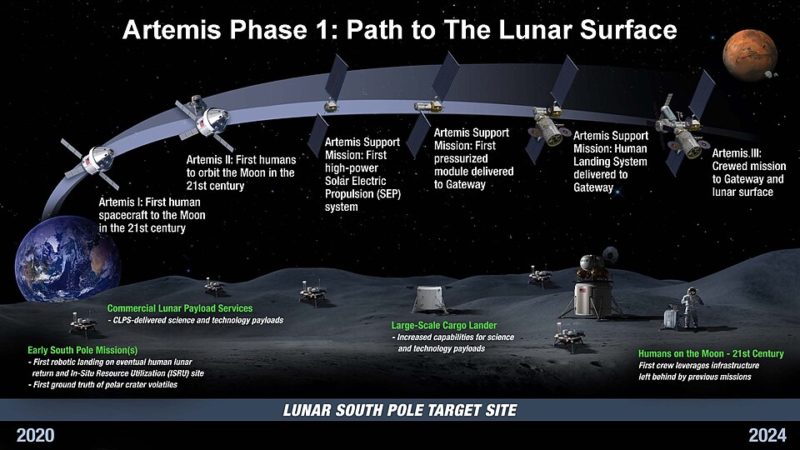
The Artemis Program is a bold initiative led by NASA, in collaboration with international and commercial partners. It is aimed at returning humans to the Moon for the first time since the Apollo era. The program will also establish a sustainable human presence there. Building on decades of exploration, Artemis marks the United States’ renewed commitment to lunar science, technology development, and deep space exploration. Moreover, it serves as a springboard for future missions to Mars. However, timelines for these future missions remain flexible and subject to change. The program is designed not only to land humans on the lunar surface, but also to leverage new technologies. It will develop essential infrastructure and demonstrate long-term survival strategies necessary for extended journeys farther from Earth.
Objectives and Vision of the Artemis Program
The Artemis Program is rooted in several key objectives that define both its immediate missions and long-term aspirations. The primary goals of Artemis include landing the first woman and the first person of color on the Moon, advancing lunar science, and preparing for eventual human expeditions to Mars.
Central to Artemis is the idea of sustainability and diversity. Rather than brief visits, Artemis is structured to establish a sustained human foothold on and around the lunar surface. This ongoing presence is expected to foster technological innovation. Additionally, it will inspire international cooperation and stimulate new commercial markets in space.
Historical Context and Legacy
Understanding the Artemis Program requires examining the legacy of previous lunar efforts and the motivations that have shaped NASA’s journey back to the Moon. The Apollo Program of the 1960s and early 1970s successfully landed twelve astronauts on the lunar surface. However, lunar ambitions waned in subsequent decades. For nearly fifty years, no human mission returned to the Moon. Instead, attention shifted toward low Earth orbit, such as activities aboard the International Space Station.
Artemis arose from both the recognized limitations of Apollo and the lessons learned from decades of robotic exploration. The program’s name, Artemis, pays tribute to Apollo’s twin sister in Greek mythology and symbolizes a new generation of lunar explorers.
Key Components and Architecture
To achieve its ambitious objectives, the Artemis Program incorporates several major components and innovative elements. The program’s architecture relies on the integration of advanced hardware, collaboration with partners, and a progressive mission cadence.
Artemis Missions Timeline
The Artemis Program unfolds through a series of increasingly complex missions, each building on the successes of the last:
- Artemis I: This mission was an uncrewed test flight of the Space Launch System (SLS) and the Orion spacecraft around the Moon, designed to validate performance and safety in deep space conditions. It successfully launched in November 2022 and completed its objectives.
- Artemis II: This mission launched on April 1, 2026, carrying astronauts on a lunar flyby and serving as the program’s first crewed test beyond low Earth orbit in over 50 years. The approximately 10-day mission is designed to demonstrate critical systems for extended crewed spaceflight in deep space. The crew includes Reid Wiseman, Victor Glover, Christina Koch, and Jeremy Hansen—the first non-American assigned to a lunar mission.
- Artemis III: The third planned mission is intended to land astronauts on the lunar South Pole, a region never before visited by humans and rich in potential water ice resources.
Future missions are envisioned to expand the capabilities of crew, cargo, and science operations. Ultimately, Artemis aims to establish more permanent infrastructure on and around the Moon.
Major Vehicles and Infrastructure
Artemis relies on several cornerstone elements to carry out its vision:
- Space Launch System (SLS): SLS is NASA’s most powerful rocket to date, specifically developed to carry Orion, cargo, and other payloads directly to deep space.
- Orion Spacecraft: Orion is a next-generation crew vehicle built for deep space travel, equipped to transport astronauts safely to lunar orbit and back to Earth.
- Human Landing System (HLS): This component is a lunar lander capable of shuttling astronauts from lunar orbit to the Moon’s surface and back, developed in collaboration with commercial partners. For Artemis III, this role is planned to be fulfilled by SpaceX’s Starship vehicle.
- Gateway: The Gateway is a small modular space station planned for lunar orbit, intended to serve as a staging point for lunar landings, a hub for scientific research, and a potential relay for future Mars missions. Its role has evolved, and it is not required for the initial Artemis III landing.
International and Commercial Partnerships
A distinctive hallmark of the Artemis Program is its emphasis on collaboration with both international allies and private industry. Efforts such as the Artemis Accords outline shared principles and guidelines for peaceful exploration and resource utilization.
Partners like the European Space Agency, Canadian Space Agency, and Japan Aerospace Exploration Agency contribute vital elements to lunar infrastructure, scientific payloads, and technology development. Additionally, commercial partners—including companies pioneering lunar landers, logistics, and communications—are integral to Artemis operations. This marks a significant evolution in how NASA conducts exploration.
Science, Technology, and Sustainability Outcomes
Artemis is not solely a crewed exploration program; it also represents a major scientific and technological opportunity. The lunar South Pole, with its permanently shadowed regions harboring water ice, offers prospects for in-situ resource utilization. This resource could provide fuel, water, and oxygen for future missions. However, the region also presents challenges, including extreme cold, long periods of darkness, and difficult terrain.
Artemis missions will deliver scientific payloads to address questions about the Moon’s geological history, solar system evolution, and the potential for life-supporting resources. Moreover, Artemis is intended as a proving ground to test and refine technologies required for Mars. These include power generation in extreme environments, autonomous operations, and long-duration habitat management. Additional research includes radiation exposure studies and volatile mapping to better understand lunar resources.
Challenges and Criticisms
Despite its ambitious vision, the Artemis Program faces several notable challenges. Funding uncertainties, shifting political priorities, and technical hurdles related to new rocket and spacecraft development have caused delays and raised some skepticism about its timelines. Additional concerns include delays in spacesuit development. Technical challenges with the Human Landing System and budget pressures from government oversight also create complications.
Some critics question the sustainability and ultimate scientific value of returning to the Moon, compared with alternative investments in direct Mars missions or robotic exploration. Nonetheless, NASA and its partners remain committed to addressing these hurdles. They do so by leveraging lessons learned from past programs, employing incremental mission architectures, and fostering adaptability through public-private partnerships.
Conclusion
The Artemis Program represents a pivotal moment in the history of lunar exploration. It offers the potential to transform humanity’s relationship with the Moon and pave the way for future journeys to Mars. While timelines and technologies continue to evolve, as the missions proceed and infrastructure is established, the program will both honor the legacy of Apollo and chart a new course for the future of human spaceflight.
FAQ
What sets the Artemis Program apart from the Apollo missions?
Unlike Apollo, which focused on short-term visits to the lunar surface, Artemis is designed to establish a sustained human presence on and around the Moon. It will also develop infrastructure for future space exploration, with broader international and commercial collaboration.
Why is the lunar South Pole a target for Artemis missions?
The lunar South Pole is of great scientific and practical interest. This is because its permanently shadowed regions may contain significant deposits of water ice. Water ice can support life, fuel generation, and further exploration beyond the Moon.
Why is Artemis considered a global endeavor?
The Artemis campaign collaborates with various space agencies and commercial partners, where countries contribute modules, technology, and scientific instruments. This global partnership reduces expenses, exchanges knowledge, and promotes non-aggressive space activities through shared norms such as the Artemis Accords.
How will Artemis support a new lunar economy?
The Artemis campaign promotes commercial lunar payload services for cargo, landers, and resource utilization. This approach allows businesses to experiment with mining and energy technologies on the Moon. These efforts could lead to breakthroughs benefiting life back on Earth.
How does Artemis contribute to potential future missions to Mars?
Artemis provides a platform to test and validate technologies, operations, and strategies essential for long-duration human missions to Mars. These include resource utilization, habitat management, deep space navigation, and international cooperation frameworks. However, Mars missions remain a long-term objective rather than an immediate next step.
Artemis II Astronauts Article Series:
- Reid Wiseman: Artemis II Mission Commander
- Victor Glover: Artemis II Pilot
- Christina Koch: Artemis II Mission Specialist 1
- Jeremy Hansen: Artemis II Mission Specialist 2
Would you like to receive similar articles by email?

Paul Tomaszewski
Paul Tomaszewski is a science & tech writer as well as a programmer and entrepreneur. He is the founder and editor-in-chief of CosmoBC. He has a degree in computer science from John Abbott College, a bachelor's degree in technology from the Memorial University of Newfoundland, and completed some business and economics classes at Concordia University in Montreal. While in college he was the vice-president of the Astronomy Club. In his spare time he is an amateur astronomer and enjoys reading or watching science-fiction. You can follow him on LinkedIn and Twitter.


You May Also Like

Why Family Nurse Practitioners Are Becoming the Backbone of Primary Care

How Did Asteroid Vesta Get Its Name