What Is LightSail and How Does It Work?
Science fiction has provided us with a lot of ideas for technology that have slowly become reality. Just look at the smartphone in your pocket. More than half a century ago, Star Trek gave us the idea of portable communicators and data tablets. These could provide you with all the information you could ever need at your fingertips. Today, we’ve got cell phones and tablets that do just that. If you’d shown them to Gene Roddenberry in 1966 when his show premiered, he’d have thought you were from the future.
Cell phones aren’t the only technology we’ve plucked from science fiction. Let’s take a closer look at LightSail—what it is, how it works and how it might change the way we look at interstellar travel.
What Is LightSail?
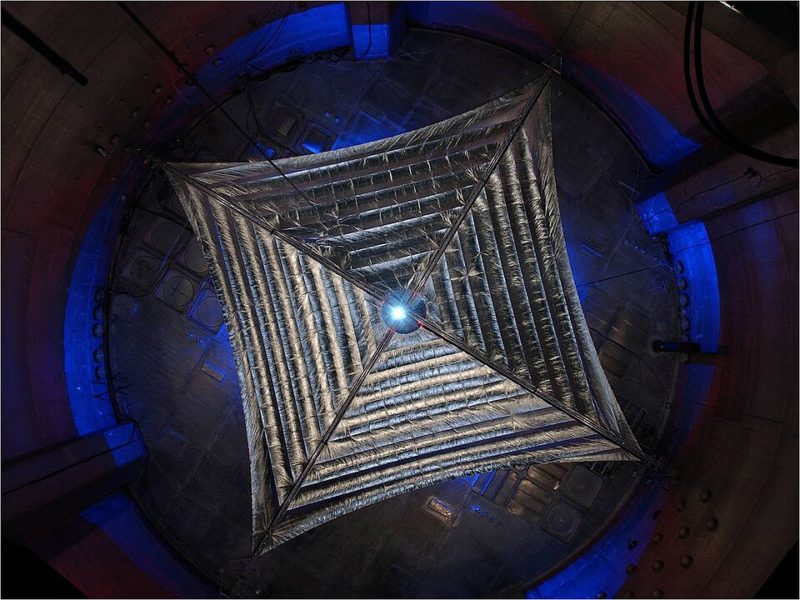
LightSail 2 is the brainchild of the Planetary Society, a CubeSat that was launched on June 25, 2019. Instead of relying on chemical thrusters, LightSail is unique in that it is propelled entirely by sunlight. Yes, you read that right. These spacecraft don’t use any chemical propulsion to navigate, move or keep their orbit stable.
The Planetary Society has been working toward this dream since 2005 when they launched their first solar sailing spacecraft, Cosmos 1. Unfortunately, the Cosmos 1 didn’t make it into orbit due to rocket failure. However, in 2015, Lightsail 1 did. It also completed a test flight, which was an orbit around our home planet.
LightSail 2 remained in orbit for more than three years and successfully demonstrated controlled solar sailing before reentering Earth’s atmosphere on November 17, 2022.
Solar sailing technology has also been tested by other missions, including IKAROS, which became the first spacecraft to successfully use solar sailing in interplanetary space in 2010. More recent projects such as NEA Scout and ACS3 continue to advance the technology.
How Does LightSail Work?
How do solar sails work? This type of propulsion relies on particle physics, or rather the physics of a single particle—the photon. These photons make up the visible light you see. When they come into contact with something, they bounce off, which is what allows you to see them. While these particles don’t have any mass, they do have momentum.
Remember what Sir Issac Newton said about momentum?
Newton’s Third Law of Motion says that for every action, there is an equal and opposite reaction. That means when these photons—specifically the ones in sunlight—bounce off the LightSail’s solar sails, they transfer that momentum to the spacecraft, pushing it in the opposite direction.
In space, you don’t have the same problems you do on Earth—namely, there’s no atmosphere to create drag that will slow you down and eventually stop you. LightSail’s solar sails don’t generate energy but instead use the momentum of photons to provide continuous, fuel-free propulsion over long periods of time.
In spite of looking fairly delicate, the solar sails are designed to withstand the harsh conditions of outer space. The success of LightSail 2 proved that solar sailing is a viable method of propulsion for small spacecraft.
What Does LightSail Mean for Space Travel?
Solar sails show up in science fiction all the time, from Count Dooku’s solar sloop in “Star Wars Episode 2: Attack of the Clones” to Jim Hawking’s solar surfer in Disney’s “Treasure Planet,” but what does this mean for interstellar travel?
It could represent the future of space travel. While not the fastest spacecraft propulsion method, solar sails have the advantage of continuous acceleration without the need for onboard fuel. A 400 meters wide solar sail could carry a spacecraft around 2.1 billion km a year, depending on factors like spacecraft mass and distance from the Sun. Over long durations, this constant acceleration could allow solar sail spacecraft to reach impressive velocities.
While solar sails offer exciting possibilities for deep-space exploration, leaving the Sun’s heliosphere would still take decades with current technology, as demonstrated by missions like Voyager 1 and Voyager 2.
Unless we figure out a way to reach close to the speed of light when it comes to space travel, we may be exploring the solar system and beyond with massive solar sails before you know it.
Looking Toward the Stars
Are solar sails the next technology to be plucked from science fiction and moved into the realm of science fact? LightSail2’s success shows us that it’s both possible and feasible. While we don’t currently have any passenger spacecraft equipped with solar sails, it may become an option for travel both in the solar system and beyond.
Would you like to receive similar articles by email?

Megan Ray Nichols
Megan Ray Nichols is a freelance writer, amateur astronomer, and science enthusiast. She loves to travel and read books.


You May Also Like
Delta Aurigid Meteor Shower Guide
Artemis I Launch a Great Success, According to NASA Engineer Kristine Ramos