What Is Hydrotreated Vegetable Oil? HVO Fuel Explained
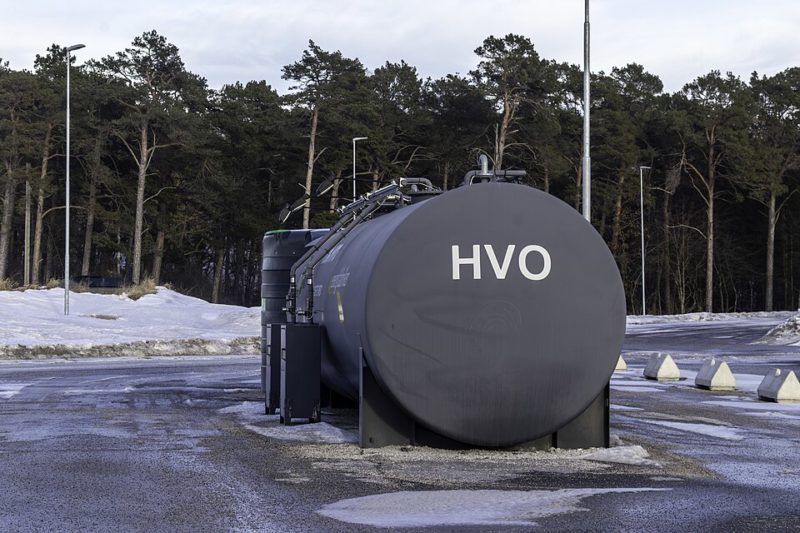
Hydrotreated vegetable oil, or HVO, is a renewable diesel fuel made by reacting vegetable oils, used cooking oil, or animal fats with hydrogen under high temperature and pressure. The result is a paraffinic hydrocarbon fuel that drops straight into most modern diesel engines with no conversion kit, no reflashing, no drama. That is the headline. The rest of this article is about the parts nobody puts on the pump sticker.
What Is Hydrotreated Vegetable Oil?
Think of it as diesel fuel that skipped the crude oil step entirely. Hydrotreated vegetable oil is not straight vegetable oil poured into a tank, and it is not FAME biodiesel either. Chemically it lands much closer to gas-to-liquid fuels and Fischer-Tropsch synthetics than to anything you would call conventional biodiesel. Sometimes it gets sold as renewable diesel, sometimes green diesel, occasionally under brand names like Repsol Nexa Diesel. Same animal, different collar.
How Is HVO Produced From Renewable Feedstocks?
Hydrotreatment stage
Triglycerides go in. Hydrogen strips out the oxygen as water and carbon dioxide, saturates the double bonds, and what comes out the other side is a straight-chain hydrocarbon. Sulfur, aromatics, and oxygen simply aren’t in the finished product. That single chemical fact drives almost every performance advantage HVO claims.
Isomerization stage
Straight chains wax up when it gets cold. So a second catalytic pass branches those molecules, and refiners can dial the cloud point down to something that survives a Minnesota January. It’s a knob, not a fixed property, which is why HVO specs vary by region and season.
Common feedstocks
- Used cooking oil collected from restaurants and food processors
- Tallow and other animal fat byproducts from rendering
- Virgin rapeseed, soybean, and palm oils, the contentious ones
- Tall oil and other forestry residues, depending on the refinery
Chemical Composition and Core Fuel Properties
Paraffinic hydrocarbon structure
Pure hydrocarbon, roughly CnH2n+2. No ester linkages anywhere. That’s the whole ballgame.
Cetane number and density
Cetane typically runs 70 to 90 against roughly 45 to 55 for low sulfur diesel, which means faster ignition and a quieter, smoother idle. Density is lower though, around 0.78 kg/L versus 0.83 or so. Volumetric energy content follows density down.
Storage and oxidation stability
Nothing to oxidize, essentially. HVO fuels shrug off the oxidation and microbial growth that plague long-term biodiesel storage. Standby generators, marine tanks, seasonal equipment. That’s where this matters.
How Does HVO Compare With Conventional Diesel?
Combustion and emissions
Cleaner burn, measurably. Real-driving emissions work on high-blend ratios has shown NOx reductions in the 13% to 18% range, and engine bench testing has documented particulate matter drops of 18% to 55% at mid-loads alongside modest CO2 improvements from brake specific fuel consumption shifts.
Energy density and range
Here is where owners get surprised. You will burn slightly more volume for the same work. Two to four percent, generally. Fuel economy displays lie a bit until the ECU adapts.
Cold-weather behavior
Comparable to good winter diesel, sometimes better, entirely dependent on the grade your supplier blended.
HVO Versus FAME Biodiesel
| Property | HVO | FAME Biodiesel |
|---|---|---|
| Chemistry | Paraffinic hydrocarbon | Fatty acid methyl ester |
| Oxygen content | None | ~11% |
| Typical blend limit | Up to 100% | Often B7 to B20 |
| Storage life | Years | Months |
| Seal compatibility | Diesel-like | Attacks some elastomers |
Chemistry differences
Esters hold oxygen. Oxygen invites water, water invites microbes, and microbes clog filters. HVO sidesteps the entire chain.
Shelf life and microbial risk
Years versus months, roughly.
Blend limits
Many OEMs approve neat HVO 100 fuel. Cummins, Volvo Penta, and most European heavy duty diesel engine makers publish approvals against EN 15940, the paraffinic fuel standard.
Engine Compatibility, Approvals, and Fuel System Checks
Modern common-rail engines handle it fine. Older units are the question mark. Pre-2000 injection systems, elastomer seals that swelled comfortably on aromatic-rich fossil diesel, and pumps calibrated for higher density can all get grumpy. Check the OEM bulletin, not the forum post. Warranty language matters more than anecdote here, and some fleet managers have found their approval hinges on documentation of the fuel spec rather than the fuel itself.
Environmental Claims and Feedstock Sustainability Concerns
Lifecycle reductions against fossil diesel span 60% to 95%, which is an enormous range and the range is the point. Feedstock origin decides everything. Waste oils processed with green hydrogen land between 0.23 and 0.45 kg CO2eq per kg of HVO, and one-step hydroprocessing routes have been measured as low as 0.137 kg CO2 per kg. Virgin palm oil with land-use change baked in? A different story entirely. Chalmers researchers running life-cycle analysis on heavy-duty truck operations found the input oil drives global warming potential more than the drivetrain does.
Certified waste feedstock is finite. That’s the ceiling nobody wants to discuss.
Supply, Availability, and Cost Realities
Feedstock sits in Asia. Refining capacity and demand sit in Europe and North America. The IEA has noted US policy driving 85% of global capacity additions, and market analysts peg the sector’s revenue near USD 10.97 billion heading toward USD 14.92 billion within the decade. Processing routes matter for cost too, with Ecofining technology holding roughly 49% share against co-processing at 38%. EU production currently covers about 6% of RED III transport fuel demand.
You’ll pay a premium at the pump. Frankly, most buyers are paying for the carbon accounting, not the horsepower.
Where HVO Makes the Most Sense Today
- Municipal and construction fleets under local emissions rules
- Backup generators where fuel sits for years
- Marine and rail where electrification is decades out
FAQ
Can I mix HVO with regular diesel?
Yes, in any ratio. It’s miscible.
Does it void warranties?
Not if your OEM lists EN 15940 approval.
Will I notice a difference driving?
Smoother idle, slightly less range. That’s about it.
Conclusion
Hydrotreated vegetable oil is genuinely good fuel with a genuinely constrained supply. Judge it by feedstock, not by the label.
Would you like to receive similar articles by email?

Danuta Smoluk
Danuta Smoluk is a teacher with over three decades of experience teaching both children and adults. She specializes in teaching the Polish language to English-speakers. She has a master's degree in primary and early childhood education from WSP Słupsk (currently Pomeranian University in Słupsk) and had her degree validated by University of Toronto. Aside from education, she also has an interest in real estate and home improvement. She has planned and supervised many house renovations. She loves interior design, cooking, and gardening.


You May Also Like

What Was the Best Chevrolet Suburban Redesign? Exploring 90 Years of Innovation

5 Tips To Handle High Volume in Auto Repair Shops