What Is Data Augmentation in Machine Learning?
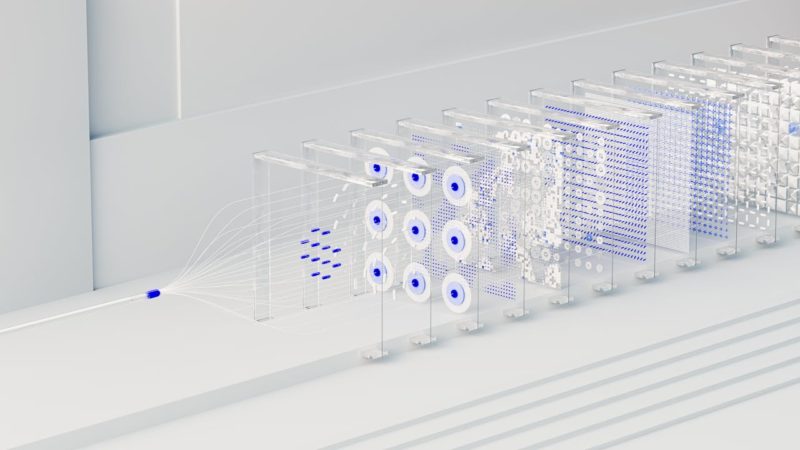
In machine learning, data augmentation expands dataset diversity without collecting new data. Applying transformations such as rotation, flipping, and scaling improves model performance, especially on smaller datasets, by providing varied training samples that boost generalization.
For image classification, minor modifications give models a more comprehensive view of objects from different angles, speeding up learning and improving prediction accuracy. It’s a pragmatic way to maximize limited data resources.
What is Data Augmentation?
Define Data Augmentation
Data augmentation is a class of techniques that increase the size of training datasets by taking existing data and making changes to produce new examples. It consists of applying transformations on existing data to create new samples, therefore increasing the dataset size and variability.
This is especially important, as providing diverse examples to machine learning models allows them to generalize well to data they’ve never seen before. Data augmentation can be used on different types of data, including images and text.
For example, in image data, it could involve rotating, flipping, or shifting images to produce augmented versions of images. These modifications offer powerful ways to balance skewed datasets and improve model learning.
Role in Machine Learning
Data augmentation is an essential component in making deep learning models learn effectively. It leads to improved generalization to uncontrolled real-world data by ensuring a robust framework for training.
Conventional transformations, like simple flips and translations, help make models robust to these variations. Moreover, even with deep learning-based methods, there is a strong defense, particularly when working with unlabeled data.
Albumentations, for instance, supports bounding boxes and segmentation masks making generation of new images with different styles possible. The researchers have found that using multiple types of augmentation significantly improves outcomes.
The best combination is different depending on the dataset and the particular task you are doing. This smart, strategic approach is what makes sure models are able to capitalize on all data sources.
Importance of Data Augmentation
Data scarcity bottlenecks many ML projects. Unlike most techniques, augmentation improves performance by expanding the training set, enhancing the model’s capacity to generalize and adapt to varied conditions.
Enhance Model Performance
Augmentation drives state-of-the-art accuracy by helping models adapt to real-world variations, reducing errors. Researchers use it to rebalance skewed datasets, boosting performance on tasks like object detection; synthetic data from reinforcement learning further improves results.
Increase Data Diversity
Diverse datasets are essential for robust models. By introducing variations reflecting real-world conditions, augmentation helps models learn patterns across diverse data. Methods like mixup (linear combination of inputs) and synonym replacement (for text) increase variety, building a well-rounded understanding useful for many ML tasks.
Benefits of Data Augmentation
By expanding the training set with varied adaptations, data augmentation strengthens model robustness and adaptability—models become more accurate and train more efficiently.
Improve Model Accuracy
Augmentation exposes models to a broader range of scenarios. Models trained on diverse data perform better in real-world conditions.
Reduce Overfitting
Overfitting occurs when models memorize training data. Augmentation adds randomness that counters this, helping models handle unseen data—crucial for domains like autonomous driving where real-world uncertainty is constant.
Optimize Training Efficiency
Augmentation reduces dependency on massive labeled datasets, saving time and money. This accelerates deployment and iteration, critical for businesses moving at the speed of AI innovation. Companies can also virtually recreate diverse real-world situations, benefiting fields like finance and logistics.
Techniques for Data Augmentation
Machine learning is a field that is very thirsty for data. Data augmentation techniques can be seen as powerful tools to enrich datasets and subsequently increase model performance. These techniques can be broadly classified into two categories: traditional methods and advanced deep learning approaches. Each category provides distinct applications and advantages.
Traditional Methods
Classical data augmentation approaches involve transformations such as rotation, flipping, and scaling. Simple but powerful, these techniques are one of the most common ways to augment image datasets. For example, flipping images upside-down and left-to-right can add variations that ultimately allow models to learn more robust features.
Libraries such as Keras’ ImageDataGenerator (legacy) and the newer keras.layers preprocessing layers (RandomFlip, RandomRotation, RandomZoom) take the hassle out of such processes. These approaches have achieved state-of-the-art results on a variety of image recognition tasks. They increase dataset size and variability, all without needing to collect new data.
Modern Automated Augmentation
Beyond hand-designed transforms, automated augmentation methods search for optimal augmentation policies. AutoAugment uses reinforcement learning to discover policies on a proxy task; RandAugment simplifies this to uniform random sampling over a fixed set of operations with two hyperparameters; and TrivialAugment shows that even a single randomly chosen operation with random magnitude can match complex searched policies. These approaches reduce the need for manual tuning and are now standard in strong baselines (e.g., torchvision.transforms.AutoAugment, RandAugment).
Advanced Deep Learning Approaches
Generative Models
Generative models are systems that learn to generate new data instances that resemble the training data. They’re integral in the realistic images or text that they produce, and in massively augmenting training datasets. For example, Generative Adversarial Networks (GANs) and Variational Autoencoders (VAEs) have gained popularity for the creation of synthetic datasets.
These models capture the complexity of real data, therefore providing a richer foundation for training downstream machine learning models. A real-world example includes employing GANs to create diverse and high-quality image datasets. This greatly improves the models’ ability to generalize across unseen data.
More recently, diffusion models (e.g., DDPM, Imagen, Stable Diffusion) have surpassed GANs in sample quality and diversity for synthetic data generation, and are increasingly used to augment classification and detection datasets where real data is scarce.
Neural Style Transfer
Done right, neural style transfer can be an impressive technique. It takes the style of one image and puts it on top of the content of another, creating beautiful, synthetic augmented data. This approach is particularly important when we consider artistic applications and creative economy.
It allows creators to experiment with new forms by combining different artistic styles. It introduces limitless creativity, equipping digital designers with tools to expand the frontiers of digital artistry.
Augmentation Networks
Augmentation networks are dedicated models specifically designed for data augmentation, with the purpose of learning the best augmentation strategies in the process of training. Beyond such theoretical considerations, they improve the quality of the generated data, increasing its utility for downstream applications.
These architectures can independently learn how to change saturation and brightness. They can use transformations such as RandomFlip, RandomRotation, and RandomZoom, increasing diversity in the dataset and increasing model performance in multiple domains.
Examples of Data Augmentation
Image Data Applications
Image classification benefits from horizontal/vertical flipping and rotation, expanding datasets with varied viewpoints. These techniques enable CNNs to learn robust features. Instance-level augmentation (copying labeled regions between images) is particularly valuable for object detection and segmentation.
Audio Data Applications
Audio augmentation (pitch shifting, time stretching) drives state-of-the-art models for speech recognition and music understanding by varying frequencies and durations.
Text Data Applications
Text augmentation uses synonym replacement, random insertion, and mixup interpolation to improve NLP model robustness.
Video Data Applications
Video action recognition uses frame skipping and temporal transformations to generalize to in-the-wild inputs.
Sensor and IoT Data Applications
Adding noise to sensor data simulates real-world unpredictability, aiding predictive maintenance and anomaly detection.
Frameworks & Libraries for Data Augmentation
TensorFlow and PyTorch provide core support. Libraries like Augmentor, torchvision.transforms, Albumentations, AugLy (audio/text/image/video), and Keras preprocessing layers offer ready-to-use transformations across modalities.
Challenges of Data Augmentation
The biggest challenge is ensuring data integrity—when modifying images or text, you must retain the original characteristics that make the data valuable. If a rotation technique isn’t implemented carefully, it can distort crucial features. Domain expertise is key to choosing appropriate augmentations.
In medical imaging, even small perturbations can create unrealistic data that damages model performance.
Another challenge is over-augmentation: unrealistic variations create noise and confusion in learning. It’s a fine line to improve the dataset without departing from real-world conditions.
Label-invariance assumption
Most augmentations assume the label stays the same (e.g., a rotated cat is still a cat). This fails when the transformation changes the semantic class—rotating a digit “6” can make it a “9,” or flipping a medical image may alter the pathological orientation. Domain expertise is essential to choose only label-preserving transforms.
Computational Cost & Selection
Finding the best augmentation combination is task- and dataset-dependent. Multiple augmentations help but increase computation, especially on large datasets. Cross-validation and intentional technique selection mitigate this; testing augmented data thoroughly ensures enhancements actually improve performance. Continuous monitoring catches accuracy declines early.
How do I validate that augmentation actually helps my model?
Run an ablation study: train identical models with and without augmentation (or each type individually) on the same split, then compare validation metrics. If augmentation helps, the augmented model shows better generalization (lower validation loss, higher test accuracy) without disproportionately increasing training loss. Tools like test-time augmentation (TTA) also estimate benefit at inference by averaging predictions over multiple augmented views of each test sample.
FAQ
What is data augmentation in machine learning?
Data augmentation is a powerful technique to make your training dataset more diverse. It’s a process that includes generating altered copies of the original data through various transformations such as rotation, cropping and flipping.
Why is data augmentation important?
Data augmentation is an incredibly important tool for achieving better model performance. Data augmentation is an effective technique to avoid overfitting by offering a wider range of training examples, improving the model’s generalization capability.
What are the benefits of data augmentation?
Data augmentation helps to increase the size of the dataset without having to collect more data. It increases both accuracy and robustness of the model by adding randomness, a key ingredient to any complex task such as image recognition.
What are some common techniques for data augmentation?
Typical augmentation methods for image data are to apply random transformations, such as rotating, scaling, or flipping the image. The state-of-the-art techniques include deep learning techniques including generative adversarial networks (GANs) and neural style transfer.
What tools are used for data augmentation?
TensorFlow’s ImageDataGenerator (legacy), tf.keras.layers preprocessing layers, and PyTorch’s torchvision.transforms are popular tools. These libraries provide built-in functionalities for applying several data augmentation techniques.
What are the challenges of data augmentation?
Challenges lie within keeping data integrity when changing format and making sure augmented data stays feasible for use. Finding the right balance between diversity and relevance is essential for good augmentation.
Does data augmentation work for tabular data?
Yes. For tabular data, methods like SMOTE (Synthetic Minority Over-sampling Technique) and its variants generate synthetic minority-class samples by interpolating between nearest neighbors. Deep generative approaches such as CTGAN and TabDDPM use GANs and diffusion models to learn the joint distribution of tabular features and generate realistic synthetic rows. These are widely used for class-imbalance correction and privacy-preserving data synthesis.
Conclusion
Data augmentation plays a key role in deep learning by increasing the diversity of training dataset, improving the performance, and increasing the accuracy. This technique offers unprecedented opportunities to improve outcomes in industries such as health, technology and retail.
Data augmentation processes like flipping, rotating, and scaling images allow models to learn better. Open-source tools make data augmentation easier than ever before, allowing developers to train smarter algorithms. Although challenges such as greater computation and the need for more thoughtful implementation exist, the advantages greatly exceed the disadvantages.
As the field continues to advance at an unprecedented pace, data augmentation will continue to be an important factor in machine learning breakthroughs. Adopt these tools and techniques to propel your projects to success and remain at the forefront in this rapidly changing technological environment.
Would you like to receive similar articles by email?

Paul Tomaszewski
Paul Tomaszewski is a science & tech writer as well as a programmer and entrepreneur. He is the founder and editor-in-chief of CosmoBC. He has a degree in computer science from John Abbott College, a bachelor's degree in technology from the Memorial University of Newfoundland, and completed some business and economics classes at Concordia University in Montreal. While in college he was the vice-president of the Astronomy Club. In his spare time he is an amateur astronomer and enjoys reading or watching science-fiction. You can follow him on LinkedIn and Twitter.


You May Also Like

AI and the Future of Innovation: How Machines Are Accelerating Discovery

How AI and ML are Changing the Technology Frontier?