What Is Astrochemistry: Discovering the Chemical Composition of the Universe
Astrochemistry is a fascinating field that seeks to understand the chemical makeup of the universe and the processes that drive its evolution. From the formation of stars and planets to the complex molecules that make life possible, astrochemistry plays a crucial role in our understanding of the cosmos.
By studying the molecules and reactions that occur in space, scientists can unlock the secrets of the universe. Additionally, they can gain new insights into our place in the cosmos.
What is Astrochemistry?
Astrochemistry is a field of science that studies the chemical composition of the universe. It involves the investigation of the formation and evolution of molecules in various astronomical environments. These environments include stars, planets, and interstellar space. Moreover, it extends to exoplanetary atmospheres, icy moons, and protoplanetary disks. In these environments chemistry shapes the conditions for habitability.
As such, astrochemistry plays a critical role in our understanding of the cosmos and the chemical processes that govern it. By examining the chemical makeup of celestial objects and their interactions, we can gain insight into the chemical evolution of matter after the Big Bang. We can also understand the formation of galaxies. Furthermore, we can study the conditions necessary for life to exist.
Through astrochemistry, scientists have been able to detect and analyze a wide range of molecules in space. These include complex organic compounds that are essential for life. In recent years, researchers have identified prebiotic molecules—such as simple amino acid precursors—in interstellar clouds and star-forming regions. This finding strengthens the link between space chemistry and the origins of life.
The study of astrochemistry is a vital component of modern astronomy and has led to many groundbreaking discoveries in recent years. As we continue to explore the chemical composition of our universe, we can look forward to even more exciting insights and revelations about the nature of our cosmos.
The History and Development of Astrochemistry
Astrochemistry is a modern and rapidly advancing interdisciplinary field that seeks to understand the chemical processes that occur in space. It is an overlap of astronomy and chemistry. In particular, it focuses on the chemical composition of the universe, including the formation of molecules, stars, and galaxies.
The history and development of astrochemistry can be traced back to the early 19th century. At that time, scientists first began to study the composition of stars and other celestial bodies through spectroscopy.
However, it wasn’t until the 1960s that astrochemistry began to emerge as a distinct field of study. With the advent of space exploration and the development of advanced spectroscopic techniques, scientists were able to gain a better understanding of the chemical processes that occur in space.
Today, astrochemistry is a thriving field of study. Researchers from all over the world work to unravel the mysteries of the universe’s chemical composition.
Modern observatories like ALMA (Atacama Large Millimeter/submillimeter Array) and the James Webb Space Telescope (JWST) have revolutionized the field. They do this by detecting water, carbon dioxide, methane, and other molecules in distant exoplanetary atmospheres. In particular, JWST’s infrared capabilities allow scientists to directly observe molecular signatures in dusty regions such as protoplanetary disks and stellar nurseries. In these environments, many chemical processes were previously hidden.
The future of astrochemistry is bright, and we can expect to learn even more about the chemical processes that drive the formation of stars, planets, and galaxies in the years to come.
How We Study Astrochemical Processes
In order to understand the formation of molecules in space, it is essential to investigate the astrochemical processes that take place. Scientists use a variety of techniques to study these processes. These include laboratory simulations, astronomical observations, and theoretical models.
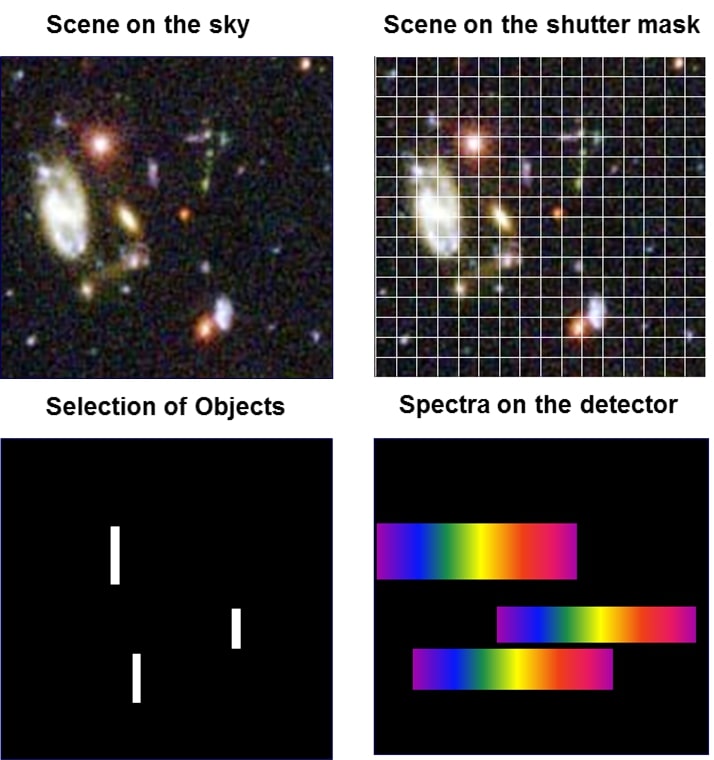
Laboratory simulations involve recreating the conditions of space in a controlled environment to observe how molecules form and behave. Astronomical observations, on the other hand, involve using telescopes to study the spectra of molecules in space, which is known as astronomical spectroscopy.
Radio and millimeter-wave astronomy play a particularly important role. They allow scientists to detect the unique spectral “fingerprints” of molecules in cold interstellar clouds. Theoretical models are used to predict and explain the chemical reactions that occur in space. Often, these models incorporate complex computational chemistry and reaction networks to simulate real cosmic environments.
A key region of study is the interstellar medium—the vast space between stars filled with gas and dust. Within dense molecular clouds, tiny dust grains act as surfaces where atoms can meet and react. This forms more complex molecules such as water, methanol, and other organic compounds. These surface reactions are now understood to be a major pathway for building chemical complexity in space.
These techniques have allowed astrochemists to identify a wide range of molecules in space, from simple diatomic molecules to complex organic molecules. In recent years, JWST and ALMA have provided unprecedented detail about molecular chemistry in protoplanetary disks and the atmospheres of exoplanets. By studying astrochemical processes, scientists can gain a deeper understanding of the chemical composition of the universe and the processes that shape it.
Conclusion
In short, astrochemistry has enabled us to delve deeper into the mysteries of our universe by studying its chemical composition. The field has come a long way since its early days. With further advancements in technology and techniques, we can continue to unlock the secrets of our universe and gain a deeper knowledge of its chemical makeup.
Astrochemistry not only helps explain how stars and planets form but also informs the search for biosignatures, offering clues about where life might exist beyond Earth. By analyzing the chemical makeup of exoplanet atmospheres—looking for combinations such as oxygen and methane that may indicate biological activity—scientists are getting closer to identifying potentially habitable worlds. As next-generation observations continue, astrochemistry will play a central role in connecting cosmic chemistry to one of humanity’s biggest questions: are we alone in the universe?
Would you like to receive similar articles by email?

Paul Tomaszewski
Paul Tomaszewski is a science & tech writer as well as a programmer and entrepreneur. He is the founder and editor-in-chief of CosmoBC. He has a degree in computer science from John Abbott College, a bachelor's degree in technology from the Memorial University of Newfoundland, and completed some business and economics classes at Concordia University in Montreal. While in college he was the vice-president of the Astronomy Club. In his spare time he is an amateur astronomer and enjoys reading or watching science-fiction. You can follow him on LinkedIn and Twitter.


You May Also Like
NASA Astronaut Christina Koch: Artemis II Mission Specialist
Eta Lyrid Meteor Shower Guide