What Heats the Chromosphere and Corona to High Temperatures?
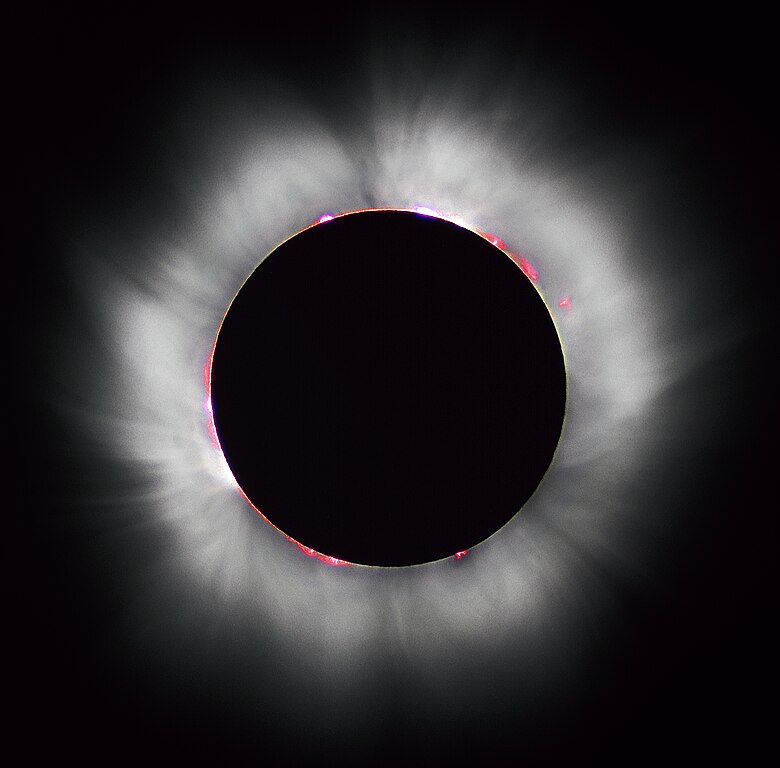
The outer layers of the Sun, the chromosphere and corona, exhibit temperatures far higher than the Sun’s surface, reaching a million degrees Kelvin (and higher in active regions). This puzzling phenomenon has captivated scientists for years. It has sparked debates and theories about the mechanisms responsible for heating these regions. Recent observations from missions like NASA’s Parker Solar Probe and ESA’s Solar Orbiter have offered new insights. These are helping to narrow down the possibilities.
The Sun’s Magnetic Field
One plausible contender for the heating of the chromosphere and corona is the Sun’s powerful magnetic field. The Sun is composed of highly conductive plasma, which enables the formation of intricate magnetic structures. The magnetic fields thread through the chromosphere and corona, inducing stunning phenomena like solar flares and coronal mass ejections. The energy released during these events is believed to contribute significantly to the heating of these regions.
Modern research increasingly emphasizes that the magnetic field does not act only through large eruptive events. Instead, it also acts through continuous small-scale restructuring and turbulent motion of field lines.
Magnetic Reconnection
Magnetic reconnection, a process through which magnetic field lines rearrange and release vast amounts of energy, is another compelling hypothesis. As the Sun’s magnetic field lines become twisted and stressed, they can reconnect in both explosive and continuous, distributed ways across many small-scale current sheets embedded in turbulent plasma. Consequently, these energetic events generate intense heating in the chromosphere and corona. This makes it a potential source for the observed high temperatures in these layers.
However, this process may be more relevant to large-scale flares and localized bursts, rather than the steady background heating of the corona on its own. In addition, modern models increasingly embed reconnection within turbulent cascades rather than isolated events.
Waves and Oscillations
The Sun is a seething mass of waves and oscillations, generated deep within its core. These waves travel upwards, propagating through the different layers of the Sun’s atmosphere. As they reach the chromosphere and corona, they undergo complex interactions, causing localized temperature increases.
In particular, Alfvén waves—magnetic plasma waves that can carry energy upward through the Sun’s atmosphere—have been observed and are considered strong candidates for explaining the heating. Moreover, these waves, in conjunction with other physical processes, contribute to the overall heating of these regions.
Nanoflares
Nanoflares are tiny, explosive events that occur on a much smaller scale than solar flares. They are believed to be the result of the constant reconnection of countless magnetic field lines within the Sun’s atmosphere.
Although individual nanoflares are relatively weak, their cumulative effect over time is still considered important. However, this effect is now typically interpreted as one manifestation of a broader turbulent magnetic energy cascade, rather than as a standalone dominant mechanism for providing the necessary energy to heat the chromosphere and corona.
Recent high-resolution observations from missions like Solar Orbiter and Hinode have lent support to this idea interpretation. Nevertheless, it remains part of an evolving multi-mechanism picture.
Spicules
Another phenomenon under investigation is the role of spicules—narrow jets of plasma that shoot up from the lower atmosphere into the corona.
Some studies suggest these features may help transfer heat and energy upward, potentially playing a supporting role in the heating process. They may contribute to mass and energy transport into the upper atmosphere, particularly in the form of Type II spicules. Yet, their exact contribution to coronal heating remains uncertain and likely secondary rather than dominant.
Chromosphere & Transition Region Physics
Modern understanding emphasizes that the chromosphere and transition region behave very differently from the corona due to partial ionization effects, strong radiative losses, and non-equilibrium plasma dynamics. Additionally, processes such as ambipolar diffusion (ion–neutral friction heating) are now considered important contributors to energy dissipation. This is especially true in the lower solar atmosphere.
Additionally, the transition region, where temperature rises extremely rapidly between chromosphere and corona, remains one of the least fully explained parts of the solar atmosphere.
Conclusion
The heating of the chromosphere and corona remains a captivating puzzle that continues to challenge scientists. Although the full picture is still incomplete, mounting evidence supports nanoflares and Alfvén waves as primary contributors.
The leading theories, including the Sun’s magnetic field, magnetic reconnection, waves and oscillations, and nanoflares, offer promising insights into the mechanisms responsible for the high temperatures observed in these regions.
New data from the Parker Solar Probe and Solar Orbiter are helping scientists refine these models and test competing hypotheses. Furthermore, further research, modeling, and advancements in observational technology will undoubtedly bring us closer to unraveling the mysteries of the Sun’s atmosphere and its enigmatic heating processes.
Source:
- Takashi Sakurai. Heating mechanisms of the solar corona, Proceedings of the Japan Academy, Series B, Physical and Biological Sciences (2017). DOI:10.2183/pjab.93.006
Would you like to receive similar articles by email?

Paul Tomaszewski
Paul Tomaszewski is a science & tech writer as well as a programmer and entrepreneur. He is the founder and editor-in-chief of CosmoBC. He has a degree in computer science from John Abbott College, a bachelor's degree in technology from the Memorial University of Newfoundland, and completed some business and economics classes at Concordia University in Montreal. While in college he was the vice-president of the Astronomy Club. In his spare time he is an amateur astronomer and enjoys reading or watching science-fiction. You can follow him on LinkedIn and Twitter.


You May Also Like
NGC 1850: An Intriguing Double Star Cluster
Pyxis Constellation Guide