How Vibe Coding Tools Are Changing the Way We Build Software
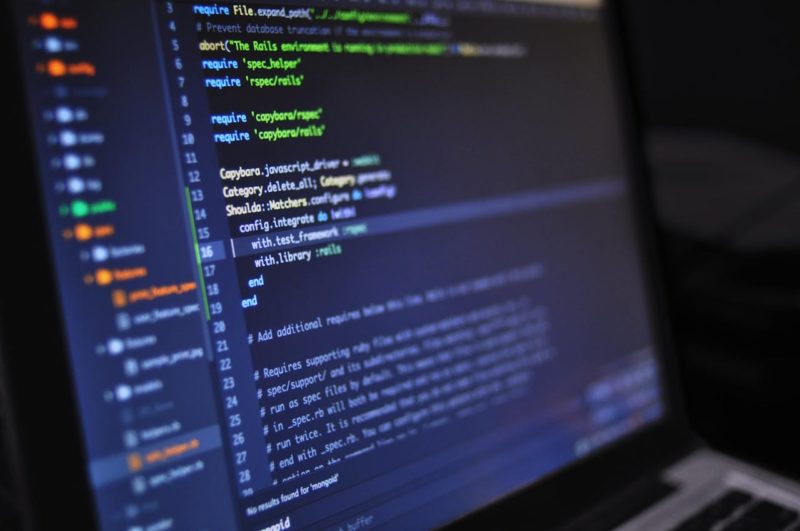
There was a time when building software felt like a secret club. You needed to know the handshake. You needed to understand semicolons and curly braces. You needed patience. Lots of it. That world is not completely gone. But something new is growing right next to it. It is looser. It is faster. It is weirdly intuitive. People are calling it something different now. And it is making software feel human again.
The Shift from Syntax to Feeling
For years, coding was about precision. One wrong character and everything broke. You learned the rules first. Then you broke them carefully. But now, there is a different path. It starts with an idea, not a manual. Developers are using vibe coding tools to describe what they want in plain language. The tool handles the syntax. The developer handles the vision. It changes the relationship completely. You are no longer fighting the machine. You are collaborating with it. The tool translates your messy human thoughts into something structured. It does not judge you for not remembering the exact method name. It just figures it out.
Lowering the Walls Around the Garden
Software has always had a gate. You needed time to learn and confidence. Vibe coding tools are dismantling that gate slowly. A designer can now prototype an interactive feature without waiting for engineering. A founder can build a rough version of their idea over coffee. A teacher can make a simple tool for their classroom in an afternoon. These are not professional developers in the traditional sense. But they are builders now. They bring perspectives that career coders might miss. The tools do not replace expertise. They just stop treating beginners like outsiders.
Speed That Changes Your Thinking
When building is slow, you think differently. You plan more and hesitate. You protect every line of code because it cost you something to write it. Vibe coding tools flip that logic. The cost of trying is almost zero. You can throw away an entire feature and rebuild it differently in the same hour. This changes your brain. You start experimenting more. You start asking “what if” instead of “how long will this take.” The feedback loop is so fast that it becomes conversational. The code starts feeling alive. It responds to you. It pushes back sometimes. But it never makes you feel stupid for asking.
The Designer and the Coder Shake Hands
There used to be a wall between design and development. One side made pictures. The other side made logic. Translating between them was painful. Visuals got lost. Interactions felt stiff. Vibe coding tools are bluring that line. You can sketch something roughly and see it come to life instantly. The tool understands the relationship between what you see and what happens underneath. It does not need a perfect mockup. It just needs direction. This makes collaboration smoother. The designer does not need to code. The coder does not need to guess. They meet somewhere in the middle. The tool acts as their translator. It is not perfect. But it is getting better fast.
Mistakes Are Louder Now
This ease comes with a shadow. When code writes itself, you trust it more than you should. It looks clean. It looks confident. But it does not always understand the full picture. Vibe coding can produce beautiful interfaces with broken logic underneath. It can make something that works in one case and fails silently in another. You have to stay awake. The tool is not thinking. It is assembling. It does not know what your users need. It does not know your constraints. You have to keep asking questions. Why did it do it that way? Is that the right approach? The tool is fast. But it is not wise. That part is still yours.
A New Kind of Coder Emerges
There is a stereotype of the programmer. Hoodie. Coffee. Quiet intensity. That person still exists. But now there is another kind too. Someone who never wanted to learn memory management. Someone who just wanted to solve a problem. Vibe coding tools are letting these people into the conversation. They bring ideas from different industries. They ask questions that career developers stopped asking long ago. They build things that are a little strange. A little inefficient. A little human. The code might not be elegant. But the solution often is. And sometimes that matters more.
What Stays the Same
Despite all this change, some things do not move. The tool still cannot decide what to build. It cannot feel the frustration of a user clicking the wrong button. It cannot care about the product the way its creator does. Vibe coding is a new pencil. It is sharper. It is more responsive. But it still follows your hand. It does not replace the intention behind the stroke. The hard part of software was never really the syntax. It was the empathy. It was the taste. It was knowing when simple is better than clever. Those things are still yours. The tool just helps you get there faster.
The Unfinished Sentence
We are still early in this shift. The tools today will look clumsy in a few years. The way we talk about building software will keep evolving. Maybe we will stop calling it coding altogether. Maybe it will just be making again. Like clay or wood or ink. Something you pick up and shape until it feels right. Vibe coding is not the final answer. It is just the current question. And for the first time in a long time, the answer does not have to be perfect. It just has to be built.
Would you like to receive similar articles by email?

Paul Tomaszewski
Paul Tomaszewski is a science & tech writer as well as a programmer and entrepreneur. He is the founder and editor-in-chief of CosmoBC. He has a degree in computer science from John Abbott College, a bachelor's degree in technology from the Memorial University of Newfoundland, and completed some business and economics classes at Concordia University in Montreal. While in college he was the vice-president of the Astronomy Club. In his spare time he is an amateur astronomer and enjoys reading or watching science-fiction. You can follow him on LinkedIn and Twitter.


You May Also Like
How Do Robotic Vacuum Cleaners Work
What Is Data Augmentation in Machine Learning?