5 Upgrades That Improve Your Toyota Tacoma
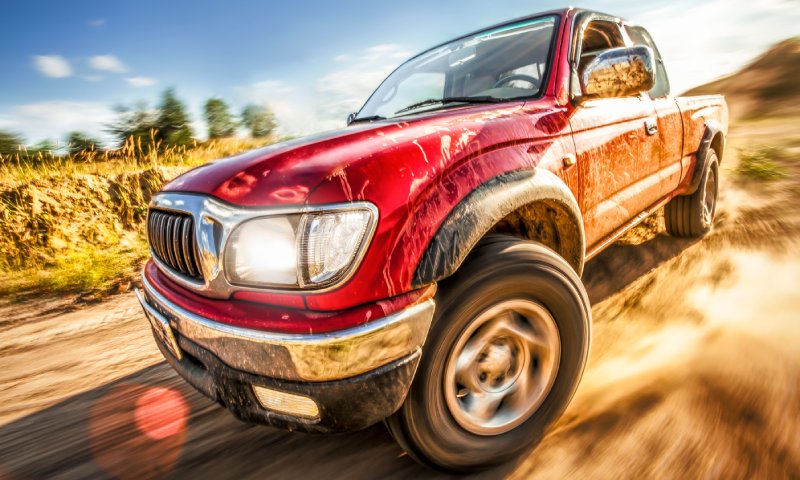
Your Toyota Tacoma delivers reliable performance whether you’re hauling equipment or exploring backcountry trails. Many people own these vehicles because of their off-roading capabilities and unique features, but with additional upgrades, you can further improve your Toyota Tacoma’s driving performance. To get the most out of your investment, consider installing these professional enhancements for a durable, smooth ride.
1. Cold Air Intake System
Best for: Throttle response, induction sound, long-term filter savings
Typical cost: $220–$500
A cold air intake system draws cooler, denser air into your engine, which improves combustion efficiency (dyno-verified: +17 hp / +19 lb-ft on 3.5L V6). If your Tacoma is losing fuel efficiency, a cold air intake may modestly improve throttle response and induction sound. However, L/100 km gains are minimal on modern Tacomas. Most systems are compatible with preexisting Tacoma components. Therefore, you can easily install these parts without major modifications.
2. Performance Exhaust System
Best for: Sound, throttle response, modest power gains
Typical cost: $800–$1,200
Upgrading your exhaust system reduces backpressure and allows your engine to breathe more freely. A quality cat-back exhaust system adds a deeper sound while potentially increasing power output (dyno-verified: +9 hp / +10 lb-ft on 3.5L V6). This modification also reduces weight compared to the stock system. In addition, it improves your truck’s overall performance.
3. Leveling Kit or Lift Kit
Best for: Ground clearance, larger tire fitment, approach/departure angles
Typical cost: $300–$2,500+
A leveling kit eliminates the factory rake, which makes it easier to fit larger tires for a more customized look and feel. For people who love to go off-roading, a 5 to 7.5 cm lift kit improves approach and departure angles. This allows your Tacoma to handle rougher terrain with confidence (2–3 in is the practical sweet spot: clears 33″ tires, preserves CV angles). 3rd gen (2016–2023) and 4th gen (2024+) fitments differ in hub bore (106.1 mm vs 95.1 mm) and bolt pattern (6×139.7 mm both). Therefore, verify kit compatibility. These upgrades give your truck a bold, commanding presence on and off the road.
4. All-Terrain Tires
Best for: Mixed on/off-road traction, winter capability (3PMSF)
Typical cost: $800–$1,600/set of 4
Quality all-terrain tires transform your Tacoma’s grip on various surfaces. These tires provide better traction in snow, mud, and loose gravel for daily driving and weekend off-roading trips. 3rd gen stocks 265/70R16–18; 4th gen TRD Pro/Trailhunter run 265/70R18. Up to 33″ (285/70R17) often fits stock with minor trimming; 35″ requires 3 in+ lift and often regearing. Choose tires that match your driving style and terrain requirements to upgrade your Toyota Tacoma with ease.
5. Skid Plates
Best for: Underbody protection, rock crawling, overlanding
Typical cost: $500–$1,500 (full package)
Protect your truck’s inner components with heavy-duty skid plates. These armor pieces shield your oil pan, transmission, and transfer case from rocks and debris during off-road adventures (3/16″ steel or 1/4″ aluminum covers oil pan, transmission, transfer case, fuel tank). Quality skid plates prevent costly damage and extend your truck’s lifespan.
Other Upgrades Worth Knowing
- Snorkel (ARB Safari ARMAX): Relocates air intake to roof height for water crossing and dust protection (10% higher CFM than competitors, 2016–2023 fitment)
- Coilovers (King, Fox, Icon): Remote-reservoir adjustable damping for ride quality and high-speed off-road control (matched front/rear spring rates for constant load)
- Rock Sliders (RCI Offroad): Bolt-on rocker panel protection with kick-out, supports vehicle weight for hi-lift (full frame support mounting plate, 20° upward angle)
- Onboard Air (ARB Twin Compressor): 174 LPM, 150 PSI for tire inflation, air lockers, air tools (CKMTA12, 100% duty cycle, IP55 rated)
FAQ
What is the first upgrade I should do to my Tacoma?
A quality set of all-terrain tires provides the biggest immediate improvement in both on-road safety and off-road capability for the money.
Do cold air intakes actually work on Tacomas?
Modern Tacomas already draw cool air from the fender well. Aftermarket intakes mainly add induction sound and modest throttle response gains. With 10–19 hp possible on 3.5L V6 models, they can provide a small performance boost. However, gains are minimal on the 2.4L turbo.
What is the difference between a lift kit and a leveling kit?
A leveling kit raises only the front to match the rear height (5–7.5 cm), while a full suspension lift raises both front and rear with upgraded shocks and springs for improved wheel travel and load capacity.
Are skid plates necessary for a Tacoma?
Factory skid plates are thin and only handle light gravel; aftermarket 5 mm steel or 6 mm aluminum plates protect the oil pan, transmission, transfer case, and fuel tank from serious trail impacts.
What size tires fit a stock Tacoma without a lift?
Most 3rd and 4th gen Tacomas fit up to 81–84 cm tires (265/70R17 or 285/70R17) on stock suspension with minor trimming. However, 89 cm tires require a 7.5 cm+ lift and often regearing.
Conclusion
Simple bolt-on upgrades like cold air intakes and skid plates require basic tools and can save hundreds on labor costs for people who want to improve their Toyota Tacoma by hand. However, suspension modifications, exhaust systems, and complex electrical work demand professional expertise. Consider your skill level, available tools, and the modification’s complexity before deciding whether to tackle the job yourself or visit a qualified mechanic.
Would you like to receive similar articles by email?

Paul Tomaszewski
Paul Tomaszewski is a science & tech writer as well as a programmer and entrepreneur. He is the founder and editor-in-chief of CosmoBC. He has a degree in computer science from John Abbott College, a bachelor's degree in technology from the Memorial University of Newfoundland, and completed some business and economics classes at Concordia University in Montreal. While in college he was the vice-president of the Astronomy Club. In his spare time he is an amateur astronomer and enjoys reading or watching science-fiction. You can follow him on LinkedIn and Twitter.


You May Also Like

Proven Ways To Fight Exhaustion for Truck Drivers
What Is Hydrotreated Vegetable Oil? HVO Fuel Explained