5 Types of Excavator Attachments Used in the Construction Industry
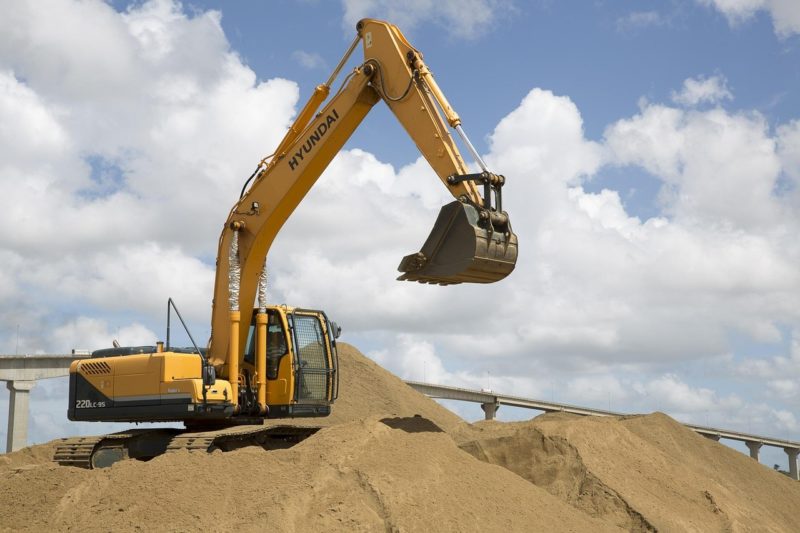
An excavator is a machine often used in the construction industry and heavy work sites. It can handle a number of tasks ranging from drilling through hard surfaces to carrying heavy loads. It is equipped with sturdy wheels or tracks, depending on the model, for improved mobility on various surfaces. Its different tools and attachments allow operators to complete work in a efficient and timely manner.
Machines that were traditionally designed for a single task are now compatible with multiple excavation attachments. Here is a list of some of the most important types of excavator attachments that you should have in the construction industry.
1. Augers
An auger is a type of excavator attachment used for drilling holes. It is a tool that can be used to quickly dig a hole even in tight spaces, where buckets cannot fit.
Some auger systems use swing or articulated mounts to help maintain a vertical drilling position. There are many types of drills and motors on the market to choose from, depending on the depth and diameter of the hole you need. There are also augers designed for different soil conditions, including soft soil, compact ground, and rock applications.
2. Hammers
Hammers, also known as hydraulic breakers, are heavy duty attachments that are used for the demolition of structures and breaking heavy rocks. Most hammers use a hydraulic system to deliver precision blows in a single spot.
In situations where you need more power, drop hammers are a great choice. They use gravity to deliver a very powerful blow. They are less accurate and more expensive than hydraulic breakers, however.
3. Blades
There are several blade configurations available, depending on the task you need to accomplish. Two common examples include:
Grading blades: Grading blades are large attachments for leveling large areas with precision. They are usually used for major projects like roads, airport runways, and large foundations. The grading blades are also sometimes used to move snow and ice in areas with heavy snowfall. They are very heavy and need a lot of control, and therefore require skilled drivers.
Dozer blades: These blades are used for pushing material. You can easily level a surface by pushing and spreading earth with this horizontal attachment. They can perform most of the functions of grading blades for small and medium scale work. Laser-guided and GPS-guided models also exist for improved grading precision. Most importantly, they can be used in small spaces, where grading blades cannot fit.
4. Grapples
Grapples are used for lifting and sorting purposes. They can lift objects of almost any shape. Most grapples have a hydraulic mechanism with internal cylinders which are suitable for lifting smaller items, while other grapple designs are built for heavier or specialized lifting tasks. Different styles are available for specific jobs, including demolition grapples, sorting grapples, and log grapples..
5. Buckets with Thumbs
Buckets become much more flexible when combined with thumb attachments. These buckets come in many different sizes, and thumbs are available in either mechanical or hydraulic versions. They can be used to dig holes and move earth, or to lift and move large items.
There are also different bucket styles designed for specific applications, including digging buckets, trenching buckets, grading buckets, and rock buckets.
Bonus: Other Types of Excavator Attachments
In addition to the more common tools, there are other types of excavator attachments that are gaining popularity on modern job sites.
Tiltrotators: A tiltrotator allows the attachment to rotate 360 degrees and tilt side to side. This gives operators more flexibility and precision, especially in tight or complex spaces. It also reduces the need to reposition the machine, saving time and fuel. These systems are becoming increasingly popular in utility work, urban excavation, and precision grading applications.
Mulchers: These are mostly used in forestry and land clearing. A mulcher attachment can shred trees, brush, and vegetation into small pieces, making site cleanup and preparation much faster. They are also commonly used for right-of-way clearing and vegetation management.
Compaction Wheels or Plates: After digging, it is often necessary to compact the soil again. These attachments make that process easier and more uniform. They are especially useful in pipeline installation, foundation work, and other construction tasks where stable ground is important. They are frequently used for trench and backfill compaction.
Quick Couplers: Quick couplers, also known as quick hitches, allow operators to switch between attachments much faster. This reduces downtime and makes excavators more versatile on busy job sites.
Rippers: Ripper attachments are used for breaking through frozen ground, hard soil, roots, and compacted materials before excavation begins.
Each of these adds to the growing list of useful types of excavator attachments that can help boost productivity and adapt machines to a wider range of tasks.
Conclusion
Choosing the right tools can make a big difference on any job site. With so many types of excavator attachments available today, it is easier than ever to adapt your machine to a wide range of tasks. From digging and grading to lifting and compacting, each attachment offers unique benefits. By selecting the proper types of excavator attachments for your specific needs, you can improve efficiency, reduce downtime, get more value out of your equipment, and complete projects faster without investing in multiple machines.
Would you like to receive similar articles by email?

Matthew Lesniak
Matthew Lesniak is a Mechanical Engineering graduate working within the exciting field of remotely piloted aircraft systems (RPAS), better known as drones. His day-to-day work focuses on supporting drone manufacturers, facilitating certification processes, as well as advancing research and development projects. Matthew’s hobbies include travelling with his wife, playing board games, reading and staying active.


You May Also Like

The Importance of Road Construction in Society

Common Bolt Shear Failures Engineers Should Consider in Design