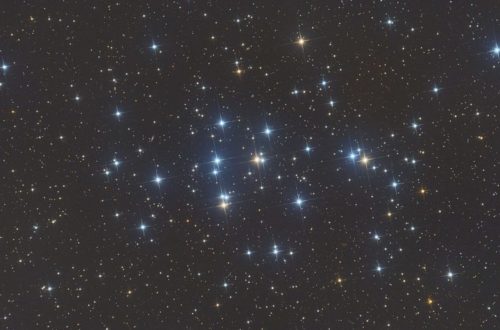
How Did Celestial Bodies Get Their Names
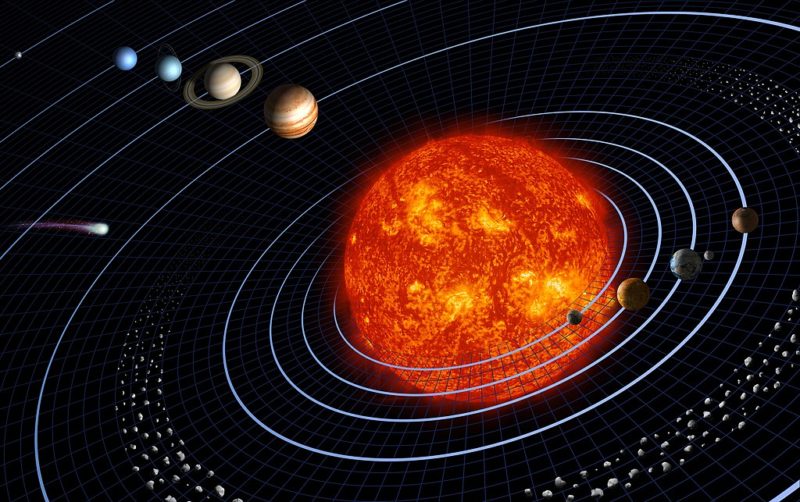
Celestial bodies got their names from a mixture of religion, language, observation, and paperwork. Ancient skywatchers named bright planets after gods, while modern astronomers often begin with a catalog number or survey code. The familiar name usually arrives later, after an object has been observed, verified, and placed within an official naming system.
That history matters because “name” can mean several things. A planet may have a mythological name, a technical designation, and a local cultural name, all at once. Astronomical nomenclature is a layered map of human curiosity.
How Did Ancient Cultures Name Celestial Bodies?
Greek and Roman Mythology
The visible planets were especially attractive to ancient observers because they appeared to move against the fixed stars. Greek astronomers associated them with members of their pantheon. Hermes, the swift messenger, became linked with Mercury. Aphrodite became Venus, Ares became Mars, and Zeus became Jupiter.
Roman culture later adopted many Greek stories while substituting its own equivalent gods. The Roman names survived through Latin, the language of medieval scholarship and early European astronomy. Saturn, for example, came from Saturnus, the Roman god associated with agriculture and time. The Greek equivalent was Cronus, a Titan.
The names were not random labels. They reflected appearance and behavior. Mercury moved quickly across the sky, Venus shone brilliantly, and Mars displayed a reddish color that invited associations with blood, war, and the Roman god of conflict.
Mesopotamian Traditions
Long before Greek and Roman naming schemes dominated European astronomy, Mesopotamian civilizations tracked the sky with remarkable precision. Babylonian priests connected planets and stars with deities, omens, calendars, and royal events. Their records helped establish planetary periods and influenced later Greek traditions.
This older system treated the sky as an active participant in earthly life. A planet was not merely an astronomical object. It could signify a god, a warning, or a change in political fortune. That worldview shaped both early science and the mythological vocabulary inherited by later cultures.
Indigenous and Regional Names
Greek and Roman names are only one strand of human sky knowledge. Indigenous communities across Africa, the Americas, Australia, Asia, and the Pacific developed their own star names, stories, navigation systems, and seasonal calendars. Arabic star names also remain embedded in modern astronomy, including names such as Aldebaran and Betelgeuse.
These traditions often describe relationships between stars rather than isolated points of light. A constellation may represent an animal, ancestor, tool, route, or seasonal event. Modern institutions increasingly recognize that cultural naming should involve the communities whose heritage is being represented, rather than treating those traditions as decorative mythology.
Why Do Planets Have Their Names?
Classical Deities
The five planets visible without a telescope, Mercury, Venus, Mars, Jupiter, and Saturn, received Roman names that became standard in Western astronomy. Uranus was later given a Latinised form of a Greek name, while Neptune followed the Roman god of the sea. Pluto, classified as a dwarf planet since 2006, continued the mythological pattern with the Roman god of the underworld.
The sequence also carries a curious historical break. Uranus was discovered with a telescope in 1781, and its proposed names changed before the international community settled on Uranus. Neptune was identified in 1846 after mathematical predictions and telescopic observation, then named within the established mythological tradition.
See also: How Did the Planets Get Their Names
Visible Planet Traditions
Ancient observers did not always use the same name for a planet at different times of day. Venus, for instance, could be treated as a morning star and an evening star before cultures understood that both appearances came from one planet. Mercury was associated with Hermes in Greek sources and Mercurius in Roman naming.
Naming became more stable as astronomical models improved. Once planets were understood as members of a solar system rather than wandering divine lights, their old names remained as cultural fossils, still useful and surprisingly durable.
Modern Planetary Conventions
Today, planet names are formalized through the International Astronomical Union, or IAU, the organization responsible for much of the global astronomical nomenclature. The IAU also defined the categories used for planets and dwarf planets, including the decision that Pluto is a dwarf planet rather than one of the eight major planets.
Who Assigns Official Names?
International Astronomical Union
The IAU approves names for planets, dwarf planets, planetary satellites, surface features, stars in selected campaigns, and other astronomical objects. Its committees create naming schemes that fit each world’s history and scientific context.
This does not mean astronomers rename every object immediately. Most begin with a designation, because observation and orbital confirmation come first.
Scientific Designations
A planet designation may combine a survey or telescope name with numbers and letters. Exoplanets often receive the host star’s catalog identifier followed by lowercase letters, beginning with b for the first confirmed planet, then c, d, and so on. NASA explains this exoplanet naming system in technical detail.
The letters are not initials, and they do not describe the planet’s composition. They simply mark the order in which planets were confirmed around that star.
Public Naming Roles
Public participation has a genuine place in naming, though it is carefully managed. The IAU’s NameExoWorlds campaigns have invited communities to propose names for selected star systems. Recent rules emphasize cultural relevance, community involvement, and consent, particularly when Indigenous names are suggested. The 2022 naming guidelines reflect that shift.
Commercial naming companies are a different matter. A certificate purchased from a private registry does not create an official star name; the IAU does not sell star names.
How Are Moons and Dwarf Planets Named?
Mythological Themes
Moons often receive names connected to the mythology associated with their parent planet. Jupiter’s satellites draw from figures linked with Zeus and Jupiter, while Saturn’s moons include Titans, giants, and other figures from Greek and Roman stories. Uranus has an unusual theme involving characters from Shakespeare and Alexander Pope.
Ceres, the largest object in the asteroid belt and a dwarf planet, follows a related agricultural theme. The official categories for worlds and their features are maintained through the USGS planetary naming categories.
Provisional Designations
A newly discovered moon or dwarf planet first receives a provisional designation. This can include the discovery year, a sequence code, and an indication of the object’s type. The designation allows scientists to share observations before a permanent name is justified.
Approved Names
Once the orbit is secure and the object’s status is established, an official name may be proposed and reviewed. The process is cautious because changing a well-used name creates confusion across research papers, databases, and spacecraft mission plans.
How Do Stars and Exoplanets Get Names?
Catalog Identifiers
Most stars have several identifiers because different surveys measure different properties. A star may be known by a Bayer designation, a catalog number, or a coordinate-based name. These labels are clumsy in conversation but excellent for databases.
Host-Star Systems
Exoplanets usually keep their scientific designations even when a public name is approved. A system can therefore contain both a catalog identifier and a cultural name. That duplication is useful: one name carries human meaning, while the other preserves a precise link to the discovery record.
Cultural Naming Campaigns
The IAU’s NameExoWorlds program has demonstrated how public naming can connect distant planetary systems with local stories, languages, and communities without discarding scientific designations.
How Are Comets, Asteroids, and Features Named?
Discoverer Credits
Comets are commonly named for their discoverers, such as Halley’s Comet. Current rules generally limit a comet name to two discoverer surnames, listed in chronological order, according to the Minor Planet Center guidelines.
Minor Planet Rules
Asteroids and other minor planets first receive provisional designations. After enough observations establish the orbit, the Minor Planet Center can assign a permanent number. The discoverer may then propose a name and citation, subject to review. The formal process is outlined by the Minor Planet Center.
See also: How Did the Asteroids Get Their Names
Surface Feature Themes
Planetary features follow themes chosen for each world. Craters on Mercury, for example, honor artists, while Venusian features often commemorate notable women. Mountains, valleys, and fault systems also use standardized descriptor terms such as Montes, Rupes, and Valles. The USGS descriptor glossary explains this specialized vocabulary.
How Are Constellations and Meteor Showers Named?
Constellations developed from ancient star patterns, but modern astronomy needed firm boundaries. In 1922, the IAU standardized 88 constellations, turning traditional sky figures into defined regions.
Meteor showers are usually named for the constellation containing their radiant, the point in the sky from which meteors appear to emerge. The Perseids come from Perseus, while the Geminids appear to radiate from Gemini. The name describes the observing geometry, not the comet or asteroid that produces the debris.
What Naming Rules Apply Beyond the Solar System?
Beyond the solar system, naming depends heavily on discovery history and data management. Galaxies, stars, and exoplanets may carry catalog identifiers from different surveys, while officially approved cultural names apply only to selected objects. Latin letters, numbers, and survey prefixes help astronomers avoid ambiguity across languages and databases.
That is why an object can have a beautiful public name and an awkward scientific designation. Both serve a purpose. One helps people remember the sky; the other helps researchers find the exact record.
FAQ
Can anyone buy an official star name?
No. Commercial naming companies can sell commemorative certificates, but those names have no standing in professional astronomy.
Why do planets use Roman names?
Medieval European astronomy preserved Latin scholarship, so Roman versions such as Venus, Mars, and Jupiter became standard internationally.
Who names a new asteroid?
The discoverer usually proposes a name after the object receives a permanent number, while the relevant IAU process reviews it.
Conclusion
Celestial bodies’ names are part mythology, part measurement, and part international administration. Ancient cultures gave the sky personality; modern astronomers added catalog precision and formal rules. The result is a naming system that preserves old stories while making room for new discoveries, Indigenous knowledge, public participation, and the next generation of science.
Would you like to receive similar articles by email?

Paul Tomaszewski
Paul Tomaszewski is a science & tech writer as well as a programmer and entrepreneur. He is the founder and editor-in-chief of CosmoBC. He has a degree in computer science from John Abbott College, a bachelor's degree in technology from the Memorial University of Newfoundland, and completed some business and economics classes at Concordia University in Montreal. While in college he was the vice-president of the Astronomy Club. In his spare time he is an amateur astronomer and enjoys reading or watching science-fiction. You can follow him on LinkedIn and Twitter.


You May Also Like
How Did Dwarf Planet Quaoar Get Its Name
What Causes Dips in Exoplanet Reflected Light Curves