Monthly Stargazing Calendar for December 2015
On the night of December 13 and 14 the Geminids meteor shower will peak. It is considered by many to be the best shower in the heavens, producing up to 120 multicolored meteors per hour at its peak. This is why it is known as the king of meteor showers. Some meteors can also be seen anytime from December 7 to 17.
Monthly Stargazing Calendar for November 2015
On the night of November 5 and 6 we will witness the peak of the Taurids meteor shower. It is a long-running minor meteor shower producing only about 5-10 meteors per hour at peak, while some meteors can also be seen from September 7 to December 10. However it is unusual in that it consists of two separate streams. The first is produced by dust grains left behind by Asteroid 2004 TG10. The second one is produced by debris left behind by Comet 2P Encke.
Monthly Stargazing Calendar for October 2015
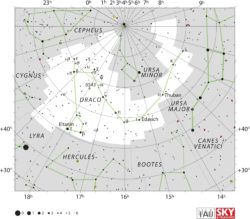
On October 8 we will witness the Draconids meteor shower. It is a minor meteor shower producing only about 10 meteors per hour originating from dust grains left behind by comet 21P Giacobini-Zinner, which was first discovered in 1900. The Draconids is an unusual shower in that the best viewing is in the early evening instead of early morning like most other showers.
Monthly Stargazing Calendar for November 2013
Earlier this month there were two major astronomical events: a hybrid solar eclipse on November 3rd and the Taurids meteor shower peak on the night of November 4 and 5. If you missed those two events, don't worry, there are two more coming up this month!
Monthly Stargazing Calendar for October 2013
Tonight (October 7 - 8) is the peak of the Draconids meteor shower. It is a minor meteor shower producing only about 10 meteors per hour during the peak, but some meteors can be seen one day before and after the peak. It originates from dust grains left behind by comet 21P Giacobini-Zinner, which was first discovered in 1900.
Earth’s First Trojan Asteroid discovered by NASA’s WISE
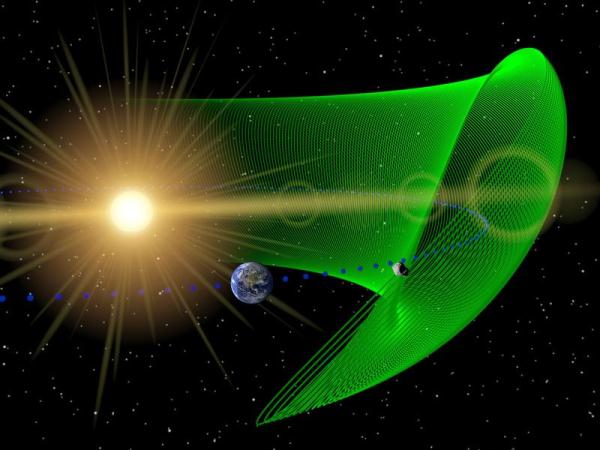
NASA's WISE mission discovered asteroid 2010 TK7, an Earth Trojan, in a stable orbit around a Lagrangian point, possibly a future space destination.

Hartley 2 Comet
Comet Hartley 2 has made it to the news recently: first because of the comet's flyby near Earth and then due to it being visited by the Deep Impact spacecraft.