Stargazing Calendar for October 2026
Stargazing in October 2026 brings a wide variety of celestial events for enthusiasts of astronomy, from close planetary pairings to dazzling meteor showers. This guide highlights the month’s best opportunities to explore the night sky.
List of Meteor Showers in October 2026
- ν-Eridanids: Start on September 1; peak on September 6; end on October 4.
- September Lyncids: Start on September 10; peak on September 13; end on October 8.
- Daytime Sextantids: Start on September 9; peak on September 27; end on October 9.
- October Camelopardalids: Start on October 5; peak on October 6; end on October 6.
- Draconids: Start on October 6; peak on October 8; end on October 10.
- Southern Taurids: Start on September 10; peak on October 10; end on November 20.
- δ-Aurigids: Start on October 10; peak on October 11; end on October 18.
- ε-Geminids: Start on October 14; peak on October 18; end on October 27.
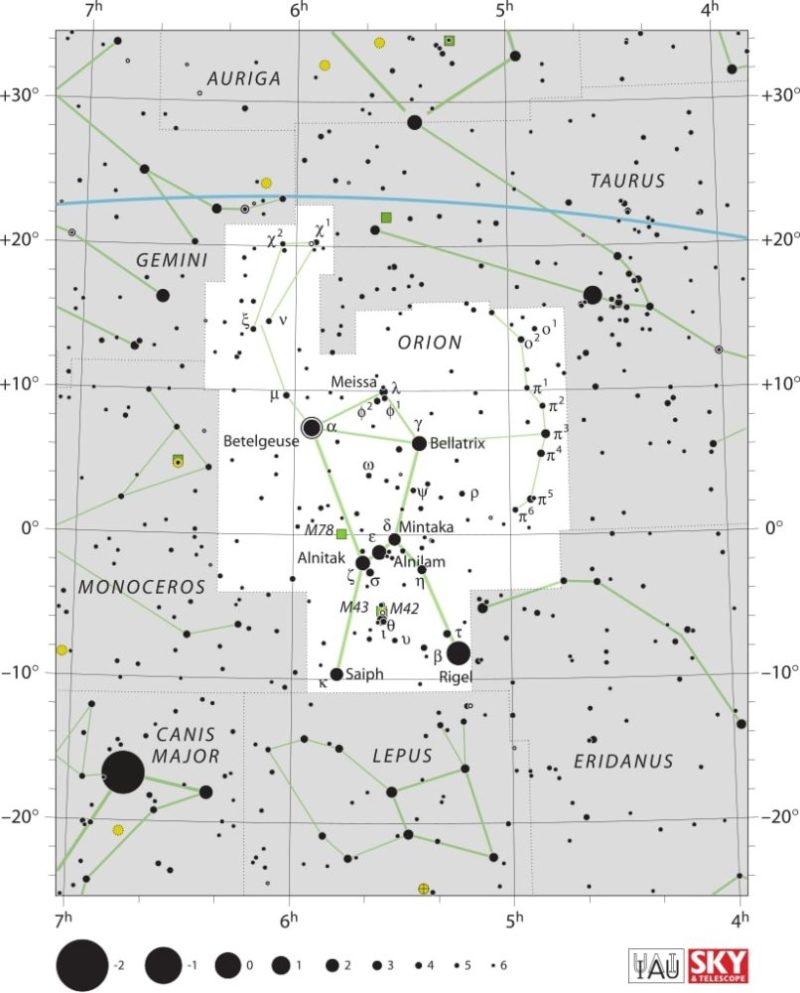
- Orionids: Start on October 2; peak on October 22; end on November 7.
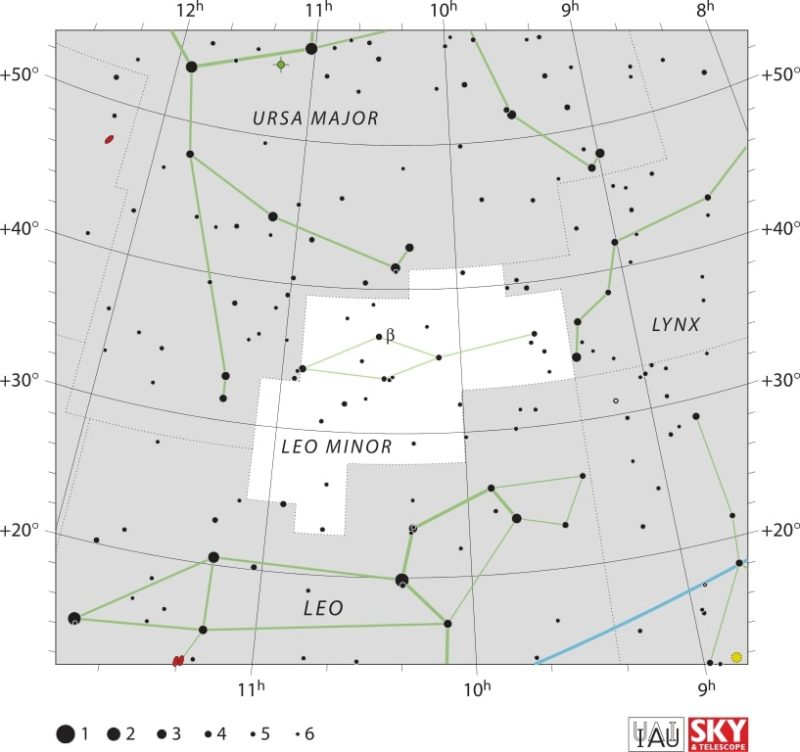
- Leonis Minorids: Start on October 19; peak on October 24; end on October 27.
- Northern Taurids: Start on October 20; peak on November 12; end on December 10.
We also have a complete list of meteor showers for the entire year of 2026 here.
List of Planetary Conjunctions in October 2026
- Conjunction of the Moon and Mars in Cancer on October 5.
- Close approach of the Moon and the Beehive Cluster in Cancer on October 5.
- Conjunction of Venus and Mercury in Virgo on October 5.
- Conjunction of the Moon and Jupiter in Leo on October 6.
- Conjunction of the Moon and Venus in Virgo on October 11.
- Conjunction of the Moon and Mercury in Libra on October 12.
- Conjunction of the Moon and Saturn in Pisces on October 24.
- Close approach of the Moon and the Pleiades in Taurus on October 27.
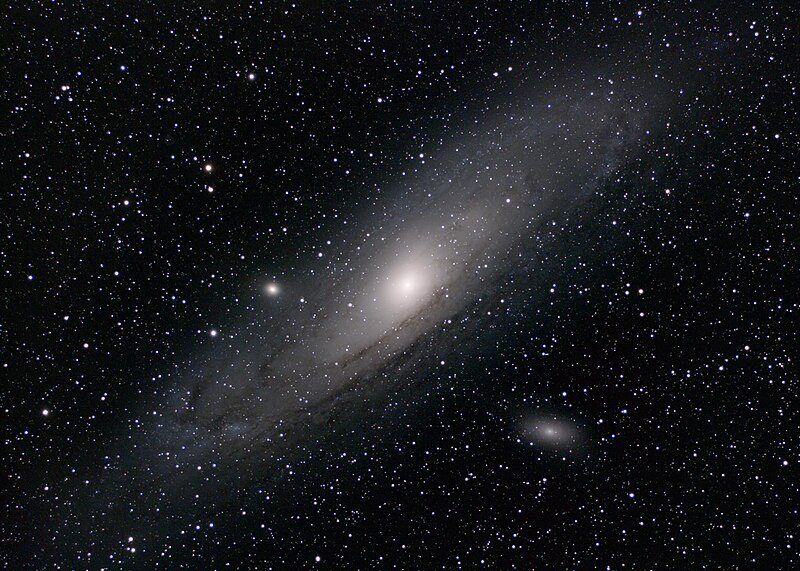
October 2: The Andromeda Galaxy at its highest point in the sky
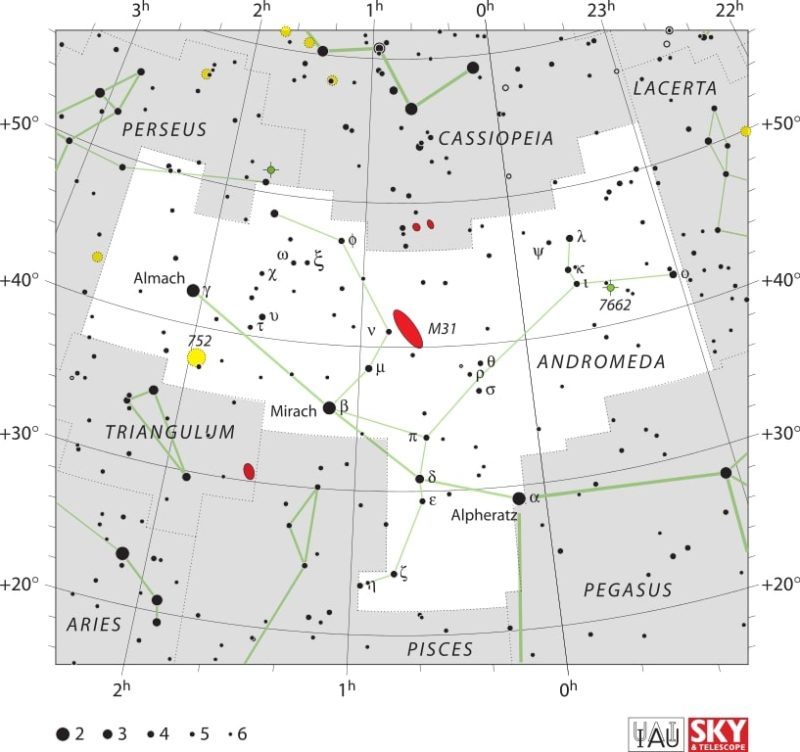
The Andromeda Galaxy (M31) will reach its highest point in the sky around midnight local time. (See featured image at the top.) At a magnitude of 3.4, it will be visible to the naked eye from dark sites and easily seen with binoculars. The galaxy lies in the constellation of Andromeda.
The Moon will be 22 days old and 50% illuminated (waning gibbous). Its glare will interfere somewhat with viewing the faint galaxy.
October 4: Saturn at opposition
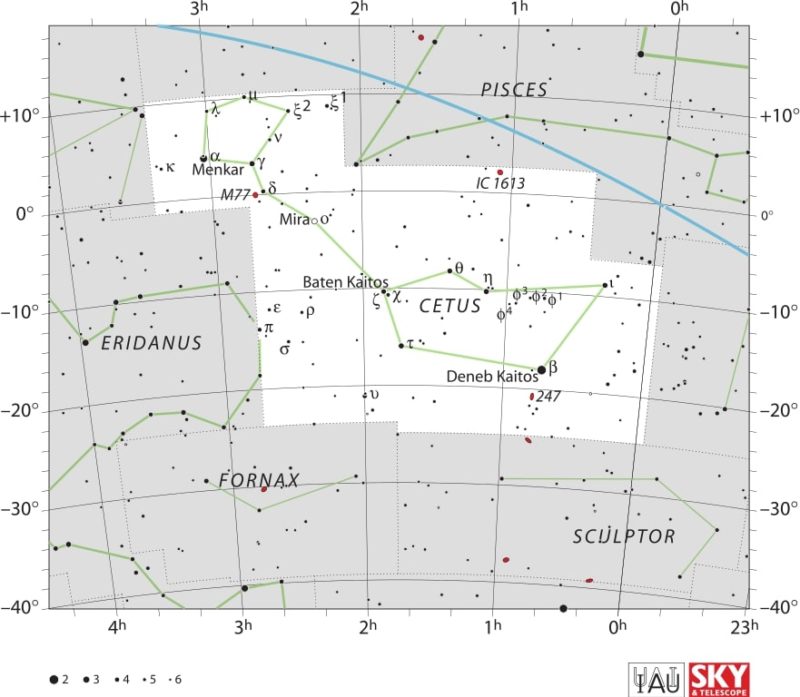
Saturn reaches opposition, meaning it is opposite the Sun in the sky and visible all night. The ringed planet will shine at magnitude 0.3 in the constellation of Cetus, with its rings tilted at a favorable angle for telescopic viewing. Saturn’s disk will span 19.7 arcseconds.
The Moon will be 24 days old and 27% illuminated (waning crescent), rising after midnight and won’t interfere much with evening observations.
October 4: Asteroid 2 Pallas at opposition
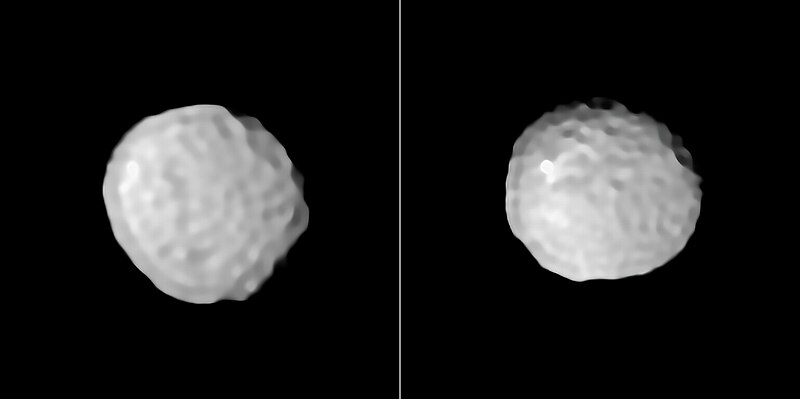
Asteroid 2 Pallas reaches opposition at magnitude 8.2 in the constellation of Cetus. (Constellation map already displayed above, when discussing Saturn at opposition on October 4.)
At 512 km in diameter, Pallas is the third-largest asteroid in the main belt. It will be visible in small telescopes. The Moon will be 24 days old and 27% illuminated (waning crescent).
October 4: The Small Magellanic Cloud at its highest point in the sky
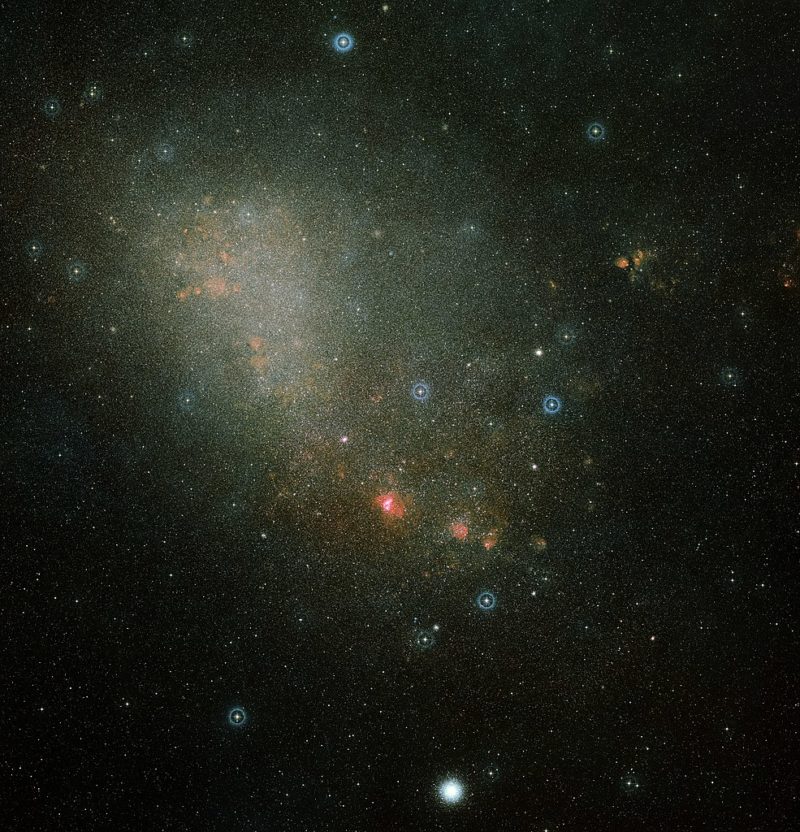
The Small Magellanic Cloud (SMC), a dwarf companion galaxy to the Milky Way at magnitude 2.7, will culminate around midnight in the constellation of Tucana. From dark southern skies, it is a spectacular naked-eye sight. The Moon will be 24 days old and 27% illuminated (waning crescent).
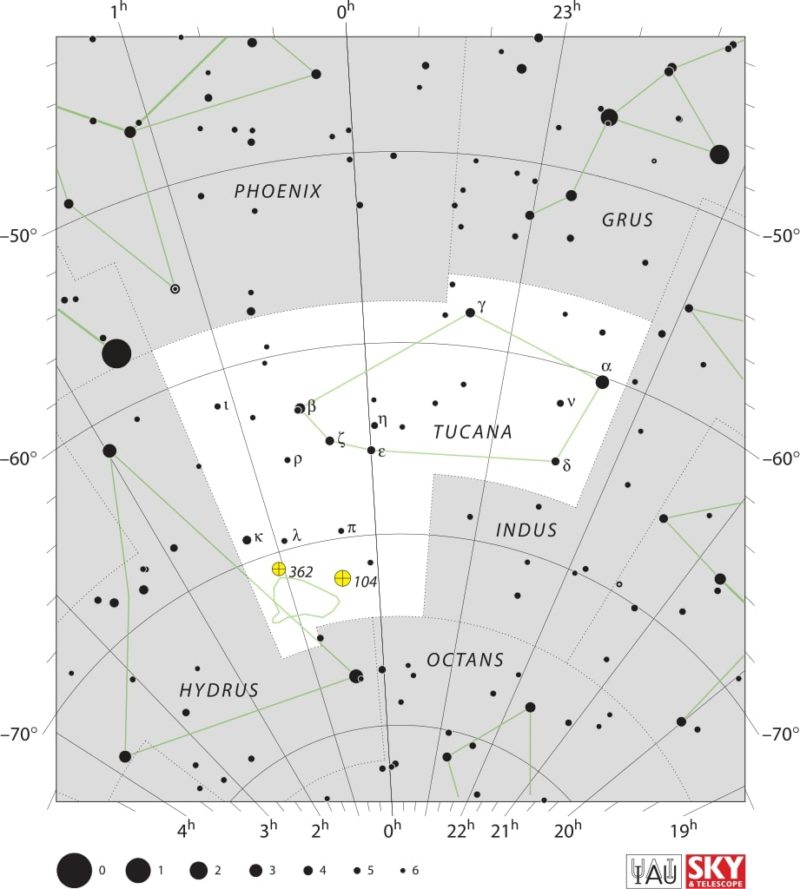
October 5: Conjunction of the Moon and Mars
The Moon and Mars will reach conjunction, passing within 1°08′ of each other while sharing the same right ascension.
Around the same time, the two bodies will also make a close approach (appulse) reaching about 1°05′, but not sharing the same right ascension.
The Moon will pass in front of Mars, creating a lunar occultation visible from parts of northern Canada. The event begins around 05:07 UTC. Mars will disappear behind the dark limb of the waning crescent Moon and reappear on the bright limb about two hours later.
The Moon will be at magnitude -11.5, and Mars at magnitude 1.1, both in the constellation of Cancer. The Moon will be 24 days old and 26% illuminated (waning crescent), so moonlight won’t interfere much with stargazing.
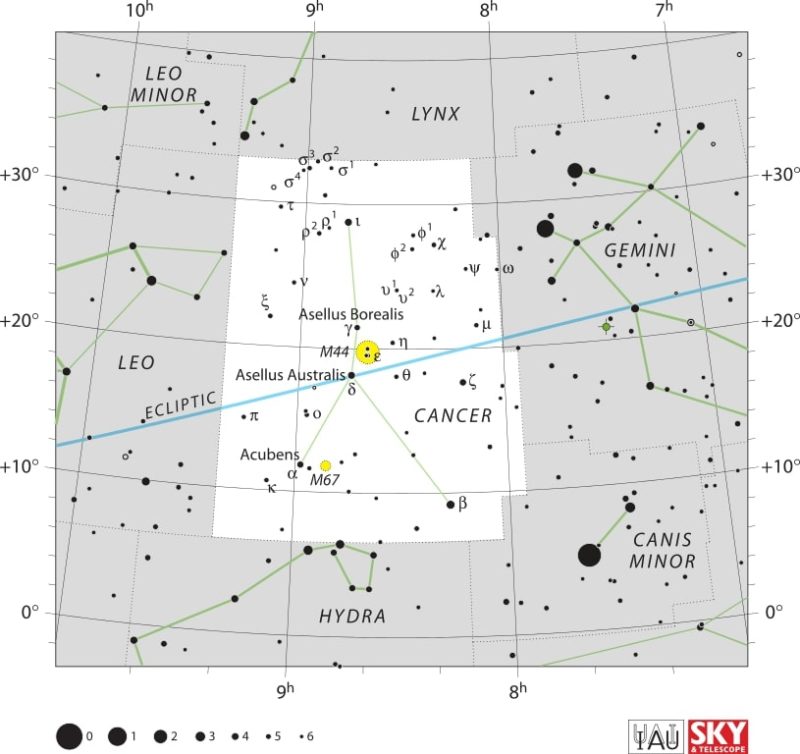
October 5: Close approach of the Moon and Beehive Cluster
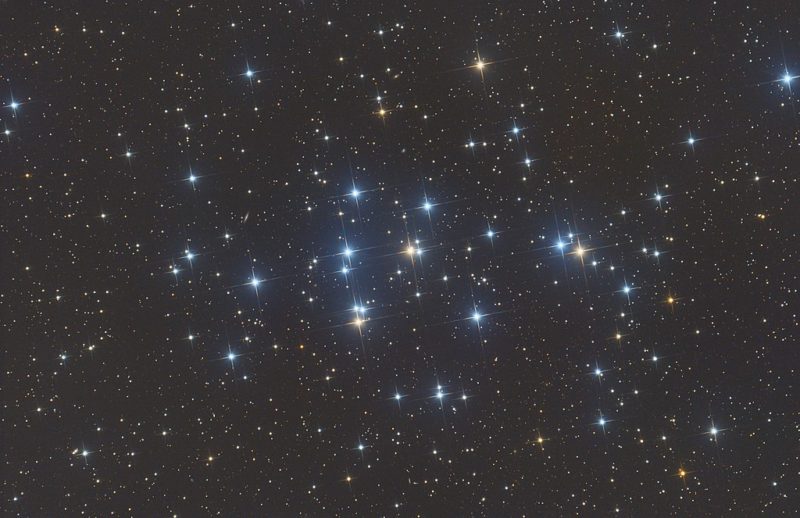
The Moon and M44 (the Beehive Cluster) will make a close approach, passing within a mere 36.2 arcminutes of each other.
The Moon will be at magnitude -11.4, and M44 at magnitude 3.1. Both objects lie in the constellation of Cancer. (Constellation map already displayed above, when discussing the conjunction of the Moon and Mars on October 5.) The Moon will be 24 days old.
October 5: Conjunction of Venus and Mercury
Venus and Mercury will reach conjunction, passing within 5°26′ of each other while sharing the same right ascension. Venus will be at magnitude -4.5 and Mercury at magnitude -0.1, both in the constellation of Virgo. The pair will be too widely separated to fit within the field of view of a telescope, but will be visible to the naked eye.
The Moon will be 24 days old and 23% illuminated (waning crescent), so moonlight won’t interfere much with stargazing.
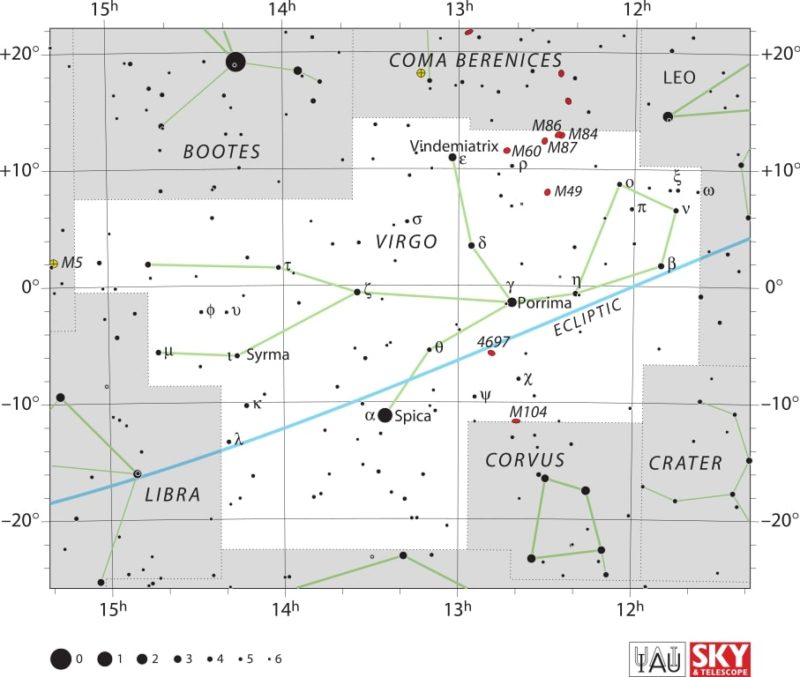
October 6: Conjunction of the Moon and Jupiter
The Moon and Jupiter will reach conjunction, with the Moon passing 10′ to the north of Jupiter while sharing the same right ascension.
Around the same time, the two bodies will also make a close approach (appulse) reaching about 9.5 arcminutes, but not sharing the same right ascension.
The Moon will pass in front of Jupiter, creating a lunar occultation visible from parts of Africa, North America, the Portuguese Azores, Madeira, the Savage Islands, and the Canary Islands. The event begins around 8:14 UTC.
The Moon will be at magnitude -11.0, and Jupiter at magnitude -1.9, both in the constellation of Leo. The Moon will be 25 days old and 15% illuminated (waning crescent), so moonlight won’t interfere much with stargazing this early October 2026.
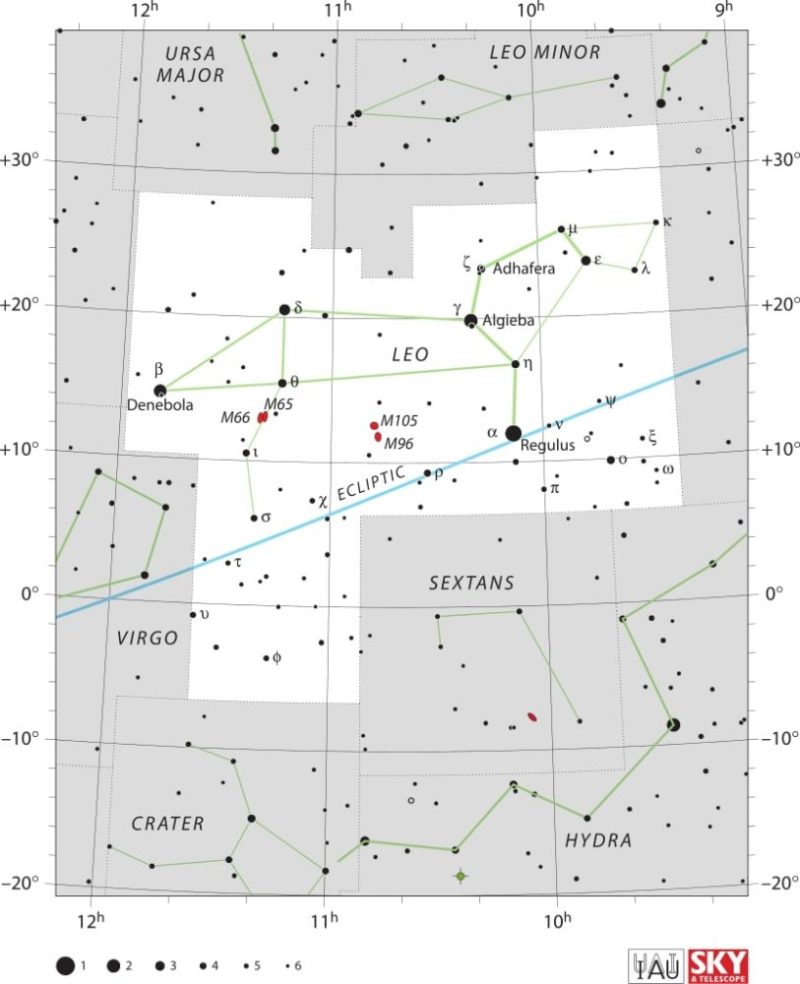
October 6: October Camelopardalid meteor shower peak
The October Camelopardalids reach their peak. This is a minor shower with a variable rate (ZHR variable). The radiant lies in Camelopardalis near the north celestial pole, making it circumpolar for northern observers. Meteors enter the atmosphere at about 46 km/s.
The Moon will be 25 days old and 24% illuminated (waning crescent), so moonlight won’t interfere much with stargazing.
October 8: Draconid meteor shower peak
The Draconids reach their peak. This is a variable shower (ZHR variable) with a radiant in Draco. Meteors are slow at about 20 km/s. In some years the Draconids produce brief outbursts, but 2026 is not predicted to be an outburst year.
The Moon will be 27 days old and 8% illuminated (waning crescent), so moonlight won’t interfere much with stargazing.
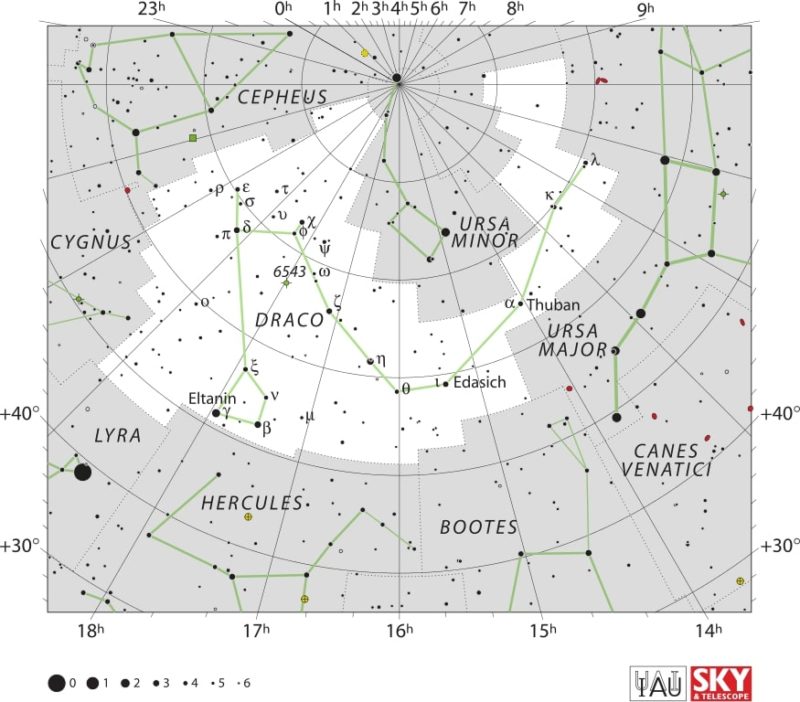
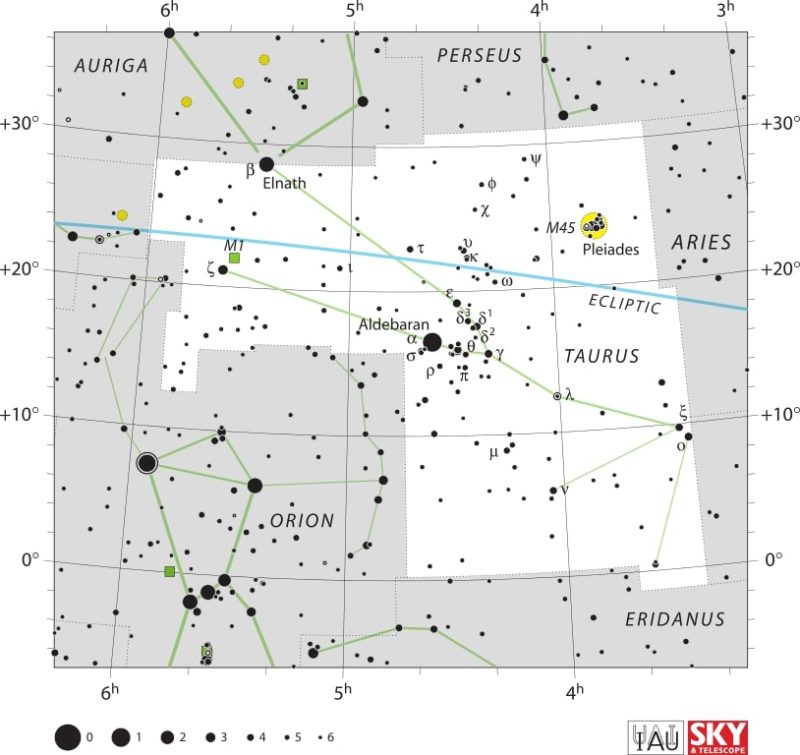
October 10: Southern Taurid meteor shower peak
The Southern Taurids reach their peak. This shower has a low ZHR of about 5 but is known for bright fireballs. The radiant is in Taurus. Meteors are slow at about 27 km/s. Activity extends from September 10 to November 20.
The Moon will be essentially new (less than 1% illuminated), so moonlight will present minimal interference—excellent news for observers.
October 11: Close approach of Mars and Beehive Cluster
Mars and M44 (the Beehive Cluster) will make a close approach, passing within a mere 4.8 arcminutes of each other.
Mars will be at magnitude 1.1, and M44 at magnitude 3.1. Both objects lie in the constellation of Cancer. (Constellation map already displayed above, when discussing the conjunction of the Moon and Mars on October 5.)
October 11: Conjunction of the Moon and Venus
The Moon and Venus will reach conjunction, passing 3°03′ within each other while sharing the same right ascension.
The Moon will be at magnitude -8.6, and Venus at magnitude -4.3, both in the constellation of Virgo. (Constellation map already displayed above, when discussing the conjunction of Venus and Mercury on October 5.) The Moon will be 1 day old and 3% illuminated (waxing crescent), so moonlight won’t interfere at all with stargazing.
October 11: δ-Aurigid meteor shower peak
The δ-Aurigids reach their peak. This is a minor shower with ZHR about 2. The radiant is in Auriga. Meteors are fast at about 64 km/s.
The Moon will be 1 day old and essentially new (3% illuminated), so moonlight won’t interfere with stargazing.
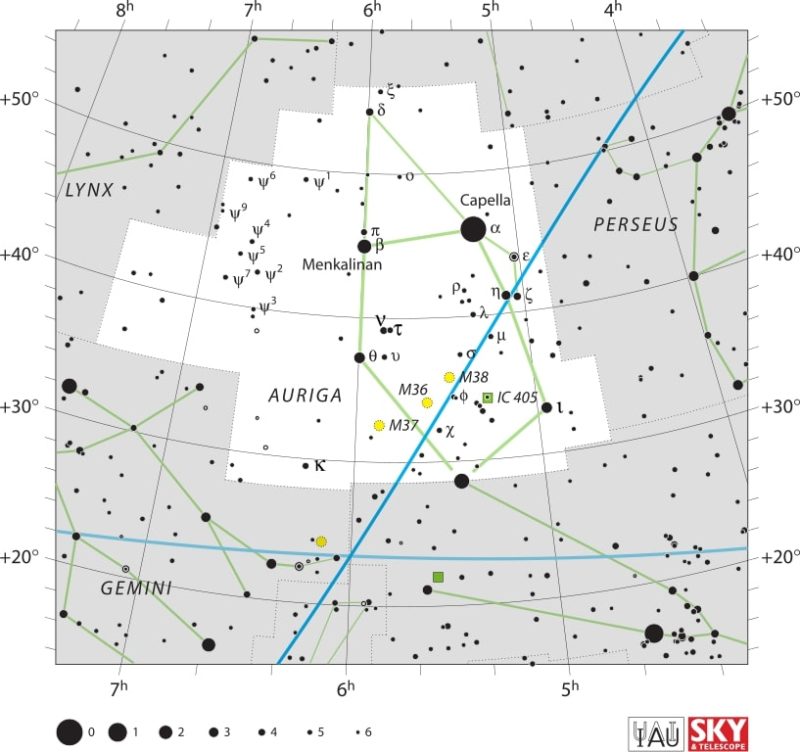
October 12: Mercury at greatest eastern elongation
Mercury reaches its greatest eastern elongation of 25° from the Sun in its September–October 2026 evening apparition. It will be shining at magnitude -0.1 in the constellation of Libra.
The Moon will be 2 days old and 4% illuminated (waxing crescent), so moonlight won’t interfere with stargazing.
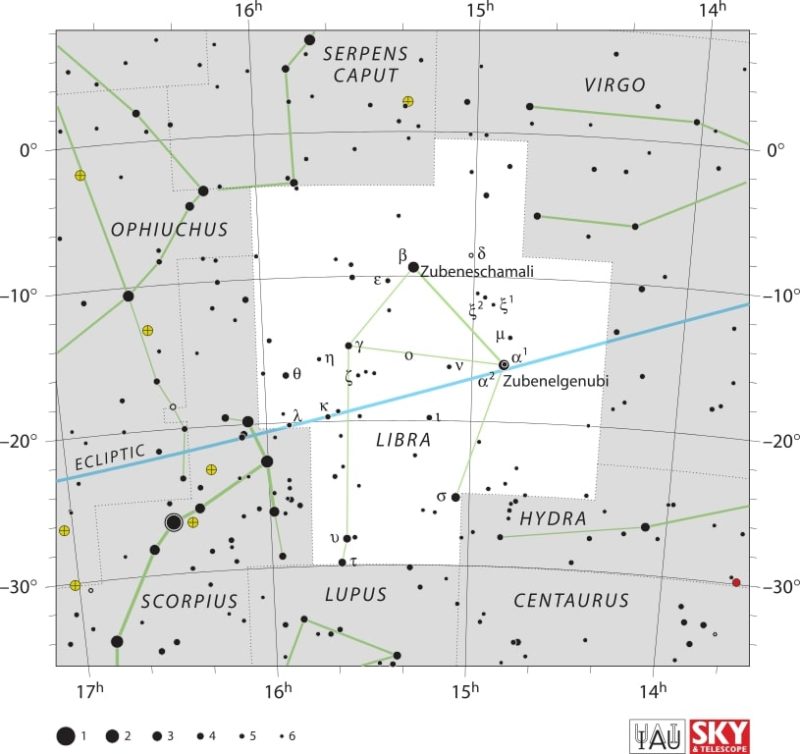
October 12: Conjunction of the Moon and Mercury
The Moon and Mercury will reach conjunction, with the Moon passing 2°07′ from Mercury while sharing the same right ascension.
The Moon will be at magnitude -9.4, and Mercury at magnitude -0.1, both in the constellation of Libra. (Constellation map already displayed above, when discussing Mercury at greatest eastern elongation on October 12.) The Moon will be 2 days old and 7% illuminated (waxing crescent), so moonlight won’t interfere with stargazing this middle of October 2026.
October 13: Asteroid 4 Vesta at opposition
Asteroid 4 Vesta reaches opposition at magnitude 6.4 in the constellation of Cetus. (Constellation map already displayed above, when discussing Saturn at opposition on October 4.) Vesta is the second-most-massive asteroid in the main belt and the brightest as seen from Earth.
The Moon will be 3 days old and 9% illuminated (waxing crescent).
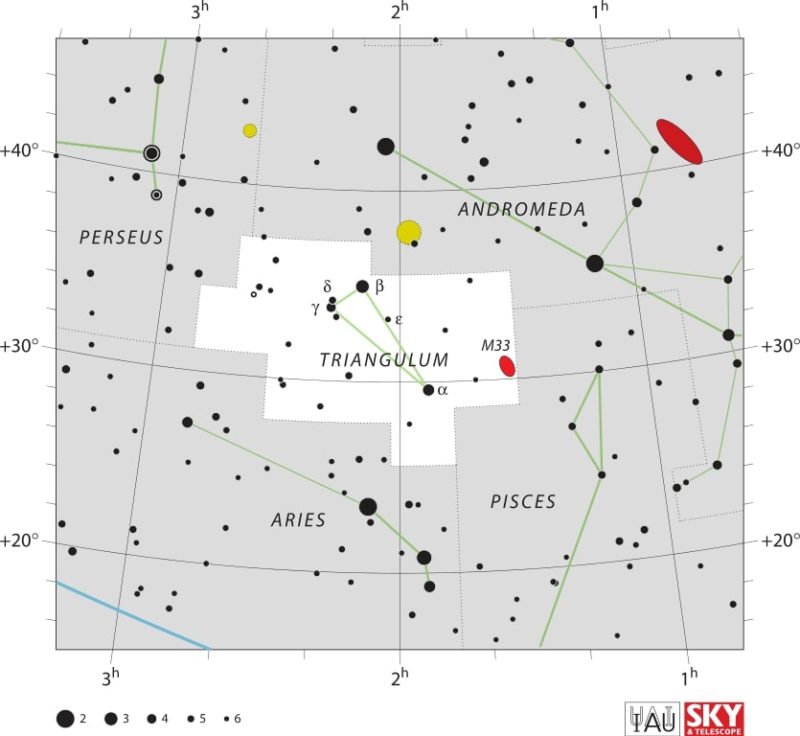
October 15: The Triangulum Galaxy at its highest point in the sky
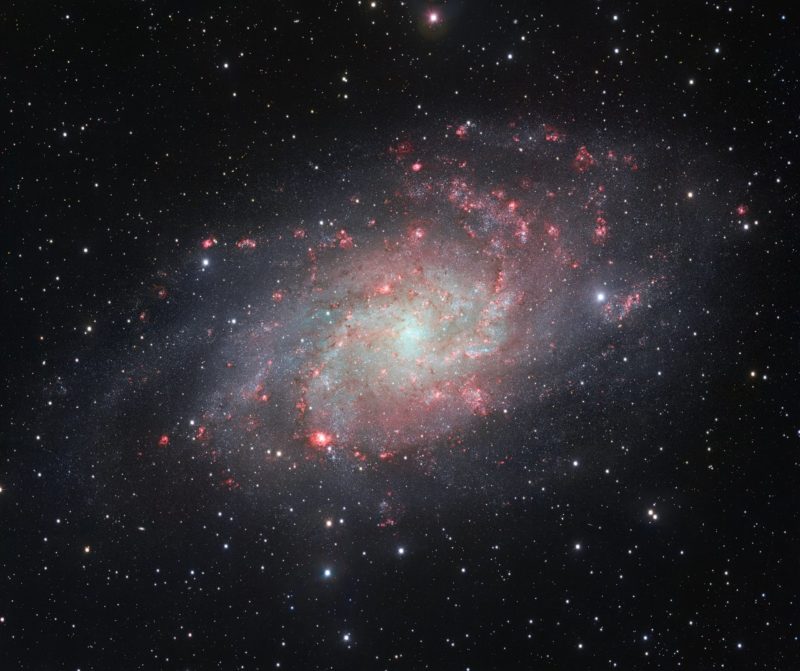
The Triangulum Galaxy (M33) at magnitude 5.8 will culminate around midnight local time. Under dark skies, it is easily seen with binoculars. It lies in the constellation of Triangulum.
The Moon will be 5 days old and 29% illuminated (waxing crescent).
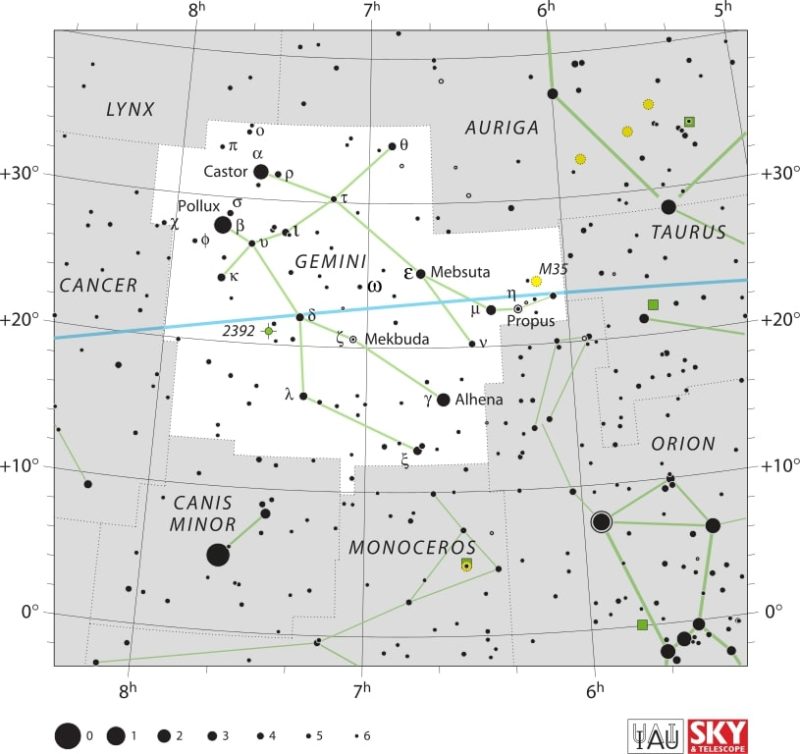
October 18: ε-Geminid meteor shower peak
The ε-Geminids reach their peak. This is a minor shower with ZHR about 3. The radiant is in Gemini. Meteors are very fast at about 70 km/s. The parent body is unknown.
The Moon will be 8 days old and 54% illuminated (waxing gibbous), so moonlight will present some interference.
October 18: Dwarf planet Eris at opposition
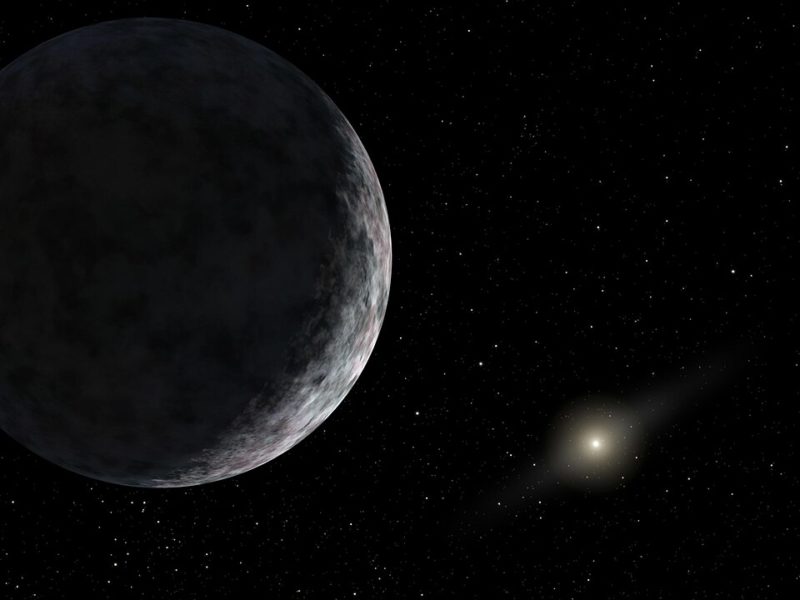
Dwarf planet Eris reaches opposition at magnitude 18.7 in the constellation of Cetus. (Constellation map already displayed above, when discussing Saturn at opposition on October 4.) At 96 AU from the Sun, Eris is one of the most distant known dwarf planets and is only visible in large professional telescopes.
October 22: Orionid meteor shower peak
The Orionids reach their peak. This is a reliable shower with ZHR about 15. The radiant is in Orion. Meteors are very fast at about 66 km/s. Activity extends from October 2 to November 7.
The Moon will be 11 days old and 81% illuminated (waxing gibbous), so its glare will interfere with viewing fainter meteors. The best viewing will be after moonset in the pre-dawn hours.
October 24: Conjunction of the Moon and Saturn
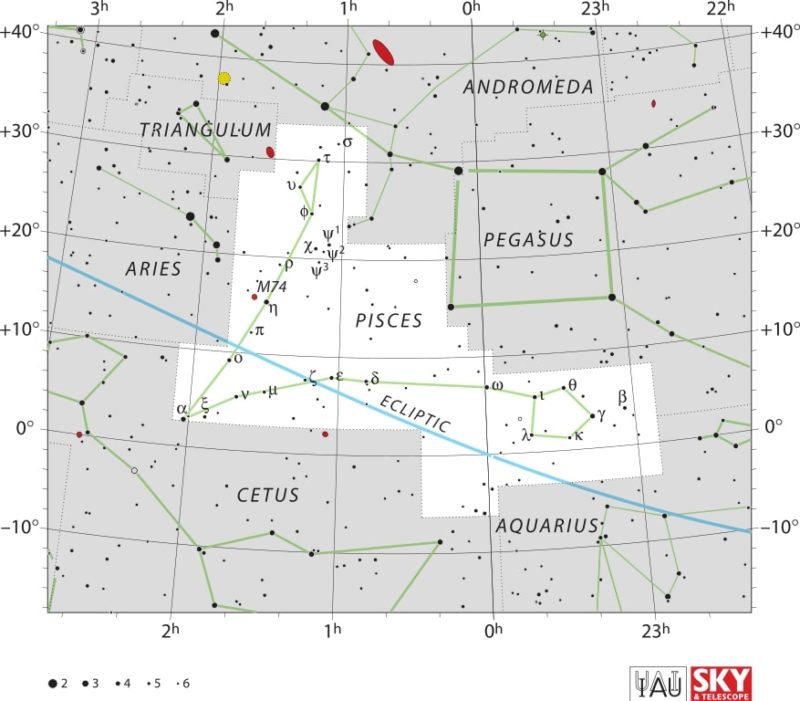
The Moon and Saturn will reach conjunction, with the Moon passing 6°47′ to the north of Saturn while sharing the same right ascension.
Around the same time, the two bodies will also make a close approach (appulse) reaching about 6°04′, but not sharing the same right ascension.
The Moon will be at magnitude -12.7 in the constellation of Pisces, and Saturn at magnitude 0.4 in the neighbouring constellation of Cetus. The Moon will be 14 days old and 98% illuminated (waxing gibbous), so its glare will interfere with stargazing.
October 24: Leonis Minorid meteor shower peak
The Leonis Minorids reach their peak. This is a minor shower with ZHR about 2. The radiant is in Leo Minor. Meteors are fast at about 62 km/s.
The Moon will be 14 days old and 98% illuminated (waxing gibbous), so its glare will interfere with stargazing this late October 2026.
October 27: Close approach of the Moon and Pleiades
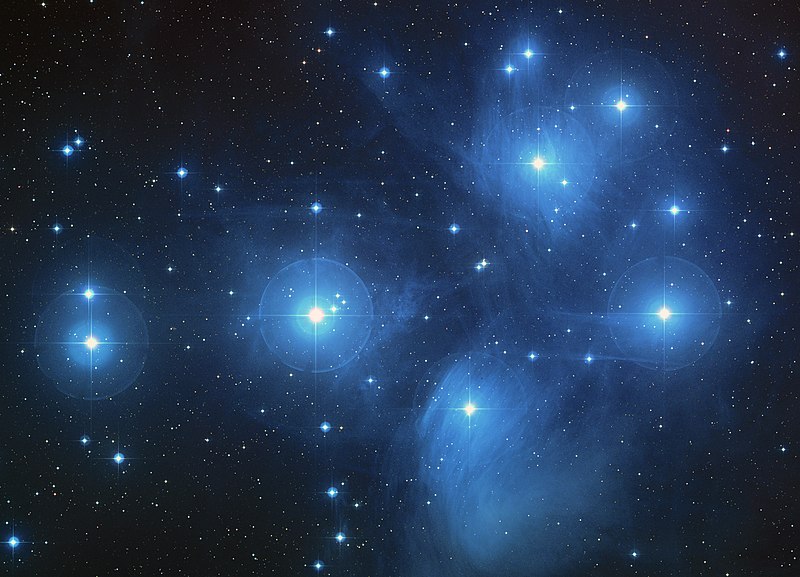
The Moon and M45 (the Pleiades) will make a close approach, passing within a mere 58.6 arcminutes of each other.
The Moon will be at magnitude -12.7, and M45 at magnitude 1.3. Both objects lie in the constellation of Taurus. (Constellation map already displayed above, when discussing the Southern Taurid meteor shower peak on October 10.) The Moon will be 17 days old and 93% illuminated (waning gibbous).
Positions of the Planets in September 2026
- Mercury: The closest planet to the Sun can be seen at dawn and dusk travelling across the constellation of Virgo and Libra. This planet, being the closest to the Sun, will appear to move quickly in the night sky and its position will change in the following weeks.
- Venus: The sister planet can be seen travelling across the constellation of Virgo. Just like Mercury, Venus can only be seen at dawn and dusk.
- Mars: The red planet can be seen in the constellation of Cancer.
- Jupiter: The gas giant is visible in the constellation of Leo. Jupiter can easily be spotted with the naked eye, even in highly illuminated cities.
- Saturn: The ringed giant can be seen with the naked eye in the constellation of Cetus.
- Uranus: The ice giant can be seen in the constellation of Taurus with the use of a telescope.
- Neptune: The blue giant requires a telescope pointed in the constellation of Pisces in order to be seen.
Positions of Dwarf Planets and Large Asteroids in September 2026
- Ceres: The asteroid belt’s lone dwarf planet can be seen in the constellation of Gemini with the help of a telescope.
- Vesta: This large asteroid can be seen in the constellation of Cetus with a telescope.
- Pallas: The asteroid can be observed with a telescope in the constellation of Cetus.
- Hygiea: The fourth largest asteroid can be found with a telescope in the constellation of Leo.
- Pluto: This distant dwarf planet can be found in the constellation of Capricornus with the help of a large telescope.
Major astronomical events next month – November 2026
- November 12: Comet 69P/Taylor at perihelion
- November 12: Northern Taurid meteor shower peak
- November 17: Leonid meteor shower peak
- November 21: α-Monocerotid meteor shower peak
- November 25: Uranus at opposition
- November 27: Comet 161P/Hartley-IRAS at perihelion
- November 28: November Orionid meteor shower peak
- November 30: Andromedid meteor shower peak
Conclusion
Stargazing this October 2026 promises an exciting month for fans of astronomy, with meteor showers, planetary encounters, and distant worlds reaching opposition. Get outside under dark skies and make the most of these spectacular celestial events.
To ensure you don’t miss out on any celestial happenings, sign up for our newsletter to receive stargazing calendars and more updates. Keep your telescopes ready and clear your calendar for these cosmic highlights!
Sources:
- Planetary ephemerides produced by NASA’s Jet Propulsion Laboratory (JPL)
- International Meteor Organization
See also:
- Previous month’s calendar: Stargazing Calendar for September 2026
Would you like to receive similar articles by email?

Paul Tomaszewski
Paul Tomaszewski is a science & tech writer as well as a programmer and entrepreneur. He is the founder and editor-in-chief of CosmoBC. He has a degree in computer science from John Abbott College, a bachelor's degree in technology from the Memorial University of Newfoundland, and completed some business and economics classes at Concordia University in Montreal. While in college he was the vice-president of the Astronomy Club. In his spare time he is an amateur astronomer and enjoys reading or watching science-fiction. You can follow him on LinkedIn and Twitter.


You May Also Like
Space Elevators in Fiction (Non-Rocket Spacelaunch)
Orion Constellation Guide