
Stargazing Calendar for November 2026
Stargazing in November 2026 brings a wide variety of celestial events for enthusiasts of astronomy, from close planetary pairings to dazzling meteor showers. This guide highlights the month’s best opportunities to explore the night sky.
Would you like to be notified of stargazing events?
List of Meteor Showers in November 2026
- Southern Taurids: Start on September 10; peak on October 10; end on November 20.
- Orionids: Start on October 2; peak on October 22; end on November 7.
- Northern Taurids: Start on October 20; peak on November 12; end on December 10.
- Leonids: Start on November 6; peak on November 17; end on November 30.
- α-Monocerotids: Start on November 15; peak on November 21; end on November 25.
- November Orionids: Start on November 13; peak on November 28; end on December 6.
- Andromedids: Start on November 25; peak on November 30; end on December 5.
- Phoenicids: Start on November 28; peak on December 2; end on December 9.
We also have a complete list of meteor showers for the entire year of 2026 here.
List of Planetary Conjunctions in November 2026
- Close approach of the Moon and the Beehive Cluster in Cancer on November 1.
- Conjunction of the Moon and Mars in Leo on November 2.
- Conjunction of the Moon and Jupiter in Leo on November 3.
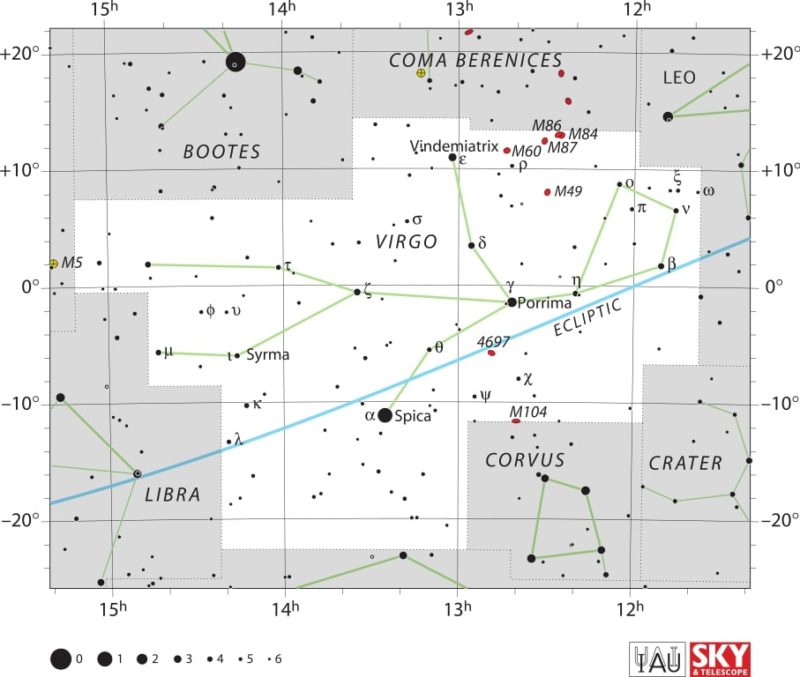
- Conjunction of the Moon and Venus in Virgo on November 7.
- Conjunction of Jupiter and Mars in Leo on November 15.
- Conjunction of the Moon and Saturn in Pisces and Cetus on November 21.
- Close approach of the Moon and the Pleiades in Taurus on November 24.
- Close approach of the Moon and the Beehive Cluster in Cancer on November 29.
- Conjunction of the Moon and Jupiter in Leo on November 30.
- Conjunction of the Moon and Mars in Leo on November 30.
November 1: Close approach of the Moon and the Beehive Cluster
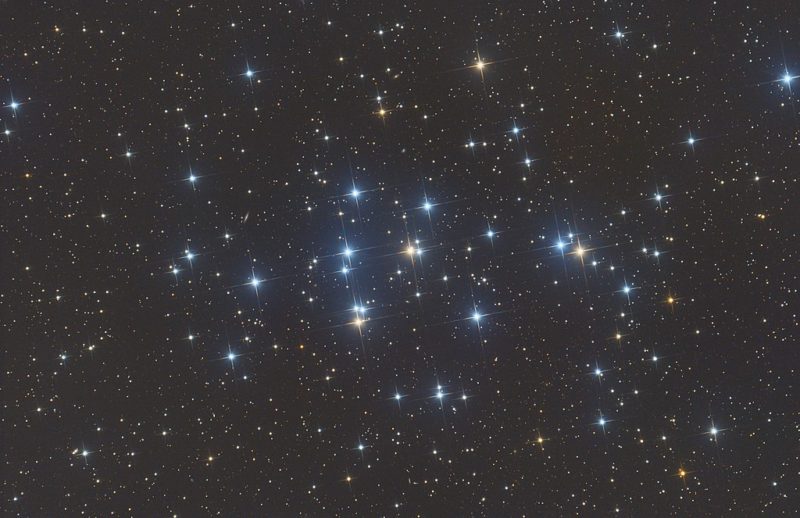
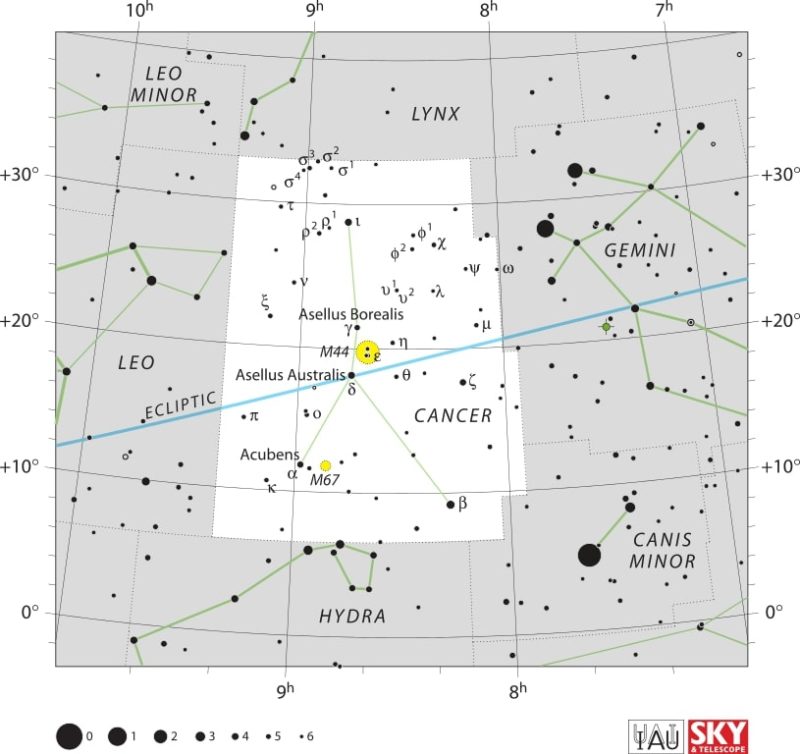
The Moon and the Beehive Cluster (M44) will make a close approach, passing within 23.1 arcminutes of each other.
The Moon will be at apparent magnitude -12.0; and M44 will be at magnitude 3.1. Both objects will lie in the constellation Cancer. They will be close enough to fit within the field of view of a telescope, but will also be visible through a pair of binoculars.
The Moon will be a 22-day-old waning crescent at 47% illumination.
November 2: Conjunction of the Moon and Mars
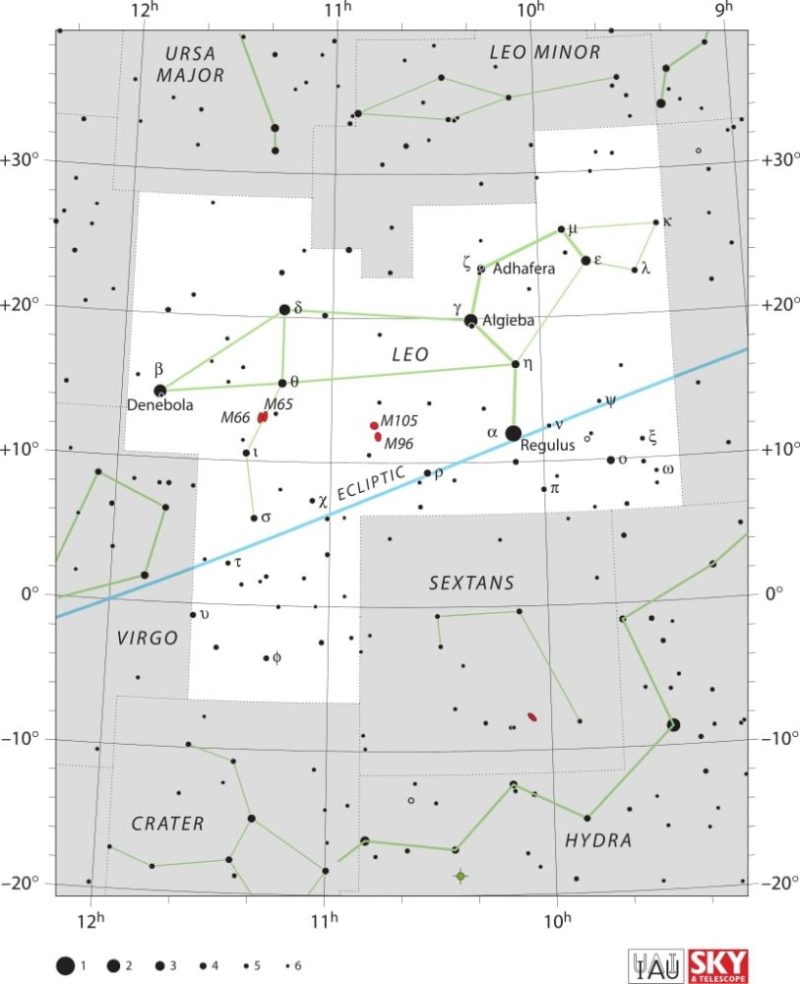
The Moon and Mars will reach conjunction passing within 1°03′ while sharing the same right ascension.
Around the same time, the two bodies will also make a close approach (appulse) reaching 58.0 arcminutes, but no longer sharing the same right ascension. A lunar occultation of Mars will also occur on this day, visible from French Polynesia, Cook Islands and Pitcairn.
The Moon will be at apparent magnitude -11.8, and Mars at mag 0.9, both in the constellation Leo. The Moon will be a 23-day-old waning crescent at 37% illumination. It won’t interfere much with stargazing.
November 3: Conjunction of the Moon and Jupiter
The Moon and Jupiter will reach conjunction passing within 31′ while sharing the same right ascension.
Around the same time, the two bodies will also make a close approach (appulse) reaching 29.1 arcminutes, but not sharing the same right ascension. A lunar occultation of Jupiter will also occur on this day, visible from parts of Australia, Indonesia, India and Malaysia amongst others.
The Moon will be at apparent magnitude -11.7, and Jupiter at mag -2.1, both in the constellation Leo. (Constellation map already displayed above, when discussing the conjunction of the Moon and Mars on November 2.) The Moon will be a 23-day-old waning crescent at 33% illumination.
November 7: Conjunction of the Moon and Venus
The Moon and Venus will reach conjunction passing within 1°03′ while sharing the same right ascension. A lunar occultation of Venus will also occur on this day, visible from Antarctica, Argentina, Chile and Falkland Islands.
The Moon will be at apparent magnitude -9.0, and Venus at magnitude -4.4, both in the constellation of Virgo. The Moon will be a 28-day-old waning crescent at 1% illumination. It won’t interfere much with stargazing this early November 2026.
November 12: Comet 69P/Taylor passes perihelion
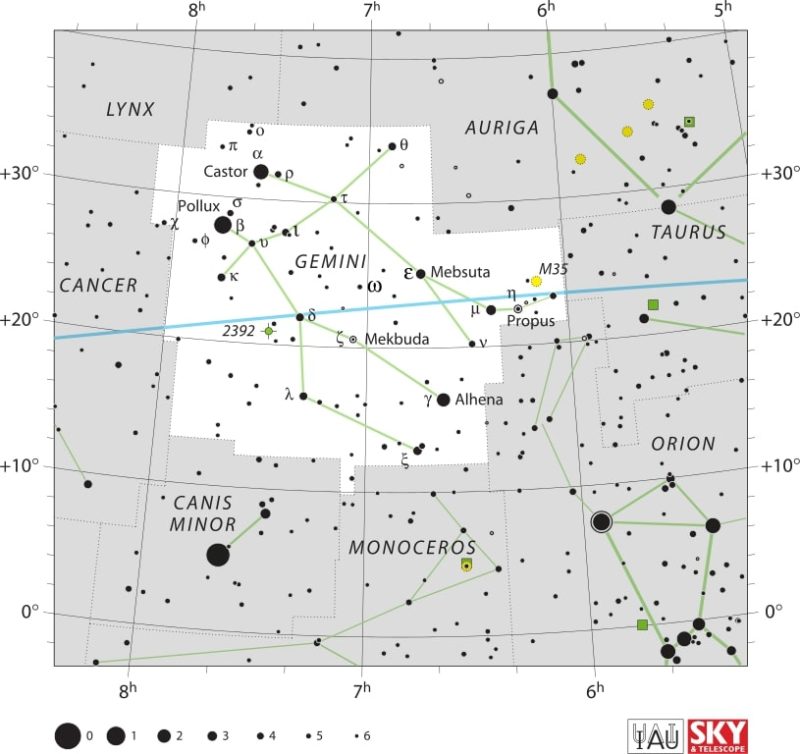
Comet 69P/Taylor will make its closest approach to the Sun on 12 November, at a distance of 2.27 AU. Based on magnitude parameters published by the BAA Comet Section, we estimate that it may be around mag 11.8. The comet will be in the constellation of Gemini. You will require a telescope to see this comet.
The Moon will be a 3-day-old waxing crescent at 12% illumination.
November 12: Northern Taurid meteor shower peak
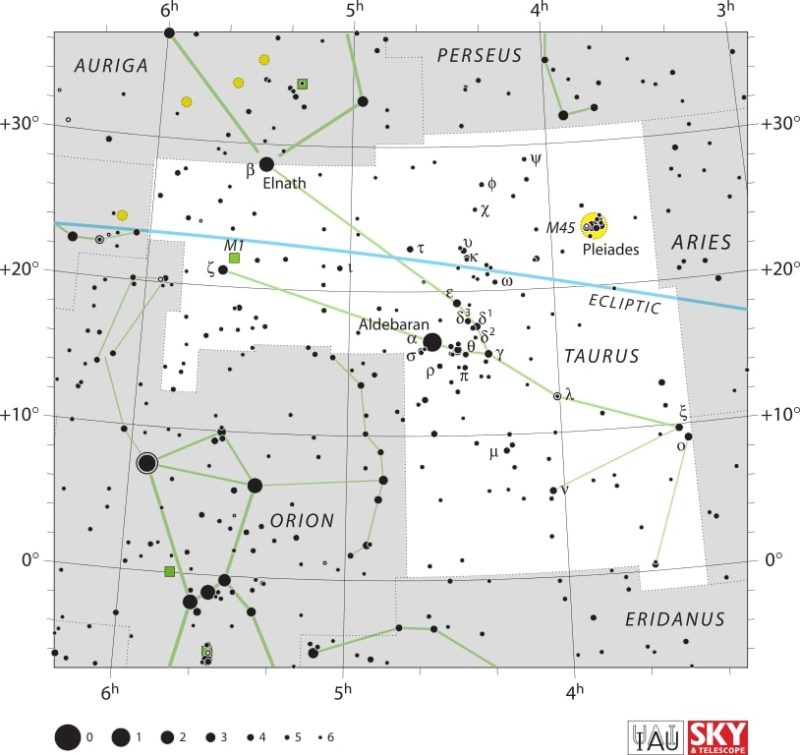
The Northern Taurids are a minor meteor shower active from 20 October to 10 December, producing its peak rate of meteors around 12 November. At its peak, the shower is expected to produce a nominal rate of around 5 meteors per hour (ZHR).
The radiant lies in the constellation Taurus. Meteors will strike the atmosphere at 29 km/s.
The Moon will be a 3-day-old waxing crescent at 12% illumination, so moonlight will present minimal interference—excellent news for observers.
November 15: Conjunction of Jupiter and Mars
Jupiter and Mars will reach conjunction passing within 1°14′ while sharing the same right ascension. Shortly after, the two bodies will also make a close approach (appulse) reaching 1°11′, but no longer sharing the same right ascension.
Jupiter will be at apparent magnitude -2.1, and Mars at mag 0.7, both in the constellation Leo. (Constellation map already displayed above, when discussing the conjunction of the Moon and Mars on November 2.) The Moon will be a 6-day-old waxing crescent at 32% illumination.
November 18: Leonid meteor shower peak
The Leonids are a major meteor shower active from 6 November to 30 November, producing its peak rate of meteors around 18 November. At its peak, the shower is expected to produce a nominal rate of around 15 meteors per hour (ZHR).
The radiant lies in the constellation of Leo. (Constellation map already displayed above, when discussing the conjunction of the Moon and Mars on November 2.) Meteors will strike the atmosphere at the high speed of 71 km/s.
The Moon will be a 9-day-old waxing gibbous at 60% illumination. Its glare will interfere somewhat with observations of the meteor shower.
November 18: The Pleiades at highest point in the sky
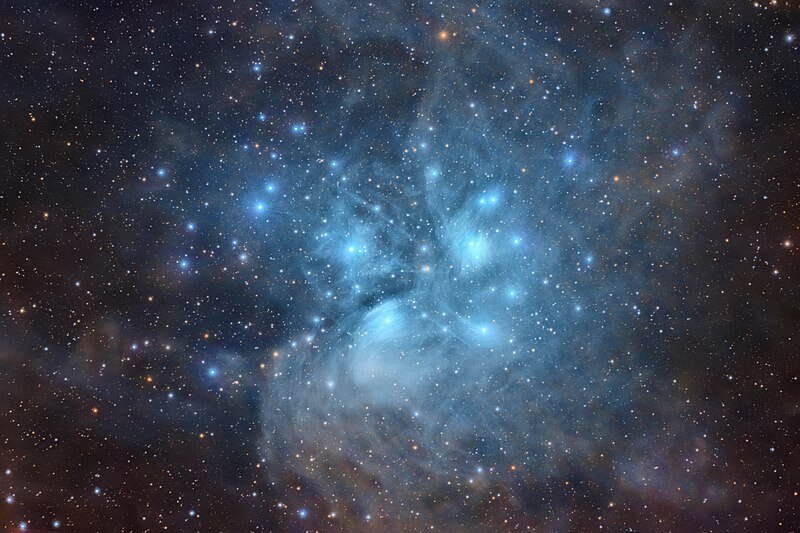
The Pleiades open star cluster (M45; mag 1.3) in Taurus will be well placed in the evening sky in coming weeks. (See featured image at the top. Constellation map already displayed above, when discussing the Northern Taurid meteor shower peak on November 12.) On 18 November it will reach its highest point in the sky at around midnight local time, and on subsequent evenings it will culminate four minutes earlier each day.
At magnitude 1.3, M45 is visible to the naked eye, but best viewed through a pair of binoculars. The Moon will be a 9-day-old waxing gibbous at 60% illumination. Its glare will interfere somewhat with observations of the cluster.
November 20: Mercury at greatest western elongation
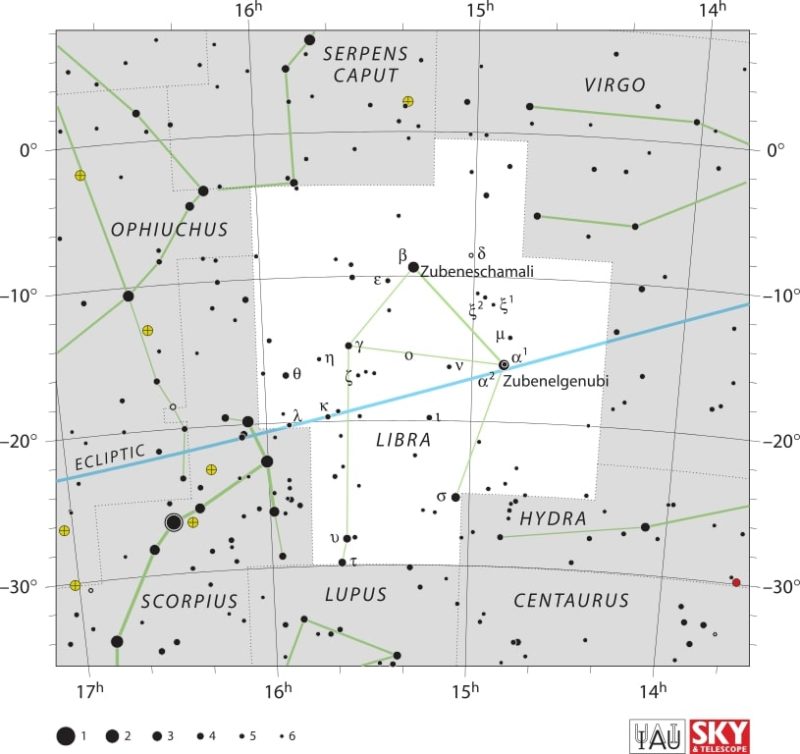
Mercury will reach its greatest separation west of the Sun on 20 November, shining at apparent magnitude -0.6 at an elongation of about 19° from the Sun. The planet will be well placed in the dawn sky in the constellation Libra.
The Moon will be a 12-day-old waxing gibbous at 86% illumination. Its glare will interfere with stargazing this late November 2026.
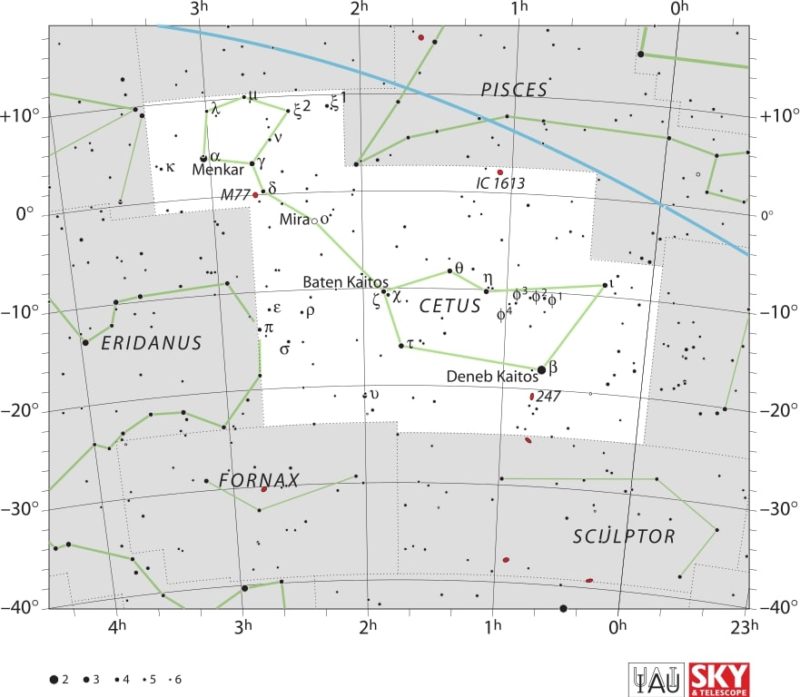
November 21: Conjunction of the Moon and Saturn
The Moon and Saturn will reach conjunction passing within 6°47′ while sharing the same right ascension.
At around the same time, the Moon and Saturn will make a close approach (appulse), passing within about 6°03′ of each other.
The Moon will be at apparent magnitude -12.5 in Pisces, and Saturn at mag 0.5 in neighbouring Cetus. The Moon will be a 12-day-old waxing gibbous at 87% illumination. Its glare will interfere somewhat with stargazing.
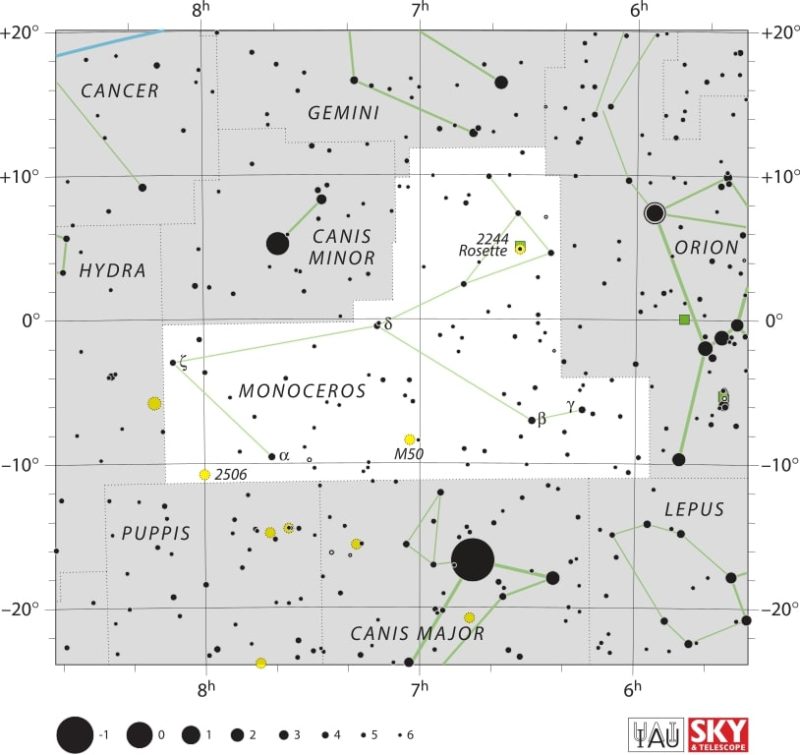
November 21: α-Monocerotid meteor shower peak
The Alpha Monocerotids are a variable meteor shower active from 15 November to 25 November, producing its peak rate of meteors around 21 November. The shower’s ZHR is typically low but can produce brief outbursts. The radiant lies in the constellation of Monoceros. Meteors strike the atmosphere at approximately 65 km/s.
The Moon will be a 12-day-old waxing gibbous at 92% illumination, presenting significant interference throughout the night.
November 24: Close approach of the Moon and Pleiades
The Moon and the Pleiades (M45) will make a close approach, passing within a mere 55.5 arcminutes of each other. (See featured image at the top.)
The Moon will be at mag -12.8; and M45 will be at mag 1.3. Both objects will lie in the constellation Taurus. (Constellation map already displayed above, when discussing the Northern Taurid meteor shower peak on November 12.) The Moon will be a 15-day-old waning gibbous at 99% illumination.
November 25: Uranus at opposition
Uranus will reach opposition—the optimal time to observe it—when it will be visible for much of the night in the constellation Taurus. (Constellation map already displayed above, when discussing the Northern Taurid meteor shower peak on November 12.) At the moment of opposition, Uranus will lie at a distance of 18.44 AU, and its disk will measure 3.8 arcsec in diameter, shining at magnitude 5.6.
The Moon will be a 17-day-old waning gibbous at 95% illumination. Its glare will interfere with observations of Uranus.
November 27: Venus at greatest brightness
Venus will reach its greatest brightness in its 2026–2027 morning apparition. It will be shining brightly at magnitude -4.7 in the constellation Virgo. (Constellation map already displayed above, when discussing the conjunction of the Moon and Venus on November 7.)
The Moon will be an 18-day-old waning gibbous at 83% illumination. Its glare will interfere with stargazing.
November 28: The Hyades cluster at its highest point in the sky

The Hyades open star cluster in Taurus will be well placed in the evening sky in coming weeks. (Constellation map already displayed above, when discussing the Northern Taurid meteor shower peak on November 12.) On 28 November it will reach its highest point in the sky at around midnight local time, and on subsequent evenings it will culminate four minutes earlier each day.
At magnitude 1.0, the Hyades cluster is visible to the naked eye, but best viewed through a pair of binoculars.
The Moon will be a 20-day-old waning gibbous at 71% illumination. Its glare will interfere somewhat with observations of the cluster.
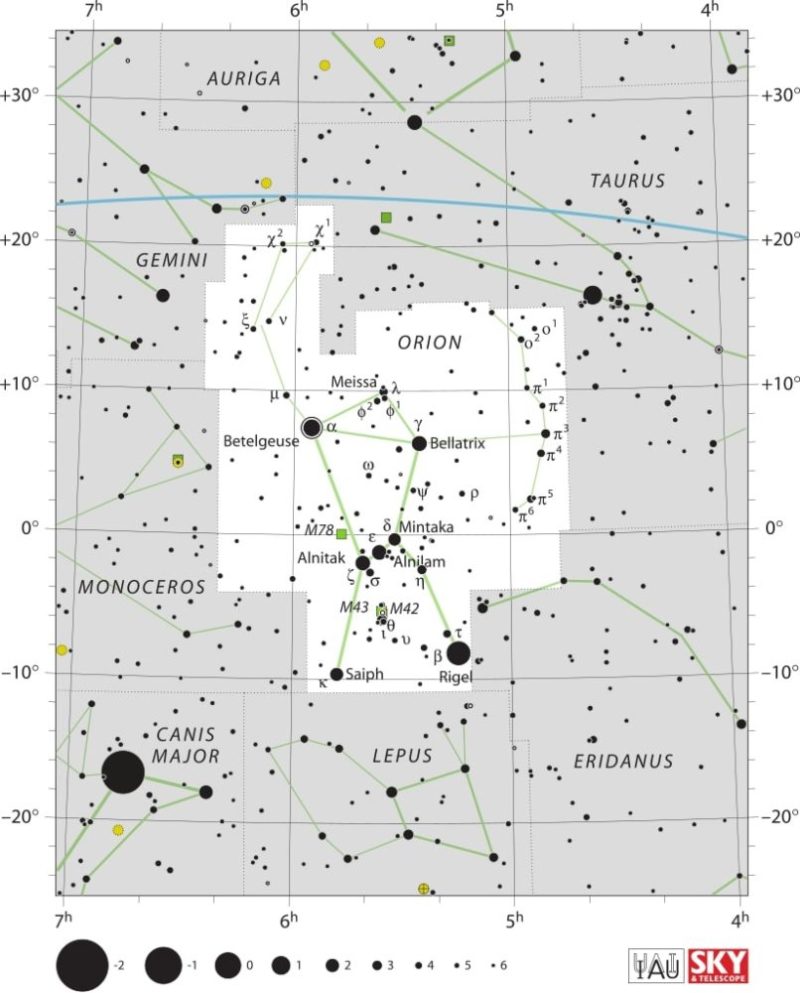
November 28: November Orionid meteor shower peak
The November Orionids are a minor meteor shower active from 13 November to 6 December, producing its peak rate of meteors around 28 November. At its peak, the shower is expected to produce a nominal rate of around 3 meteors per hour (ZHR). The radiant lies in the constellation of Orion. Meteors strike the atmosphere at approximately 44 km/s.
The Moon will be a 19-day-old waning gibbous at 74% illumination, presenting significant interference in the pre-dawn sky.
November 29: Close approach of the Moon and Beehive Cluster
The Moon and Beehive Cluster (M44) will make a close approach, passing within a mere 7.4 arcminutes of each other. (See image above when discussing the close approach of the Moon and the Beehive Cluster November 1.)
The Moon will be at mag -12.5; and M44 will be at magnitude 3.1. Both objects will lie in the constellation Cancer. (Constellation map already displayed above, when discussing the close approach of the Moon and the Beehive Cluster on November 1.) They will be close enough to fit within the field of view of a telescope, but will also be visible through a pair of binoculars.
The Moon will be a 20-day-old waning gibbous at 70% illumination. Its glare will interfere with stargazing.
November 30: Conjunction of the Moon and Jupiter
The Moon and Jupiter will reach conjunction passing within 1°09′ while sharing the same right ascension.
Around the same time, the two bodies will also make a close approach (appulse) reaching 1°03′, but not sharing the same right ascension. A lunar occultation of Jupiter will also occur on this day, visible from Argentina, Chile, Antarctica and Falkland Islands.
The Moon will be at mag -12.2, and Jupiter at mag -2.2, both in the constellation Leo. (Constellation map already displayed above, when discussing the conjunction of the Moon and Mars on November 2.) The Moon will be a 21-day-old waning gibbous at 55% illumination.
November 30: Conjunction of the Moon and Mars
The Moon and Mars will reach conjunction passing within 3°20′ while sharing the same right ascension. Around the same time, the two bodies will also make a close approach (appulse) reaching 2°59′, but not sharing the same right ascension.
The Moon will be at mag -12.1, and Mars at mag 0.5, both in the constellation Leo. (Constellation map already displayed above, when discussing the conjunction of the Moon and Mars on November 2.) The Moon will be a 22-day-old waning gibbous at 51% illumination.
November 30: Andromedid meteor shower peak
The Andromedids are a variable meteor shower. The shower is typically weak but has produced notable outbursts in past years. The radiant lies in the constellation of Andromeda. Meteors strike the atmosphere at approximately 18 km/s.
The Moon will be a 22-day-old waning gibbous at 51% illumination.
Positions of the Planets in November 2026
- Mercury: The closest planet to the Sun can be seen at dawn and dusk travelling across the constellation of Libra. This planet, being the closest to the Sun, will appear to move quickly in the night sky and its position will change in the following weeks.
- Venus: The sister planet can be seen travelling across the constellation of Virgo. Just like Mercury, Venus can only be seen at dawn and dusk.
- Mars: The red planet can be seen in the constellation of Leo.
- Jupiter: The gas giant is visible in the constellation of Leo. Jupiter can easily be spotted with the naked eye, even in highly illuminated cities.
- Saturn: The ringed giant can be seen with the naked eye in the constellation of Cetus.
- Uranus: The ice giant can be seen in the constellation of Taurus with the use of a telescope.
- Neptune: The blue giant requires a telescope pointed in the constellation of Pisces in order to be seen.
Positions of Dwarf Planets and Large Asteroids in November 2026
- Ceres: The asteroid belt’s lone dwarf planet can be seen in the constellation of Gemini with the help of a telescope.
- Vesta: This large asteroid can be seen in the constellation of Cetus with a telescope.
- Pallas: The asteroid can be observed with a telescope in the constellation of Cetus.
- Hygiea: The fourth largest asteroid can be found with a telescope in the constellation of Leo.
- Pluto: This distant dwarf planet can be found in the constellation of Capricornus with the help of a large telescope.
Major astronomical events next month
- December 2: Pheonicid meteor shower peak
- December 6: December φ-Cassiopeid meteor shower peak
- December 7: Puppid-Velid meteor shower peak
- December 8: Monocerotid meteor shower peak
- December 11: σ-Hydrid meteor shower peak
- December 12: λ-Sculptorid meteor shower peak
- December 14: Geminid meteor shower peak
- December 16: Comae Berenicid meteor shower peak
- December 20: December Leonis Minorid meteor shower peak
- December 21: December solstice
- December 22: Ursid meteor shower peak
Conclusion
Stargazing this November 2026 promises an exciting month for fans of astronomy, with meteor showers, planetary encounters, and distant worlds reaching opposition. Get outside under dark skies and make the most of these spectacular celestial events.
To ensure you don’t miss out on any celestial happenings, sign up for our newsletter to receive stargazing calendars and more updates. Keep your telescopes ready and clear your calendar for these cosmic highlights!
Sources
See also
- Previous month’s calendar: Stargazing Calendar for October 2026
Would you like to receive similar articles by email?

Paul Tomaszewski
Paul Tomaszewski is a science & tech writer as well as a programmer and entrepreneur. He is the founder and editor-in-chief of CosmoBC. He has a degree in computer science from John Abbott College, a bachelor's degree in technology from the Memorial University of Newfoundland, and completed some business and economics classes at Concordia University in Montreal. While in college he was the vice-president of the Astronomy Club. In his spare time he is an amateur astronomer and enjoys reading or watching science-fiction. You can follow him on LinkedIn and Twitter.

You May Also Like
Artemis I Launch a Great Success, According to NASA Engineer Kristine Ramos
What Is the Hubble Volume?
