Stargazing Calendar for April 2026
April brings an exciting lineup of celestial events for skywatchers of all levels, from bright planetary pairings to distant deep-sky objects. Whether you’re planning casual viewing or dedicated observing sessions, stargazing this April 2026 offers a great chance to experience the wonders of astronomy throughout the month.
Would you like to be notified of stargazing events?
List of Meteor Showers in April 2026
- Antihelion Source: Start on December 10; multiple peaks; end September 10.
- Lyrids: Start on April 16; peak on April 22; end on April 25.
- π-Puppids: Start on April 15; peak on April 23; end on April 28.
- η-Aquariids: Start on April 19; peak on May 5; end on May 28.
We also have a complete list of meteor showers for the entire year of 2026 here.
List of Planetary Conjunctions in April 2026
- Conjunction of Venus and Ceres in Aries and Cetus on April 8.
- Conjunction of Mars and Neptune in Pisces on April 13.
- Conjunction of the Moon and Mercury in Pisces on April 15.
- Conjunction of the Moon and Mars in Pisces on April 16.
- Conjunction of the Moon and Saturn in Pisces and Cetus on April 16.
- Conjunction of Mercury and Neptune in Pisces on April 16.
- Conjunction of the Moon and Venus in Aries and Taurus on April 19.
- Close approach of the Moon and the Pleiades in Taurus on April 19.
- Conjunction of Mercury and Mars in Cetus on April 20.
- Conjunction of Mercury and Saturn in Cetus on April 20.
- Conjunction of Saturn and Mars in Cetus on April 20.
- Conjunction of the Moon and Jupiter in Gemini on April 22.
- Conjunction of Venus and Uranus in Taurus on April 24.
- Close approach of the Moon and Beehive Cluster in Cancer on April 24.
Moon Phases in April 2026
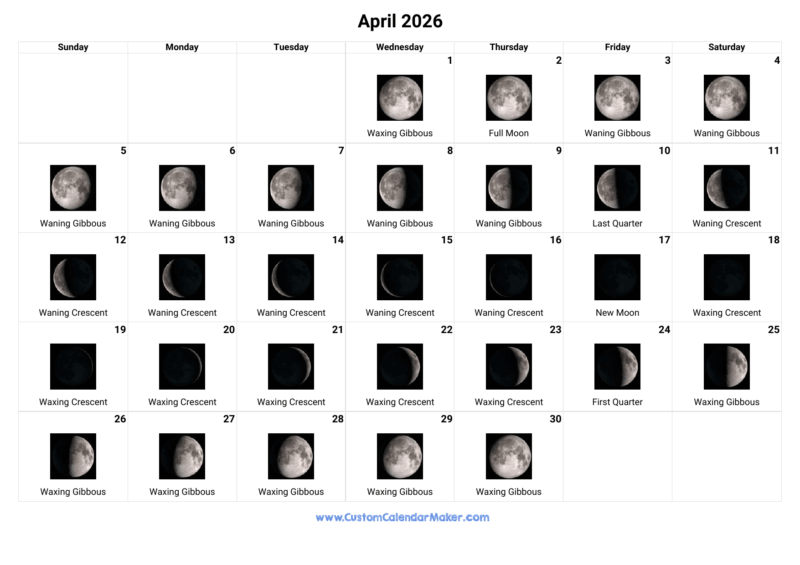
As you know, the Moon has a big impact on the visibility of celestial bodies and astronomical events in the night sky. So to help you with stargazing, here’s a calendar of the phases of Moon for this month of April 2026:
April 1: Dwarf planet Makemake at opposition
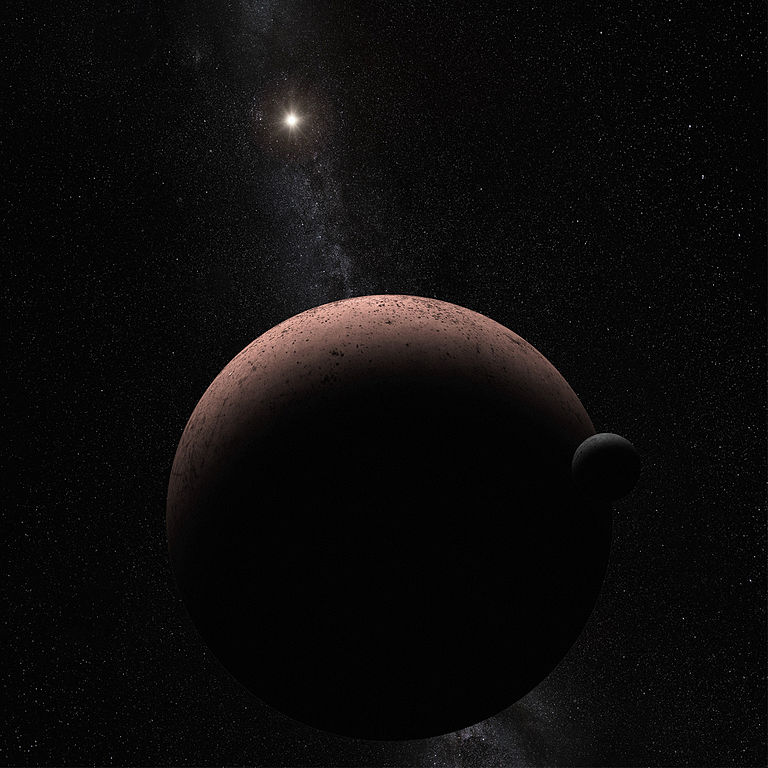
At about midnight local time, the dwarf planet Makemake (minor-planet designation of 136472 Makemake) will reach the highest point in the sky and be opposite of the Sun. (See featured image at the top of the article.)
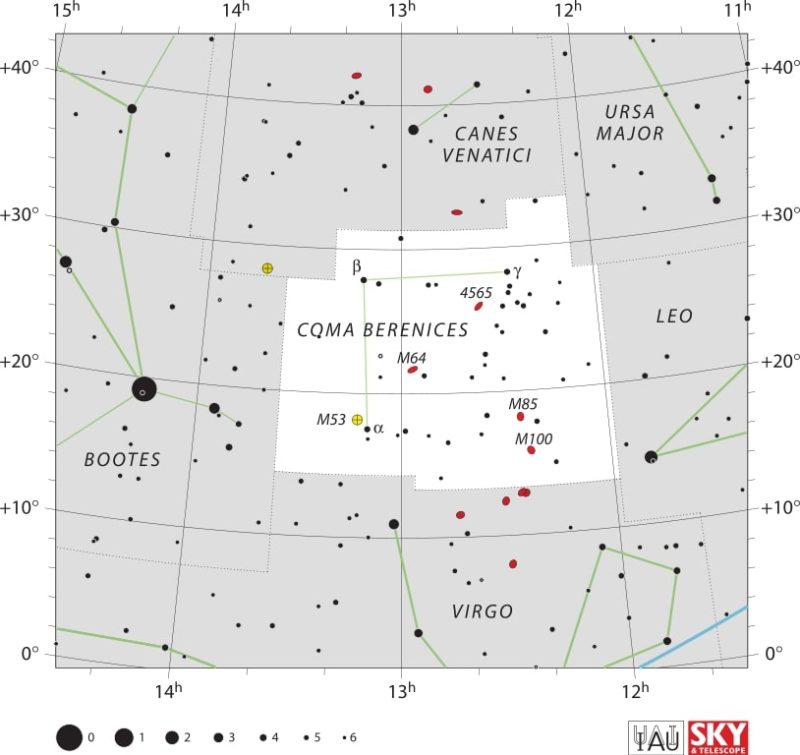
Look in the constellation of Coma Berenices with a large telescope, as it will have an apparent magnitude of 17. At around the same time Makemake will also reach its closest point to the Earth (perigee) at a distance of 51.84 AU. Unfortunately the Moon will be interfering with stargazing this early April 2026 as it will be 13 days old waxing gibbous at 99%.
April 2: The Sombrero Galaxy at its highest point in the sky
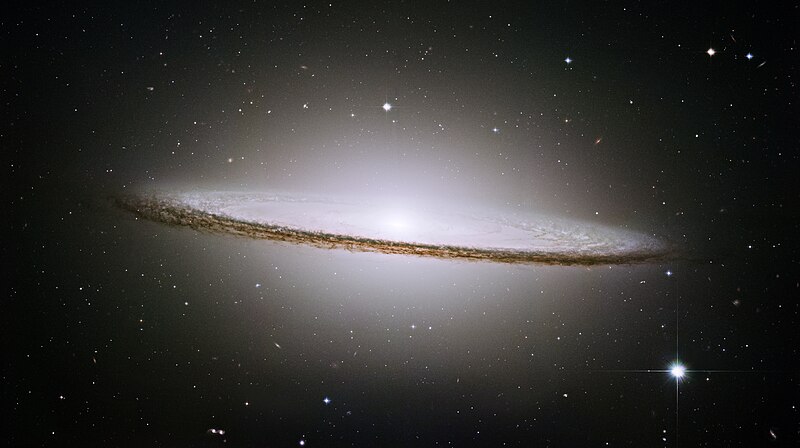
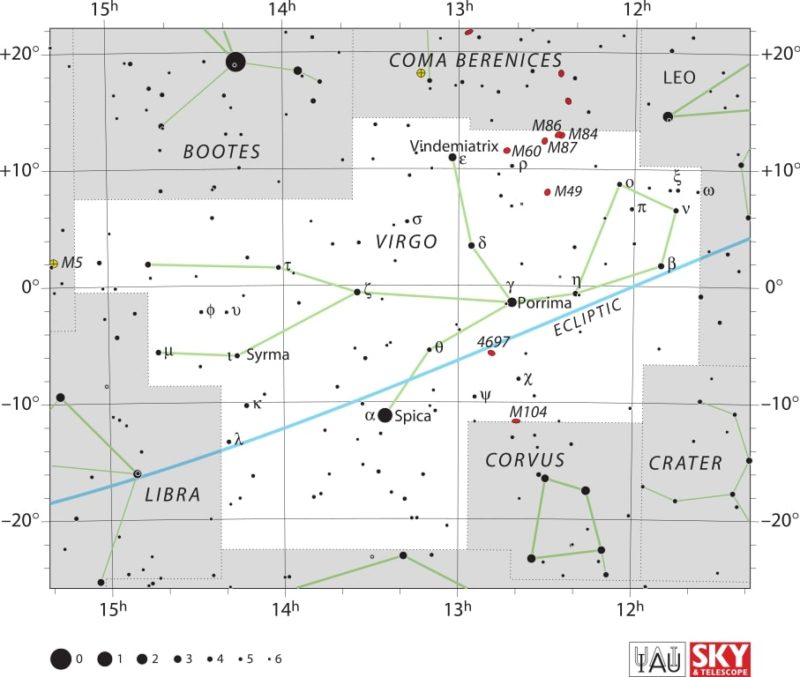
The Sombrero Galaxy, also known as Messier 104 (M104) or NGC 4594, is a peculiar galaxy of unclear classification located in the constellation of Virgo. It gets its name from its distinctive appearance resembling a Mexican hat, with a prominent central bulge surrounded by a flat, disk-like structure of stars, dust, and gas.
The galaxy will reach its highest point in the sky at around midnight local time. It will reach apparent magnitude of 8.6, which means it will require at large telescope to be able to distinguish the bulge from the disk. The Moon will be at full moon phase.
April 3: Mercury at greatest western elongation
Mercury will be at its highest point above the horizon in the morning sky, making it the best time to view the planet. Look for it low in the eastern sky just before sunrise.
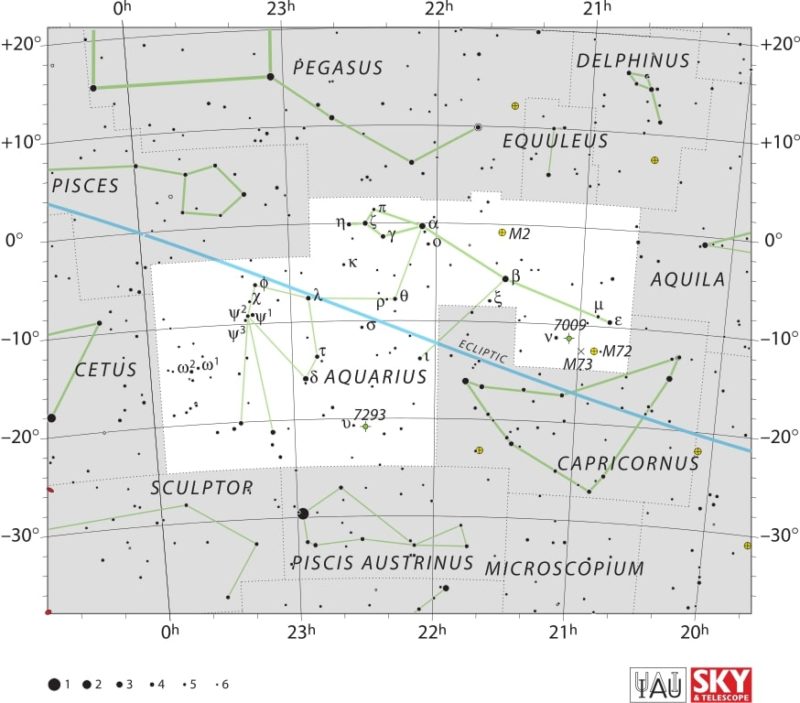
It will be at apparent magnitude 0.2 in the constellation of Aquarius. The Moon will be 16 days old, waning gibbous at 94%.
April 4: Comet C/2026 A1 (MAPS) at perihelion
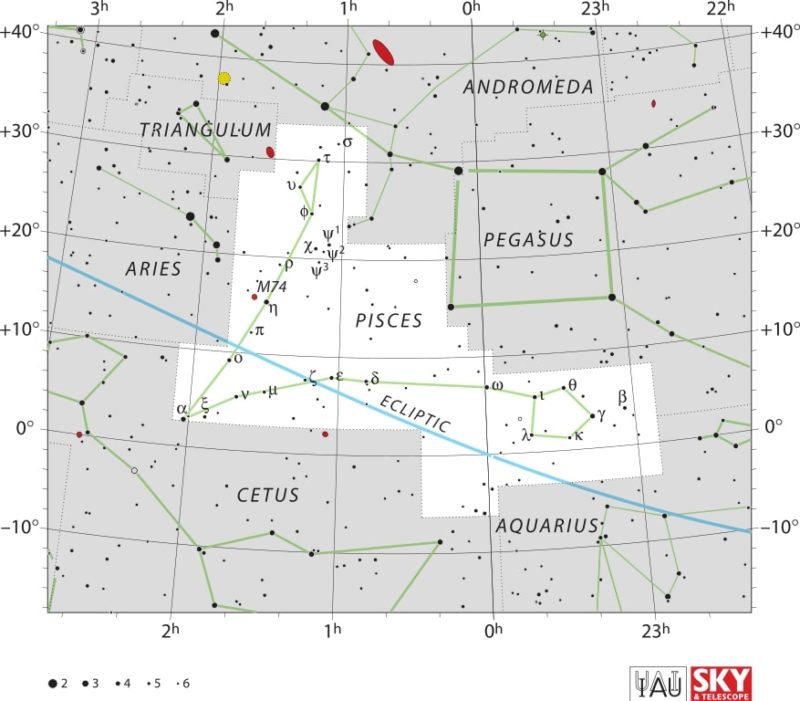
The comet C/2026 A1 (MAPS) will reach perihelion, meaning it will reach the closest point in its orbit to the Sun at a distance of only 0.02 AU. It will have an apparent magnitude of -32.6 and will be located in the constellation of Pisces. Be careful to not look directly at the Sun and especially not to point a telescope at it. This is very dangerous to your eyes and may result in permanent eye damage. The Moon will be a 16 days old waning gibbous at 90%.
April 6: The Jewel Box cluster at its highest point in the sky
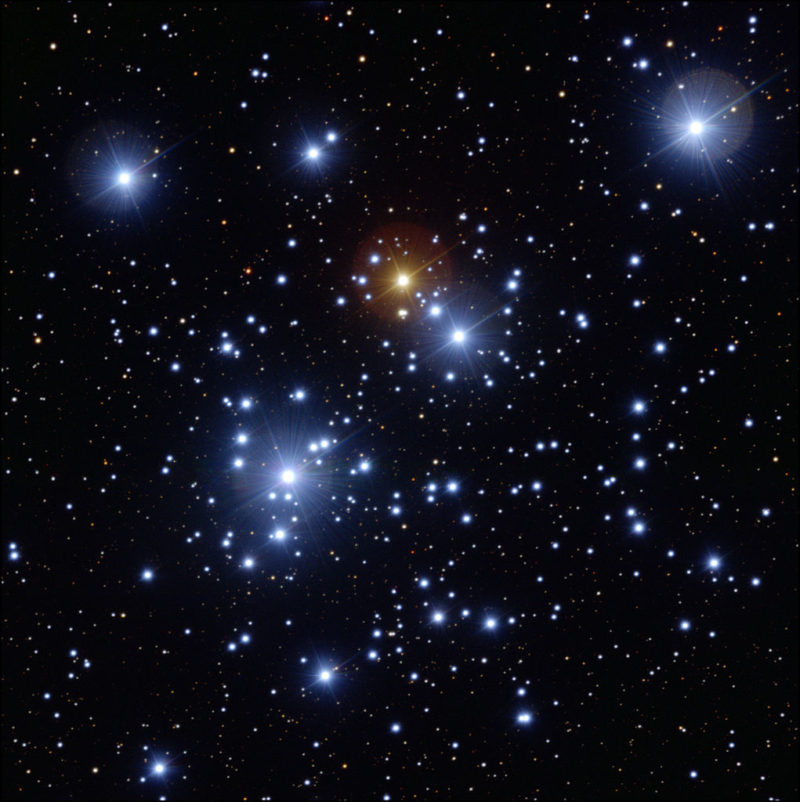
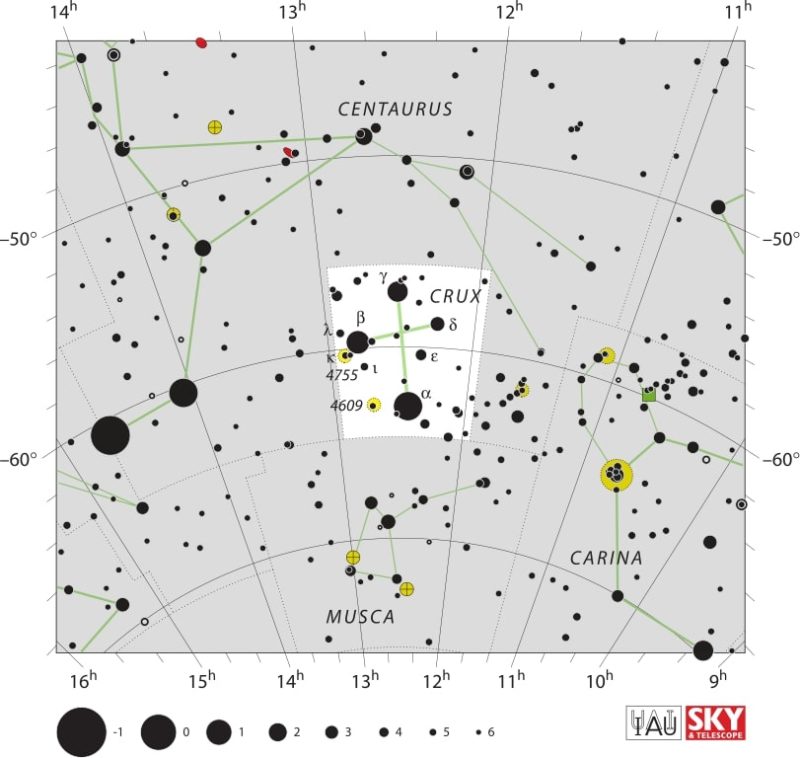
The Jewel Box, also known as NGC 4755, is a famous open star cluster located in the southern constellation of Crux (the Southern Cross). It was discovered by the French astronomer Abbé Nicolas Louis de Lacaille in the mid-18th century. It was later named the Jewel Box by John Herschel due to its bright and colorful stars, which give it a jewel-like appearance. The Jewel Box contains approximately 100 stars, with many of them being young, hot, and massive.
The cluster will reach its highest point in the sky at around midnight local time. It will reach apparent magnitude 4.2, which means it will be very difficult to spot with the naked eye, so a pair of binoculars or a small telescope is recommended for optimal viewing. The Moon will be an 18 days old waning gibbous at 81%. Keep in mind that this cluster is not visible to those of us in the Northern Hemisphere, as Crux is a southern constellation.
April 6: Comet C/2026 A1 (MAPS) at perigee
The comet C/2026 A1 (MAPS) will reach perigee, meaning it will reach the closest point in its orbit to the Earth at a distance of 0.96 AU. It will have an apparent magnitude of -10.0 and will be in the constellation of Pisces. (Constellation map already displayed above, when discussing the comet C/2026 A1 (MAPS) at perihelion on April 4.) The Moon will be an 18 days old waning gibbous at 81%.
April 8: Conjunction of Venus and Ceres
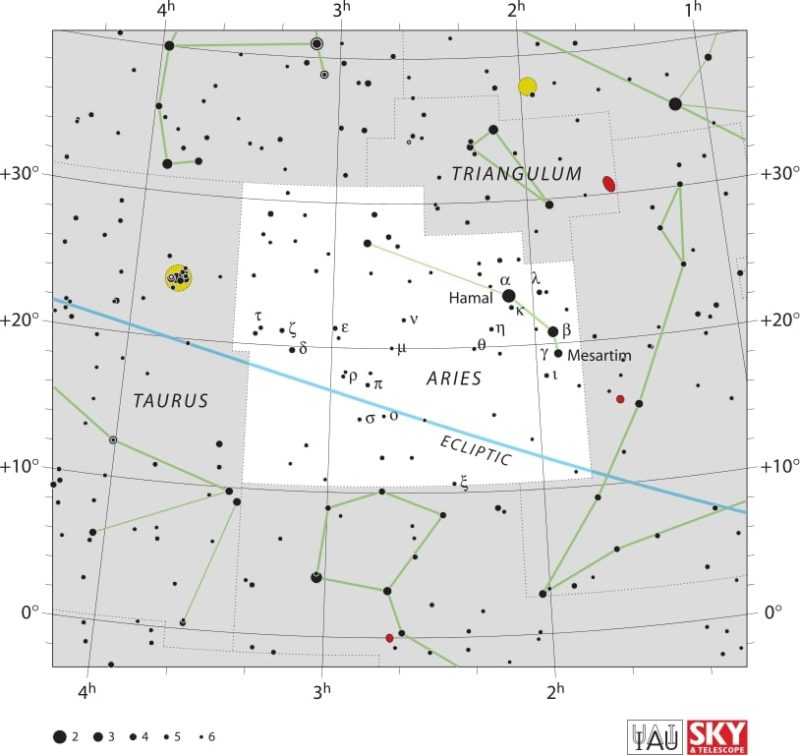
Venus and dwarf planet Ceres will reach conjunction passing within 4°35′ of each other while sharing the same right ascension.
Venus will be at apparent magnitude -3.9 in the constellation of Aries and Ceres at magnitude 9.0 in Cetus. The two bodies will be too widely separated to fit within the field of view of a telescope, but will fit with binoculars. The Moon will be an 20 days old waning gibbous at 59%.
April 13: Conjunction of Mars and Neptune
Mars and Neptune will be at conjunction by sharing the same right ascension and passing within 20′ of each other.
The two planets will meet in the constellation of Pisces with an apparent magnitude of 1.2 for Mars and 8.0 for Neptune. (Constellation map already displayed above, when discussing the comet C/2026 A1 (MAPS) at perihelion on April 4.) The Moon will be an 25 days old waning crescent at 15%.
April 15: Whirlpool Galaxy at its highest point in the sky
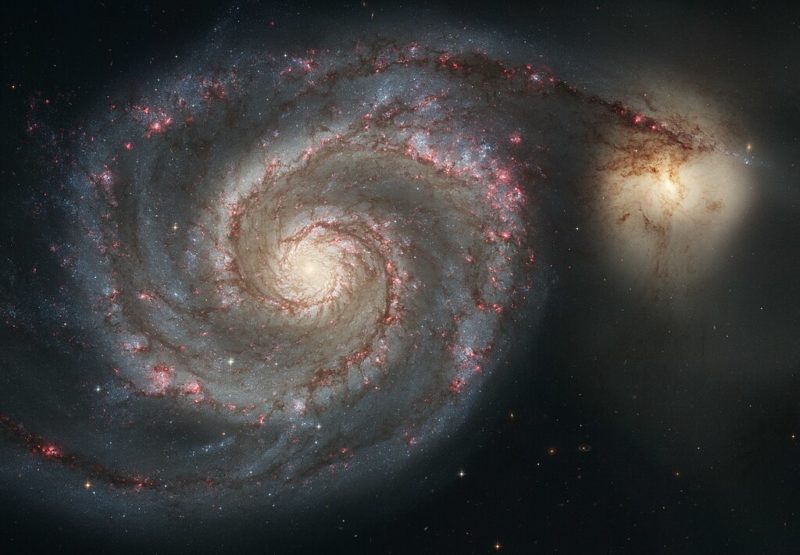
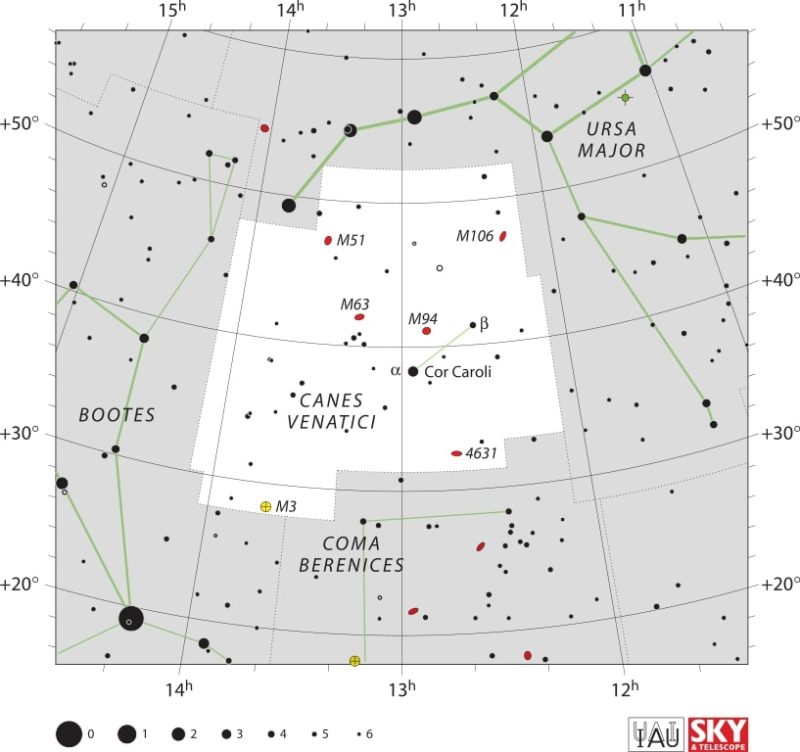
The Whirlpool Galaxy, also known as Messier 51 (M51) or NGC 5194, is a famous spiral galaxy located in the constellation Canes Venatici. It is one of the most recognizable and studied galaxies in the night sky.
The galaxy will reach its highest point in the sky at around midnight local time. It will reach apparent magnitude 8.4, which means you need at least a four inch telescope. The Moon will be an 27 days old waning crescent at 5% and won’t interfere much with stargazing in this middle of April 2026.
April 15: Conjunction of the Moon and Mercury
The Moon and Mercury will be at conjunction by sharing the same right ascension and passing within 5°12′ of each other.
You can find both celestial bodies in the constellation of Pisces, with the Moon at apparent magnitude -9.2 and Mercury at apparent magnitude -0.1. (Constellation map already displayed above, when discussing the comet C/2026 A1 (MAPS) at perihelion on April 4.) The Moon will be an 28 days old waning crescent at 1%.
Mars, Saturn, and Neptune are also nearby waiting for their own conjunctions.
April 16: Conjunction of the Moon and Mars
The Moon and Mars will be at conjunction by sharing the same right ascension and passing within 3°42′ of each other.
Look for the two bodies in the constellation of Pisces. The Moon will be at apparent magnitude of -8.9, while Mars will be at magnitude 1.2. (Constellation map already displayed above, when discussing the comet C/2026 A1 (MAPS) at perihelion on April 4.) The Moon will be an 29 days old waning crescent at less than 1%.
April 16: Conjunction of the Moon and Saturn
The Moon and Saturn will reach conjunction passing within 4°38′ of each other while sharing the same right ascension.
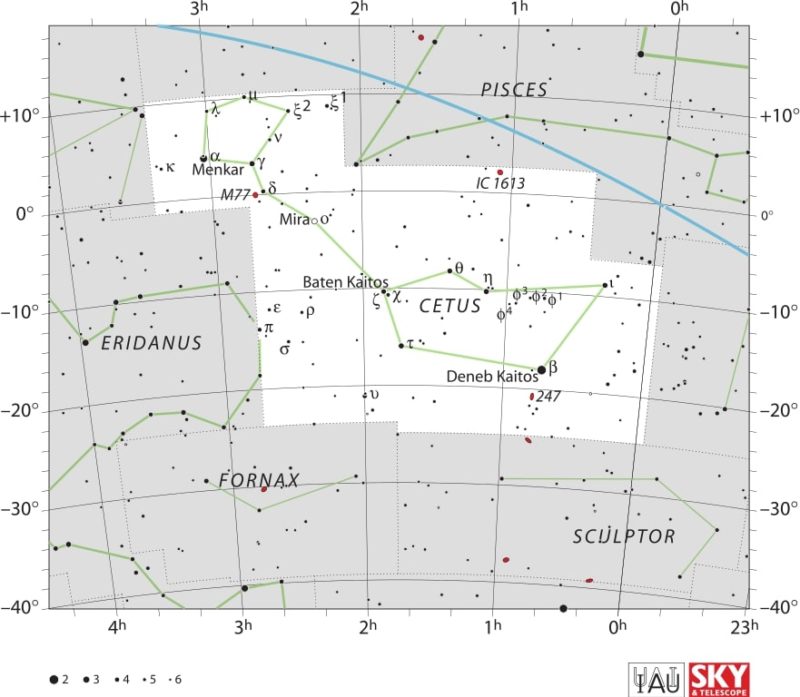
The Moon will be at apparent magnitude -8.6 in the constellation of Pisces and Saturn at magnitude 0.8 in the neighbouring constellation of Cetus.
April 16: Conjunction of Mercury and Neptune
Mercury and Neptune will reach conjunction passing within 1°25′ of each other while sharing the same right ascension.
Mercury will be at apparent magnitude -0.1 and Neptune at magnitude 8.0 both in the constellation of Pisces. (Constellation map already displayed above, when discussing the comet C/2026 A1 (MAPS) at perihelion on April 4.)
April 19: Conjunction of the Moon and Venus
The Moon and Venus will be at conjunction by sharing the same right ascension and passing within 4°45′ of each other.
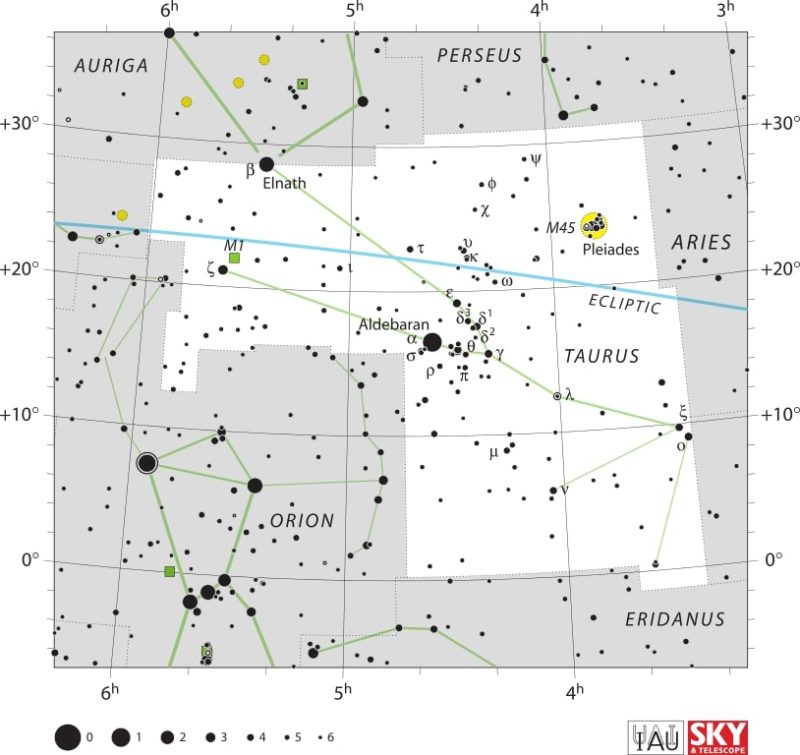
The Moon will be a 2 day old, very thin waxing crescent at 7%. Despite this, the Moon will still be at apparent magnitude of -9.6 in the constellation of Aries, while Venus will be at magnitude -3.9 in the neighbouring constellation of Taurus.
April 19: Comet C/2025 R3 (PANSTARRS) at perihelion
The comet C/2025 R3 (PANSTARRS) will reach perihelion, meaning it will reach the closest point in its orbit to the Sun at a distance of 0.50 AU. It will have an apparent magnitude of 0.2, which means it will be visible to the naked eye with precautions. Look in the constellation of Pisces. (Constellation map already displayed above, when discussing the comet C/2026 A1 (MAPS) at perihelion on April 4.) The Moon will be 2 days old or waxing crescent at 7%.
April 19: Close approach of the Moon and the Pleiades
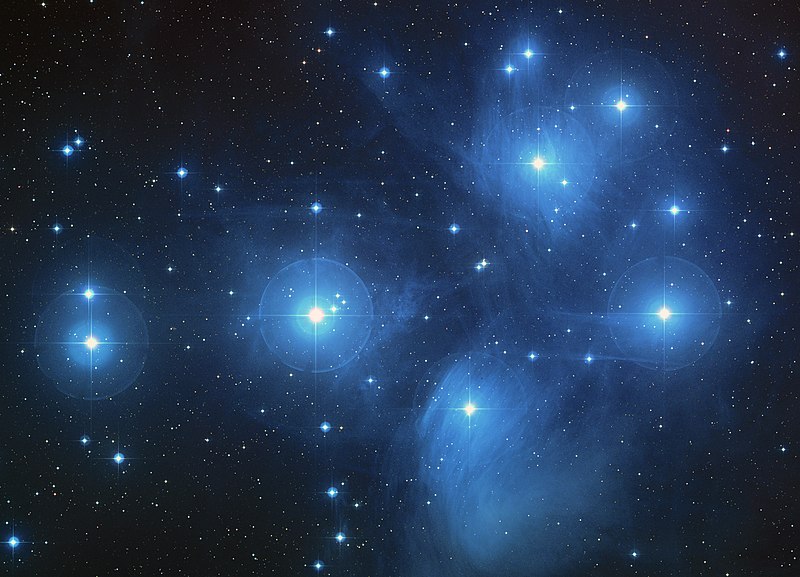
The Moon and the Pleiades star cluster (M45) will make a close approach or appulse, by passing within 1°00′ of each other. This will happen in the constellation of Taurus. (Constellation map already displayed above, when discussing the conjunction of the Moon and Venus on April 19.)
You can observe this astronomical event with the naked eye because the Moon will be at apparent magnitude -9.9 and M45 at 1.3. The Moon will be 2 days old or waxing crescent at 7%.
April 20: Conjunction of Mercury and Mars
Mercury and Mars will pass within 1°48′ of each other while sharing the same right ascension, in what is called a conjunction.
Both planets will be visible in the constellation of Cetus, with the Mercury at apparent magnitude -0.2, and Mars at 1.2. (Constellation map already displayed above, when discussing the conjunction of the Moon and Saturn on April 16.) The Moon will be 3 days old or waxing crescent at 12%.
Saturn is also nearby waiting for its own conjunction.
April 20: Conjunction of Mercury and Saturn
Mercury and Saturn will reach conjunction passing within 30′ of each other while sharing the same right ascension.
Around the same time, the two bodies will also make a close approach (appulse) reaching 27.6 arcminutes, but no longer sharing the same right ascension.
Mercury will be at apparent magnitude -0.2 and Saturn at magnitude 0.8 both in the constellation of Cetus. (Constellation map already displayed above, when discussing the conjunction of the Moon and Saturn on April 16.) The Moon will be 3 days old or waxing crescent at 12%.
April 20: Conjunction of Saturn and Mars
Saturn and Mars will be at conjunction by sharing the same right ascension and passing within 1°18′ of each other.
The two planets will meet in the constellation of Cetus with an apparent magnitude of 0.8 for Saturn and 1.2 for Mars. (Constellation map already displayed above, when discussing the conjunction of the Moon and Saturn on April 16.) The Moon will be 3 days old or waxing crescent at 12%.
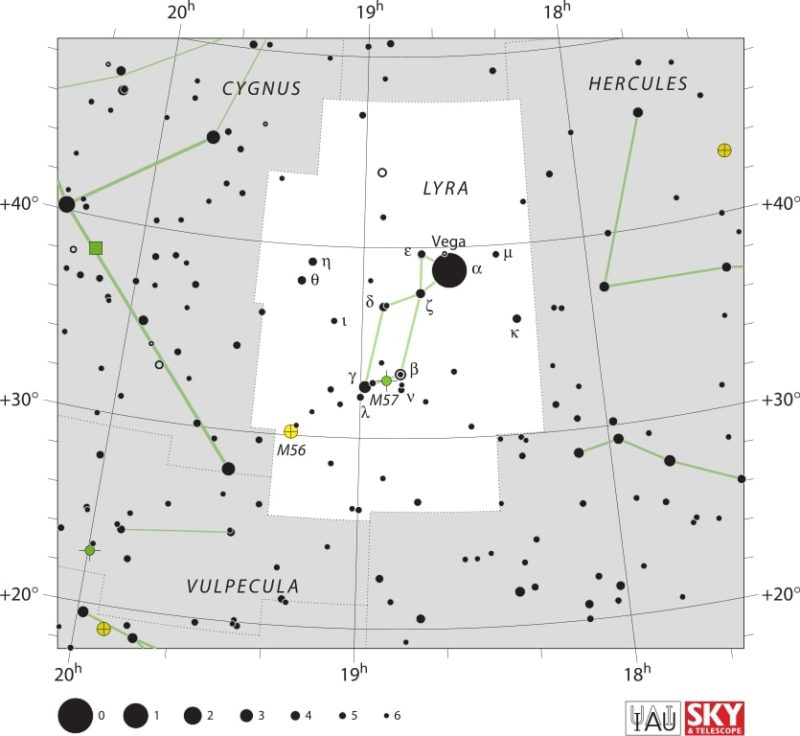
April 22: Lyrid meteor shower peak
The Lyrids will peak this April 2026 with a zenithal hourly rate of 18 meteors if stargazing conditions are optimal.
Some meteors may also be spotted between April 16 and April 25. They will radiate from the constellation of Lyra but near Hercules, at the speed of 49 km/s on average. The Moon will be 5 days old or waxing crescent at 42%.
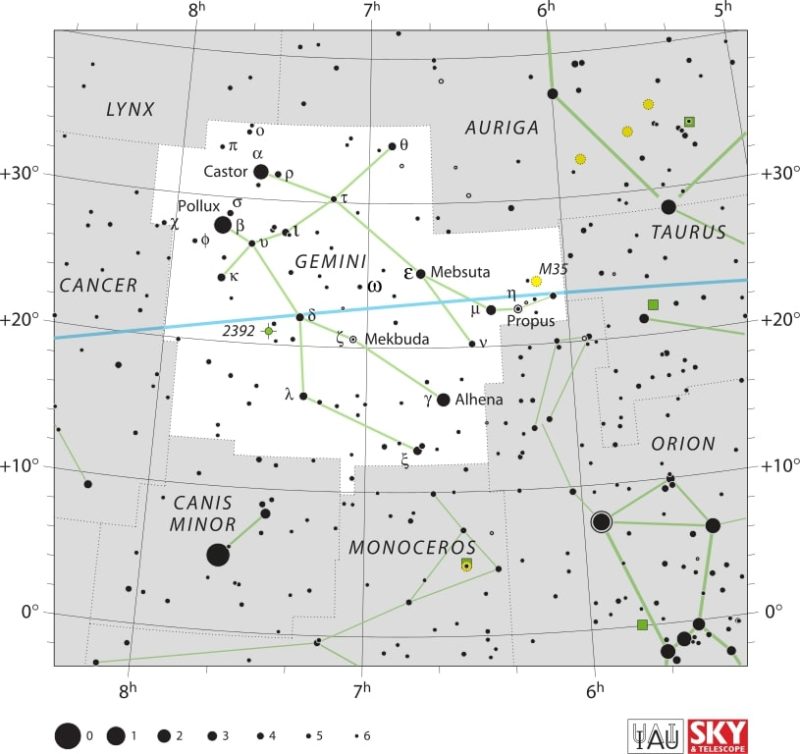
April 22: Conjunction of the Moon and Jupiter
The Moon and Jupiter will be at conjunction by sharing the same right ascension and passing within 3°33′ of each other.
At around the same time the two bodies will also make a close approach (appulse) reaching 3°29′ from each other, but not sharing the same right ascension.
The two celestial bodies will meet in the constellation of Gemini with the Moon at apparent magnitude of -11.6 and Jupiter at -2.1. The Moon will be 5 days old or waxing crescent at 42%.
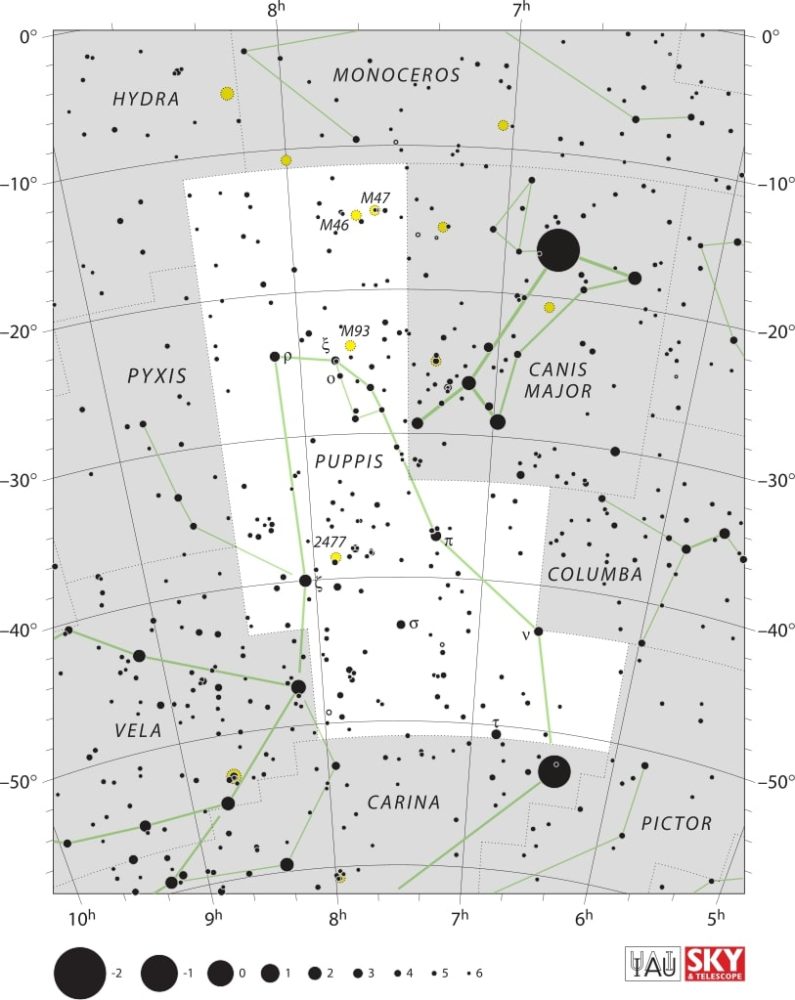
April 23: π-Puppid meteor shower peak
The Pi Puppids are a small variable meteor shower. The future of this shower is uncertain since Jupiter perturbed the orbit of the parent comet in 1999. The meteors from this shower originate from the comet 26P/Grigg-Skjellerup, which now orbits further out from Earth.
Some meteors may also be spotted between April 15 and April 28. They will radiate from the constellation of Puppis at the speed of 18 km/s on average. The Moon will be 6 days old or waxing gibbous at 54%.
April 23: Dwarf planet Haumea at opposition
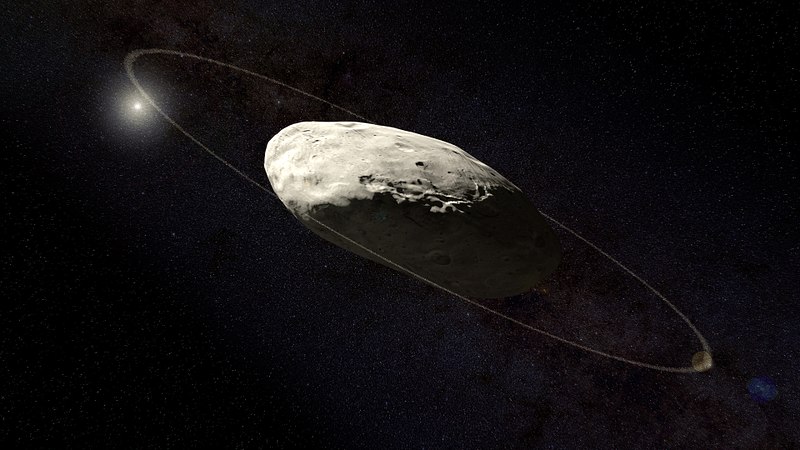
At about midnight local time, the dwarf planet Haumea (minor-planet designation of 136108 Haumea) will reach the highest point in the sky and be opposite of the Sun. Look in the constellation of Bootes with a large telescope, as it will have an apparent magnitude of 17.2. At around the same time Haumea will also reach its closest point to the Earth (perigee) at a distance of 48.91 AU. The Moon will be 6 days old or waxing gibbous at 54%.
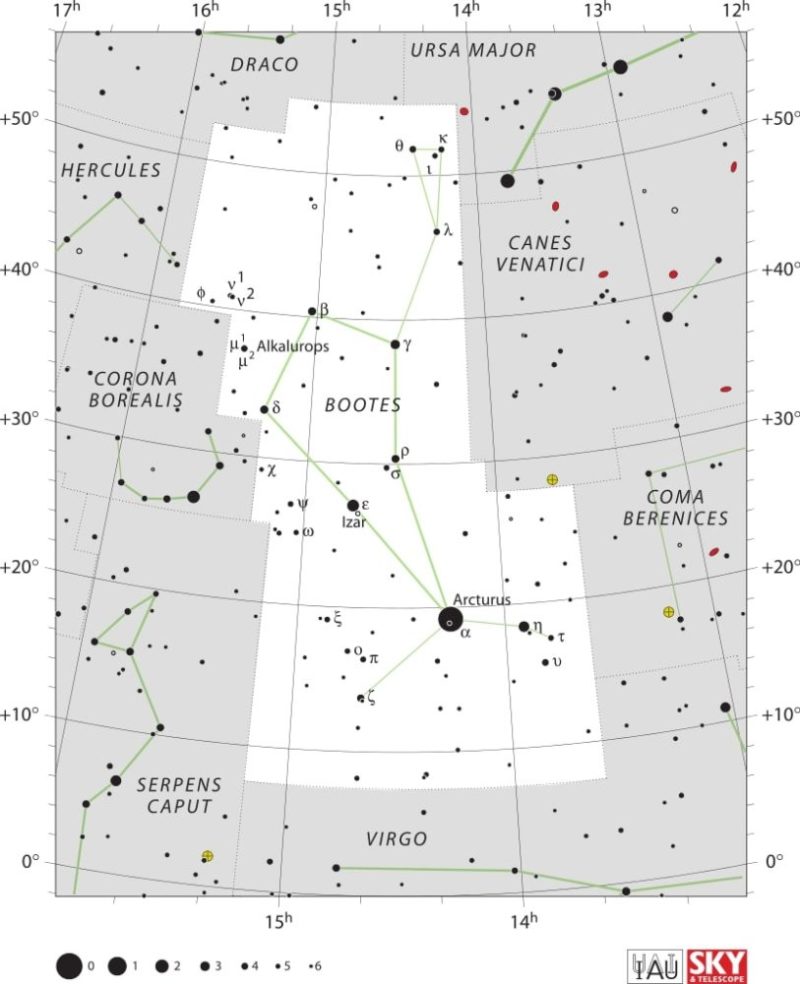
April 23: Comet 141P/Machholz at perihelion
The comet 141P/Machholz will reach perihelion, meaning it will reach the closest point in its orbit to the Sun at a distance of only 0.81 AU. It will have an apparent magnitude of 11.1 and will be located in the constellation of Aries. (Constellation map already displayed above when discussing the conjunction of Venus and Ceres on April 8.) The Moon will be 6 days old or waxing gibbous at 54%.
Be careful to not look directly at the Sun and especially not to point a telescope at it. This is very dangerous to your eyes and may result in permanent eye damage.
April 24: Pinwheel Galaxy at its highest point in the sky
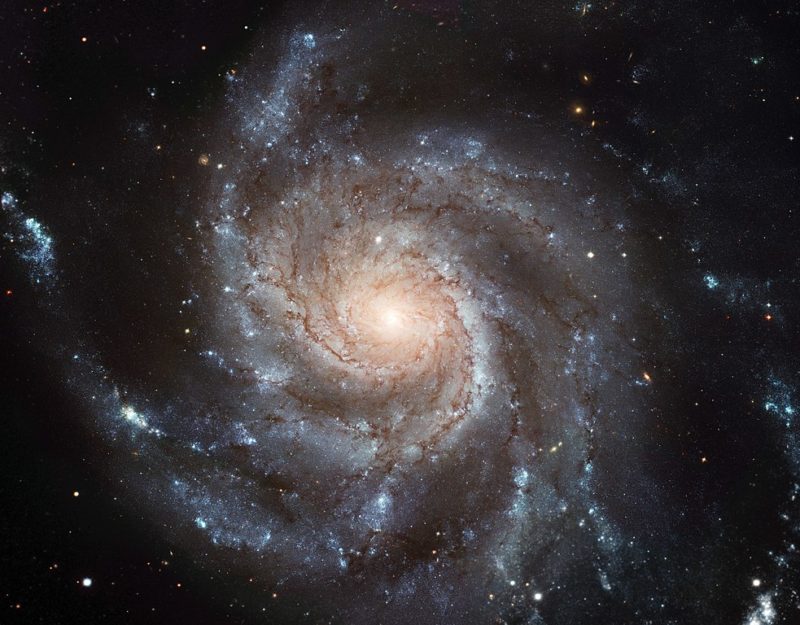
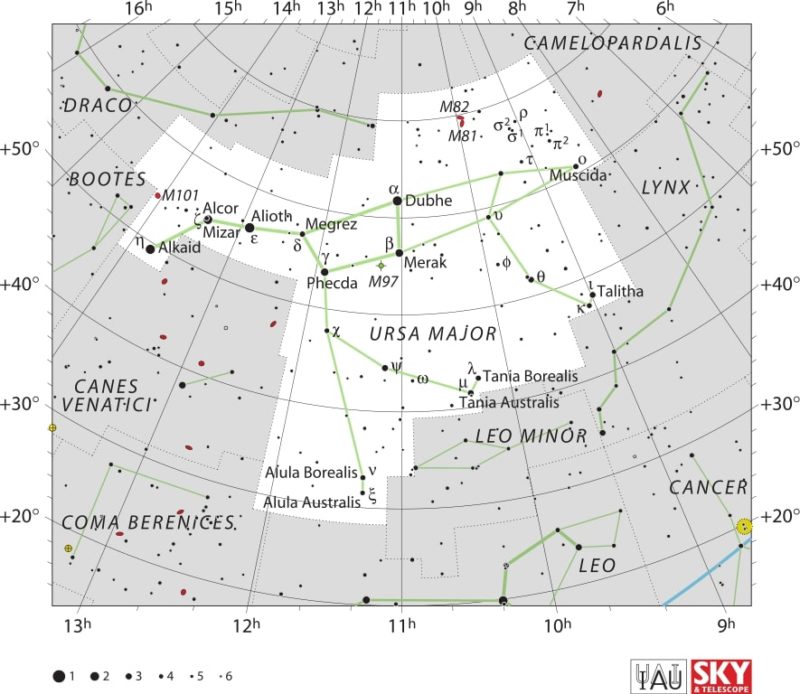
The Pinwheel Galaxy, also known as Messier 101 (M101) or NGC 5457, is a beautiful face-on spiral galaxy located 21 million light-years away in the constellation of Ursa Major.
The galaxy will reach its highest point in the sky at around midnight local time. It will reach apparent magnitude 7.9, which you’ll need a telescope for optimal viewing. The Moon will be 7 days old or waxing gibbous at 56%.
April 24: Conjunction of Venus and Uranus
Venus and Uranus will reach conjunction passing within 46′ of each other while sharing the same right ascension.
Venus will be at apparent magnitude -3.9 and Uranus at magnitude 5.8 both in the constellation of Taurus. (Constellation map already displayed above, when discussing the conjunction of the Moon and Venus on April 19.) The Moon will be 7 days old or waxing gibbous at 56%.
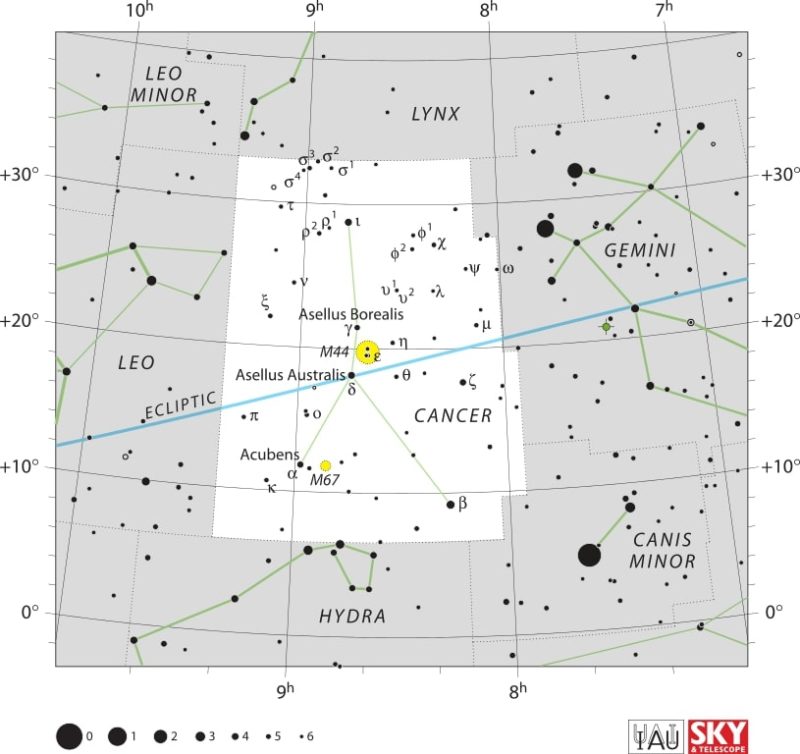
April 24: Close approach of the Moon and Beehive Cluster
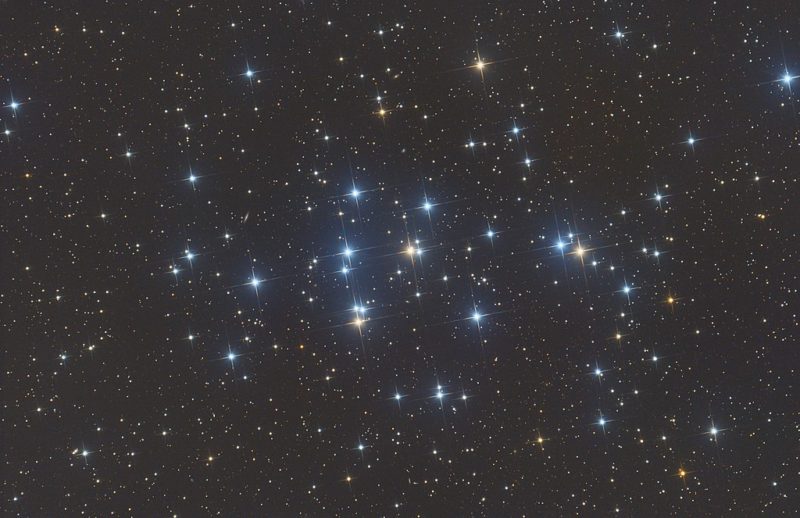
The Moon and the Beehive Cluster (also known as M44 or Messier 44) will make a close approach, passing within 1°14′ of each other.
Both objects will be in the constellation of Cancer with the Moon being at apparent magnitude -12.0; and the Beehive Cluster at 3.1. The Moon will be 7 days old or waxing gibbous at 56%.
April 26: Comet C/2025 R3 (PANSTARRS) at perigee
The comet C/2025 R3 (PANSTARRS) will reach perigee, meaning it will reach the closest point in its orbit to the Earth at a distance of 0.49 AU. It will have an apparent magnitude of 0.2 and so will be visible to the naked eye. As already mentioned above, be careful to not look directly at the Sun and especially not to point a telescope at it. This is very dangerous to your eyes and may result in permanent eye damage.
It will be in the constellation of Cetus. (Constellation map already displayed above, when discussing the conjunction of the Moon and Saturn on April 16.) The Moon will be 9 days old or waxing gibbous at 79%.
Positions of the Planets in April 2026
- Mercury: The closest planet to the Sun can be seen at dawn and dusk travelling across the constellations of Aquarius, Pisces, and Cetus. This planet, being the closest to the Sun, will appear to move quickly in the night sky and its position will change in the following weeks.
- Venus: The sister planet can be seen travelling across the constellations of Aries and Taurus. Just like Mercury, Venus can only be seen at dawn and dusk.
- Mars: The red planet can be seen in the constellation of Aquarius, Pisces, and then Cetus.
- Jupiter: The gas giant is visible in the constellation of Gemini. Jupiter can easily be spotted with the naked eye, even in highly illuminated cities.
- Saturn: The ringed giant can be seen with the naked eye in the constellation of Pisces and then Cetus.
- Uranus: The ice giant can be seen in the constellation of Taurus with the use of a telescope.
- Neptune: The blue giant requires a telescope pointed in the constellation of Pisces in order to be seen.
Positions of Dwarf Planets and Large Asteroids in April 2026
- Ceres: The asteroid belt’s lone dwarf planet can be seen in the constellation of Cetus with the help of a telescope.
- Vesta: This large asteroid can be seen in the constellation of Aquarius with a telescope.
- Pallas: The asteroid can be observed with a telescope in the constellation of Pisces.
- Hygiea: The fourth largest asteroid can be found with a telescope in the constellation of Taurus.
- Pluto: This distant dwarf planet can be found in the constellation of Capricornus with the help of a large telescope.
Major astronomical events next month – May 2026
- May 5: η-Aquariids meteor shower peak
- May 8: η-Lyrids meteor shower peak
- May 29: Asteroid 29 Amphitrite at opposition
- May 31: τ-Herculids meteor shower peak
Conclusion
April offers a packed schedule of celestial highlights, from planetary conjunctions to meteor showers and distant galaxies. While moonlight may interfere early on, conditions improve later in the month, making it a rewarding time for observers. Whether you’re using binoculars or a telescope, stargazing this April 2026 provides plenty of opportunities to explore the night sky and deepen your appreciation for astronomy.
To ensure you don’t miss out on any celestial happenings, sign up for our newsletter to receive stargazing calendars and more updates. Keep your telescopes ready and clear your calendar for these cosmic highlights!
Sources:
- Planetary ephemerides produced by NASA’s Jet Propulsion Laboratory (JPL)
- International Meteor Organization
See also:
- Previous month’s calendar: Stargazing Calendar for March 2026
Would you like to receive similar articles by email?

Paul Tomaszewski
Paul Tomaszewski is a science & tech writer as well as a programmer and entrepreneur. He is the founder and editor-in-chief of CosmoBC. He has a degree in computer science from John Abbott College, a bachelor's degree in technology from the Memorial University of Newfoundland, and completed some business and economics classes at Concordia University in Montreal. While in college he was the vice-president of the Astronomy Club. In his spare time he is an amateur astronomer and enjoys reading or watching science-fiction. You can follow him on LinkedIn and Twitter.

You May Also Like
Stargazing Calendar for March 2026
Leonis Minorid Meteor Shower Guide