Why Are Star Clusters Ideal Laboratories for Stellar Evolution?
Stellar evolution, the study of how stars change over time, is an essential field in astronomy. Although we cannot observe individual stars’ entire lifetimes, we can make educated guesses about what happens to them based on their physical properties and the physical laws that govern them. Star clusters are considered the ideal laboratories for studying stellar evolution, and there are good reasons why.
What are Star Clusters?
A star cluster is a group of stars that are gravitationally bound together. There are two main types of star clusters: open clusters and globular clusters.
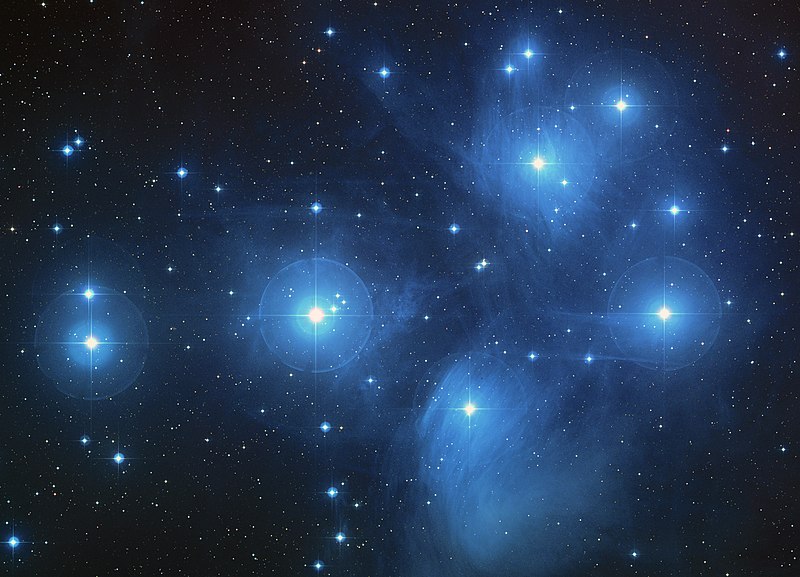
- Open Clusters: Open clusters are groups of up to a few thousand stars that are found primarily in the disks of galaxies, including the Milky Way. These clusters are relatively young, and the stars in them are loosely bound together. The stars were all formed from the same giant molecular cloud at roughly the same time.
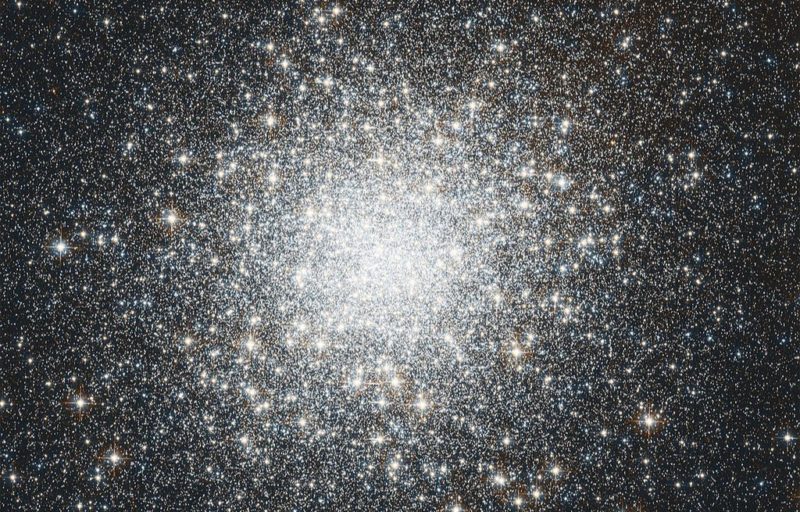
- Globular Clusters: Globular clusters are much older than open clusters and contain between tens of thousands to millions of stars. They exist in the galactic halo, a region surrounding the Milky Way’s disk. They can also be found in nearly all other galaxies. The stars in globular clusters are densely packed and strongly bound together, forming a spherical shape. Although originally thought to contain only a single population of stars, many globular clusters have now been found to host multiple stellar populations with slightly different chemical compositions and elemental abundances.
Some astronomers also recognize a third category called stellar associations, which are young, loosely bound groups of massive stars.
What Makes Star Clusters Ideal Laboratories for Stellar Evolution?
Star clusters have a few key properties that make them ideal laboratories for studying stellar evolution and testing theories:
Age
Star clusters are a snapshot of stellar evolution at a particular point in time. We can determine the age of a star cluster from the properties of its stars, such as their temperature, luminosity, and composition. By studying star clusters of different ages, we can observe how the properties of stars change over time.
Astronomers often use Hertzsprung–Russell diagrams, also called H–R diagrams or color–magnitude diagrams, to compare the brightness and temperature of stars within a cluster. Because the stars formed at roughly the same time, differences in their appearance are primarily caused by differences in stellar mass and evolutionary stage. The point where stars begin leaving the main sequence, known as the main-sequence turnoff point, is especially useful for estimating a cluster’s age.
Stellar Populations
Star clusters contain stars of different masses, allowing researchers to observe how stars evolve at different rates over time. Massive stars burn through their fuel much more quickly than smaller stars, so clusters naturally contain stars at different evolutionary stages despite having formed at nearly the same time. This allows astronomers to better understand the physical processes that govern stellar evolution. Some globular clusters also contain multiple stellar populations with subtle chemical differences.
Proximity
Many important star clusters are close enough to Earth for astronomers to resolve individual stars in detail. This proximity allows researchers to perform detailed studies of individual stars within the cluster and observe the differences in their properties. Modern observatories like the Gaia spacecraft have further enhanced our ability to study nearby clusters by providing precise distances, motions, and memberships.
Infrared observatories such as the James Webb Space Telescope are also helping astronomers study young star clusters still hidden inside dusty star-forming regions that are difficult to observe in visible light.
Homogeneity
Many star clusters are relatively homogeneous, meaning that most stars within a cluster formed around the same time and share similar chemical compositions. This homogeneity reduces the complexity of the stellar systems, making it easier to isolate the physical processes that govern stellar evolution. However, astronomers now know that some globular clusters contain multiple stellar populations with subtle chemical variations, revealing that cluster formation can be more complex than once believed.
Dynamical Evolution
In addition to stellar evolution, star clusters also allow astronomers to study dynamical evolution, which involves how stars interact gravitationally over time. In dense globular clusters, stars can migrate toward the center through mass segregation, interact in binary systems, or occasionally experience close encounters and collisions. These processes help researchers better understand the long-term evolution of stellar systems.
Conclusion
In summary, star clusters are ideal laboratories for studying stellar evolution for a few key reasons. Their age, stellar populations, proximity, and homogeneity allow researchers to observe and study a range of stars in a single location more easily. Thanks to these properties, the findings from studying star clusters have contributed immensely to our understanding of how stars evolve. With modern tools like Gaia and the James Webb Space Telescope, astronomers continue to unlock new insights into star formation and stellar life cycles through the study of clusters.
Sources:
- Jason S. Kalirai and Harvey B. Richer. Star clusters as laboratories for stellar and dynamical evolution, The Royal Society Publishing (2010). DOI:/10.1098/rsta.2009.0257
- Chelsea Gohd. Star Clusters: Inside the Universe’s Stellar Collections, NASA Science Universe Exploration (2023). https://universe.nasa.gov/news/235/star-clusters-inside-the-universes-stellar-collections/
Would you like to receive similar articles by email?

Paul Tomaszewski
Paul Tomaszewski is a science & tech writer as well as a programmer and entrepreneur. He is the founder and editor-in-chief of CosmoBC. He has a degree in computer science from John Abbott College, a bachelor's degree in technology from the Memorial University of Newfoundland, and completed some business and economics classes at Concordia University in Montreal. While in college he was the vice-president of the Astronomy Club. In his spare time he is an amateur astronomer and enjoys reading or watching science-fiction. You can follow him on LinkedIn and Twitter.


You May Also Like
Cetus Constellation Guide
NGC 2903: A Glimpse into the Barred Spiral Galaxy