Sigma Hydrid Meteor Shower Guide
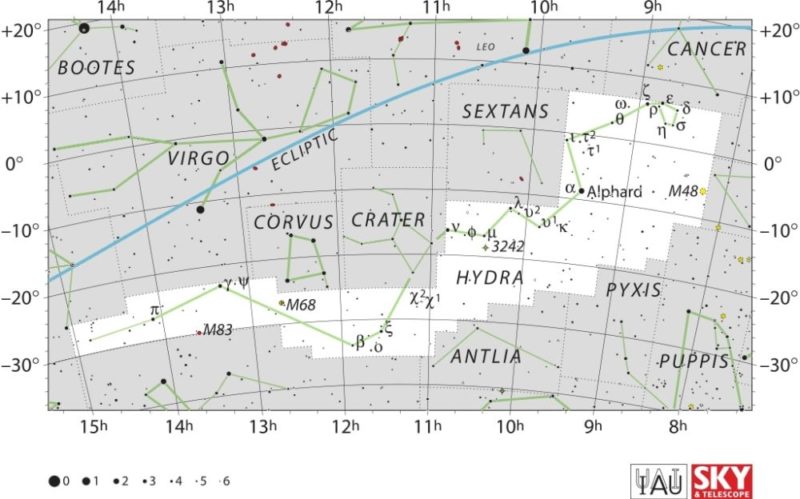
The Sigma Hydrid meteor shower leaves a faint trace across the December night sky. Compared to the popular Geminids or Perseids, these meteors are relatively dim and few. For the meteor shower hunters who venture beyond the popular displays, the Sigma Hydrids bring a feeling of finding a hidden gem.
Linked to the Hydra constellation, this shower comes each year for a short period, peaking on December 11. Understanding the Sigma Hydrids means getting familiar with faint meteors, their constellation connection, and the basics of meteor shower observation.
What Is the Sigma Hydrid Meteor Shower?
The Sigma Hydrids are one of the most minor of the minor showers. Most meteors from this shower are faint and zip by fast at 58 km/s.
To anyone who has become accustomed to the dazzle of the Geminids, the Sigma Hydrids will likely seem underwhelming. Yet, the rarity and subtlety beckon to the keenly perceptive skywatchers every December.
Unraveling the Parent Body Mystery
Meteor showers happen when Earth travels through streams of debris that comets, or less frequently asteroids, expel. For many years, the parent body of the Sigma Hydrids remained a mystery. According to recent investigations from 2023, Comet C/2023 P1 Nishimura probably acts as the source of the shower.
This determination is based on an analysis of its orbit and timing. As comets like Nishimura get close to the Sun, they lose material and create trails of dust and small rocks. As Earth passes through this stream, the particles burn up in our atmosphere due to their speed, creating visible meteors.
Finding the parent body for minor showers such as the Sigma Hydrids is difficult. One reason might be that the debris is very faint, and the shower’s radiant moves somewhat each year, though calculations indicate this motion is uniform. Astronomers can use both the visual trails and precision radar data to match showers up with possible parent comets.
Annual Activity Period Explained
The Sigma Hydrids are an annual shower, typically active from December 3 to 15. The peak occurs on December 11, as Earth passes through the densest part of the debris stream. This brief window is largely due to Earth’s orbit around the Sun.
For those interested in watching, mark December 9–12 on your calendar, but particularly December 11. Since local weather and Moon phase can impact visibility, it’s a good idea to check sky conditions before you go out.
Typical Peak Viewing Rates
The shower’s Zenithal Hourly Rate (ZHR) is 3, which means that on the peak night—December 11—observers can expect to see up to 3 meteors per hour under ideal dark-sky conditions.
As with all meteors, light pollution, clouds, and bright moonlight significantly reduce the odds of spotting these meteors. To see the highest number of meteors, find a dark spot far from the lights of urban areas.
Why They Are Called “Sigma Hydrids”
The radiant is located near the star Sigma Hydri in the Hydra constellation. In astronomy, meteor showers derive their names from the stars nearest to their radiant. The Greek letter denotes the name of each star of a constellation.
Using the Greek letter sigma as a prefix along with the parent constellation’s name provides an easy way to sort stars throughout a constellation. This systematic naming process allows astronomers and meteor enthusiasts to stay organized when referring to dozens of yearly showers, allowing for more effective sharing and learning of observations.
Best Ways to Watch Meteors
Meteor watching requires a little bit of expertise and some basic equipment. Gaze at the night sky from a dark location. Utilize tools that will augment your experience.
Essential Gear for Stargazers
- Blanket or sleeping bag for warmth
- Warm clothes, hat, and gloves
- Folding chair or recliner
- Notebook or stargazing app
- Red flashlight to save night vision
- Binoculars or telescope (optional)
- Tripod and camera (optional)
Let Your Eyes Adapt Properly
Allowing your eyes time to adjust is a game changer. After 20–30 minutes in the dark, your eyes are able to see even the faintest meteors much clearer.
Eliminate light interference from streetlights and phone screens. A red flashlight or headlamp will be your best friend when you need to see without destroying your night vision. The longer you’re in the dark, the more detail you catch, letting you spot faint trails that you might miss at first.
Patience is Your Best Friend
Keep in mind that meteor watching is usually more of a waiting game. You may need to be patient for a nice streak.
During these times, the best, most surprising meteors will appear. Many people have stood out for the occasion for hours and witnessed an unusual fireball rush throughout the sky. Peace and solitude enhance the flair of the experience, turning it into more than just a simple search for meteors.
Simple Photography Techniques
If taking photos, make sure you bring a tripod and experiment with long exposures. Since meteors are quick, a shutter speed of at least 10-30 seconds is ideal.
A wide-angle lens will capture more of the sky. Adjust ISO and focal point to capture crisp shots. The good news is that even a simple camera can do the job with a little experimentation.
Using Sky Map Apps
Sky map apps are great tools to locate which showers are active currently and locate the radiant. These apps let you know where to look, what time to start, and can even alert you to upcoming events. Explore the features in advance, so you know what you’ll be doing when you go out to view the show.
Why Meteor Showers Fascinate Us
Meteor showers, such as the Sigma Hydrids, ignite a childlike wonder in novice stargazers and veteran skywatchers alike. When hundreds of shooting stars zip across the sky, it’s difficult not to look up and be amazed. Every flash you see is caused by a relatively small space rock, most no bigger than a grain of sand.
As it plows into the atmosphere at than 58 km/s, it vaporizes spectacularly. This show gives us a rare chance to see the universe in motion, reminding us how small and connected we are to the cosmos.
The Thrill of Catching Streaks
Stargazing in your backyard requires no advanced equipment. All it takes is a lawn chair and a clear sky. That sense of uncertainty, of not knowing when and where the next streak will be visible, is what has many people hooked.
Simple Backyard Astronomy Fun
Getting out with friends and family can help make this experience even more enjoyable, like a group camping trip. Whether it’s friends bringing snacks, blankets, or playing games while they wait, it becomes part of that memory. Spending time outdoors stargazing with your family provides a unique opportunity to engage in a wonderful shared learning experience.
A Personal Take on Skywatching
We understand that many enjoy skywatching as a peaceful, almost meditative, experience. Whether it’s sharing stories or simply being together in the calm, those experiences can be powerful.
These instances allow individuals to pause, consider, and connect with the vastness of everything around us.
Conclusion
The Sigma Hydrids meteors produce bright streaks that cut through the night sky. The shower is short-lived and hits hard, despite going unnoticed by most people. Catching these meteors is like finding a diamond in the rough—brief, bright, and absolutely fabulous.
City lights and large crowds are no way to ruin the adventure! Pick a dark place and spend some time stargazing with your friends and family. Grab a blanket, keep the phone in your pocket, and simply look up for a few minutes. Showers such as the Sigma Hydrids are a good way to bring small but delightful spark of awe into your daily hustle and bustle. Get out there for the next one—look up and see what the sky has to offer, and make the experience more beautiful by sharing it with another person.
Frequently Asked Questions
What are Sigma Hydrids?
The Sigma Hydrid meteor shower is a weak shower. It radiates from the constellation of Hydra and happens each December.
When is the Sigma Hydrid meteor shower peak?
To maximize your chances of seeing Sigma Hydrids, look to the night sky after midnight, when the radiant is at its highest point.
How can I spot the Sigma Hydrid meteor shower
Locate a dark place, far from urban light pollution. Look for the Hydra constellation. The meteors themselves can be quite faint, so give your eyes about 30 minutes to adjust.
What is the Sigma Hydri star?
It’s not particularly bright, but it is the radiant point for the Sigma Hydrids meteor shower.
How many meteors can I expect from Sigma Hydrids?
Sigma Hydrids is a small shower, typically yielding 3 meteors per hour at peak. The meteors tend to be fairly quick and dim.
What’s the best way to watch a meteor shower?
Recline comfortably on your back, ideally with an unobstructed view of the sky. Get away from light pollution. The main thing is to dress warmly and be patient, which is key to making the experience enjoyable.
Why are meteor showers like Sigma Hydrids interesting?
Whether you are a stargazer or simply curious, watching them is inspiring, educational, and calming. Even small showers such as the Sigma Hydrids present an opportunity to marvel at the beauty above.
See also:
- Previous meteor shower: Monocerotid Meteor Shower
- Next meteor shower: Lambda Sculptorid Meteor Shower
Would you like to receive similar articles by email?

Paul Tomaszewski
Paul Tomaszewski is a science & tech writer as well as a programmer and entrepreneur. He is the founder and editor-in-chief of CosmoBC. He has a degree in computer science from John Abbott College, a bachelor's degree in technology from the Memorial University of Newfoundland, and completed some business and economics classes at Concordia University in Montreal. While in college he was the vice-president of the Astronomy Club. In his spare time he is an amateur astronomer and enjoys reading or watching science-fiction. You can follow him on LinkedIn and Twitter.


You May Also Like

Dental Implants vs. Dentures: Long-Term Benefits Compared
What Is an H II Region?