How To Safely Handle a Flat Tire on the Road
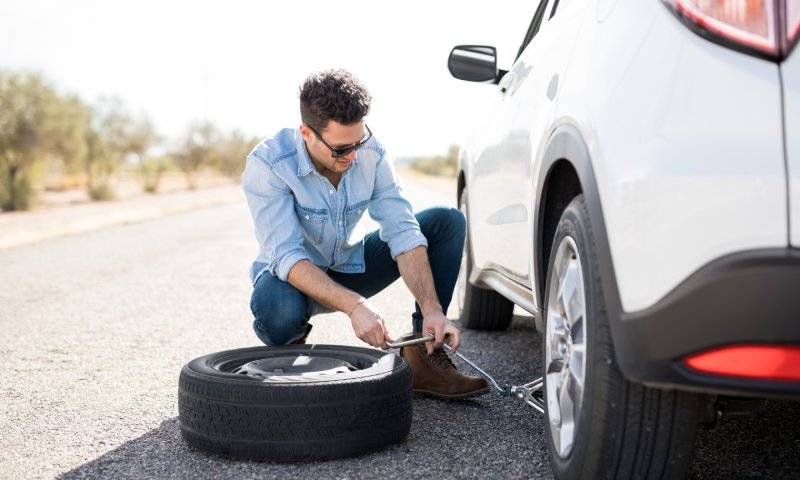
A flat tire is one of the most common issues drivers face, and it often happens at the most inconvenient times. That unmistakable thumping sound, followed by the pull of your vehicle to one side, can be alarming.
Knowing how to safely handle a flat tire can make all the difference, protecting you, your passengers, and other drivers. This guide provides clear, step-by-step instructions on what to do when you get a flat tire while driving.
What To Do Immediately After Getting a Flat Tire
Once you realize that you have a flat, you will probably feel panicked. Take a deep breath and stay calm. Don’t brake quickly, since that can cause you to lose control of your vehicle. Instead, grip the steering wheel firmly with both hands and ease off the gas pedal. Then, pull over to the side of the road and come to a complete stop.
Secure Your Vehicle
Once you have safely pulled over, you need to secure your vehicle to prevent it from moving while you work. This is a crucial step for avoiding accidents.
Turn on your hazard lights to inform passing cars that you are stopped. If you have wheel wedges (or chocks), place them behind the wheels on the opposite end of the car from the flat tire. For example, if your front tire is flat, place the wedges behind the rear tires. If you don’t have wedges, a large rock or piece of wood can work in a pinch.
How to Safely Change a Tire
When changing a tire, always follow best practices for emergency tire use or for using your donut. You can treat an emergency tire the same as any other on your car, and drive normal speeds, but with a donut, you shouldn’t exceed 50 miles per hour.
To change your tire, grab your replacement tire, jack, and lug wrench from your trunk. Then loosen the lug nuts on your flat tires, but don’t remove them completely; you still need to position your jack.
Place the jack under the vehicle’s frame near the flat tire. Your owner’s manual will show the correct placement points. Lifting the car from the wrong spot can cause serious damage, so always consult your owner’s manual. Raise the vehicle on the jack, then fully remove the lug nuts and tire.
Now you can mount your spare with the lug bolts and lower the vehicle to the ground. Don’t fully tighten the lug nuts until you completely drop the car. Then stow your gear and carefully get
Drive Safely to a Repair Shop
Remember, if you have a donut instead of a complete tire, don’t exceed 50 miles per hour. Drive cautiously to the nearest tire shop to have your flat tire repaired or replaced so that you don’t run into this problem again.
Handling a flat tire safely starts with being prepared. Always ensure your spare tire is properly inflated and your car’s toolkit is complete. By following these steps, you can confidently and safely handle a flat tire and get back on the road with minimal disruption.
Would you like to receive similar articles by email?

Paul Tomaszewski
Paul Tomaszewski is a science & tech writer as well as a programmer and entrepreneur. He is the founder and editor-in-chief of CosmoBC. He has a degree in computer science from John Abbott College, a bachelor's degree in technology from the Memorial University of Newfoundland, and completed some business and economics classes at Concordia University in Montreal. While in college he was the vice-president of the Astronomy Club. In his spare time he is an amateur astronomer and enjoys reading or watching science-fiction. You can follow him on LinkedIn and Twitter.


You May Also Like

Top Maintenance Tips for High-Performance Cars

How to Keep Your Car Cool in Hot Weather