The Roche Limit: What Happens When a Moon Gets Too Close?
The Roche limit is a fascinating phenomenon. It occurs when a moon gets too close to its host planet or other massive celestial body.
In this article, we’ll break down the science behind this phenomenon and explore the different factors that influence it. Get ready to dive into the world of celestial death spirals!
What is the Roche Limit?
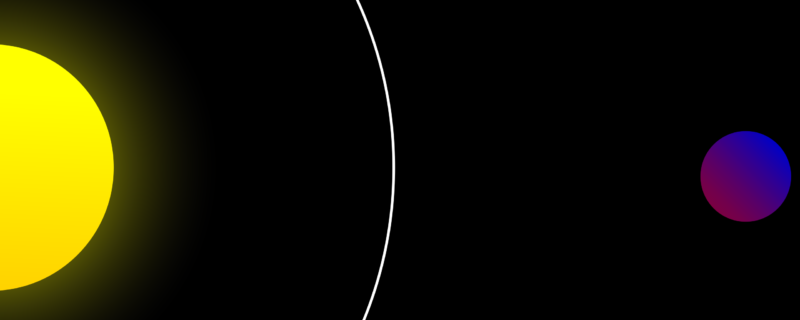
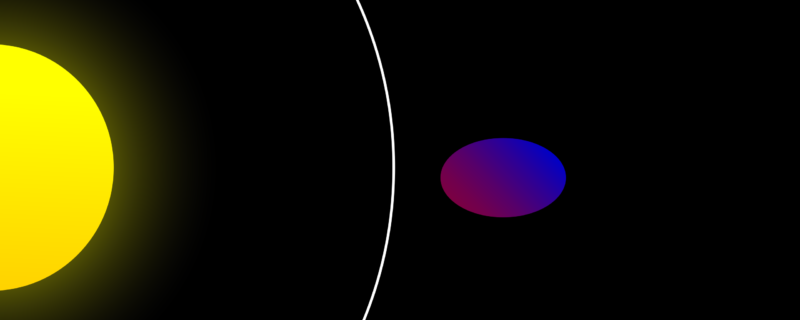
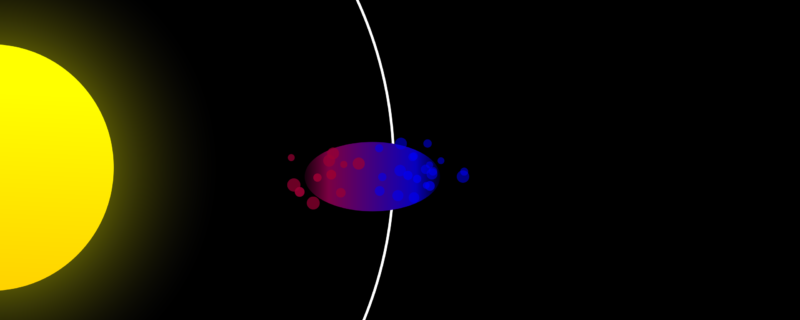
The Roche limit, also called Roche radius, refers to the distance within which a celestial object, such as a planet or moon, will be significantly disrupted or torn apart by tidal forces. These tidal forces are due to the gravitational pull of a larger object, such as a star or planet.
Beyond this limit, the object will be held together by its own gravity—but this depends strongly on the object’s internal strength and structure. As a result, rigid, solid bodies can survive closer to the parent body than loosely bound or fluid-like ones.
The Roche limit is determined by the density, size, and mass of the objects involved, as well as whether the smaller object behaves more like a rigid or fluid body.
It is named after Édouard Roche, a French astronomer who first described it in 1848. Another concept also named after him is the Roche lobe, which is especially important in binary star systems. In those systems, mass transfer occurs between stars.
How Does the Roche Limit Work?
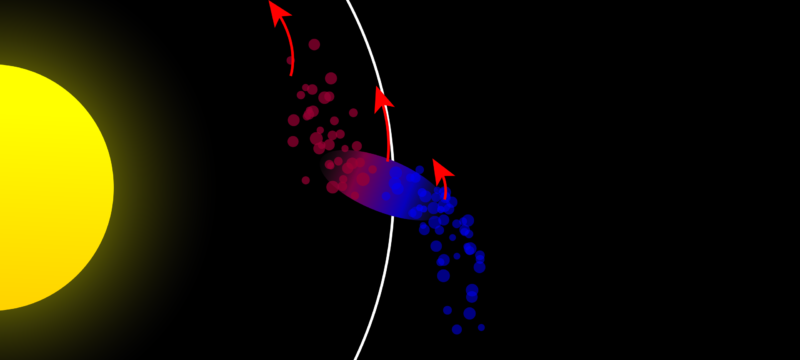
The Roche limit is essentially the distance at which gravity between two objects, such as a planet and a moon, is no longer strong enough to overcome the tidal forces acting on the smaller object. These tidal forces are created by the difference in gravitational pull between the near and far sides of the smaller object. If they are too strong, they can cause the object to break apart.
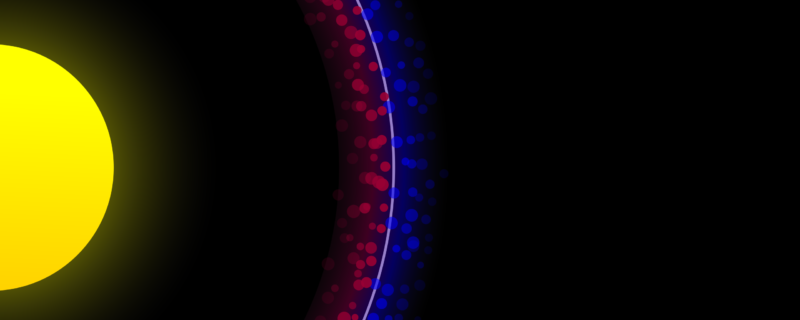
When a moon gets too close to its parent planet, it can experience catastrophic consequences due to the Roche limit. In some cases, the moon may break apart into rings. For example, Saturn’s rings, which lie within the Roche limit, are widely thought to be partially formed from disrupted moons or comets. However, their exact origin is still debated and likely involves multiple processes. This may include relatively recent formation compared to the age of the Solar System.
Examples of Objects Affected by the Roche Limit
The comet Shoemaker-Levy 9 famously broke apart and collided with Jupiter. Unusually, this comet was orbiting Jupiter rather than the Sun. It got pulled within the Roche limit of Jupiter and the tidal forces pulled it apart in 1992 during a close pass. The fragments finally collided with Jupiter in 1994.
Another example is Saturn’s moon, Pan. It is a small moon that orbits within the Encke Gap of Saturn’s A Ring. Due to its proximity to the planet, Pan is close the Roche limit, and has a distinctive “ravioli-like” shape, which is thought to be partly due to material from Saturn’s rings accreting onto its equator.
Another moon that will be affected by the Roche limit in the future is Mars’ moon, Phobos. Phobos orbits Mars at a close distance, making it vulnerable to tidal forces that are gradually pulling it closer to the planet’s surface. Scientists predict that Phobos will eventually be torn apart by these tidal forces, forming a ring around Mars, within an estimated 30-50 million years.
In addition to Solar System cases, astronomers have observed similar tidal disruption processes beyond it:
- Disintegrating exoplanets such as Kepler-1520 b, which appears to be slowly shedding material and forming a dust tail as it orbits its star.
- White dwarf debris disks, where asteroids and minor planets are torn apart and form rings around dense stellar remnants.
- Tidal disruption events (TDEs), where stars passing too close to black holes are violently torn apart by extreme tidal forces.
These systems show that Roche-limit-like physics operates across the universe, not just in our Solar System.
Conclusion
In short, the Roche limit plays a crucial role in determining the fate of moons orbiting planets. Through understanding the physics behind this phenomenon, we can accurately calculate the distance at which a moon will break apart. Additionally, sometimes a moon will collide with its parent planet.
By understanding the principles behind this phenomenon, we can better comprehend how planets, moons, and other objects interact with each other and their environments. Moreover, the Roche limit is a crucial factor in determining the fate of many celestial bodies, from comets to binary stars. It has also helped explain the formation of planetary rings. Additionally, it explains the diversity of moons observed in our solar system.
As we continue to explore space and discover new moons and planets, this concept will remain an important tool for understanding the dynamics of these celestial bodies.
Related concepts: Roche Lobe, Hill Sphere.
Would you like to receive similar articles by email?

Paul Tomaszewski
Paul Tomaszewski is a science & tech writer as well as a programmer and entrepreneur. He is the founder and editor-in-chief of CosmoBC. He has a degree in computer science from John Abbott College, a bachelor's degree in technology from the Memorial University of Newfoundland, and completed some business and economics classes at Concordia University in Montreal. While in college he was the vice-president of the Astronomy Club. In his spare time he is an amateur astronomer and enjoys reading or watching science-fiction. You can follow him on LinkedIn and Twitter.


You May Also Like
Crater Constellation Guide
What Is the Antihelion Source Meteor Shower?