Puppid-Velid Meteor Shower Guide
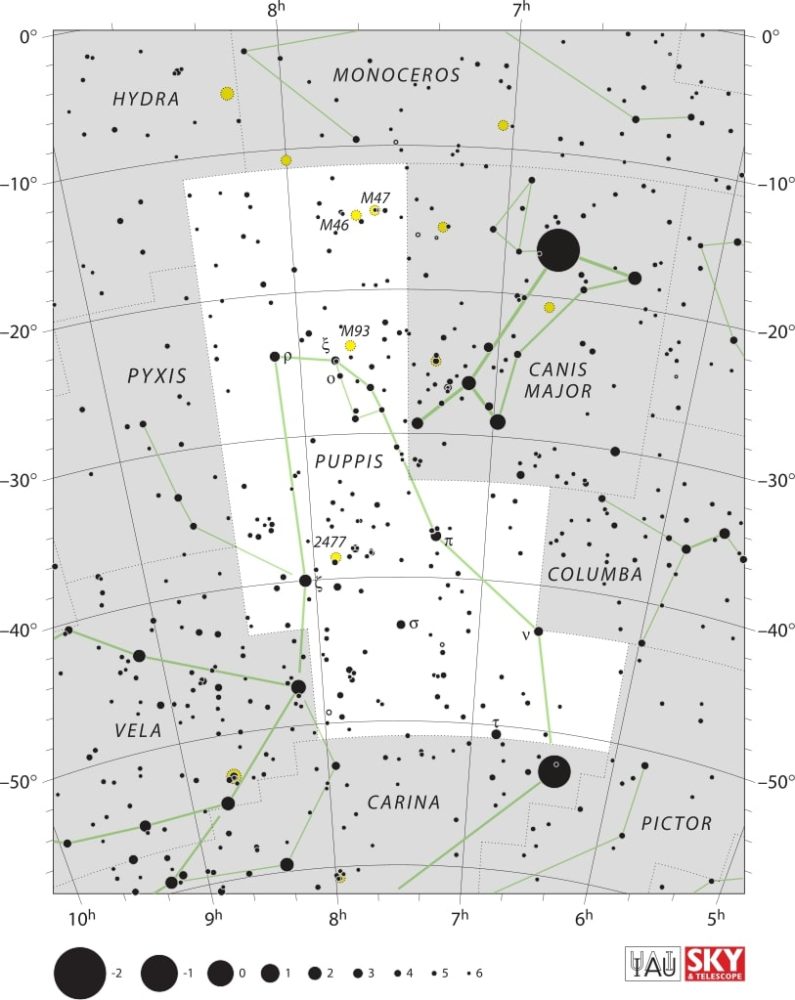
The Puppid-Velid meteor shower is a lesser-known event, best visible from the Southern Hemisphere, in early December between the 1st and 15th.
The Puppid-Velids connects the event’s trajectory to two southern sky constellations—Puppis and Vela. The meteors all appear to radiate from a point where these two cross. Naming meteor showers after their radiant helps to guide skywatchers in knowing where to look. This practice touches on a broader system of meteor shower names.
Meteor showers occur when Earth passes through debris trails, typically created by comets or asteroids. For the Puppid-Velids, this flow is copious enough to render our shower a celebrated occurrence. When Earth runs into the stream, these particles hit our atmosphere at about 40 kilometers per second.
The Puppid-Velids are much quieter than the big meteor showers. They possess a rather low rate of around 10 meteors per hour at the peak on December 7.
Spotting Meteors: North vs South
Meteor showers like the Puppid-Velids show up in the night sky around the world, but where you live shapes what you see. Whether or not we’re able to see these showers is affected by the tilt of the Earth, the location of the radiant point, and even the time of night.
Viewing From the Northern Hemisphere
If you’re located in the north, seeing these Puppid-Velids up high is a seldom occurrence. This shower’s radiant sits very low on the southern horizon, so the visibility is limited to the lowest meteors.
Looking south, focus on the area near the constellation Puppis, though it barely rises above the horizon in most northern places. The optimal time to spot meteors will be after midnight, when the sky is darkest and the radiant is highest.
Choose dark sky parks or rural locales. These locations reduce the glare of urban lights, providing you the best chance at spotting even the dimmest meteors.
Southern Hemisphere Sighting Advantages
Observers in the Southern Hemisphere have a few advantages compared to their Northern counterparts. The Puppid-Velids radiant climbs very high overhead, giving you a great advantage to see the bright meteors as they streak across the sky.
Southern constellations such as Vela and Puppis define the shower’s radiant. The Australian Outback and New Zealand’s Aoraki Mackenzie are home to some of the world’s clearest, darkest skies. These conditions are incredibly favorable for high meteor rates.
My Take: Appreciating Faint Showers
Not every meteor shower is so glamorous or popular. The Puppid-Velids, for instance, are one of the fainter showers, but that’s what makes them so special. Faint showers are especially wonderful because it requires you to slow down and really pay attention to subtleties that are difficult to catch in more vibrant displays.
If you appreciate the night sky, don’t miss this opportunity to enjoy one of nature’s more delicate wonders. It’s a pretty amazing show just waiting to be appreciated! Meteors fly through the sky with a peaceful ferocity. If you’re paying enough attention, you may just find that a fleeting glimpse is incredibly exhilarating.
People who watch these faint showers often say that it’s not just about the meteors, but about being present, sharing quiet moments, and feeling a deeper connection to the sky.
Conclusion
The Puppid-Velids may not steal the show like the big meteor showers, but they bring a quiet charm to December skies. It is huge fun to pick out those fleeting streaks, even if the number remains small. The tale of the Puppid-Velids only continues to expand, each passing year providing another cause to lift one’s gaze.
Save the date and stay tuned to see what unfolds. So bring a friend, pull up a lawn chair, and come discover what the sky has to offer. For those who wish to go deeper, stay tuned as we take you every day into the night sky, so you never miss a happening again.
Frequently Asked Questions
What are the Puppid-Velids?
The Puppid-Velids is a weak annual meteor shower that is visible each December, originating from the Puppis and Vela constellations, prominent in the night sky of the southern hemisphere.
How many meteors can I expect to see during the Puppid-Velid meteor shower?
This is a fairly weak annual meteor shower, producing only 10 visible meteors per hour at best under ideal, dark-sky conditions. Of course, in urban areas, especially where city lights pollution is prevalent, that number can be much less.
Can I view the Puppid-Velids from the United States?
Yes, but the Puppid-Velid meteor shower is more intense in the Southern Hemisphere. Provided conditions are clear and dark, U.S. observers may see a few visible meteors, especially in areas with less city lights pollution, like coastal areas.
Do I need special equipment to watch the Puppid-Velids?
To observe the Puppid-Velids meteor shower, simply find a dark, open area away from city lights pollution. If you plan to watch the sky for a while, consider bringing a reclining chair or blanket for comfort.
Why is the Puppid-Velid meteor shower not as intense as others?
It’s a weak annual meteor shower in general, as the meteors are pretty small and spread out, leading to less intense displays compared to more major showers such as the Geminids.
See also:
- Previous meteor shower: December Phi Cassiopeid Meteor Shower
- Next meteor shower: Monocerotid Meteor Shower
Would you like to receive similar articles by email?

Paul Tomaszewski
Paul Tomaszewski is a science & tech writer as well as a programmer and entrepreneur. He is the founder and editor-in-chief of CosmoBC. He has a degree in computer science from John Abbott College, a bachelor's degree in technology from the Memorial University of Newfoundland, and completed some business and economics classes at Concordia University in Montreal. While in college he was the vice-president of the Astronomy Club. In his spare time he is an amateur astronomer and enjoys reading or watching science-fiction. You can follow him on LinkedIn and Twitter.


You May Also Like
How Did the Sun Get Its Name?

NGC 6888: The Crescent Nebula