
What Is a Protocol Converter and How to Choose One
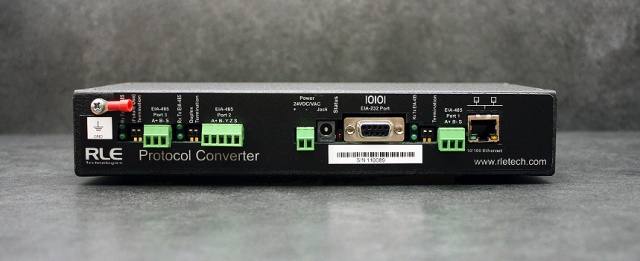
What Is a Protocol Converter?
A protocol converter is a program or device which converts from one protocol to another so as to permit systems or devices to achieve interoperability.
The protocols are communication standards (rules) implemented in software or firmware across devices such as routers, controllers, sensors and computers that allow them to exchange data. This involves the conversion of commands, data, their encoding, representation and framing to achieve the transformation.
There is a range of protocols used in various fields which include: remote monitoring applications, oil and gas, power generation, transmission and distribution, utilities, automation, AMR, and protocol translation involving commands, conversion of data messages, events and time synchronization.
A protocol converter utilizes an internal master protocol to communicate to the external devices. The collected data is used to update the converter’s internal database. There are different ways of handling the spontaneous reporting of commands and events. Different physical mediums for communication on protocol-X & Y is used. These include Ethernet, RS-485, RS-232 among others.
In modern systems, protocol converters are also widely used in Industrial Internet of Things (IIoT) environments, where they connect legacy equipment to cloud platforms and modern monitoring systems.
Types of Protocol Converters
There are essentially two types of protocol converters which are software protocol converters and hardware protocol converters.
Hardware protocol converters are typically used in industrial environments where real-time performance and reliability are critical, while software protocol converters are more common in virtualized, cloud or server-based environments where flexibility and scalability are required.
How to Choose a Protocol Converter
Allan Drek, networking manager at Equustek Solutions Inc. insists that, when selecting a protocol converter, it is important to choose a protocol converter that best suits your application and communication setup. There are three main features to consider which include:
Number of Connections
Protocol converters have different connections. Some have single connections, whereas others have as many as 32 connections with multiple serial ports.
Connectivity Protocol
The chosen converter must support the protocol used by your network whether RS-485, RS-422, RS-232 or TTL serial. Modern systems may also require support for Ethernet-based and IP protocols such as MQTT, HTTP/REST and industrial Ethernet protocols.
Baud Rate
High baud rates perform better. Some converters have baud rates that are as high as 921 kbaud. Converters with lower baud rates have a slower performance but are less expensive.
In addition to baud rate (mainly relevant for serial communication), modern systems should also consider bandwidth (Mbps/Gbps), latency and real-time performance requirements.
Applications
Protocol Converter applications differ from industry to industry. Daniel Stephen, a software engineer at datahighwaygateways.com, states that, depending on the protocols, it can be a hardware converter, software converter or an integrated converter. A few of the key applications are substation automation, industrial automation, process automation, automatic meter reading, vehicle automation applications and building automation.
The protocol converter is best suited in cases where data from the monitored equipment is unable to coexist with the protocols used by the building management system or network management system.
The protocol converter can support a wide range of inputs depending on the device and configuration. This allows for flexible integration with multiple management and alarm systems using one device. Protocol converters are used with switches, CWDM and DWDM equipment, PCIe network cards, PDH multiplexers and fiber media converters.
Some of the industrial automation protocols are the RS232 converter, RS422 converter, CAN (Controller Area Network), DF-1, EtherNet/IP, DeviceNet, ControlNet, Profibus, HostLink Protocol, Honeywell SDS, Modbus, HART Protocol and some industrial control system protocols like OPC, OPC UA, and MTConnect. Modern and widely used protocols also include MQTT, REST/HTTP APIs, PROFINET, EtherCAT and BACnet, especially in IIoT and building automation systems.
Protocol converter series implement the actual transformation linking legacy communication interfaces (such as E1, where still used) and protocol ports of RS232, V.24, V.35 or Ethernet in the transmission system. It is used to address interoperability challenges for service providers as well as commercial clients such as ATM, DDN and for that transformation in between the router and E1 port. Protocol converters offer local, commanded remote device loopback and remote loopback functions.
In many modern deployments, protocol converters are integrated into edge gateways that not only translate protocols but also perform data filtering, preprocessing and secure transmission to cloud platforms. Security is also an important consideration, as modern protocol converters may implement encryption (such as TLS), authentication and secure access controls to protect industrial networks.
Types of Conversions
Simple Conversions
These conversions do not change the overall framing. The most commonly used and simplest conversion is protocol conversion between Modbus TCP and Modbus RTU. In simple conversions, the Serial Modbus RTU frame is encapsulated in a TCP/UDP socket and sent over Ethernet. Due to similar protocol framings, both application layers interpret the data similarly provided that the communication interfaces be made transparent.
A common real-world example is converting Modbus RTU data from legacy equipment into Modbus TCP for monitoring over an Ethernet network.
Complex Conversions
These types of conversions require the conversion engine to make modifications in framing, mapping information for each type of command and data and even the object models. User configurations might also be required to define the mapping of both supported and unsupported data types. Complex conversions have advantages such as a finite processing time.
An example of complex conversion is translating industrial protocols like Modbus or CAN into MQTT for cloud-based monitoring systems, which requires restructuring data and mapping it into a different data model.
Conclusion
In today’s increasingly connected world, protocol converters play a crucial role in ensuring seamless communication between diverse systems and technologies. Whether bridging legacy equipment with modern networks or enabling integration across industrial and cloud-based platforms, they provide the flexibility needed to keep systems interoperable and efficient. By choosing the right protocol converter for your specific application, you can extend the life of existing infrastructure while taking full advantage of new technological advancements.
Would you like to receive similar articles by email?

Matthew Lesniak
Matthew Lesniak is a Mechanical Engineering graduate working within the exciting field of remotely piloted aircraft systems (RPAS), better known as drones. His day-to-day work focuses on supporting drone manufacturers, facilitating certification processes, as well as advancing research and development projects. Matthew’s hobbies include travelling with his wife, playing board games, reading and staying active.



2 Comments
V3
Great post! I never realized how crucial protocol converters are for ensuring seamless communication between different systems. Your tips on choosing the right one are super helpful—especially the part about compatibility and data integrity. Thanks for shedding light on this topic!
Matthew Lesniak
Thank you for your comment. Glad I could help!