Pickering’s Triangle: Unveiling the Beauty of Stellar Remnants
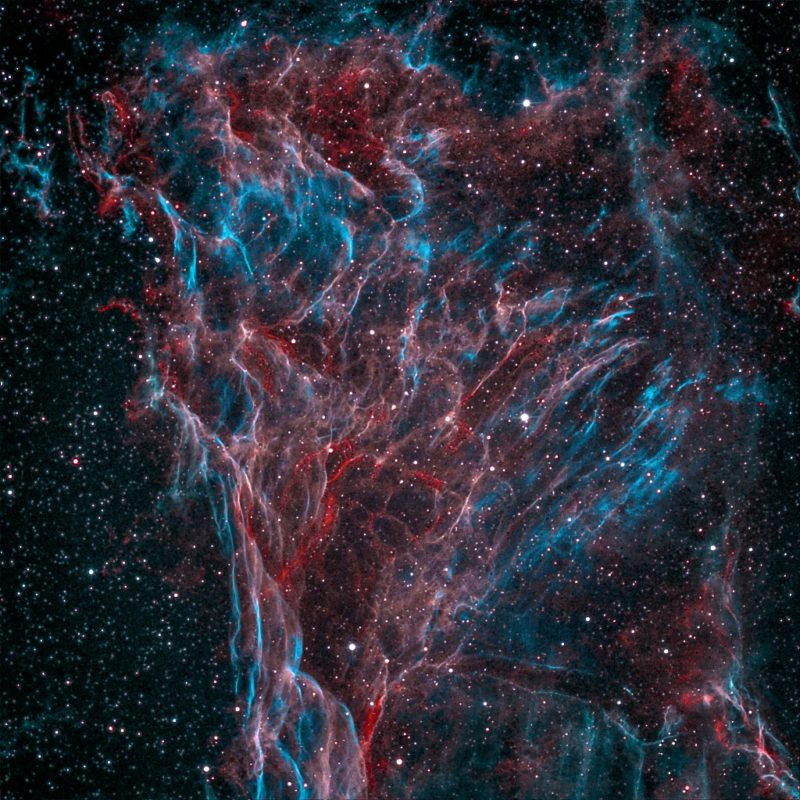
In the constellation Cygnus, a celestial masterpiece unfolds—the Veil Nebula. Within its intricate folds lies Pickering’s Triangle, a luminous mystery born from the explosive demise of a massive star. Let’s delve into this captivating cosmic tapestry, exploring its unique features and the intriguing story behind its discovery and name.
Location
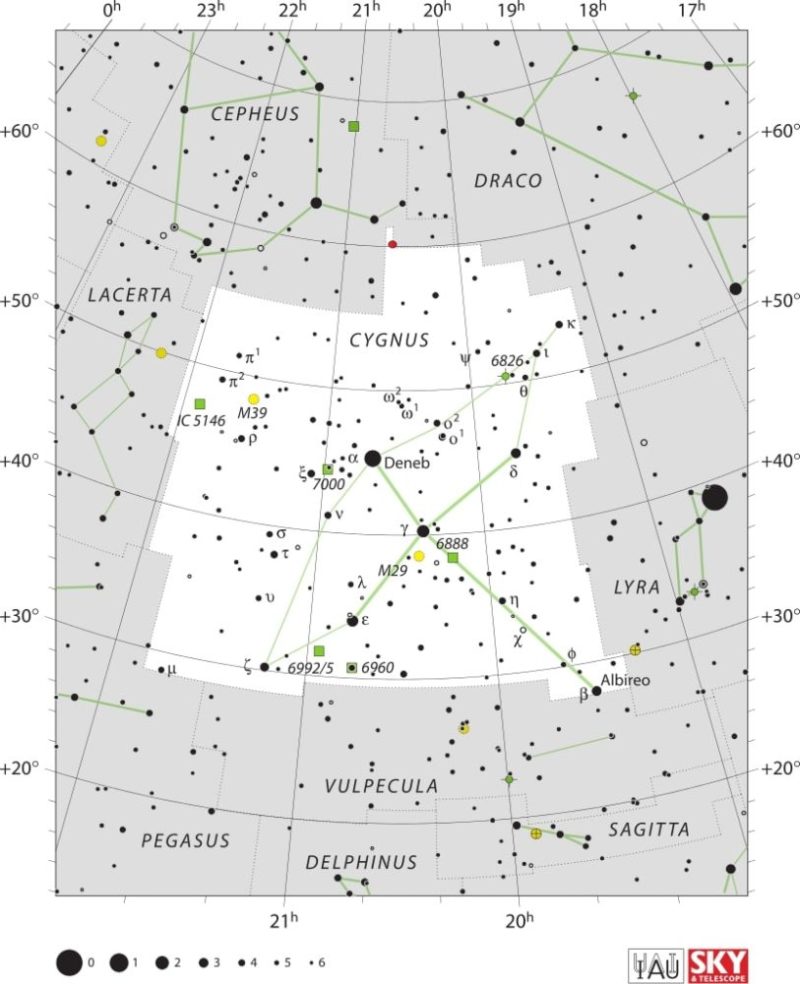
Nestled within the sprawling expanse of the constellation Cygnus, Pickering’s Triangle resides as a radiant jewel within the Veil Nebula. This celestial tapestry spans across a significant portion of the northern sky. As a result, it offers astronomers a breathtaking view of cosmic remnants from a stellar explosion that occurred approximately 10,000 to 20,000 years ago.
The Veil Nebula or Cygnus Loop, comprising several distinct sections, is a supernova remnant—a dazzling aftermath of a massive star’s dramatic demise. Among its intricate filaments and clouds of ionized gas lies Pickering’s Triangle. This is an area that stands out for its brightness and distinct features. The Veil Nebula also includes the Eastern Veil Nebula as well as the Witch’s Broom Nebula.
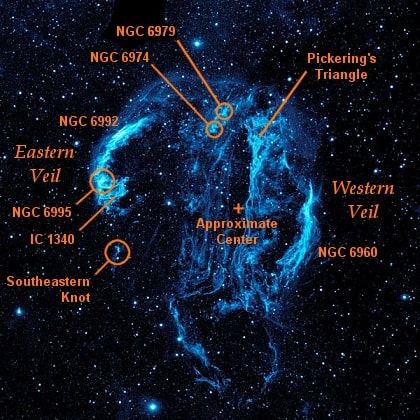
Located approximately 2400 light-years away from Earth, Pickering’s Triangle captivates observers with its intricate details. It serves as a testament to the immense forces unleashed during a supernova event. Its positioning within the larger Veil Nebula provides astronomers with a unique vantage point to study the aftermath of stellar explosions. Thus, it helps them unravel the secrets hidden within these cosmic remnants.
The region’s location in the constellation Cygnus, a prominent and easily identifiable constellation in the northern hemisphere, allows for accessible observation and scrutiny. Therefore, it makes it an intriguing target for both amateur and professional astronomers seeking to explore the wonders of the universe.
Notable Features and Characteristics
Pickering’s Triangle stands out amidst the Veil Nebula due to its distinctive luminosity and intriguing structural elements. This section of the nebula showcases a vibrant display of ionized gases—glowing clouds of hydrogen, oxygen, and sulfur. Accordingly, these elements paint a mesmerizing portrait of cosmic remnants.
Filamentary Structure
One of the most striking aspects of Pickering’s Triangle is its intricate filamentary structure. The remnants display a delicate, web-like pattern, weaving through the cosmic landscape. These filaments, composed of gas and dust, bear witness to the shockwaves from the supernova explosion that propagated through the interstellar medium.
Expansion and Evolution
Pickering’s Triangle continues to expand and evolve over millennia. Observations and measurements of its expansion rate provide crucial insights into the dynamics of the supernova explosion. Additionally, they illuminate the subsequent interactions with the interstellar medium. Tracking this expansion offers astronomers a unique opportunity to understand the processes governing the evolution of supernova remnants.
Multi-Wavelength Observations
Studying Pickering’s Triangle across various wavelengths, from radio to X-ray, reveals different facets of its composition and physical properties. Observations conducted using different instruments and techniques allow astronomers to construct a comprehensive understanding of the nebula’s structure. Consequently, these reveal the underlying mechanisms at play.
In recent decades, space telescopes such as Hubble and Chandra have provided detailed multi-wavelength imagery. This has greatly enhanced our knowledge of the Veil Nebula’s intricate structure. JWST may also contribute infrared observations, though it is not a primary instrument for Veil Nebula imaging.
Discovery and Naming
Pickering’s Triangle, was actually discovered by Scottish-American astronomer Williamina Fleming, but credit went to Edward Charles Pickering who was the director of her observatory (Harvard College Observatory), as was the custom at the time. Despite this, sometimes the object is referred to as Fleming’s Triangle instead, albeit rarely.
It was discovered in 1904, after the New General Catalogue was already published, which explains why such a large and prominent object does not have an NGC designation. An alternate name for the object is Pickering’s Triangular Wisp. Neither “Pickering’s Triangle” nor “Fleming’s Triangle” is an official IAU designation, but both remain widely used by astronomers and astrophotographers. It is sometimes associated with catalog designations such as NGC 6979 and lies within the larger Sharpless Sh2-103 supernova remnant complex.
Conclusion
Pickering’s Triangle, nestled within the Veil Nebula in Cygnus, is a cosmic marvel revealing the aftermath of a supernova. Its luminous filaments and gases stand testament to a stellar explosion’s enduring beauty and complexity.
In its intricate details, Pickering’s Triangle embodies the cosmic drama and the awe-inspiring forces that shape our celestial landscape, a testament to the enduring quest to understand the vast expanse of our cosmos.
Would you like to receive similar articles by email?

Paul Tomaszewski
Paul Tomaszewski is a science & tech writer as well as a programmer and entrepreneur. He is the founder and editor-in-chief of CosmoBC. He has a degree in computer science from John Abbott College, a bachelor's degree in technology from the Memorial University of Newfoundland, and completed some business and economics classes at Concordia University in Montreal. While in college he was the vice-president of the Astronomy Club. In his spare time he is an amateur astronomer and enjoys reading or watching science-fiction. You can follow him on LinkedIn and Twitter.


You May Also Like
How Did Neptune Get Its Name?
Ursid Meteor Shower Guide