Panoramic Imaging for Space Telescopes: Explained
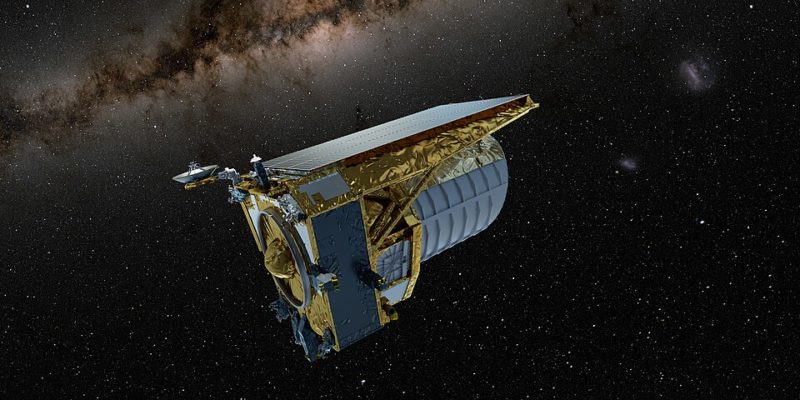
Panoramic imaging in a space telescope means capturing a very wide area of the sky at scientifically useful resolution, either with an inherently wide-field camera or with a carefully stitched mosaic of many exposures. Standard telescope imaging usually goes the other way. It spends its time on a smaller patch, often to go deeper, isolate one object, or pull out finer detail with less concern for sky coverage. Same universe, different job description.
That difference matters more than the pretty pictures suggest. In space astronomy, the field of view drives the whole system: detector size, optical correction, pointing strategy, survey cadence, calibration, even what questions the mission can answer. If you want a handful of galaxies in forensic detail, you build one kind of observatory. If you want to map billions of galaxies, trace weak gravitational lensing, catch supernovae in progress, or run a wide exoplanet survey, you build something closer to a cosmic cartography machine.
A lot of public-facing panoramas blur two ideas together. One is a true wide-field observatory, like Euclid or NASA’s Nancy Grace Roman Space Telescope, designed from day one to see a broad sweep of sky. The other is a narrow-field observatory, like Hubble or JWST, making a panoramic image by tiling many frames and processing them into a mosaic. Both are legitimate. They just get there by different engineering routes.
What does panoramic mean in space astronomy?
Field of view
When astronomers say “panoramic,” they are usually talking about field of view first, not magnification, not color, not whether the final image looks cinematic on a poster. Field of view is simply how much sky lands on the detector at once. A panoramic camera sees more sky per exposure. A narrow-field instrument sees less, but often spends that optical budget on depth, spectral detail, or very fine sampling.
A useful mental shortcut looks like this:
- Narrow field favors a small sky patch, often for deep or targeted work
- Panoramic field favors coverage, survey speed, and statistical astronomy
- Mosaic panoramas simulate a wide field by combining many narrow frames
- Survey-grade panoramas demand stable calibration, not just visual stitching
That last part gets overlooked. Panoramic astronomy is not casual panoramic photography. It is not a phone sweeping across a skyline. The image has to preserve astrometry, photometry, and point-spread behavior across the frame. If the stars shift, brighten, smear, or warp differently from one corner to another, weak-lensing studies and source catalogs get ugly fast.
Survey scale
Panoramic astronomy is really survey astronomy with sharp elbows. The goal is not merely to admire a galaxy or nebula. The goal is to measure populations, distributions, shapes, motions, and change over time across huge samples. That is why wide-field missions are so valuable in cosmology. Dark matter maps, galaxy formation studies, cluster statistics, and transient hunting all need numbers at scale.
You can feel the distinction in mission language. Hubble gave us iconic deep fields and exquisite Hubble imagery of selected regions. Euclid and Roman are built to produce sky maps. As Scientific American put it in its coverage of Euclid’s panoramic vision of the cosmos, the power lies in seeing enormous celestial structure in one coherent survey instead of collecting isolated masterpieces.
Single frame vs mosaic
A panoramic image in space may come from one exposure on a large focal plane, or from hundreds of smaller exposures aligned and merged later. Those are not interchangeable, though the finished picture can look similar to the public.
Hubble’s famous work on the Andromeda galaxy is the clean example. The Panchromatic Hubble Andromeda Treasury was not a single snap of our galactic neighbor. It was a massive mosaic, assembled from many pointings, covering the central bulge, outer disk, star clusters, dust lanes, and countless individual stars across a huge portion of the Andromeda galaxy. Gorgeous, yes. Also painstaking photographic cartography.
A true wide-field telescope cuts down the amount of tiling needed because the detector footprint is much larger to begin with. NASA often describes Roman as delivering Hubble-like sharpness over an area roughly 100 times larger than Hubble’s infrared field in a single shot. That is the difference between surveying with a postage stamp and surveying with a floor tile.
| Imaging mode | Sky captured per exposure | Typical strength | Typical weakness |
|---|---|---|---|
| Standard narrow-field imaging | Small | Deep targeted study, high detail on one region | Slow for large surveys |
| True panoramic wide-field imaging | Large | Fast mapping, population statistics, transient discovery | More complex optics and calibration |
| Mosaic panoramic imaging | Built from many small frames | Can create giant high-resolution views | Time-intensive, processing-heavy |
How does it differ from standard imaging?
Sky area
The blunt answer is coverage. Standard imaging asks, “What can I learn from this object or this tiny field?” Panoramic imaging asks, “What happens when I look at enough sky for patterns to emerge?”
That shift changes the science from anecdotal to statistical. One supernova is interesting. Thousands of supernovae, found with controlled cadence across the same survey footprint, become cosmology. One spiral galaxy can teach morphology. Millions of galaxies, all measured with the same instrument model and calibration chain, start betraying the geometry of the universe.
Target strategy
A narrow-field observatory often works from a target list. Point at a quasar. Revisit a protoplanetary disk. Spend hours on the Eagle Nebula. Drill down. Panoramic missions work more like territorial surveys. They scan fields, revisit them on schedule, and let discoveries emerge from coverage.
Wide-field missions find the offbeat and unexpected: faint dwarf galaxies, moving solar system objects, star-forming regions, lensing arcs, and transient events that nobody scheduled as the star attraction that night. The same survey that hunts dark matter signatures can stumble into supernovae, variable stars, or a rare cluster merger.
Depth tradeoffs
No free lunch. Astronomy never hands those out.
If you spread observing time across a larger area, each patch may get less exposure time than a dedicated narrow-field program. So panoramic work often trades some depth for breadth. Not always, and not absolutely, but often. Survey designers wrestle with cadence, exposure length, pixel scale, and limiting magnitude because every extra second spent going deeper costs area or revisit speed elsewhere.
That tradeoff is easier to see in a simple comparison:
| Question | Standard imaging usually favors | Panoramic imaging usually favors |
|---|---|---|
| Do you want the faintest possible object in one tiny field? | Yes | Sometimes |
| Do you want a uniform map of a huge sky area? | Rarely | Yes |
| Do you need large statistical samples? | Limited | Ideal |
| Do you revisit the same field to catch change over time? | Selectively | Often built into mission cadence |
Hubble and JWST weren’t designed as survey machines. They can create panoramic views, and some of those Hubble images are legendary. Still, neither was primarily designed as a panoramic survey machine in the Roman or Euclid sense. Hubble’s strength has long been optical and ultraviolet precision across modest fields. JWST, as NASA’s telescope overview makes plain, pushes hard into infrared sensitivity, thermal control, and deep observation. Different toolboxes. Complementary, not interchangeable.
Core hardware
Optics
Wide-field space telescopes live or die by corrected optics across the whole field, not just in the center. A narrow-field system can sometimes tolerate a smaller “sweet spot.” A panoramic system has to keep stars star-like over a broad detector area, which means fighting coma, astigmatism, field curvature, distortion, and scattered light with serious discipline.
Many survey telescopes use optical layouts built for broad corrected fields, sometimes with extra corrective elements or a field-flattening train near the focal plane. The aperture still matters, of course. More light means better signal. But panoramic performance is not just aperture worship. You need image quality that stays stable from one edge of the detector mosaic to the other.
Detectors
Panoramic views are often detector problems disguised as optics problems. To cover a wide field at high resolution, you need a large focal plane packed with many sensors, each one carefully matched and calibrated.
A few ingredients usually show up together:
- large detector mosaics rather than one tiny chip
- low read noise and high quantum efficiency
- stable flat-field response across the array
- well-characterized gaps between sensors, handled by dithering and overlap
Roman is a good example of this design philosophy, using a very large near-infrared detector array in its Wide Field Instrument. Euclid also leans on big detector real estate because wide surveys are impossible if the focal plane is too cramped. It sounds obvious. It still took decades of technology innovation to make practical.
Pointing control
People talk about mirror size because it sounds heroic. Fine. But panoramic astronomy also depends on the observatory not twitching.
Pointing stability, guide-star tracking, fine guidance sensors, reaction wheels, jitter control, and thermal stability all feed directly into image sharpness. If the telescope drifts during an exposure, the point-spread function broadens. If the point-spread function changes subtly across time or detector position, weak-lensing measurements start to wobble. For dark matter work, that is poison.
Image quality is never only about the mirror. It is about the observatory as a whole: optics, thermal environment, guidance, detectors, and pipeline acting in concert.
How do wide-field images form?
Exposure capture
The raw acquisition step usually involves multiple exposures, not one heroic frame. Astronomers dither the telescope by tiny amounts between shots. That helps fill detector gaps, improve sampling, reject bad pixels, and make cosmic-ray removal easier. In visible-light systems this often involves CCD or CMOS-style detector behavior; in near-infrared systems, nondestructive reads and ramp fitting enter the picture.
A public panoramic photo can look smooth and inevitable. The raw data almost never does. It arrives with cosmic-ray hits, detector artifacts, bias or dark structure, flat-field variations, geometric distortion, and background gradients. Real image formation in astronomy is pipeline work long before it becomes wallpaper.
Tiling method
If the telescope itself is not especially wide-field, astronomers tile the sky. Think overlapping floor planks, except each plank is a calibrated exposure with its own distortion map, exposure time, roll angle, and noise properties. Then software registers the star positions, matches backgrounds, and combines the frames into a larger mosaic image.
Hubble did this repeatedly. The famous Andromeda survey, various Hubble survey products, and many panoramic views of nebulae or star clusters all depended on this strategy. One frame sees a fragment. Hundreds of aligned frames create a sweeping view.
The alignment work is not cosmetic. It is astrometric. Distortion correction and world coordinate system solutions have to be right, or the source catalog drifts and the science suffers. This is one reason I’ve always liked Hubble’s panoramic output so much. Beneath the public glamour sits years of boring, exacting engineering. That is where the confidence comes from.
Data calibration
Calibration is where pretty astronomy becomes trustworthy astronomy. The pipeline subtracts detector signatures, corrects for flat-field response, removes cosmic rays, maps distortions, aligns the exposures, and often uses drizzle-style resampling to preserve resolution while combining dithered frames.
Then comes photometric calibration, source extraction, and catalog generation. For survey missions, consistency matters more than drama. If one corner of the panorama records flux a little differently than another, galaxy counts, star colors, and shape measurements pick up systematic error. Wide-field observatories spend enormous effort making the whole field behave like one coherent instrument.
A “panoramic image” for public release may also be color-mapped, contrast-stretched, and artistically balanced. That is normal. Those outreach images are usually derived from valid data, but the scientific measurements come from calibrated data products, not from the final outreach rendering.
Scientific uses
Dark matter maps
Panoramic imaging in a space telescope is almost tailor-made for weak gravitational lensing. Dark matter does not glow, so astronomers infer its distribution by measuring the tiny shape distortions it imposes on background galaxies. You need huge numbers of galaxies spread across huge areas, all measured with exceptional control of the point-spread function.
Missions like Euclid matter because they are not merely producing one more galaxy gallery. They are measuring the large-scale structure of the universe and the scaffolding in which galaxies form, merge, and evolve. The result is a map of invisible mass from visible distortions. Rather elegant, really.
Exoplanet surveys
Roman’s exoplanet work shows another strength of panoramic strategy. Instead of staring at one nearby planetary system the way a direct-imaging or transit mission might, a wide-field survey can monitor dense star fields for gravitational microlensing events. If a foreground star with planets passes in front of a background star, the temporary brightening can reveal the planets.
That method needs huge numbers of stars in the same field and repeated observations with precise timing. Panoramic imaging for space telescopes delivers exactly that. It turns crowded stellar regions from a nuisance into an asset.
Transient events
Supernovae, kilonova candidates, tidal disruption events, variable stars, moving objects, flaring active galaxies, the whole unruly transient zoo, these phenomena reward wide repeated coverage. A standard pointed observation might catch one by luck. A panoramic survey is built to discover them as a matter of routine.
A panoramic observatory can watch an area about the size of the full Moon, or larger in survey terms, with enough fidelity to notice what changed. In transient astronomy, timing and repetition matter almost as much as raw sharpness.
Advantages and limits
The advantages are obvious once you stop judging astronomy by poster value alone. Panoramic imaging surveys sky faster, finds rare events more efficiently, builds large and uniform samples, and gives astronomers context. Context is gold. A single galaxy is interesting. A galaxy in its environment, with neighbors, lensing structure, star formation pattern, cluster membership, and time-domain behavior, becomes science with muscle.
The limits are just as real. Wide fields are harder to correct optically. Large detector mosaics are costly and fussy. Data volume can be brutal. Broad surveys may sacrifice some depth per target. Crowded fields can become confusion-limited. And a panoramic view still does not replace spectroscopy, high-cadence follow-up, or extremely deep narrow observations. It sets the table. Other instruments still cook the meal.
Which missions show this best?
Hubble deserves respect here, though with precision. The National Academies review of Hubble’s scientific impact makes clear how transformative the observatory has been, and Hubble mosaics of the Whirlpool Galaxy, the Eagle Nebula, and the Andromeda galaxy remain some of the best-known panoramic products in astronomy. Still, Hubble usually achieves panoramas through planned mosaics, not through an enormous native field of view.
JWST is similar in spirit, though shifted into infrared and early-universe work. Its panoramas are often assembled, and its strength lies in sensitivity to cool, dust-obscured, and very distant objects. If Hubble often gives the broad optical context, JWST reveals the buried structure inside that context. I suspect that pairing will define a lot of galaxy formation work for years.
Roman and Euclid are the cleaner examples of panoramic survey design. They are not simply making beautiful views. They are optimized for wide-field cosmology and discovery space. That means broad sky coverage, uniform calibration, and survey strategies built around large samples rather than handpicked showpieces.
| Mission | Panoramic role | Best known for in this context |
|---|---|---|
| Hubble Space Telescope | Mosaic panoramas from narrower fields | High-resolution optical surveys and iconic stitched views |
| James Webb Space Telescope | Mosaic panoramas, especially in infrared | Seeing through dust and into the early universe |
| Euclid | True wide-field survey observatory | Dark matter and dark energy mapping through weak lensing and large-scale structure |
| Nancy Grace Roman Space Telescope | True panoramic wide-field mission | Fast sky surveys, exoplanet microlensing, cosmology |
Mission status update (2025–2026): Euclid launched July 2023 and is surveying; Roman is targeting launch no later than May 2027; Rubin Observatory achieved first light June 2025 and is commissioning.
FAQ
Is panoramic imaging just a really big photo from space?
Not in the casual sense. It is a calibrated scientific image or mosaic covering a large area of sky, with known geometry, brightness scaling, and detector behavior.
Does panoramic mean lower resolution?
Not necessarily. It usually means more sky at once. Resolution depends on optics, detector sampling, and stability. Roman, for example, is designed to keep very sharp imaging over a broad field.
Are Hubble panoramas single images?
Often no. Many famous Hubble panoramas are mosaics built from many exposures. The Panchromatic Hubble Andromeda Treasury is a textbook case.
Why not make every space telescope panoramic?
Because telescope design is all tradeoffs. Some missions need deep spectroscopy, very high contrast, extreme infrared sensitivity, or specialized timing rather than huge sky coverage.
Why is space so useful for wide-field imaging?
No atmosphere. That means no seeing blur, no weather, less background in some bands, and much more stable imaging across long campaigns. Orbit removes the turbulence and absorption that sabotage ground observations.
Conclusion
Panoramic imaging in space telescopes is really about scale with discipline. It captures wide sky areas without surrendering scientific rigor, whether through giant focal planes or mosaics assembled from many narrower frames. Standard imaging goes narrow and often deeper. Panoramic imaging goes broad and discovers patterns, populations, and surprises that only appear when you stop staring through a keyhole and open the window.
Would you like to receive similar articles by email?

Paul Tomaszewski
Paul Tomaszewski is a science & tech writer as well as a programmer and entrepreneur. He is the founder and editor-in-chief of CosmoBC. He has a degree in computer science from John Abbott College, a bachelor's degree in technology from the Memorial University of Newfoundland, and completed some business and economics classes at Concordia University in Montreal. While in college he was the vice-president of the Astronomy Club. In his spare time he is an amateur astronomer and enjoys reading or watching science-fiction. You can follow him on LinkedIn and Twitter.


You May Also Like

Sustainable Practices in Mining: How Modern Mining Pumps Reduce Environmental Impact
How Did Jupiter’s Moon Ganymede Get Its Name