NGC 7822: A Cosmic Question Mark
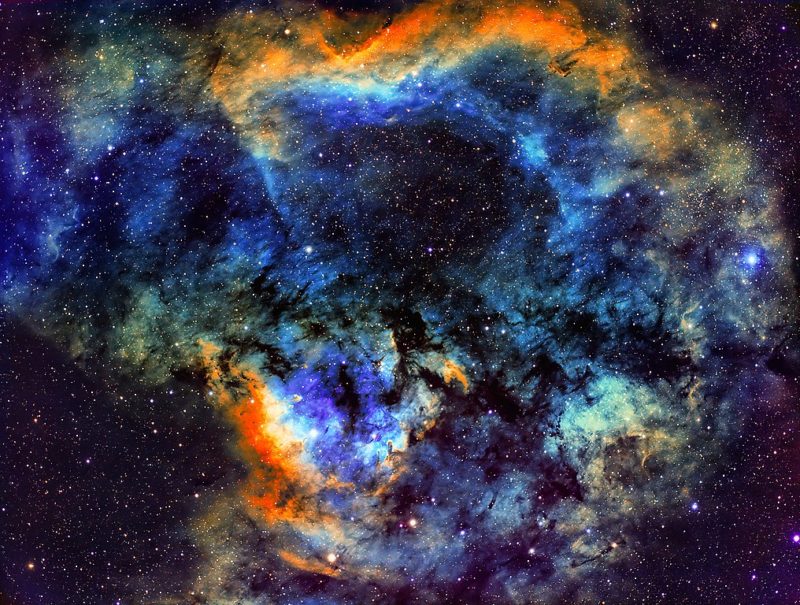
NGC 7822, a stunning and awe-inspiring celestial wonder in the shape of a cosmic question mark, is a haven for star formation. With its intricate and mesmerizing features, this astronomical masterpiece is a sight to behold for enthusiasts and experts alike.
In this article, we will delve into the astonishing features of this nebula. We will explore its secrets and uncover the treasures that lie within.
Where Is NGC 7822 Located?
This unique nebula, located in the constellation of Cepheus, has been a subject of intense scrutiny in recent years. Scientists seek to unravel its mysteries and understand its origin and structure. Despite its distance of about 2,900 light-years from Earth, NGC 7822 has revealed spectacular beauty to those who have studied it. Its intricate patterns of gas clouds, dust clumps, and stellar winds are especially notable.
The Structure of NGC 7822
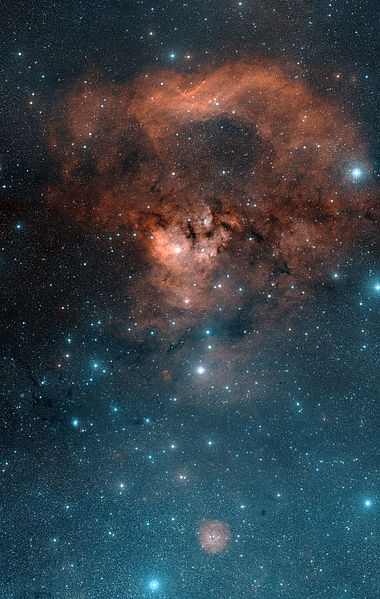
NGC 7822 is actually made up of two major components. A beautiful emission nebula designated as Sharpless 171 and a young cluster of stars named Berkeley 59. The entire complex looks a cosmic question mark—a nickname that comes from wide-field images of the region. See for yourself below.
A Stellar Nursery
Astronomers have discovered that this unique nebula is a haven for star formation and a complex structure that consists of gas clouds, dust clumps, and stellar winds. The most striking feature of this nebula is its intricate network of filaments that extend across the entire region. These filaments are the result of shock waves that have been created by the powerful winds of young stars formed within the nebula.
The region also contains dramatic pillar-like structures and elephant trunks sculpted by the radiation and stellar winds of massive stars. These towering formations are similar to those found in the famous Eagle Nebula. Moreover, they provide astronomers with valuable insight into the processes that govern star formation.
Berkeley 59 itself is only a few million years old and contains numerous young stars. The energetic radiation from its most massive members continues to shape nearby clouds of gas and dust, potentially triggering new generations of stars.
Recent studies (2022) have also revealed expanding molecular shells around Sharpless 171 and Berkeley 59. Therefore, these findings offer new insight into the dynamics of the region’s growth.
One of the Hottest Stars in the Orion Arm
In addition, NGC 7822 is home to several massive stars, including one of the hottest known stars within about 1,000 parsecs of the Sun, namely BD+66 1673. That star is of the O5V type and is part of a binary star system. Also, it has a surface temperature of almost 45,000 K and a luminosity of as much as 100,000 times that of our Sun!
Astrophotography and Observation
NGC 7822 is a popular target among astrophotographers due to its intricate emission structures and distinctive appearance. Narrowband imaging techniques can reveal spectacular details in the region’s hydrogen, oxygen, and sulfur emissions. Its large apparent size makes it especially well suited for wide-field imaging systems.
Conclusion
Astronomers have been able to reveal the spectacular beauty of NGC 7822, which has captivated the imagination of many. As an active stellar nursery, it offers astronomers a valuable opportunity to study how massive stars interact with and shape their surrounding environment. Its remarkable structures, ongoing star formation, and striking appearance continue to make NGC 7822 one of the most fascinating regions in our cosmic neighborhood.
Would you like to receive similar articles by email?

Paul Tomaszewski
Paul Tomaszewski is a science & tech writer as well as a programmer and entrepreneur. He is the founder and editor-in-chief of CosmoBC. He has a degree in computer science from John Abbott College, a bachelor's degree in technology from the Memorial University of Newfoundland, and completed some business and economics classes at Concordia University in Montreal. While in college he was the vice-president of the Astronomy Club. In his spare time he is an amateur astronomer and enjoys reading or watching science-fiction. You can follow him on LinkedIn and Twitter.


You May Also Like
December Phi Cassiopeid Meteor Shower Guide
Is Mercury Theia? Evidence, Theories, and What Scientists Know