NGC 7380: The Spellbinding Charms of the Wizard Nebula
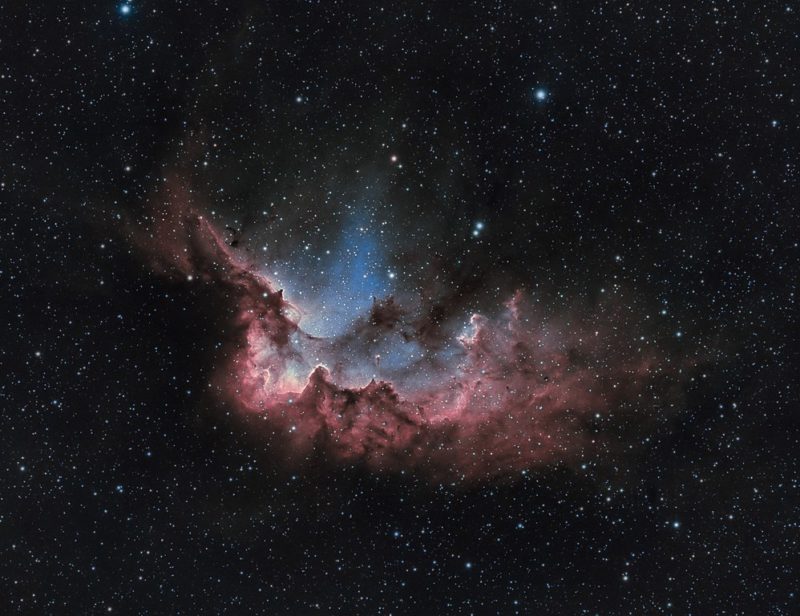
The NGC 7380, also known as the Wizard Nebula, is a spectacular celestial wonder. It has captivated astronomers and stargazers alike for years. Its striking appearance, resembling a wizard holding a staff, has earned it its popular name.
In this article, we will delve into the alluring charms of the NGC 7380 and explore what makes it such an enchanting sight to witness.
NGC 7380 Location
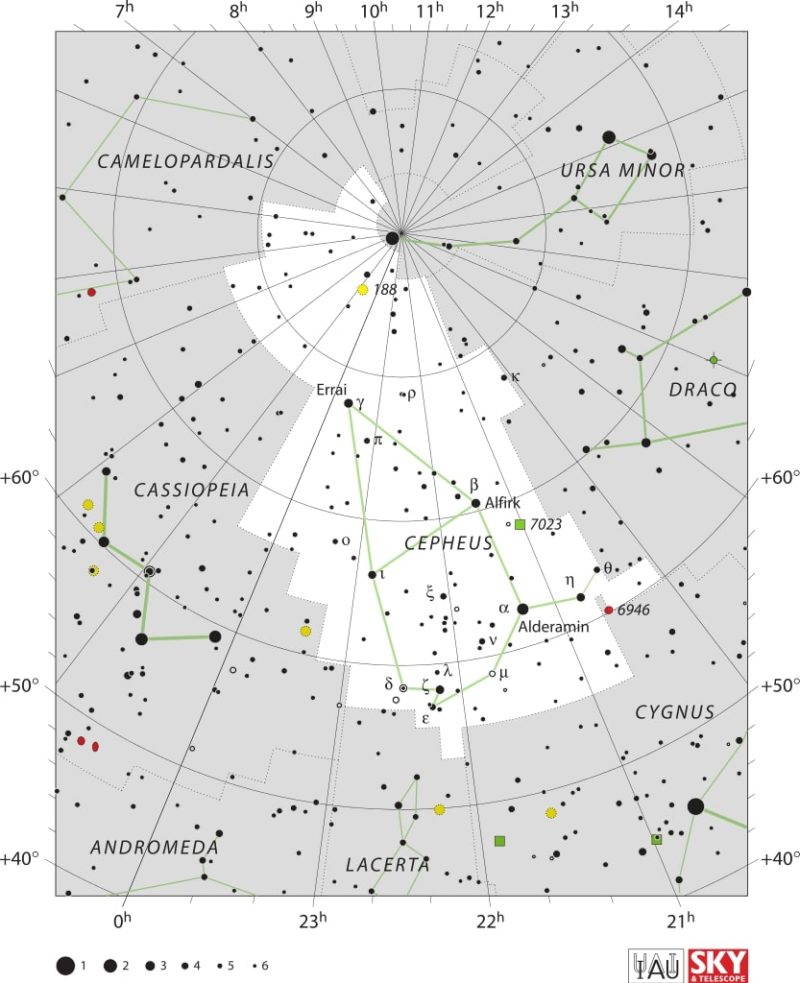
The Wizard Nebula is a stunningly beautiful and fascinating astronomical object located in the constellation of Cepheus. It is about 7,000 light-years from Earth in the Perseus Arm of the Milky Way. It spans about 20 light-years across, although estimates vary depending on the region being measured. The nebula has an elongated shape and an extended tail.
Open Star Cluster or Nebula?
Actually both! NGC 7380 is an open star cluster surrounded by a H II region, which is a vast region of ionized hydrogen gas energized by intense ultraviolet radiation from hot young stars. Those clouds of gas and dust are what’s visible as a nebula. The cluster is composed of young stars estimated to be between 4 and 11.9 million years old. However, age estimates vary among studies.
One of the most influential stars in the region is DH Cephei. It is a massive multiple-star system whose powerful radiation helps ionize the surrounding gas and shape much of the nebula’s appearance.
Exploring its Magnificent Structure and Colorful Appearance
NGC 7380, also known as the Wizard Nebula, is a mesmerizing masterpiece of the universe. Its magnificent structure and colorful appearance make it a fascinating subject for astronomers and space enthusiasts alike.
The nebula is composed of a cluster of stars, which illuminate the gas and dust clouds surrounding them. This creates a stunning display of hues ranging from deep reds to vibrant blues and greens. These colors are typically revealed through long-exposure astrophotography and narrowband filters, such as the Hubble palette, rather than visible to the naked eye. The intricate details of the nebula’s structure are visible in high-resolution images. These reveal ornate filaments and swirls of gas and dust.
The Wizard Nebula has become a favorite target among astrophotographers. This is because strong emissions from hydrogen, oxygen, and sulfur create dramatic contrasts in narrowband images.
Its unique shape, resembling a wizard casting a spell, adds to its mystical allure. It is truly a wonder of the universe, and its intricate structure and vibrant colors continue to captivate and inspire us.
An Overview of Its History and Discovery
The nebula was first observed by Caroline Herschel in 1787, and later cataloged by her brother William Herschel. Over the years, scientists have delved deeper into the history of NGC 7380. They have studied its evolution and formation. Moreover, it has been included in the Sharpless catalog under the designation of Sh2-142.
Modern observations from NASA’s Spitzer Space Telescope, Chandra X-ray Observatory, and other instruments have revealed protostars, young stellar objects, and ongoing star formation in the nebula. These processes are shaped by powerful stellar winds and ionization fronts. In some areas, radiation and stellar winds from massive stars may be compressing nearby clouds of gas. This could potentially trigger the formation of new generations of stars.
Infrared observations have also uncovered numerous young stars. These are hidden behind dense clouds of dust that would otherwise remain invisible in visible-light images.
Today, NGC 7380 remains a popular target for amateur astronomers and astrophotographers due to its vivid colors and unique shape.
Conclusion
NGC 7380, also known as the Wizard Nebula, offers a captivating charm and mystical presence. It has fascinated astronomers and stargazers alike for centuries. The nebula’s unique structure and colorful appearance make it a stunning sight to behold. This is especially true when viewed through different mediums of artistic expression.
Despite its discovery in the late 18th century, NGC 7380 continues to amaze and inspire astronomers with its fascinating history. The nebula’s alluring charms are truly spellbinding, and it is no wonder that it continues to be a popular subject of study and artistic interpretation. From its intricate details to its sweeping beauty, NGC 7380 is a true wonder of the cosmos. It leaves a lasting impression on all who witness its magnificence.
Would you like to receive similar articles by email?

Paul Tomaszewski
Paul Tomaszewski is a science & tech writer as well as a programmer and entrepreneur. He is the founder and editor-in-chief of CosmoBC. He has a degree in computer science from John Abbott College, a bachelor's degree in technology from the Memorial University of Newfoundland, and completed some business and economics classes at Concordia University in Montreal. While in college he was the vice-president of the Astronomy Club. In his spare time he is an amateur astronomer and enjoys reading or watching science-fiction. You can follow him on LinkedIn and Twitter.


You May Also Like

A Glance at the Different Types of Farm Soil

Choosing the Right Material for Medical Device Enclosures