NGC 7023: The Iris Nebula
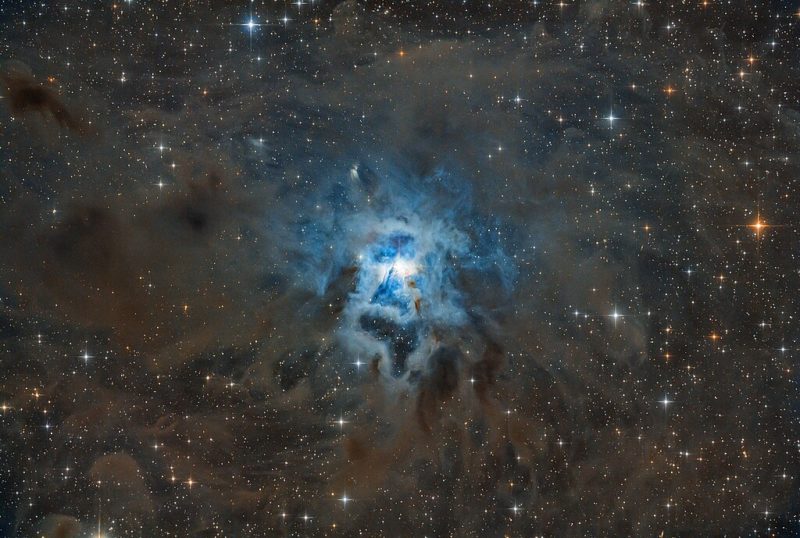
NGC 7023, also known as the Iris Nebula, is a stunning celestial object that continues to captivate space enthusiasts around the world. In this article, we will embark on an exciting exploration of this mesmerizing cosmic entity, uncovering its unique beauty and intricate details.
Introduction to the NGC 7023
The Iris Nebula is a beautiful and intriguing reflection nebula, meaning that it reflects light from nearby stars. The nebula’s dusty core is surrounded by a bright blue reflection nebula. This reflection nebula is illuminated by a young star (HD 200775) in its formative years. Its name comes from its flowery appearance, which resembles the iris flower.
Technically the designation NGC 7023 refers only to the open cluster within the Iris Nebula, not the whole nebula. However, the two are often used interchangeably. Some modern catalogs also identify NGC 7023 with the reflection nebula itself. Meanwhile, the embedded cluster is separately designated Cr 429. Other designations for the nebula include: LBN487, Caldwell 4, and Cr 429.
The illuminating star system is HD 200775, a Herbig Be binary system that is actively shaping the surrounding gas and dust with intense radiation and stellar winds.
Iris Nebula Location
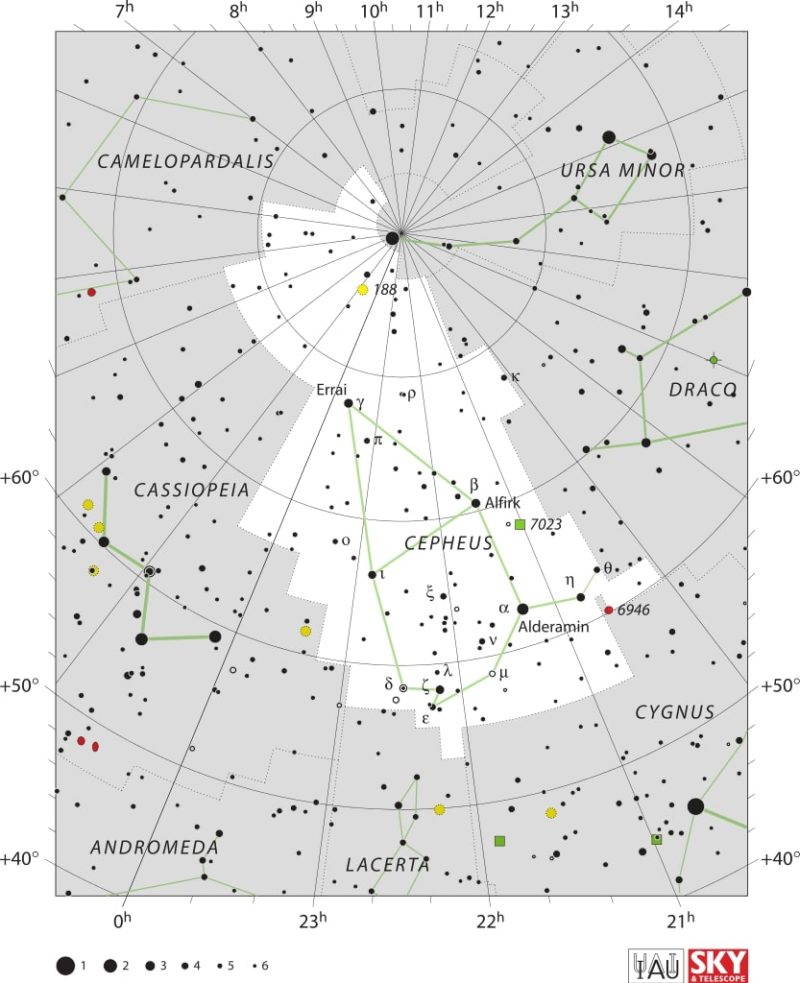
The NGC 7023 cluster and Iris Nebula are located 1,300 light-years away in the constellation of Cepheus. This is near the stars T Cephei and Beta Cephei (Alfirk). The nebula spans over six light-years in diameter. However, this size can vary depending on the wavelength of observation.
Scientific Significance of the Iris Nebula
The Iris Nebula, is a breathtakingly beautiful nebula but its significance goes beyond its aesthetic appeal. The nebula is a prime target for scientific study due to its unique properties. Its dust clouds and gas pockets offer insight into the formation and evolution of stars.
In fact, NGC 7023 has been extensively studied in the infrared spectrum, revealing the presence of complex organic molecules such as polycyclic aromatic hydrocarbons. These molecules are essential building blocks of life. Moreover, their presence in NGC 7023 suggests that similar organic molecules may be present in other parts of our galaxy.
Observations from space telescopes such as Spitzer and Herschel have also detected additional organic compounds and detailed dust structures. This further underscores the nebula’s importance to astrochemistry.
Recent observations from the James Webb Space Telescope have further advanced this research, revealing unprecedented fine structure in polycyclic aromatic hydrocarbon (PAH) emission regions. These observations also show sharply defined dust filaments that were not previously resolved.
The Iris Nebula is also a classic example of a photodissociation region (PDR), where ultraviolet radiation from the central star system interacts with surrounding molecular gas and dust. This process creates layered chemical zones that transition from ionized to atomic to molecular material.
Conclusion
In summary, the Iris Nebula showcases a stunning beauty that leaves us in awe. Its intricate features and structure provide us with a glimpse into the fascinating world of astronomy and the mysteries of the universe. As we continue to uncover the secrets of NGC 7023, we can only imagine what other wonders and mysteries await us in the vast expanse of space. Therefore, let us continue to appreciate and explore the beauty and complexity of this nebula and all that the universe has to offer.
Would you like to receive similar articles by email?

Paul Tomaszewski
Paul Tomaszewski is a science & tech writer as well as a programmer and entrepreneur. He is the founder and editor-in-chief of CosmoBC. He has a degree in computer science from John Abbott College, a bachelor's degree in technology from the Memorial University of Newfoundland, and completed some business and economics classes at Concordia University in Montreal. While in college he was the vice-president of the Astronomy Club. In his spare time he is an amateur astronomer and enjoys reading or watching science-fiction. You can follow him on LinkedIn and Twitter.


You May Also Like
Caelum Constellation Guide

The Different Types of Work Gloves and Their Benefits