NGC 6888: The Crescent Nebula
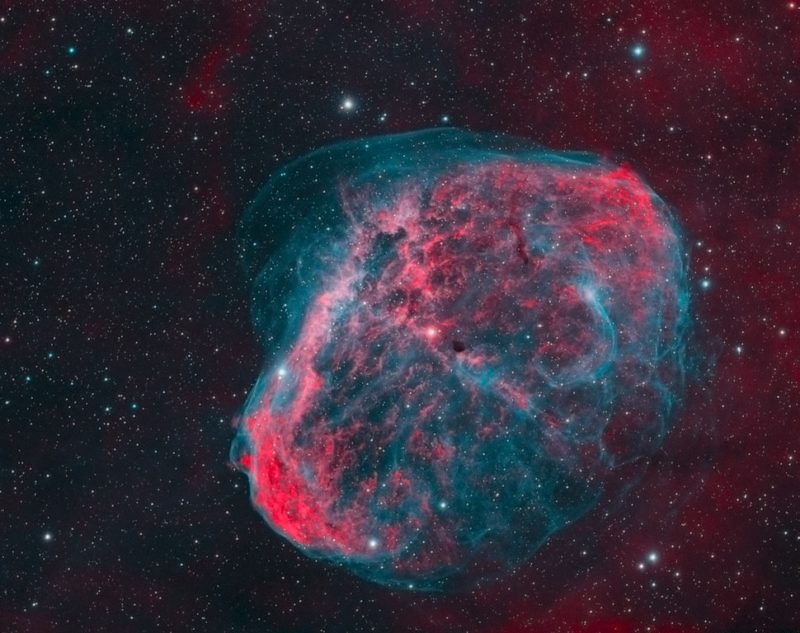
NGC 6888, also known as the Crescent Nebula, has been a subject of fascination for astronomers for many years. Through careful observations and scientific analysis, experts have been able to unravel some of the secrets behind this stunning phenomenon.
In this article, we will delve into the science behind NGC 6888 and explore the latest discoveries in this field.
NGC 6888 Location
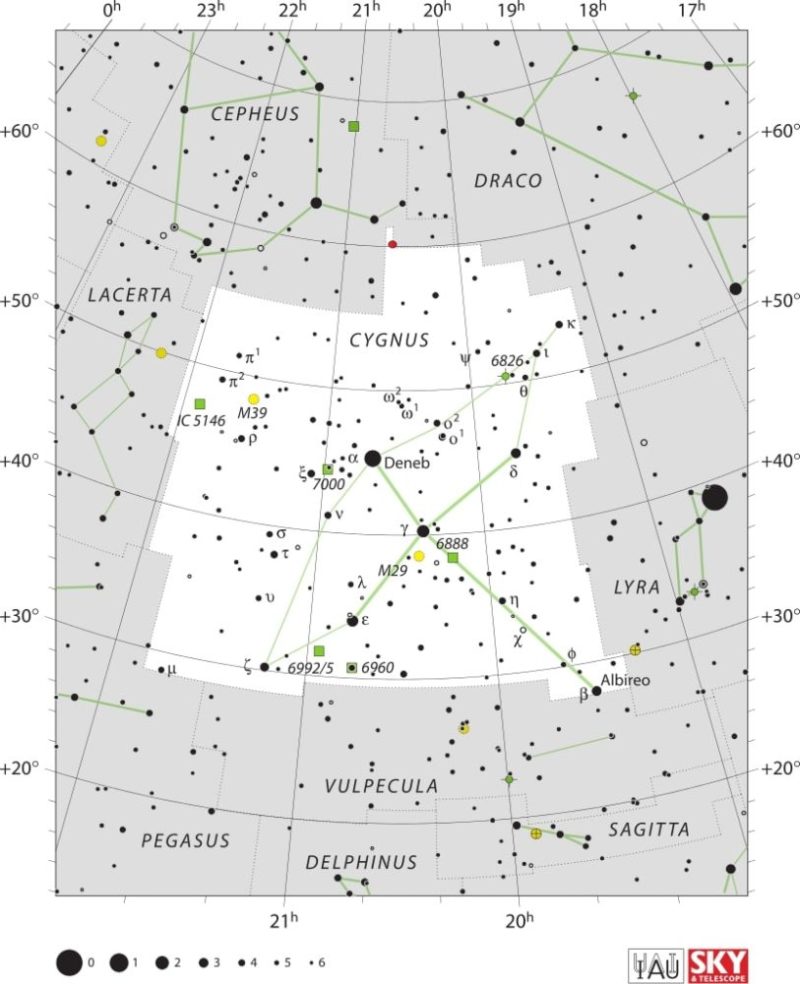
NGC 6888 (also known as the Crescent Nebula, Caldwell 27, and Sharpless 105) is an emission nebula located in the constellation of Cygnus about 5000 light-years away from Earth. It is one of the best-known examples of a Wolf-Rayet nebula. In fact, it was formed by the powerful stellar winds of a massive Wolf-Rayet star.
Discovery of NGC 6888
The history of NGC 6888 dates back to the late 18th century when it was first observed by the famous astronomer William Herschel in 1792. Over the years, NGC 6888 has been the subject of numerous studies and observations. Each of these studies has added to our understanding of this unique stellar phenomenon.
Formation of the Crescent Nebula
The Crescent Nebula has always been a fascinating object for astronomers due to its unique shape and structure. However, it is only through the advancements in science and technology in recent years that we have been able to uncover some of the secrets hidden within this celestial object. By using various telescopes and imaging techniques, scientists have been able to study the nebula’s physical structure, dynamics, and chemistry.
They have discovered that the Crescent Nebula is a result of the massive Wolf-Rayet star WR 136 (HD 192163) having shed its outer layers in a powerful stellar wind. This has created a bubble-like structure around the star. Now, the bubble is illuminated by the star’s intense radiation.
NGC 6888 consists of the collision of two shock waves, one moving outward and one moving inward. The collision compresses and heats the gas. As a result, it produces the glowing shell observed today. This glowing gas is rich in ionized hydrogen, oxygen, and sulfur, which produce the brilliant red, blue-green, and deep red colors often seen in astrophotographs.
The fast stellar wind from the star collides with wind ejected when the star became a red giant around 250,000 years ago. This star is expected to finish its life within the next several hundred thousand years. In fact, it will likely do so in less than one million years, though with significant uncertainty, by exploding as a supernova.
Recent observations from space- and ground-based observatories, including the Hubble Space Telescope, the James Webb Space Telescope, and X-ray telescopes, have revealed intricate filaments, turbulent shock fronts, and hot gas within the nebula. The gas reaches temperatures of millions of degrees. These observations continue to improve astronomers’ understanding of how massive stars shape their surroundings before ending their lives as supernovae.
Conclusion
In short, the enigmatic beauty of the Crescent Nebula has captivated astronomers for centuries. From its discovery by William Herschel to the recent advancements in technology, our understanding of this celestial marvel has deepened significantly. Through meticulous observation and scientific inquiry, we’ve unraveled some of the secrets behind its formation—a stunning result of a massive star shedding its layers in a powerful stellar wind. This process creates a breathtaking bubble illuminated by intense radiation. As we continue to explore and analyze this cosmic spectacle, NGC 6888 stands as a testament to the ever-evolving nature of our understanding of the universe.
Would you like to receive similar articles by email?

Paul Tomaszewski
Paul Tomaszewski is a science & tech writer as well as a programmer and entrepreneur. He is the founder and editor-in-chief of CosmoBC. He has a degree in computer science from John Abbott College, a bachelor's degree in technology from the Memorial University of Newfoundland, and completed some business and economics classes at Concordia University in Montreal. While in college he was the vice-president of the Astronomy Club. In his spare time he is an amateur astronomer and enjoys reading or watching science-fiction. You can follow him on LinkedIn and Twitter.


You May Also Like
Why Are Star Clusters Ideal Laboratories for Stellar Evolution?
How Did Uranus Get Its Name?