NGC 6523: A Close Look at the Lagoon Nebula
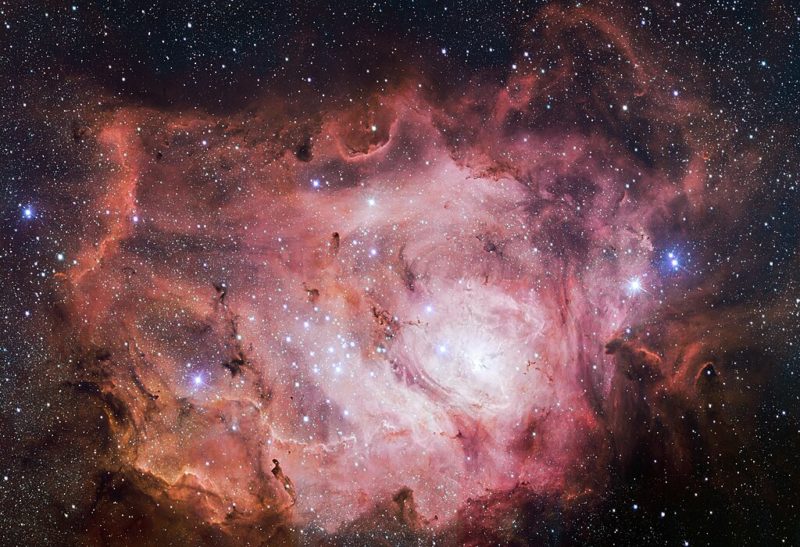
In the heart of Sagittarius, a cosmic masterpiece awaits discovery—the Lagoon Nebula or NGC 6523. Cloaked in celestial allure, it beckons astronomers and stargazers alike.
Join us on an exploration of its mysterious location, the intriguing tale of its discovery, and the captivating enigma of its physical characteristics.
Lagoon Nebula Location
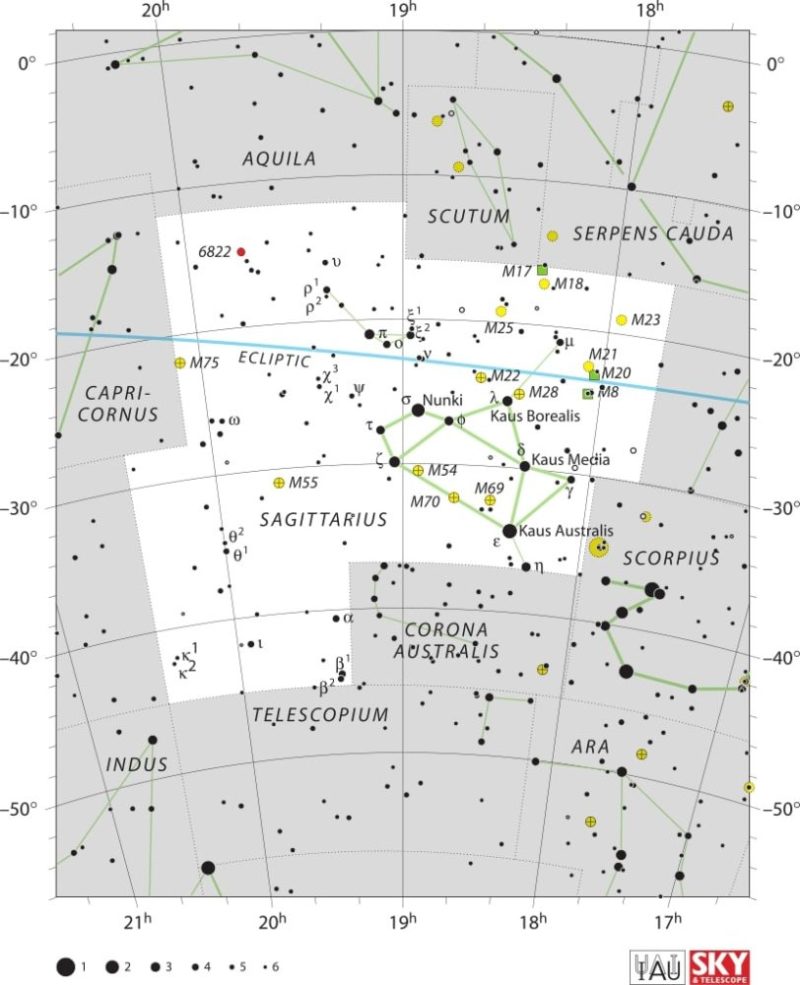
The Lagoon Nebula (also known as NGC 6523, Messier 8, or Sharpless 25) is located 4,100 light-years away within the Carina-Sagittarius Arm of the Milky Way galaxy. This emission nebula can be seen in the Sagittarius constellation. It spans about 110 by 50 light-years. Moreover, it can even be spotted with the naked eye under dark skies.
Discovery of NGC 6523
The Lagoon Nebula was discovered by Italian astronomer Giovanni Hodierna among various other celestial objects, in the mid-17th century. His pioneering efforts, often recognized as foundational contributions to observational astronomy, provide a historical context to the exploration of NGC 6523. However, his work remained relatively obscure until much later.
Building upon the works of predecessors like Hodierna, the Lagoon Nebula’s discovery journey continued through subsequent astronomers. Each contributed to the unfolding story of this captivating cosmic phenomenon. As a result, the narrative of its identification is a collaborative effort spanning centuries. This story reflects the evolution of astronomical observation techniques and the collective pursuit of unraveling the mysteries of the night sky.
The nebula’s recognition was subsequently bolstered by the pioneering work of Charles Messier, a French astronomer renowned for his compilation of astronomical objects. In 1764, Messier cataloged the Lagoon Nebula as the 8th entry in his renowned catalog, labeling it Messier 8 (M8). His meticulous documentation solidified the nebula’s status as an astronomical entity. This marked a pivotal moment in its observational history. In addition, Messier’s cataloging helped popularize the Lagoon Nebula among astronomers and ensured its enduring place within observational astronomy.
Advancements in observational technology during the 19th and 20th centuries further enriched our understanding of the Lagoon Nebula. The advent of powerful telescopes and the utilization of different wavelengths for observation provided astronomers with deeper insights into the nebula’s composition, structure, and the stellar processes unfolding within its cosmic confines. Furthermore, modern observatories such as the Hubble Space Telescope, Spitzer Space Telescope, Herschel Space Observatory, and the James Webb Space Telescope have revealed increasingly detailed views of the nebula’s active star-forming regions hidden behind dense clouds of interstellar dust.
Physical Characteristics of NGC 6523
The Lagoon Nebula stands as an astronomical marvel not only for its historical discovery but also for its intricate physical characteristics. As we delve into the nebula’s makeup, we uncover a captivating interplay of elements. These contribute to its celestial allure.
Ionized Gases
The primary constituent of the Lagoon Nebula is ionized hydrogen gas, the illumination of which yields the nebula’s striking hues. This ionization process occurs when the gas is exposed to the intense ultraviolet radiation emitted by nearby, hot, and massive stars. Because of this, it is classified as an H II region as well as an emission nebula.
In addition to hydrogen, the nebula incorporates traces of helium and other elements, along with interstellar dust. These components collectively contribute to the nebula’s unique composition. Each plays a role in the spectacular interplay of colors that characterize this celestial wonder. The nebula’s vivid reddish-pink glow primarily originates from hydrogen-alpha emission. Additionally, bluish regions are caused by reflected starlight. Dark lanes cutting across the nebula consist of dense dust clouds that obscure light from more distant stars.
Bok Globules in NGC 6523
Embedded within the Lagoon Nebula are enigmatic entities known as Bok globules—dark, collapsing clouds of protostellar material. E. E. Barnard’s comprehensive cataloging effort has identified several prominent Bok globules within the nebula, with B88, B89, and B296 standing out as the most noteworthy.
These Bok globules represent pockets of dense, cold gas and dust, acting as crucibles for potential star formation. The Lagoon Nebula’s possession of these globules adds another layer to its narrative. This suggests ongoing processes of stellar birth and evolution. Furthermore, modern infrared observations with telescopes like Spitzer and Herschel have confirmed active star formation within these globules.
Astronomers have also identified young stellar objects, protostellar disks, and powerful stellar winds. These are shaping portions of the surrounding nebula.
Central Lagoon Nebula Cluster (NGC 6530)
At the epicenter of NGC 6523 lies the NGC 6530, a relatively youthful star cluster with an estimated age of around 2 million years. However, some of the earliest stars formed as early as 15 million years ago.
This cluster encapsulates a multitude of stars in various stages of evolution, from protostars to more mature, luminous bodies. The interplay between these stars and the surrounding nebula creates a dynamic environment. The cluster’s intense radiation ionizes the adjacent gas clouds. This contributes to the visually stunning effects observed from our vantage point on Earth.
Several massive O-type stars within the cluster are responsible for energizing much of the surrounding gas. They also drive ongoing star formation throughout the nebula.
Hourglass Nebula in the Center of the Lagoon Nebula
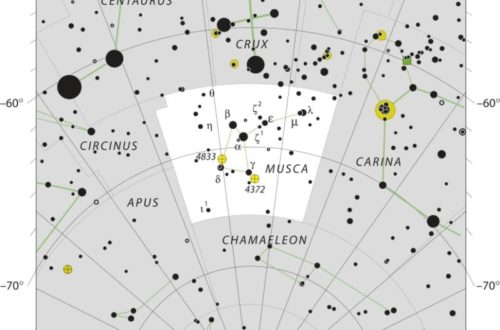
Within the heart of the Lagoon Nebula lies a structure of particular interest known as the Hourglass Nebula, a designation bestowed by John Herschel. It is crucial to distinguish this feature from the more widely recognized Engraved Hourglass Nebula located in the constellation of Musca. The Hourglass Nebula within the Lagoon Nebula adds a distinctive dimension to the nebula’s complexity.
Named for its unique shape reminiscent of an hourglass, this internal structure became a subject of heightened astronomical intrigue. Notably, in 2006, the discovery of four Herbig-Haro objects within the Hourglass Nebula marked a significant milestone. These objects provide direct evidence of ongoing star formation through accretion processes within this intriguing region of the Lagoon Nebula. Follow-up observations with Hubble and the Very Large Telescope have revealed additional jets and outflows. Therefore, these observations further confirm this active stellar nursery.
Conclusion
The Lagoon Nebula, or NGC 6523, captivates with a rich history and celestial wonders. From Giovanni Hodierna’s discovery to features like the Hourglass Nebula and central star cluster, it unfolds a tale of ongoing star formation. Exploring its ionized gases, star formation, and unique structures, we witness the dynamic interplay within. As a cosmic jewel, the Lagoon Nebula invites contemplation of the universe’s mysteries, a timeless allure echoing through the ages.
Would you like to receive similar articles by email?

Paul Tomaszewski
Paul Tomaszewski is a science & tech writer as well as a programmer and entrepreneur. He is the founder and editor-in-chief of CosmoBC. He has a degree in computer science from John Abbott College, a bachelor's degree in technology from the Memorial University of Newfoundland, and completed some business and economics classes at Concordia University in Montreal. While in college he was the vice-president of the Astronomy Club. In his spare time he is an amateur astronomer and enjoys reading or watching science-fiction. You can follow him on LinkedIn and Twitter.