NGC 6355 – A Guide to the Globular Cluster
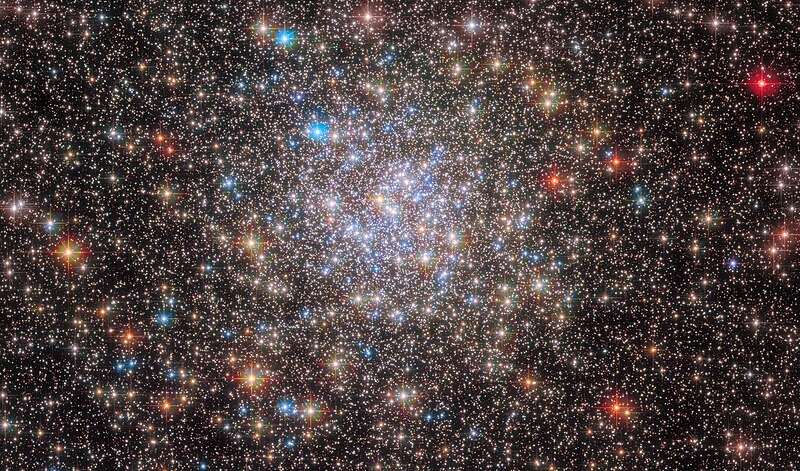
Discover the celestial marvel of NGC 6355, a stunning globular cluster nestled within the vastness of space. While its name may not roll off the tongue with familiarity like some other cosmic wonders, NGC 6355 boasts an allure that rivals even the most renowned stellar attractions. This hidden gem offers a contrast to the more popular astronomical phenomena, inviting you to delve into its mysteries and beauty.
NGC 6355 Location
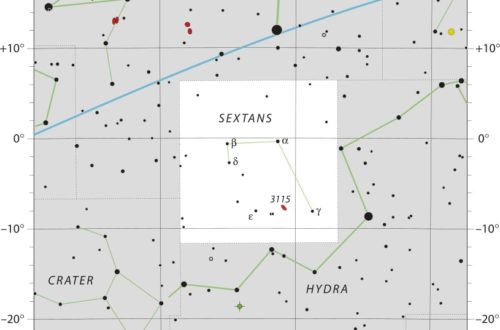
This globular cluster is located in the Milky Way galaxy within the Ophiuchus constellation.
NGC 6355 is positioned relatively close to Earth, approximately 30,000 light-years away, in the direction of the dense Galactic bulge. This proximity allows for detailed observations and studies of its characteristics.
The cluster contains many tens of thousands of ancient stars packed into a relatively small region of space. Many of these stars are ancient red giants, giving the cluster a slightly reddish hue when viewed through a telescope. It is estimated to be about 12–13 billion years old and is a metal-poor globular cluster, making it one of the Milky Way’s oldest surviving stellar systems.
Historical Discovery
NGC 6355 was first discovered in 1784 by German-British astronomer William Herschel. This discovery marked an essential milestone in understanding the composition and structure of our galaxy’s inner regions. Herschel’s careful observations of the Ophiuchus region helped map many of the Milky Way’s hidden treasures. The cluster was later included in the New General Catalogue (NGC), compiled by John Louis Emil Dreyer in 1888.
Scientific Insights
Recent studies have shown that clusters like NGC 6355 play an important role in understanding the stellar makeup and evolution of the Galactic bulge, offering astronomers valuable insights into how our galaxy formed and matured.
As an old, metal-poor globular cluster, NGC 6355 provides clues about the early chemical evolution of the Milky Way and helps researchers better understand the formation of the Galaxy’s central regions.
Observation Tips
With an apparent magnitude of about 8.6, NGC 6355 requires a medium-sized telescope under dark skies to be observed. It is not visible to the naked eye. Under exceptional observing conditions, large binoculars may reveal it as a faint fuzzy patch, but a telescope is needed to appreciate its appearance.
Use a star chart to locate the Ophiuchus constellation and focus on the dense stellar region near the Galactic bulge. A medium-sized telescope with at least 4–6 inches of aperture will reveal the cluster’s subtle glow. Its apparent diameter is only about 2 arcminutes, making it appear small and compact. Patience and dark skies are essential to fully appreciate its beauty.
Compared to more famous clusters such as M13 in Hercules or Omega Centauri, NGC 6355 is smaller and more compact, offering a unique challenge and reward for dedicated observers seeking less crowded star fields. Unlike those well-known Messier objects, NGC 6355 remains a lesser-known target, making it especially rewarding for experienced observers looking to explore beyond the Messier catalog.
Conclusion
The significance of this celestial wonder lies in its beauty and scientific value, offering a unique experience for astronomy enthusiasts like you. Its ancient stars and location within the Galactic bulge make it an important piece of the Milky Way’s history.
Take your stargazing journey to the next level. Grab your telescope, head to a suitable location, and dive into the mesmerizing globular cluster. Happy observing!
Would you like to receive similar articles by email?

Paul Tomaszewski
Paul Tomaszewski is a science & tech writer as well as a programmer and entrepreneur. He is the founder and editor-in-chief of CosmoBC. He has a degree in computer science from John Abbott College, a bachelor's degree in technology from the Memorial University of Newfoundland, and completed some business and economics classes at Concordia University in Montreal. While in college he was the vice-president of the Astronomy Club. In his spare time he is an amateur astronomer and enjoys reading or watching science-fiction. You can follow him on LinkedIn and Twitter.


You May Also Like
How Did NASA Choose the First Astronauts to Walk on the Moon
How Are Astronomers Able to Explore the Layers of the Sun Below the Photosphere?