NGC 4565: The Needle Galaxy
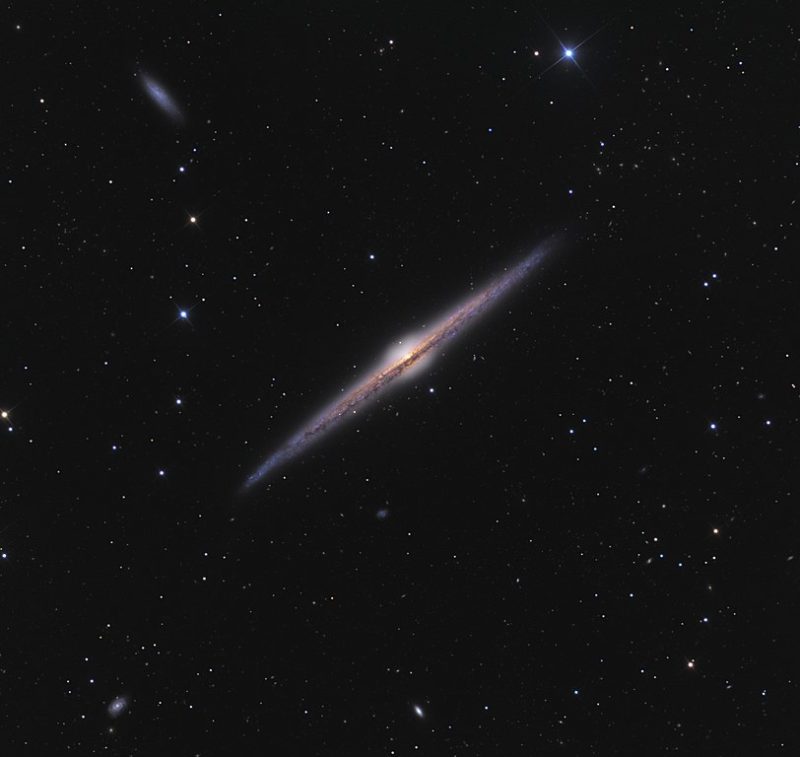
NGC 4565, also known as the Needle Galaxy, is a breathtaking sight in the night sky. Its slender shape and remarkable size make it a favourite among stargazers and astronomers alike. In this article, we’ll explore the unique features of NGC 4565. Additionally, we’ll discuss why it is a must-see for anyone interested in the beauty of the universe.
Needle Galaxy Location
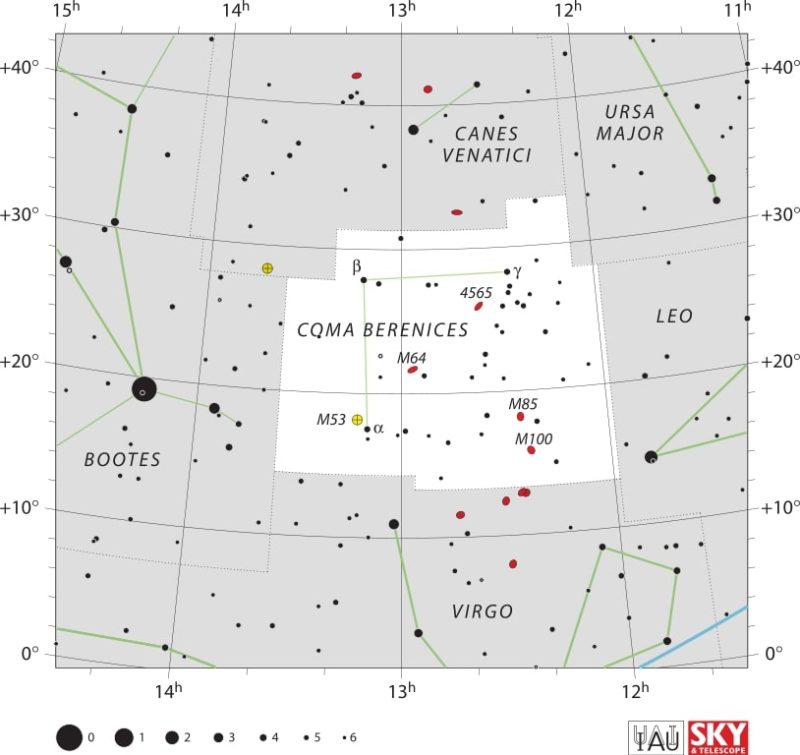
NGC 4565, also known as the Needle Galaxy, is a remarkable sight in the night sky. This edge-on spiral galaxy is located in the northern constellation of Coma Berenices near the North Galactic Pole. It is approximately 30-50 million light-years away from Earth. Furthermore, it is located in the Coma I Group of galaxies, of which NGC 4565 is one of the brightest. Like other galaxies in this region, it belongs to the larger Virgo Supercluster alongside our own Local Group. In turn, this is part of the even larger Laniakea Supercluster.
Edge-On Galaxy
The Needle Galaxy’s edge-on orientation to Earth provides a unique perspective that allows us to study its intricate structure, including a bright central bulge (a pseudobulge) surrounded by a prominent dust lane and a thin disk.
The discovery of these features has contributed significantly to our understanding of the formation and evolution of spiral galaxies. This makes NGC 4565 an exciting object of study in the field of astronomy. The pseudobulge is particularly interesting because it likely formed gradually through internal processes within the galaxy. It would not have formed through major galactic mergers. Like most large spiral galaxies, NGC 4565 is also thought to contain a supermassive black hole at its centre.
NGC 4565 Galaxy Classification
The galaxy NGC 4565, also known as the Needle Galaxy, is classified as a spiral galaxy. It is specifically categorized as a type SA(s)b or SAb spiral galaxy, indicating a weakly-barred spiral structure. This classification is based on the Hubble and de Vaucouleurs galaxy morphological systems. Due to its edge-on orientation, astronomers continue to debate whether the galaxy possesses a weak central bar. Some even wonder if it is entirely unbarred.
Conclusion
It is easy to understand why skygazers are captivated by the splendid sight of NGC 4565. This needle-shaped galaxy not only presents itself as a stunning view in the night sky, but it also holds many mysteries waiting to be uncovered. Moreover, the unique edge-on perspective of the Needle Galaxy offers a rare opportunity to observe the galactic disk and its intricate details.
Thanks to the modern advances in astronomy, we can now enjoy spectacular views of this distant world through Earth and space telescopes. We can even capture its beauty in photography. The Needle Galaxy is truly a stargazer’s dream, and we can only hope that future generations will continue to explore and admire the wonders of this remarkable galaxy.
Would you like to receive similar articles by email?

Paul Tomaszewski
Paul Tomaszewski is a science & tech writer as well as a programmer and entrepreneur. He is the founder and editor-in-chief of CosmoBC. He has a degree in computer science from John Abbott College, a bachelor's degree in technology from the Memorial University of Newfoundland, and completed some business and economics classes at Concordia University in Montreal. While in college he was the vice-president of the Astronomy Club. In his spare time he is an amateur astronomer and enjoys reading or watching science-fiction. You can follow him on LinkedIn and Twitter.


You May Also Like

Space Technology Will Protect the Vatican’s Treasures
How Did Saturn’s Moon Enceladus Get Its Name