NGC 2903: A Glimpse into the Barred Spiral Galaxy
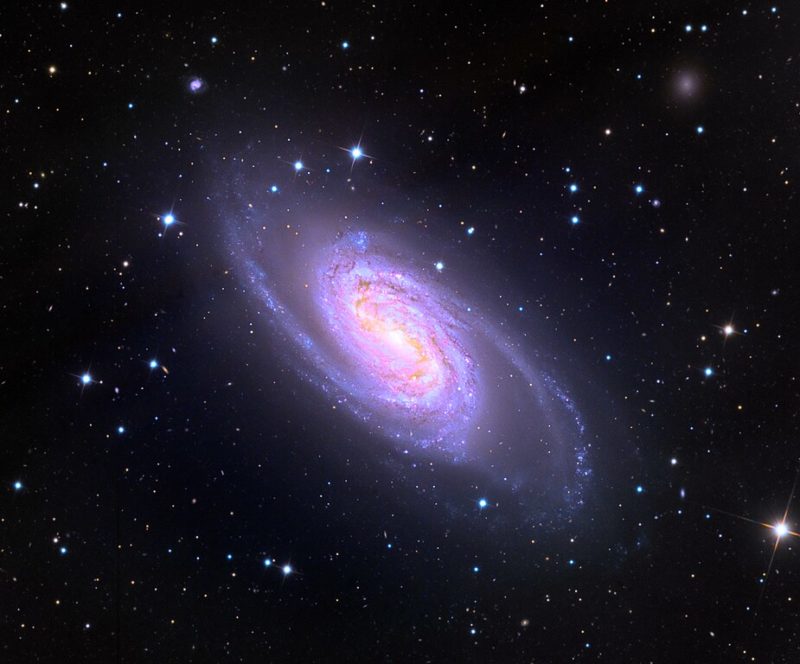
NGC 2903 is a breathtaking barred spiral galaxy located approximately 30 million light-years away from Earth. With its bright central region and spiral arms extending outwards, it’s an awe-inspiring sight to behold.
In this article, we’ll take a closer look at the majestic beauty of this galaxy and explore the wonders that lie within.
Where Is NGC 2903 Located
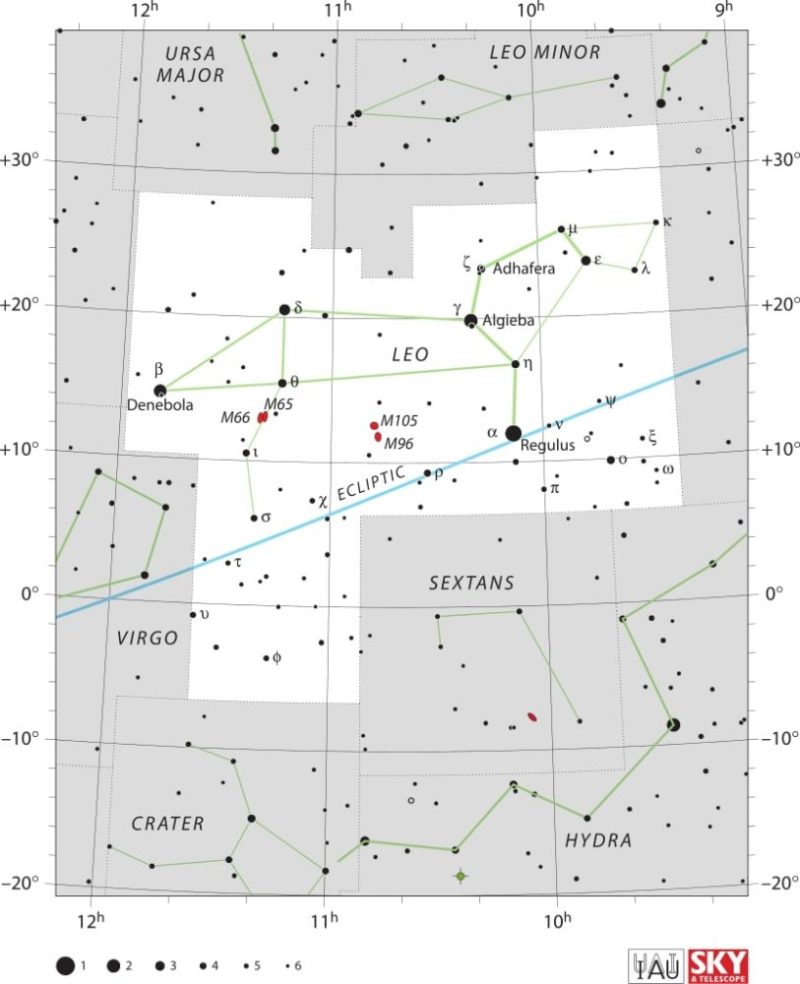
NGC 2903 is a barred spiral galaxy formally classified as SBbc located in the constellation Leo. It is a stunningly beautiful galaxy that has captured the attention of astronomers and stargazers alike.
Despite being located approximately 30 million light-years away from Earth, the unparalleled view from our perspective allows us to witness its captivating vistas. Furthermore, it is inclined by an angle of 60° to our line of sight.
NGC 2903 is a field galaxy, which is a galaxy not belonging to a larger galaxy group or cluster and so is gravitationally alone. However, it still belongs to the Virgo Supercluster. It is alongside our own Local Group and many other clusters of galaxies.
The Size of NGC 2903
This galaxy is similar in size to our own Milky Way at about 100,000 light-years in diameter, so only slightly larger, with presumably a similar number of stars. The question of how many stars are in NGC 2903 is not easily answered, as the estimates for our own Milky Way galaxy vary wildly from 100 to 400 billion stars.
Of the total stellar mass, 88% is found in the galaxy’s outer disk and 6% is in the bar. The bulge adds another 6% of stellar mass. In addition, its superb structural formation and bright central regions make it one of the most remarkable barred spiral galaxies visible from Earth.
Other NGC 2903 Facts
It was discovered in 1784 by German-born British astronomer William Herschel. He, as well as subsequent observers, mistook it as a double nebula. However, it wasn’t until the nineteenth century that the spiral form of this object was observed by William Parsons, 3rd Earl of Rosse.
It is for this reason that this galaxy was originally assigned two numbers in the New General Catalogue (NGC): 2903 and 2905. However, currently NGC 2905 designates a bright star-forming region located in NGC 2903’s northeastern spiral arm rather than a separate object. Surprisingly, this galaxy is not in Messier’s catalogue. Yet, it is just as spectacular as many galaxies on that list.
Amateur astronomers can also enjoy this galaxy. With a medium-sized telescope, NGC 2903 can be spotted beneath the Sickle asterism that forms the head of Leo the Lion. With an apparent magnitude of around 9.0, it is bright enough to reveal an elongated shape and brighter core under dark sky conditions. Moreover, it is best observed during late winter and spring in the Northern Hemisphere.
In modern times, NGC 2903 has been studied extensively by telescopes such as Hubble and Spitzer, as well as large ground-based observatories. These observations have provided deeper insights into its bar dynamics, star formation, and stellar populations. Additionally, infrared and radio observations have also revealed large amounts of molecular gas and numerous active star-forming regions throughout the galaxy.
One of the most interesting features of NGC 2903 is its central starburst activity. The galaxy’s bar structure channels gas toward the inner regions, fueling intense episodes of star formation near the core. Researchers also believe the galaxy contains a relatively low-activity supermassive black hole at its center.
Conclusion
NGC 2903 is undeniably a stunningly beautiful barred spiral galaxy that never fails to captivate astronomers and space enthusiasts alike. Its distinctive features, including the central star-forming region and its magnificent structural formation, make it a remarkable sight to behold.
From Earth’s perspective, the unparalleled view of this galaxy offers captivating vistas that continue to inspire scientific exploration and discovery.
Would you like to receive similar articles by email?

Paul Tomaszewski
Paul Tomaszewski is a science & tech writer as well as a programmer and entrepreneur. He is the founder and editor-in-chief of CosmoBC. He has a degree in computer science from John Abbott College, a bachelor's degree in technology from the Memorial University of Newfoundland, and completed some business and economics classes at Concordia University in Montreal. While in college he was the vice-president of the Astronomy Club. In his spare time he is an amateur astronomer and enjoys reading or watching science-fiction. You can follow him on LinkedIn and Twitter.


You May Also Like
Exo-Gas Giant Atmospheres: Formation, Differences
What Is LightSail and How Does It Work?