NGC 281: The Stunning Pacman Nebula
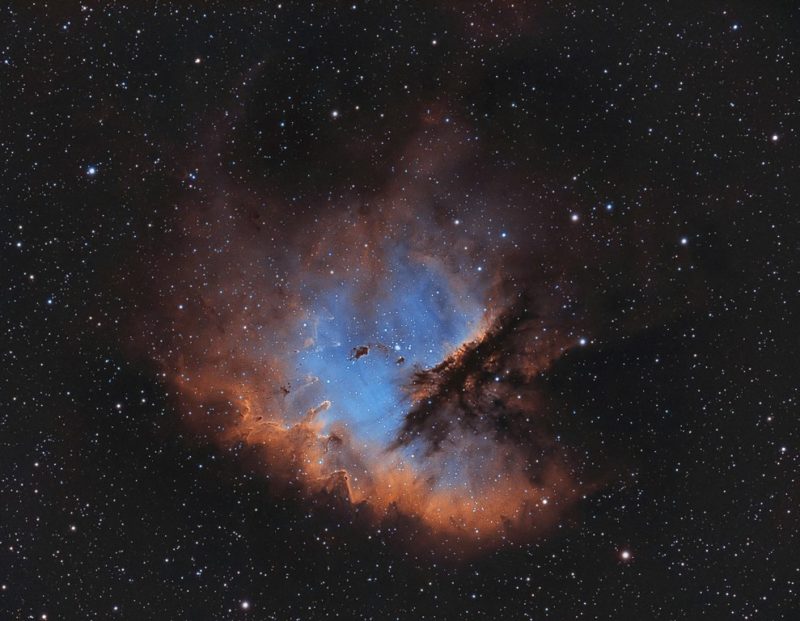
NGC 281, also known as the Pacman Nebula, is a breathtakingly beautiful astronomical wonder. This emission nebula, located in the constellation of Cassiopeia, gets its nickname from its resemblance to the iconic video game character.
In this article, we will take a closer look at this stunning phenomenon. We will also explore its fascinating features.
Where Is NGC 281?
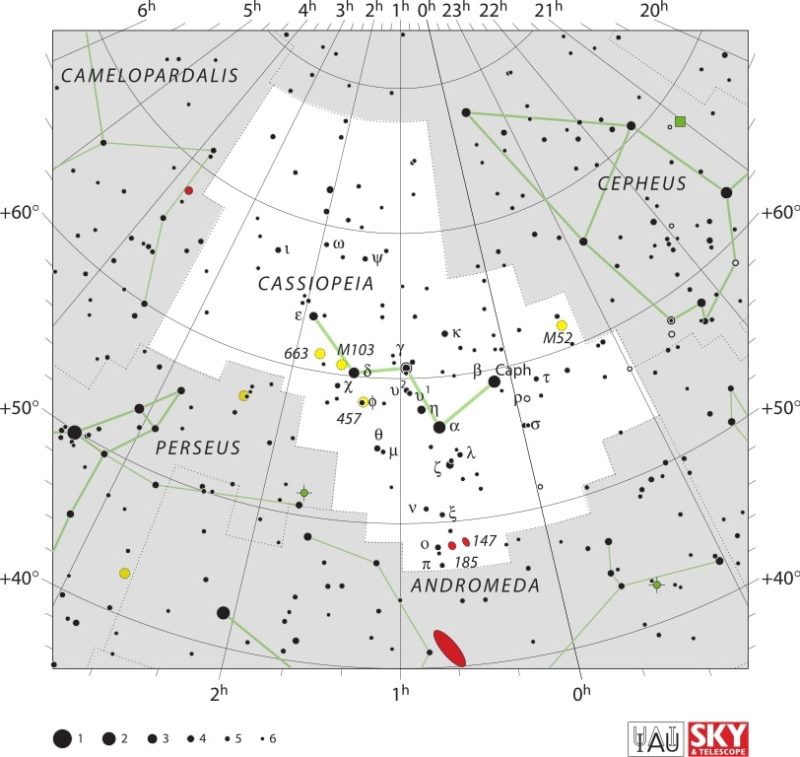
The Pacman Nebula is a stunning celestial object located in the constellation of Cassiopeia. Its unique and captivating appearance has made it a popular target for both amateur and professional astronomers.
Its distance from Earth is estimated to be around 9,500 light-years in the Perseus Spiral Arm of our Milky Way galaxy. In addition, it spans an area of about 96 light-years.
Examining its Uniqueness and Beauty
One of the most striking features of this emission nebula and H II region is its uniqueness and beauty. NGC 281 is shaped like a Pac-Man, with a darker region that appears as the mouth of the character. The nebula is also surrounded by a complex network of filaments and gas clouds, which are illuminated by radiation from hot, young stars within the embedded open cluster IC 1590.
Within the nebula, active star formation is taking place, particularly in the young open cluster IC 1590. The cluster’s massive stars are shaping the surrounding gas and dust. The cluster’s brightest stars, including the multiple-star system HD 5005, emit intense ultraviolet radiation. Consequently, this ionizes the surrounding hydrogen gas, causing the nebula to glow. Together, these factors make this nebula a truly unique and beautiful object in the night sky. It is one that is well worth studying and admiring.
NGC 281 also contains numerous Bok globules, which are dense clouds of gas and dust where new stars may be forming. These dark structures stand out against the bright background of the nebula. In addition, they provide astronomers with valuable insights into the early stages of stellar evolution.
Brief History of the Discovery of NGC 281
NGC 281 was first discovered by American astronomer Edward Emerson Barnard in 1883. Barnard was known for his extensive work in discovering and studying celestial objects. This nebula was just one of his many achievements. Since its discovery, the nebula has continued to intrigue astronomers. It has been the subject of numerous studies and observations using increasingly advanced telescopes and imaging techniques.
Other Designations for the Pacman Nebula
Aside from NGC 281, this nebula is also known as IC 11 in the Index Catalogue. The Pacman Nebula along with the open cluster IC 1590 and several Bok globules is also designated collectively as Sharpless 184 (or Sh2-184).
Conclusion
The Pacman Nebula is truly a celestial wonder that never fails to astound astronomers and stargazers alike. Its unique shape and stunning beauty make it a popular target for observation and study.
NGC 281 is a testament to the wonders of space and the endless possibilities for discovery that lie beyond our planet. As we continue to study and learn more about this incredible celestial object, especially its role as a site of ongoing star formation and the processes that shape new generations of stars, we can only imagine what other mysteries and treasures await us in the vast expanse of the cosmos.
Would you like to receive similar articles by email?

Paul Tomaszewski
Paul Tomaszewski is a science & tech writer as well as a programmer and entrepreneur. He is the founder and editor-in-chief of CosmoBC. He has a degree in computer science from John Abbott College, a bachelor's degree in technology from the Memorial University of Newfoundland, and completed some business and economics classes at Concordia University in Montreal. While in college he was the vice-president of the Astronomy Club. In his spare time he is an amateur astronomer and enjoys reading or watching science-fiction. You can follow him on LinkedIn and Twitter.


You May Also Like
How Atmospheric Escape Strips Rocky Planet Atmospheres
How Did Dwarf Planet Gonggong Get Its Name