NASA Night Sky Network Guide for Clubs and Individuals
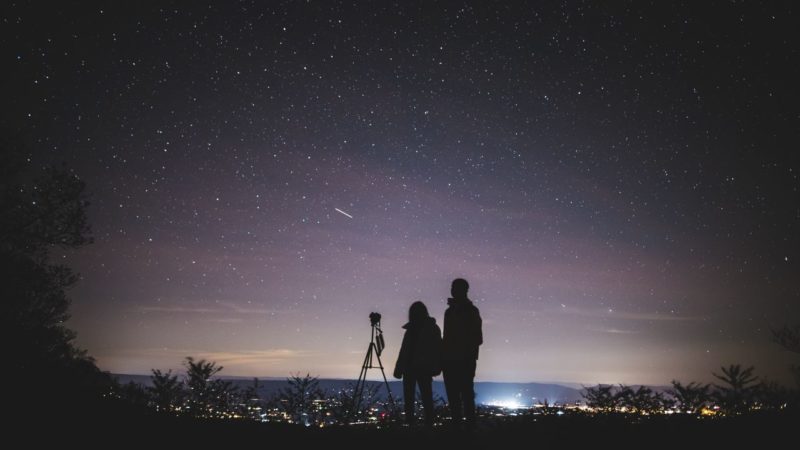
To participate in the NASA Night Sky Network, an individual usually starts by finding a nearby astronomy club or public observing event through the network’s directory and event calendar, while a club joins by submitting the official application, meeting the published outreach requirements, naming a club coordinator, and staying active through regular event reporting.
That sounds more bureaucratic than it really is. In practice, the Night Sky Network, usually shortened to NSN, exists to connect NASA science with real people standing in parks, schoolyards, libraries, observatories, and parking lots with telescopes pointed upward. Some come for Saturn. Some come for the Moon. Some come because a child asked a question at dinner and the adults had no decent answer. All of that counts.
It also helps to clear up one common confusion early. NSN is not a replacement for your local club’s dues, not the same thing as Astronomical League membership, and not a direct “join NASA” pipeline for solo hobbyists. It is a public outreach network built around astronomy clubs, amateur astronomers, and community events. If you are an individual, you usually participate by attending or connecting. If you run a club, you participate by organizing and reporting outreach.
What is this program?
Core purpose
The Night Sky Network is a NASA-connected outreach program within the broader Science Activation portfolio. Its job is simple in the best way. It helps local astronomy clubs bring current NASA missions, space science, and practical skywatching to the public, using shared educational resources, activity guides, training materials, and club tools.
That matters because astronomy can get weirdly split. On one side you have cutting-edge innovation, missions studying exoplanets, solar activity, deep space objects, and planetary science. On the other, you have the public, often interested but not sure where to begin. NSN is the bridge. A rather useful one.
If you are trying to place yourself in that map, it usually breaks down like this:
- Individuals and families use the network to discover local astronomy events and meet nearby clubs
- Astronomy clubs use the program to strengthen outreach efforts with NASA-backed materials
- Club coordinators use the platform to report events, manage profiles, and keep benefits active
Who it serves
The audience is broader than many people assume. NSN serves longtime amateur astronomers, first-time skywatchers, school groups, libraries, scouts, museums, park programs, and the curious public who just want one good night under the stars without feeling lost.
It also serves clubs that already have their own identity. A local astronomical society, a college group, an amateur astronomy club attached to a park, even clubs that already participate in the Astronomical League, all can fit the ecosystem if public outreach is part of their primary mission.
For individuals, the value is access. For clubs, the value is structure, visibility, and support. Those are different needs, but the same network handles both surprisingly well.
Why it matters
According to a peer-reviewed AAS abstract tracking the network’s reach, the program has connected with millions of people since 2004. That scale is not just impressive trivia. It means there is already a working system behind the scenes, one that has helped clubs turn scattered enthusiasm into repeatable public astronomy experiences.
Outside feedback has also been unusually warm for a government-linked public program. Clubs tend to treat it less like paperwork and more like useful infrastructure. Frankly, that is rare.
How can individuals join local events?
Club directory
If you want a nearby group, start with the regional club finder. It points people toward local astronomy clubs and their profile pages, where you can usually find meeting information, public contact details, and notes about upcoming observing nights.
Some profiles are bare-bones. Some are lively and packed with updates. That is normal. Astronomy clubs are run by volunteers, not by a polished marketing department, and that is part of their charm.
Event calendar
If you care less about joining a club and more about getting outside soon, use the global event calendar. It collects public events, star parties, talks, sidewalk astronomy sessions, eclipse programs, school visits, and virtual presentations. Historically, the archive has been huge, well over one hundred thousand posted events, so you are not walking into a tiny, forgotten corner of the web.
Check whether an event is in person or virtual. Check whether registration is required. Check the weather note, if there is one. Amateur astronomers are romantics, yes, but they cannot negotiate with clouds.
First steps
The best first move is usually plain and low-drama:
- Find one nearby club or one upcoming public event
- Read the event note carefully, especially location and start time
- Email the organizer if you are unsure whether beginners or families should attend
- Show up with curiosity, not a shopping cart full of gear
That last part matters. A lot.
Start with simple skywatching
Naked-eye basics
I would not push a beginner toward an expensive telescope first. That habit wastes money and confidence in equal measure. A better start is learning the night sky with your own eyes, a simple sky map or planisphere, and a notebook. That approach lines up with Sky & Telescope’s beginner guidance, and it remains the cleanest way to build real observing skill.
A club can help with this immediately. Good club meetings do not just talk at people. They help you recognize seasonal constellations, learn where the planets are this month, and understand why the Moon looks different from one week to the next. The sky stops being random. That is when the hobby turns addictive.
Beginner tools
Keep it modest. A red flashlight, binoculars, an app for identifying bright objects, and a notebook will take you farther than many beginners expect. Some clubs even have loaner scopes, which is a lovely way to delay a purchase until you actually know what you want to observe.
The point is not austerity for its own sake. The point is that astronomy makes more sense once you can orient yourself. A person who knows the sky with binoculars will use a telescope better later.
First targets
Start with obvious targets that reward attention. The Moon is first-rate because it changes constantly. Bright planets such as Venus, Jupiter, or Saturn are public favorites for a reason. After that, pick a few anchor constellations and maybe one easy deep-sky object once your local club starts showing you around.
If your first event includes a planet, a cratered Moon, and somebody cheerfully arguing about eyepieces near the telescope line, congratulations, you found the right crowd.
How can clubs qualify?
Eligibility rules
For clubs, participation is more formal. According to the published participation FAQ, the current guidance expects a group to have at least 15 members and to conduct at least five public outreach events per year. Those are not random thresholds. They tell the network that the group is stable enough to serve its community rather than just exist on paper.
Here is the short version:
| Requirement | Why it matters |
|---|---|
| At least 15 members | Shows the club has enough people to sustain meetings and outreach |
| At least 5 public events each year | Confirms a real outreach commitment |
| A designated club coordinator | Gives NSN one accountable contact |
| Ongoing event reporting | Keeps activity visible and benefits current |
Requirements can evolve, so clubs should verify the latest wording before applying.
Club coordinator
The club coordinator is the hinge point. This person handles the application, keeps the club profile current, logs events, and acts as the main contact when NSN shares toolkits, webinars, or program updates.
Choose that person carefully. It should be someone organized, responsive, and not allergic to follow-through. A gifted observer who never answers email is not the right pick. Sad, but true.
Public outreach
NASA Night Sky Network membership is tied to public outreach, not private observing alone. That means school visits, library programs, community events, public star parties, museum nights, and similar activities count more than closed member sessions.
This is where the network gets its real character. The strongest clubs treat outreach as a living part of club culture, not a box to check once a quarter. They become gateways. A good astronomy club meeting feels part science, part social gathering, part offbeat adventure.
Apply for membership
Club details
When a club is ready, it starts with the official club application. The form typically asks for the basics you would expect, club name, location, size, website or contact page, outreach record, and coordinator information. If your officers want a preview, the sample application guide is useful because it shows what details tend to matter before you begin typing.
A sloppy application slows everything down. Better to gather the facts first.
Review process
The review is about fit and credibility. NASA Night Sky Network is trying to verify that a club is real, active, and genuinely public-facing. No mystery there. If a group has a clear outreach history, a functioning contact path, and a coordinator who can respond, the application tends to make sense on its face.
What should a club expect? Not instant approval, not endless delay either. More like a practical review of whether the group belongs in the network.
Membership terms
NASA Night Sky Network participation is separate from a local club’s yearly membership dues. That distinction trips people up. Your local astronomy club may charge annual membership, family member rates, or student rates. NSN club membership is the program-level affiliation that unlocks resources and visibility for the club itself.
So if someone asks, “Do I pay NASA to join?” the honest answer is usually no. You either attend public events as a member of the public, or you join your local club under that club’s own rules.
Use member benefits
Outreach toolkits
One reason clubs bother with NSN, beyond the public mission, is the resources. The outreach resource log shows how clubs can unlock themed outreach toolkits, handouts, activity guides, and other materials tied to NASA topics.
These toolkits are not fluff. They are built to help volunteers explain real science clearly, whether the topic is the Moon, planets, exoplanets, solar activity, or current missions.
Training access
Clubs also get training support. The official video and webinar archive includes presentations, activity walkthroughs, and sessions with NASA scientists and astronomy educators. That is one of the quiet strengths of the program. A volunteer does not have to invent a public talk from scratch every month.
Club tools
A participating club can use the network for practical management, not just inspiration. The event reporting guide explains how logging outreach affects visibility and resource eligibility.
The benefits usually fall into three buckets:
- Better outreach materials for public events
- Better training for volunteers and speakers
- Better administrative support through profiles, reporting, and promotion
Stay active and keep benefits
A club does not join once and coast forever. Active involvement matters. Event reporting is the mechanism that tells NSN the club is still doing real public work, still serving its community, still worth supporting.
This is also where some clubs get lazy and then act surprised when benefits thin out. Toolkits, recognition, and continued access often depend on regular reporting. In some published program rules, specific outreach toolkit offers have been tied to reporting thresholds such as two events per quarter. That is not punitive. It is simple accountability.
Get help and contact support
If a person is stuck, the support path is fairly straightforward:
- Use the local club contact listed in the directory for event-specific questions
- Use the FAQ and application pages for rule questions and membership details
- Use the training archive when your club needs practical examples for outreach
For individuals, the local organizer is usually the fastest answer. For clubs, the coordinator should be the main contact, because scattered officer communication is how confusion multiplies.
FAQ
Can an individual join NSN directly?
Usually, individuals participate by attending public events, connecting with a local club, or using the site’s public-facing tools. NSN is built around club participation more than solo enrollment.
Do I need a telescope before attending?
No. In fact, you will probably learn faster without rushing into a purchase. Start with naked-eye observing, binoculars, and public events where experienced members can show you the sky.
Is NSN the same as the Astronomical League?
No. They can overlap through the same clubs and members, but they are separate organizations and separate kinds of membership.
Can a school or small community group apply?
Possibly, if it meets the published requirements and has a real public outreach pattern. If it does not yet meet them, partnering with an established local club is often the smarter route.
Conclusion
The cleanest way into the NASA Night Sky Network is to stop overthinking it. If you are an individual, find a club, find an event, and go look up. If you run a club, make your outreach real, get your coordinator organized, submit the application, and stay active enough to keep the relationship alive.
That is the whole shape of it, really. A universal sky, local people, free public science, a little technology, and just enough structure to help wonder travel farther.
Would you like to receive similar articles by email?

Paul Tomaszewski
Paul Tomaszewski is a science & tech writer as well as a programmer and entrepreneur. He is the founder and editor-in-chief of CosmoBC. He has a degree in computer science from John Abbott College, a bachelor's degree in technology from the Memorial University of Newfoundland, and completed some business and economics classes at Concordia University in Montreal. While in college he was the vice-president of the Astronomy Club. In his spare time he is an amateur astronomer and enjoys reading or watching science-fiction. You can follow him on LinkedIn and Twitter.


You May Also Like
How Comet Nucleus Ice Sublimates Into Coma And Tails
Crux Constellation Guide