Monocerotid Meteor Shower Guide
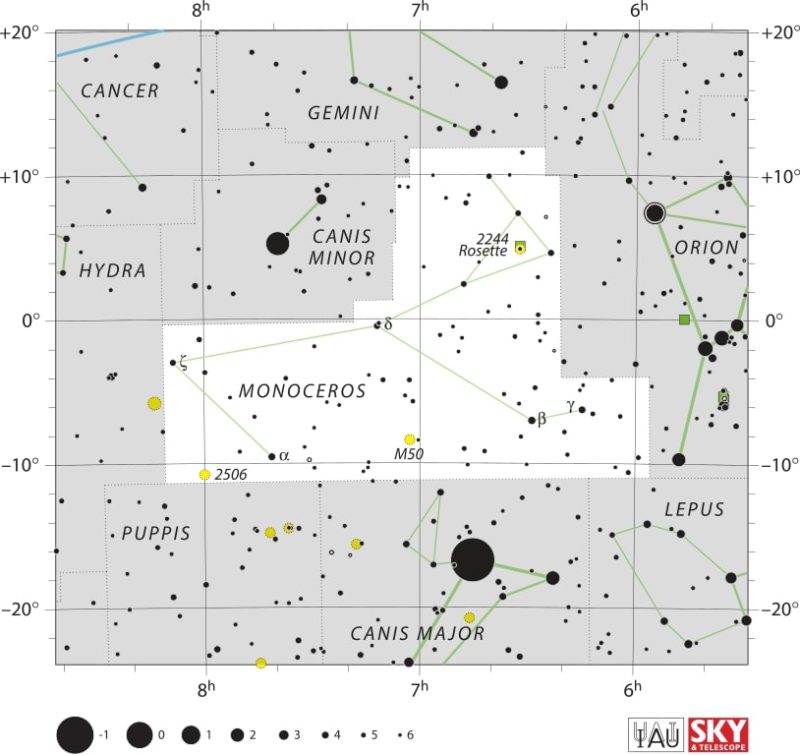
Monocerotids are a unique and interesting meteor shower. They appear to come from the direction of the constellation Monoceros, located just next to Orion in the night sky. The Monocerotids are little known for their spectacularly swift, bright meteors, visible in early December.
This works best when the skies are dark and clear. With a short peak and relatively low intensity, the Monocerotids tend to be overshadowed by more prominent showers such as the Perseids. Our new guide explains in detail what causes the Monocerotid meteor shower, how to spot it, and what you can expect during the peak.
What Is the Monocerotid Meteor Shower?
The Monocerotids are a meteor shower associated with the constellation Monoceros, they are named after. Typically, this shower has a very low profile.
The Monocerotids are active whenever Earth crosses a stream of dust, and they shine when this is the case. This debris is shed by a long-period comet. The Monocerotids glimmer like diamonds in the late fall to early winter skies. They lie near the unicorn-shaped constellation Monoceros, near the very bright Betelgeuse in Orion.
Unpacking the Name Origin
The term “Monocerotid” comes from the constellation Monoceros. Monoceros, Latin for “unicorn”, is one of the faintest constellations, located next to Orion in the winter night sky.
Astronomers name meteor showers after the constellation where their radiant is located. Like any shower, this radiant is the point from which the meteors seem to originate.
Naming conventions such as these allow astronomers and skywatchers to easily identify and classify meteor showers.
The Suspected Parent Body
Every meteor shower starts with a parent body, typically a comet or asteroid that sheds bits of rock and dust along its orbit. For the Monocerotids, the parent body is suspected to be comet C/1917 F1 (Mellish).
The parent body’s characteristics determine the shower’s overall brightness, velocity, and even periodicity of outbursts.
Understanding these mysteries allows scientists to gain an intricate perspective on the birth and evolutionary process of meteoroid streams.
Defining Key Shower Traits
The Monocerotid meteor shower is unique in several notable aspects. During a typical year, the shower is relatively weak with only about 2 meteors an hour (ZHR).
The average Monocerotid meteor is swift and brilliant, racing quickly across the sky at the speed of 41 km/s. While the shower is officially active from December 5 to 20, the majority of the activity occurs on the peak on December 8.
These traits render the Monocerotids unpredictable, but thrilling for anyone fortunate enough to encounter them at their peak.
How To Watch Monocerotids
Getting to see the Monocerotids meteor shower would be a once in a lifetime experience for anyone who loves the night sky. Advance planning will ensure that you get the most out of this fleeting spectacle. Here’s how to watch the Monocerotids.
First, plan ahead. Then, choose a dark location with a clear view of the sky and be ready for the cold and the dark.
Best Viewing Times This Year
The best time to view the Monocerotid meteor shower is on its peak, on December 8.
Foul weather, such as overcast skies or precipitation, can spoil the experience. Monitor forecast conditions before you go out!
Book your excursion several days ahead of time, and be prepared to go on a different night if the weather isn’t favorable.
Tips for Optimal Observation
- Get comfy: Bring a lawn chair or sleeping bag.
- Dress in layers, since nights get cold.
- Binoculars are optional. The naked eye works best.
- Position yourself facing east and allow your eyes to adjust to the darkness (20 minutes recommended).
Gear Recommendations (Or None!)
- Bring a warm blanket, snacks, and water.
- A red flashlight helps save night vision.
- Use a meteor shower app for live updates.
- Camera with manual mode (optional) if you plan on shooting photos.
- Pack for sudden weather changes: rain jacket and hat.
Light Pollution: The Enemy
Light pollution drastically reduces the number of meteors you’ll be able to see. Look for dark sky parks or wide open rural areas. Muffle light sources, close curtains, and ask other people to do so too.
When you support local dark sky efforts, you’re doing your part to ensure that everyone can see more meteors.
Conclusion
The Monocerotid meteor shower provides sky watchers with a rare yearly display. Clear skies and cold nights make for a night that feels very basic and very untamed all at once. This is what makes the short, sharp bursts of meteors unique among other meteor showers.
Patience, ample warm layers, and a modicum of luck are watching prerequisites. Despite the overwhelming odds, those who are lucky enough to observe the Monocerotids remember it for the rest of their lives. Looking for a front-row seat to all of this? Keep an eye out for the next Monocerotids window and watch to see if you spot that fast-moving, bright flash!
Frequently Asked Questions
What are the Monocerotids?
The Monocerotids are a small meteor shower that seems to originate from the constellation Monoceros, the Unicorn. They typically reach their maximum activity around early December annually.
How many meteors can I expect to see during the Monocerotids?
Even at a great ideal peak rate, you should expect no more than 2 meteors at most per hour.
What makes the Monocerotids unique compared to other meteor showers?
They’re known for their extremely quick meteors and can sometimes catch observers off guard with an unexpected outburst. Their radiant is located close to the faint constellation Monoceros, making them somewhat difficult to observe.
Are the Monocerotids dangerous to watch?
No, viewing meteor showers such as the Monocerotids is perfectly safe. All you need is your eyes and a nice place outside.
Can I use binoculars or a telescope to see Monocerotid meteors?
Meteors are viewed best with the naked eye since they race very fast across the sky.
See also:
- Previous meteor shower: Puppid-Velid Meteor Shower
- Next meteor shower: Sigma Hydrid Meteor Shower
Would you like to receive similar articles by email?

Paul Tomaszewski
Paul Tomaszewski is a science & tech writer as well as a programmer and entrepreneur. He is the founder and editor-in-chief of CosmoBC. He has a degree in computer science from John Abbott College, a bachelor's degree in technology from the Memorial University of Newfoundland, and completed some business and economics classes at Concordia University in Montreal. While in college he was the vice-president of the Astronomy Club. In his spare time he is an amateur astronomer and enjoys reading or watching science-fiction. You can follow him on LinkedIn and Twitter.


You May Also Like

Proven Health Tips for Living Longer and Stronger in 2024

What Are the Great Advantages of Physiotherapy? A Comprehensive Guide