Light Pollution Solutions
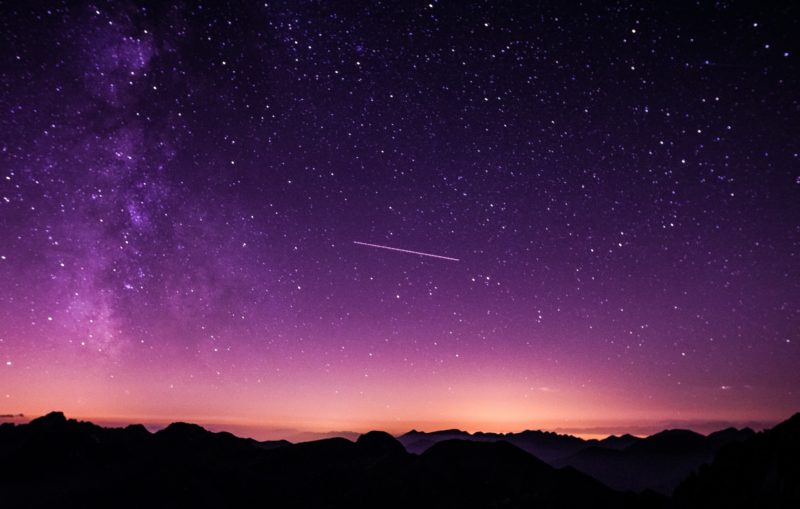
When Apollo 17 launched in 1972, one of the commentators memorably announced: “it’s lighting up the sky!”
A beautiful turn of phrase, but also something that many astronomers might have heard and muttered in response: “well… what isn’t?”
Would you like to be notified of stargazing events?
Light pollution has been a problem for decades now, yet it’s still one that many amateur astronomers struggle with. Unless you live in a remote region, the chances of seeing much from your own backyard seemingly diminish every year. As civilization grows, our view of the night sky is becoming more and more clouded by light.
To an extent, there is not much you can do about this, unless you happen to have control of the entire electrical grid. Assuming you don’t, that means the best you can hope for is to do as much as possible to control the situation and make the best of what you have in front of you. Or above you, as the case may be. Here are a few ideas to get you started.
Move House
Okay, so it sounds fairly extreme, but it’s worth considering if you’re planning a move anyway. As a general rule, the closer you are to the center of a city, the harder a time you’re going to have being able to see the sky at night.
So before you’re packing up boxes, it’s worth thinking about how your next move is going to impact your love of astronomy. There are some great tools available that can show you the light pollution of any potential area you’re considering. For example, LightPollutionMap.info is a regularly updated tool that offers detailed overlays of sky brightness worldwide. If you have the option to move away from a city, you’ll greatly increase your chance of some backyard viewing.
Motion-Sensor Lighting
It makes sense from a security point of view to have some kind of lighting overlooking your yard, but not if you’re going to want to try and view the skies. Switching to motion-sensor lighting can give you a better view than you otherwise would have had. Moreover, it’s just as effective as a security measure too. DarkSky’s Five Principles call this “Controlled”—use timers, motion detectors, or dimmers so light is only on when needed, at the lowest necessary level. Pair sensors with fully shielded, ≤3000 K fixtures for maximum benefit.
Petition Your Local Authority
DarkSky International has numerous suggestions for the kind of bulbs and other equipment that could be used to increase the visibility of the sky at night. Their Five Principles for Responsible Outdoor Lighting—Useful, Targeted, Low Level, Controlled, Warm-colored—give a concise framework you can cite. It might not get far, but you could petition a council to change existing lighting. You’ll have more success if there’s a new development they are installing lighting for, so keep an eye on local news for any announcements.
Make sure to advocate for fully shielded fixtures and warm-colored LEDs (≤3000 K, ideally 2200–2700 K), which reduce upward glare while maintaining safety. For ready-to-spec products, point officials to DarkSky Approved lighting, a searchable database of certified fixtures. It might not make an immediate difference, but if enough people do this in enough places, the impact could be considerable.
Get Away
If your backyard isn’t an option, then you’re going to need to travel. As a general rule: you need to go high or remote. Of course, the perfect viewing site would be a mixture of both! Look out for local astronomy clubs which tend to know the terrain and can recommend sites with the best views.
Do keep in mind that in some areas, seasonal wildfire smoke has become a new factor impacting visibility, especially during summer months—Scientific American reports wildfire smoke now routinely blots out stars at sites thousands of miles from the fire.
Find a Dark-Sky Site (Bortle Scale & Tools)
When “getting away” is your best option, knowing how dark a site really is matters. The Bortle Scale (Class 1 = excellent dark sky, Class 9 = inner-city) gives a standard language for sky quality. Three free, non-commercial tools map this for any location:
- DarkSiteFinder.com—interactive map with 2006/2016/2020/2022 VIIRS layers and Bortle class overlay.
- DarkSkySites.com—adds a realistic skyglow simulator, SQM readings, and observer-submitted site reports.
- DarkSky International’s International Dark Sky Places directory—certified parks, reserves, and communities with protected night skies.
Cross-reference two tools before a trip; satellite layers can differ by 0.5–1 Bortle class in rural areas.
Use Light Pollution Filters
Special light pollution filters (often called LP or LPR filters) are available for telescopes, binoculars, and even DSLR or mirrorless cameras.
They fall into two main categories: broadband (UHC/LPR) filters that suppress mercury, sodium, and LED streetlight wavelengths while passing nebular and stellar light broadly—good for visual observing and general imaging—and narrowband (O-III, H-α, S-II, dual/tri-band) filters that isolate specific emission lines for deep-sky astrophotography under heavy skyglow.
Established brands include Sky-Watcher, Optolong (L-Pro, L-eXtreme), and IDAS (Hutech). Choose threaded 1.25″/2″ for eyepieces or clip-in/front-mount for cameras. However, narrowband filters dim stars significantly and are poorly suited for visual use.
Satellite Constellations: The New Light Pollution Layer
Since 2019, mega-constellations (Starlink, OneWeb, Kuiper) have added a moving, global component to light pollution. Thousands of satellites in low Earth orbit reflect sunlight. As a result, they leave streaks in long exposures and raise the diffuse sky background.
A 2024 Astronomy & Astrophysics study found Starlink’s second-generation “v2 mini” satellites emit unintended low-frequency radio noise 30× brighter than earlier models, threatening radio astronomy. ESO warned in 2026 that >1 million planned satellites could make “dark sky” sites a thing of the past for professional facilities.
For visual observers the impact is subtler: naked-eye satellites are mostly a nuisance, but dark-adapted eyes can see mag 5–6 satellites crossing the field. Mitigation: observe during “satellite-free” windows (astronomical night, anti-solar point), use shorter subs with dithering for imaging.
Conclusion
In the quest to reclaim our view of the stars, battling light pollution remains an ongoing challenge for astronomy enthusiasts. The glow of civilization continues to obscure the night sky. Despite this, there are strategies we can employ. Whether it’s relocating strategically, advocating for better lighting practices, or seeking refuge in remote locations, each step taken amplifies our chances of rediscovering the beauty above.
Even though satellite constellations like Starlink now add another layer of difficulty for astronomers, especially with long-exposure photography, casual stargazing remains rewarding. While the sky’s clarity might be veiled, our determination to uncover its wonders remains steadfast.
Would you like to receive similar articles by email?

Paul Tomaszewski
Paul Tomaszewski is a science & tech writer as well as a programmer and entrepreneur. He is the founder and editor-in-chief of CosmoBC. He has a degree in computer science from John Abbott College, a bachelor's degree in technology from the Memorial University of Newfoundland, and completed some business and economics classes at Concordia University in Montreal. While in college he was the vice-president of the Astronomy Club. In his spare time he is an amateur astronomer and enjoys reading or watching science-fiction. You can follow him on LinkedIn and Twitter.


You May Also Like
Stargazing Calendar for November 2025
Mastering Astronomy: Reach for the Stars With These Top Tips