The Science Of Growing Diamonds In A Laboratory
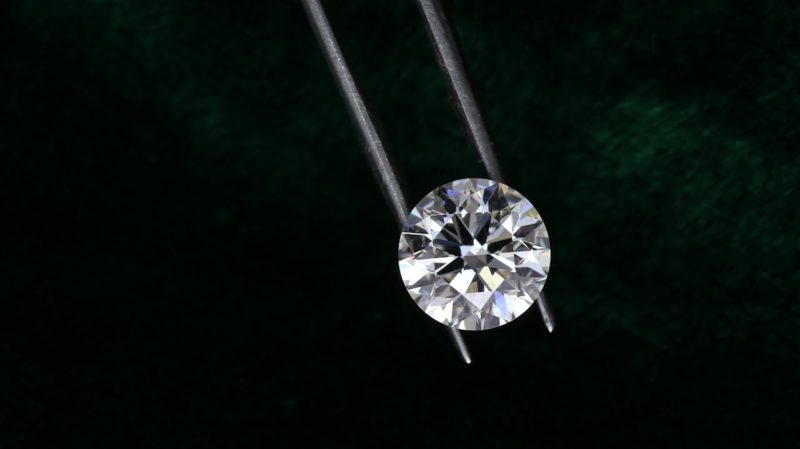
A diamond is a specific configuration of carbon atoms held in a tetrahedral lattice under conditions that lock the structure in place. The Earth produces this lattice at depths of 100 to 200 kilometers. It forms under temperatures and pressures that have to be sustained for hundreds of millions of years. A laboratory produces the same lattice in 7 to 14 days. The chemistry is identical, and the optical behavior is identical. Additionally, the certifying laboratories now grade lab-grown diamonds using the same equipment they use for mined ones. The path between the two outputs runs through two different methods. Each one has implications for the final stone.
The Two Production Methods
Lab-grown diamonds are produced through one of two processes. The HPHT method, short for High Pressure High Temperature, replicates the conditions found at depth in the Earth’s mantle. The CVD method, short for Chemical Vapor Deposition, builds the diamond up atom by atom from a gas environment. Both produce real diamonds. The differences sit in the equipment, the timing, and the impurities each method leaves behind.
How HPHT Works
HPHT was the first method used to produce gem-quality lab-grown diamonds at scale. The process places a small diamond seed in a press capable of generating around 870,000 pounds per square inch of pressure. At the same time, temperatures reach 1,300 to 1,600 degrees Celsius. A carbon source (graphite or another high-purity carbon material) sits adjacent to the seed. A metal catalyst (iron, nickel, or cobalt) is placed between them.
The press runs for 5 to 10 days. The metal catalyst melts under the heat and pressure and dissolves the carbon. Dissolved carbon atoms migrate to the cooler seed crystal. Then, they crystallize onto its surface in the diamond lattice structure. When the press cycles down, the result is a rough diamond surrounded by solidified metal. This metal is dissolved away with acid, leaving the rough stone.
The resulting diamonds tend to carry trace nitrogen and other metallic impurities from the catalyst, and the rough often has a slight yellow or brownish cast. HPHT stones can also be color-treated after growth to push them toward colorlessness.
How CVD Works
CVD is the newer method and now produces the larger share of gem-quality lab-grown stones. The process starts with a thin diamond seed plate in a vacuum chamber. The chamber is filled with a hydrogen-and-methane gas mixture (typically around 10 to 20% methane in hydrogen). Then, it is heated to roughly 800 to 1,200 degrees Celsius using microwaves or hot filaments.
The microwaves break the methane molecules apart, releasing carbon atoms that drift down to the seed plate and bond to its surface in the same diamond lattice structure. The diamond grows in thin atomic layers. The final thickness depends on how long the reactor runs. A 1 to 2-carat finished stone takes around 4 weeks of growth time.
CVD diamonds tend to come out as Type IIa, meaning they have almost no nitrogen and are chemically purer than most natural diamonds. Roughly 1 to 2% of natural diamonds qualify as Type IIa. This rarity in nature is what helps gemological labs separate CVD stones from natural ones during testing.
Lab-Grown Diamond Jewelry in the Market
The market for lab-grown stones has moved past the early-adopter phase. Couples buying lab grown diamond jewelry now make up more than half of the engagement ring market. The price differential against natural stones has settled at 60 to 80% off equivalent quality and size.
The categories that have grown fastest are larger center stones (2 carats and up), three-stone settings, and pieces with side stones above half a carat each. The math is straightforward, since lab-grown rough is priced low enough that designers can include accent stones at full carat weight without changing the retail tier.
Grading and Certification
Lab-grown stones are graded on the same 4Cs framework used for natural diamonds. Cut, color, clarity, and carat weight are evaluated using the same equipment, the same scales, and the same protocols. The Gemological Institute of America has graded lab-grown diamonds since 2007. The International Gemological Institute, known as IGI, and the GCAL provide similar reports.
The reports include identification language that marks the stone as laboratory-grown. The grading methodology produces the same letter grade for color (D through Z) and the same clarity scale (FL through I3). A lab-grown D color VVS1 stone has the same optical performance as the natural equivalent.
Cost Structure and Pricing
The cost gap between lab-grown and natural diamonds comes from supply economics, not quality. A natural diamond passes through mining, sorting, polishing, distribution, and retail markups that compound on each other. A lab-grown stone runs from reactor to polishing to certification to retailer. The metal catalyst and the energy input are the primary upstream costs.
Lab-grown wholesale prices have dropped by roughly 70 to 80% since 2018. Most of that decline reflects the entry of new producers in India and China. The lowering of HPHT and CVD equipment costs plays a role as well. The maturation of the post-growth treatment processes also contributes. The retail discount against natural stones at equivalent grade now sits at 60 to 80%, depending on size and color.
The Environmental Question
Lab-grown stones avoid the land disturbance and water use associated with mining. The energy input is the trade-off. CVD reactors run continuously for weeks at high temperature. The electricity source determines the carbon footprint of the final stone.
A reactor running on coal-generated grid power has a higher per-carat carbon footprint than a reactor running on solar or hydroelectric power. Several producers in India and Iceland have moved to fully renewable grids. The wider lab-grown diamonds industry has tracked these moves, and the resulting stones carry independent carbon-tracking certifications. The picture is not uniform across the industry. Therefore, buyers who care about the environmental angle should check the producer’s energy source rather than assume the lab-grown label answers the question on its own.
Detection Methods
Modern gemological labs separate lab-grown from natural stones through spectroscopic testing. spectroscopic testing for synthetic diamonds handles. Photoluminescence imaging, infrared absorption, and UV fluorescence patterns each show different signatures depending on the growth method. CVD stones often show specific defect signatures from the gas chemistry. HPHT stones show metallic inclusions visible under magnification at the right angle.
The bare eye cannot tell the difference. Standard 10x jeweler loupes cannot tell the difference. The certification report and the spectroscopic instruments are the only reliable separators. This is why every lab-grown stone in the gem market carries a grading report from a recognized lab.
Closing Notes on the Process
Synthetic diamonds are real diamonds produced through repeatable industrial methods. The 7 to 30 day production window has replaced the geological timescale that produced the mined supply, and the resulting stones have moved from technical curiosity to mainstream jewelry inventory in less than two decades.
The science is settled at this point. The remaining variables are growth-method preference (HPHT versus CVD), the producer’s energy source, and the certification used to grade the finished stone. Buyers who understand those three points have most of what they need to make an informed decision.
Would you like to receive similar articles by email?

Danuta Smoluk
Danuta Smoluk is a teacher with over three decades of experience teaching both children and adults. She specializes in teaching the Polish language to English-speakers. She has a master's degree in primary and early childhood education from WSP Słupsk (currently Pomeranian University in Słupsk) and had her degree validated by University of Toronto. Aside from education, she also has an interest in real estate and home improvement. She has planned and supervised many house renovations. She loves interior design, cooking, and gardening.


You May Also Like
Signs It’s Time To Upgrade Your Sewing Machine

Top Italian Men’s Sneaker Brands: The Ultimate Guide