What Is an Inflatable Planetarium Dome
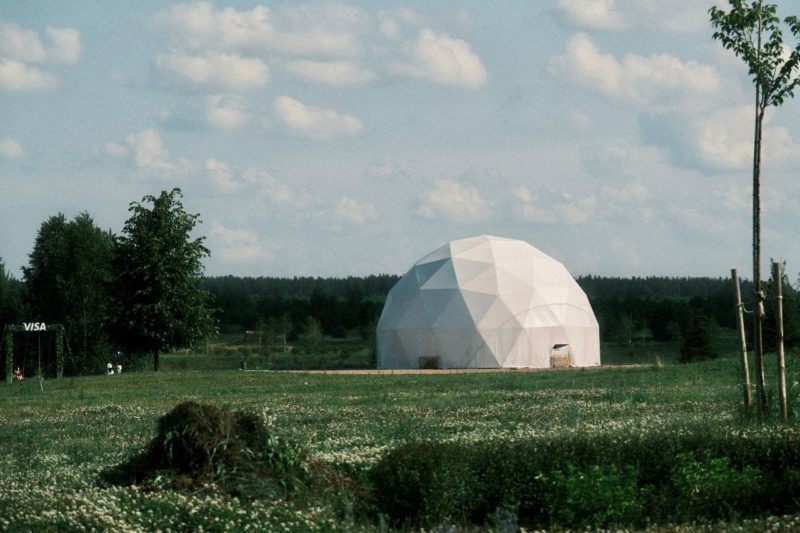
Many people picture an inflatable planetarium dome as a giant classroom tent with a few stars projected on its cloth. That undersells it. A well-designed portable dome turns a gym, library, or museum room into a temporary night sky, allowing visitors to move through planets, constellations, black holes, supernovae, and spacecraft missions without leaving the building.
The trade is straightforward: portability brings access and excitement, while fixed planetariums usually provide sharper images, quieter operation, and steadier long-term performance. NASA outreach programs have shown how a mobile planetarium can bring astronomy to schools that cannot easily organize a field trip, particularly in remote communities.
What Is an Inflatable Planetarium Dome?
An inflatable planetarium dome is a fabric enclosure supported by continuous airflow from one or more fans. Inside, a projection system displays digital images across the curved interior, creating a 360-degree viewing surface. It is a temporary educational theater, not a rigid architectural planetarium and not the same thing as a digital home planetarium viewed on a flat screen.
Dome Structure
Most portable planetarium systems pack into cases or bags and inflate on a level indoor floor. The fabric may include a dark projection surface, entrance panels, ventilation sections, and a separate blower sleeve. Mobile domes vary considerably in size, seating capacity, material, and inflation design.
The details matter. A loose cloth surface, wrinkles, seams, or a poorly tensioned section can distort the image. Some domes use airlocks or overlapping doors to reduce pressure loss when people enter. Others rely on careful operating procedures. A small hole can become a large operational headache.
Projection System
A digital projector, computer, fisheye lens, and fulldome software work together to map imagery onto the curved projection surface. The content may show the night sky from different locations, zoom toward a planet, or carry viewers from Earth to a space station.
The projector is only part of the result. Brightness, contrast, resolution, lens geometry, interior color, and the distance between projector and dome all influence image quality. A gray or neutral interior can improve contrast, while excessive ambient light washes out faint stars.
Immersive Experience
Inside the sky dome, the audience loses the familiar edges of a flat projections screen. The horizon, ceiling, and walls blend into one visual field, which makes the brain feel surrounded by the material. That physical enclosure is the source of much of the awe, especially for younger kids seeing a planet or black hole for the first time.
How Does the Immersive Experience Work?
Full-Dome Visuals
Full-dome visuals place motion around the audience rather than in a rectangle ahead of them. A presenter can rotate the celestial sphere, trace a constellation, compare planetary atmospheres, or show how the Sun changes across a year. Viewers can also experience scale more clearly, from the surface of Mars to the structure of the universe.
Research on learning in digital planetariums has found that the wide field of view can support attention and knowledge retention when the program is carefully designed. The dome alone does not teach. Content and presentation still carry the lesson.
Guided Narration
A trained operator can pause a program, answer questions, and connect astronomy to local culture or current missions. That flexibility is one advantage over a prerecorded video. A session might begin with visible stars, move to seasonal changes, then explore a supernova or the search for life beyond Earth.
The International Planetarium Society provides portable planetarium resources that help operators think about equipment, programming, and curriculum alignment.
Learning Retention
Immersive learning works best when students participate. Ask them to locate the North Star, predict where a planet will move, or explain why the Moon appears to change shape. For school assemblies, shorter sessions with clear learning objectives usually outperform an overloaded tour of everything in space.
Who Uses Portable Planetarium Domes?
Schools
Schools use inflatables for astronomy, Earth science, STEM enrichment, and school science events. A mobile unit can serve several classes in one day, avoiding buses, permission forms, and the disruption of a full field trip. NASA describes this access model in its account of portable planetarium outreach.
Museums
Museums and science centers often use a dome for traveling exhibits, temporary galleries, and public planetarium outreach. The format works particularly well when a permanent theater is unavailable or when the institution wants to test new programming before investing in a fixed structure.
Public Events
Libraries, festivals, universities, and community events can use mobile domes to create a memorable attraction in a short time. Capacity remains finite, though. A popular show may require timed entry, accessible seating, and a queue plan.
What Subjects Can Audiences Explore?
Astronomy Lessons
Programs can cover constellations, stellar evolution, planets, the Sun, lunar phases, and observing from different latitudes. The operator can also demonstrate light pollution and explain why a truly dark sky reveals more stars.
Earth Science
A dome can visualize seasons, weather systems, climate patterns, ocean circulation, and Earth’s position in the solar system. These lessons connect naturally with science standards when teachers frame the show around evidence, models, and observable changes.
Space Exploration
Audiences can follow robotic probes, visit the International Space Station, examine a supernova, or discuss spacecraft engineering. Strong programs distinguish established science from speculation. A black hole is already extraordinary; it does not need fictional claims attached to it.
How Do You Choose the Right Dome?
Start with audience size, room dimensions, ceiling height, transport needs, and program frequency.
Compare the projection system, blower noise, entrance design, accessibility, warranty, replacement parts, and cleaning requirements. A quieter fan can matter more than an impressive specification sheet when an educator must speak over it for six hours.
How Do You Set Up and Operate It?
Inspect the floor for sharp objects, tape down cables, unfold the fabric without dragging it, and allow the dome to inflate fully before projection. Keep the projector aligned with the software’s geometry, then test brightness and focus from the audience area.
A setup crew should rehearse entry, seating, evacuation, and deflation. Never treat the blower as an afterthought. The fan maintains pressure, creates background noise, and may become a failure point during a busy school assembly.
What Safety and Maintenance Issues Matter?
Use the dome indoors unless the manufacturer explicitly approves outdoor deployment. Wind, rain, uneven ground, and changing temperatures can damage the structure or compromise stability. Keep exits clear, follow local fire requirements, and provide a plan for visitors with mobility needs, including wheelchair access where the design permits it.
After each use, inspect seams, zippers, Velcro, fan connections, and the projection surface. Remove dirt with the manufacturer’s recommended method, dry the cloth completely, and store it loosely enough to prevent permanent wrinkles. In practical use, cleanliness and tension often affect image quality as much as the projector.
FAQ
Is an inflatable planetarium worth it?
For schools, traveling educators, and public outreach, yes. It delivers strong visual impact at multiple sites. A fixed planetarium remains the better choice for daily operation, high image quality, and dependable seating.
How long does setup take?
Many systems inflate within minutes, but a safe event setup takes longer once floor inspection, projector alignment, seating, accessibility, and testing are included.
What’s the difference between an observatory and a planetarium?
An observatory uses telescopes to view the real night sky. A planetarium projects a simulated sky onto a dome—no weather, no light pollution, and you can travel through time and space.
What kind of projector do planetariums use?
Three main types: fisheye (single projector, 180° lens, center-mounted), mirror (spherical mirror + 4K laser at dome edge, budget-friendly), and multi-projector (2–5+ blended projectors for large domes and 4K/8K resolution).
Conclusion
An inflatable planetarium dome makes astronomy mobile. Its real strength is access: a school gym can become a sky, a museum can host a traveling universe, and students can encounter science as an experience rather than a diagram. Choose it with clear eyes, because portability brings maintenance, noise, setup demands, and image-quality compromises. For the right audience, that exchange is still remarkably worthwhile.
Would you like to receive similar articles by email?

Paul Tomaszewski
Paul Tomaszewski is a science & tech writer as well as a programmer and entrepreneur. He is the founder and editor-in-chief of CosmoBC. He has a degree in computer science from John Abbott College, a bachelor's degree in technology from the Memorial University of Newfoundland, and completed some business and economics classes at Concordia University in Montreal. While in college he was the vice-president of the Astronomy Club. In his spare time he is an amateur astronomer and enjoys reading or watching science-fiction. You can follow him on LinkedIn and Twitter.


You May Also Like

Stargazing Calendar for January 2025
Quadrantid Meteor Shower Guide