How to Participate in Galaxy Zoo: A Volunteer Guide
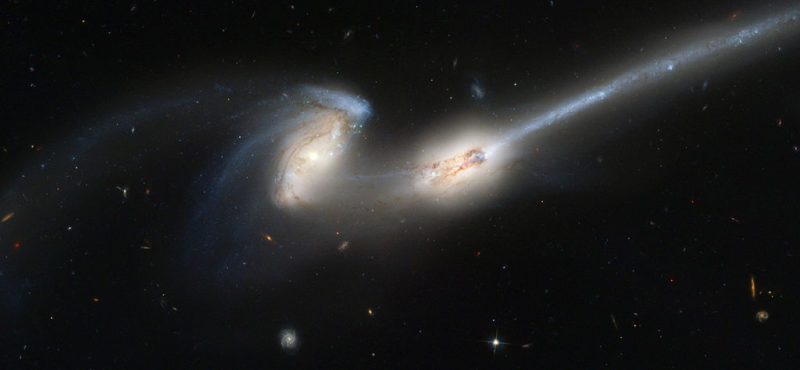
Galaxy Zoo is a global, Zooniverse-hosted citizen science project that asks volunteers to visually classify real telescope images of galaxies so professional astronomers can study morphology, mergers, star formation, and galaxy evolution across cosmic time.
You probably think clicking a few radio buttons is cute busywork. It is not. Those volunteer classifications feed catalogs used in peer-reviewed science, machine learning training, and targeted follow-up observations.
Start here if you want immediate context: Galaxy Zoo images come from surveys like the Sloan Digital Sky Survey and space telescopes such as Hubble and James Webb, and the project has expanded to include newer datasets and time-domain tasks—now spanning 18+ active projects as of 2026.
The point is simple: machines are getting very good, but humans still outperform them on subjective shape, disturbance, and rare-feature spotting. That gap is where you, a curious person with an internet connection, add real scientific value. Live stats show 125M+ classifications and counting.
What is the project and its goals?
Galaxy Zoo began as a crowdsourced effort Chris Lintott and Kevin Schawinski launched to handle the tidal wave of imaging from major surveys (origins). Its core goal remains to turn visual classifications by volunteers into reliable catalogs that professional astronomers use to test theories of galaxy formation and evolution. Workstreams include: morphology, the incidence of mergers, the distribution of bars, quenching indicators, and searching for unusual objects that automatic pipelines miss.
Research themes
- Morphology and structure: spiral arms, bars, bulges, disk vs smooth.
- Evolutionary processes: mergers and interactions, quenching of star formation, bar-driven secular evolution.
- Rare-object discovery: green pea galaxies, gravitational lenses, extreme starbursts, and transients.
- Time-domain monitoring: supernovae and variable galaxy cores in repeated imaging.
Volunteer roles
Volunteers, often called zooites, do several different tasks depending on the active campaign. Typical roles are visual classifiers (the main work), Talk participants who flag curiosities and discuss findings with the science team, and validators who help vet unusual candidates for follow-up. Over time the project has morphed into a hybrid: human classifications train automated agents that scale to larger surveys.
Current Active Projects
The project now runs multiple parallel workflows on Zooniverse:
- Galaxy Zoo: Clump Scout II—identify star-forming clumps in Euclid Space Telescope images.
- Galaxy Zoo:Rubin—classify galaxies from Vera C. Rubin Observatory’s first data preview.
- JWST COSMOS-Web—morphology of early-universe galaxies from James Webb Space Telescope.
- Euclid—ESA’s dark universe mission providing high-resolution imaging for clump detection.
Which classification tasks will I do?
You will mostly answer short, focused questions about each galaxy image. Most workflows are intentionally granular so consensus can be aggregated cleanly.
Morphology questions
You will be asked whether a galaxy looks smooth or displays a disk, whether spiral arms are present, how tightly wound they are, and if a central bar is visible. Sometimes there are secondary questions about bulge prominence and the number of spiral arms. These are morphological building blocks used to study galaxy structure statistically.
Rare-object spotting
Every so often images show oddities: compact emission-line dominated green pea galaxies, merging tidal tails, lens-like arcs, or nuclear activity. Galaxy Zoo encourages flagging and discussing these on Talk because a single human eye can spot a scientifically interesting anomaly that automated pipelines throw away.
Time-domain tasks
When repeat imaging exists, you may compare epochs and note differences like new point sources (possible supernovae) or variability in active galactic nuclei. Time-domain work is more specialized but increasingly important as the Vera C. Rubin Observatory era approaches.
Classification task quick reference
| Task type | What you’ll answer | Scientific payoff |
|---|---|---|
| Morphology | Smooth vs disk, spiral arms, bar presence | Catalog galaxy types for evolution studies |
| Rare-object spotting | Flag arcs, compact emission, strange morphologies | Find lenses, green peas, merger candidates |
| Time-domain | New/vanished sources, variability | Discover transients and variable AGN |
How to create an account and start
The fastest path to classifying is straightforward. You will be logged, tracked, and credited for your contributions.
Sign-up steps
- Create a free account on Zooniverse (you can also use Google or institutional sign-in). This gives you a profile and contribution history.
- Navigate to the Galaxy Zoo project page and click Join Project. The current classification interface and tutorial will load.
- Complete the interactive tutorial for that project’s workflow—it is brief but essential.
- Start classifying images; your first few classifications may be weighted differently until you build a consistency profile.
Tutorial checklist
- Finish the guided tutorial questions at least once.
- Review example images in the tutorial that show edge cases like overlapping galaxies.
- Open the Talk board and read a few threads to see how zooites discuss ambiguous objects.
Profile setup
Add a display name and optionally a short bio. If you want to follow science outcomes, subscribe to the project blog or follow the science team on the project’s Talk pages. If you are a teacher, check the education portal for classroom-ready materials and assignments. The interface is available in 8 languages (English, French, Spanish, German, Polish, Czech, Chinese, Japanese), and short sessions with a “Can’t tell” option keep participation low-barrier and inclusive.
How to classify images—step-by-step
Classifying is a rhythm. Get comfortable with the workflow and your accuracy will improve.
Workflow checklist
- Observe the image for 3–6 seconds to form an honest first impression; don’t overthink it.
- Answer the top-level question: smooth or features/disk? This choice routes secondary questions.
- Proceed through follow-ups: bar? spiral arms? number and tightness of arms? signs of disturbance?
- Use the “Can’t tell” option when confusion arises rather than guessing; consensus algorithms treat unclear answers properly.
- If you see an unusual object, use the Talk button to flag it with a brief note and tags.
Quality indicators
- Use consistent criteria across images. If you decide a faint arm counts as “present” in one image, apply the same rule in similar SNR situations.
- Pay attention to image scale, annotated when available; apparent size can change how features present.
- Avoid biasing your responses by reading others’ Talk comments before answering.
Using Talk
Talk is not just chit-chat. It’s a scientific scouting network. Post images you find interesting and include why it’s odd—morphology notes, unusual colors, extended tails, or lens-like arcs. Scientists and experienced zooites monitor Talk and sometimes follow up with additional observations or spectroscopy requests.
Best practices to contribute reliably
You want your classifications to carry weight. Small habits matter.
Consistency tips
- Stick to short batches of images to avoid fatigue-induced errors.
- Build a private heuristic list: how you treat low surface brightness arms, overlapping galaxies, and bright foreground stars.
- Calibrate yourself occasionally by reclassifying archived examples where consensus is already strong.
Common errors
- Over-calling structure in noisy images. Don’t invent spirals from pixel noise.
- Treating projection effects as physical bars; inclination can hide or mimic features.
- Letting spectacular color distract from morphology; color is informative but not definitive for shape.
Training actions
- Spend 15–30 minutes in the education and tutorial portals which show tricky edge cases.
- Revisit the project blog and typical papers to see what features researchers prioritize.
- Join a discussion thread with an experienced zooite—these peer corrections sharpen pattern recognition faster than solo practice.
How classifications become published science
Your clicks are raw inputs. They are processed carefully before becoming data scientists use.
Aggregation methods
Each image collects multiple independent classifications. The project uses consensus statistics—majority voting, weighted by volunteer consistency—to produce per-object attributes such as the probability a galaxy is barred or spiral. Debiasing corrections account for redshift, seeing, and imaging depth so intrinsic features across the nearby universe and higher redshift samples can be compared.
AI and follow-up
Human classifications now train machine-learning models—a hybrid workflow that scales to the tens of millions of objects expected from next-generation telescopes. ZooBot and related systems use volunteer labels to learn subtle morphological signatures, then flag borderline cases for human review. Meanwhile, high-interest objects are passed for follow-up with spectroscopy or higher-resolution imaging.
Key results and papers
Galaxy Zoo has directly enabled 100+ peer-reviewed scientific papers that study bars, mergers, quenching, and the prevalence of spiral structure in different environments. For a curated bibliography consult the Zooniverse publications directory. For a foundational read on morphology catalogs tied to scientific results, see the Monthly Notices paper that illustrates how bar identifications led to insights about angular momentum and secular evolution.
Short caveat about motivations and outcomes
Surveys of volunteers show the primary motivation is to contribute to original research, not entertainment—that sincerity matters because the project gets more than clicks; it gets careful human attention. Research into education outcomes indicates that routine classification alone is not a substitute for structured learning; pair classification with reading, lectures, or community discussions for broader astrophysical literacy.
FAQ
Do I need any background in astronomy to contribute?
No formal background is required. The tutorial and examples are designed to get you up to speed on the specific visual tasks quickly. Many volunteers learn by doing, and by reading Talk threads and project blog posts.
Will my classifications actually get used?
Yes. Aggregated volunteer classifications feed public catalogs and have been cited in peer-reviewed literature. The project maintains public data releases so scientists worldwide can reproduce and extend analyses.
How much time should I plan per session?
Short sessions of 10–30 minutes work best. Fatigue increases mistakes. Many effective volunteers classify for minutes a day but do so consistently.
Does participating increase my astrophysical content knowledge?
You will become proficient at pattern recognition and the practicalities of morphology classification, but studies suggest this does not automatically translate into broader astrophysical content knowledge unless you supplement with reading and interaction with the science team.
Conclusion
Galaxy Zoo is not a museum of pretty pictures. It is a working scientific instrument with the human brain as its detector. Your classifications become part of a rigorous pipeline: multiple volunteers, consensus statistics, debiasing, machine learning, and then peer-reviewed papers.
Start with the tutorial, develop consistent heuristics, use Talk to flag curiosities, and you will contribute to tangible results—sometimes quietly, sometimes by being the first to spot something odd enough to change how astronomers think about galaxies. If that idea makes you itch to click, good. The nearby universe and the deeper cosmos both need more eyes.
Would you like to receive similar articles by email?

Paul Tomaszewski
Paul Tomaszewski is a science & tech writer as well as a programmer and entrepreneur. He is the founder and editor-in-chief of CosmoBC. He has a degree in computer science from John Abbott College, a bachelor's degree in technology from the Memorial University of Newfoundland, and completed some business and economics classes at Concordia University in Montreal. While in college he was the vice-president of the Astronomy Club. In his spare time he is an amateur astronomer and enjoys reading or watching science-fiction. You can follow him on LinkedIn and Twitter.


You May Also Like
December Leonis Minorid Meteor Shower Guide
How Is the Sunspot Cycle Directly Relevant to Us Here on Earth?