How to Make a Superhero Movie [Common Recipe]
Superhero movies—there’s something about this genre of movies that keeps us coming back. From Superman to Antman, at any given time during the year there’s (probably) a hero filled blockbuster showing at your local theater. Stories with comic book roots, and already dedicated fan bases, seem to take over the big screen yearly with A list casts. In fact, these widely successful adaptations and reboots appeal to more than the average fanboy. For example, Avengers Infinity Wars grossed over 1.9 billion at the box office.
But why are these movies megahits? Some could argue that they follow a common formula when producing these movies in order to keep audiences interested in new releases—Marvel we’re looking at you. At the same time, the genre has evolved in recent years. It has experimented with tone, storytelling, and structure to avoid becoming predictable. Here are some key things you’ll probably notice the next time you watch your favorite comic come to life.
The Lengthy Action Scenes
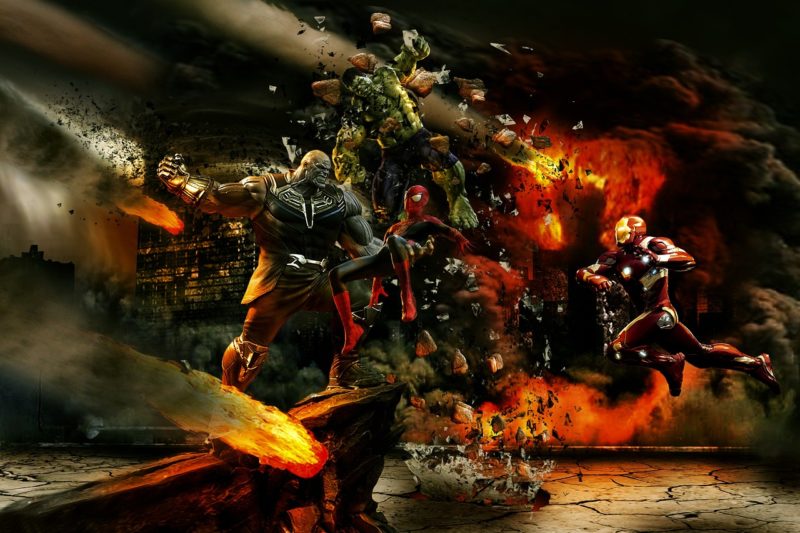
Okay this one seems like a no brainer, but the reason movie tickets sell is that people are in search of entertainment. Nothing keeps your eyes glued to the screen like a high-stakes battle scene between the hero and villain. The final fight sequence, in which a battle takes place to save the city (or, in some cases, the world), always seems to leave audiences on the edge of their seats with innovative special effects. For example, The Incredible Hulk is notorious for its lengthy fight sequences. These sequences seem to make up the backbone of the film. Large-scale finales, like those seen in Avengers: Endgame, can dominate entire acts of a film.
A well choreographed action scene allows the audience to be engaged, and allows them to root for the hero to win. That said, modern superhero films often prioritize emotional weight and storytelling within action scenes, rather than just their length.
Star Studded Cast
While most people don’t mind seeing an unknown actor take on the role of their favorite hero—Tom Holland being cast as Spiderman in the reboot. However, casting big names allows for more publicity and appeal. Your girlfriend probably was more willing to see Green Lantern because Ryan Reynolds was the leading man. When Scarlett Johansson was cast as Black Widow a successful press junket flowed suit.
Shared Universes & Connectivity
One of the biggest modern shifts in superhero movies is the rise of interconnected storytelling. The Marvel Cinematic Universe popularized the idea of multiple films existing within the same continuity. Additionally, characters cross over and storylines build over time. Post-credit scenes, recurring villains, and long-term arcs keep audiences invested beyond a single movie. Thus, individual releases turn into chapters of a much larger story.
Superhero Inspiration
Stan Lee is a creative genius for his original comics, creating over 360 original superheroes and villains for his comics. This study on pest based superheroes shows that over 144 characters have origins from either reptiles, arachnids, or other common creatures we would consider nuisances. Moreover, modern superhero stories also increasingly draw from real-world themes such as identity, technology, and social issues. This makes them more relatable to audiences.
Today’s superhero movies go beyond simple good-versus-evil storytelling. Heroes often struggle with personal loss, responsibility, or moral dilemmas. Also, villains are written with deeper motivations and backstories. In many cases, the antagonist mirrors the hero in meaningful ways. As a result, their conflict is more compelling and emotionally grounded.
Big City Setting
Ever seen a superhero movie based in a small rural town? Large cities allow for a fast paced setting, with a higher risk for the civilians at risk. New York City is one of the most popular “real world” hero settings. Other popular locations include San Francisco, London, and Los Angeles. These metropolises serve as the perfect background to large scale battle sequences. They engage the audience by featuring certain landmarks that the audience members will recognize.
At the same time, fictional cities and entirely new worlds—ranging from hidden nations to cosmic settings—have become increasingly common. This has expanded the scope of superhero storytelling.
Genre Blending & Modern Trends
Superhero movies today rarely stick to just one formula. Films like Deadpool lean heavily into comedy and self-awareness. Others like The Batman take on darker, detective-style storytelling. This blending of genres helps keep superhero films fresh and prevents the formula from becoming stale. Additionally, the rise of streaming platforms has introduced serialized superhero storytelling. In turn, this allows for deeper character development across multiple episodes and films. Representation and diverse casting have also become central to the genre’s continued global appeal.
Conclusion
Superhero movies follow a winning formula that keeps fans coming back for more—epic battles, big-name stars, and familiar cityscapes. These recurring elements not only entertain but also set the foundation for box office success. So if you’ve ever wondered how to make a superhero movie, paying attention to these proven ingredients is a great place to begin.
Would you like to receive similar articles by email?

Paul Tomaszewski
Paul Tomaszewski is a science & tech writer as well as a programmer and entrepreneur. He is the founder and editor-in-chief of CosmoBC. He has a degree in computer science from John Abbott College, a bachelor's degree in technology from the Memorial University of Newfoundland, and completed some business and economics classes at Concordia University in Montreal. While in college he was the vice-president of the Astronomy Club. In his spare time he is an amateur astronomer and enjoys reading or watching science-fiction. You can follow him on LinkedIn and Twitter.


You May Also Like

Who is Monkey Joe (Marvel Comics Character)
How to Print Reverse Text