How Do Robotic Vacuum Cleaners Work
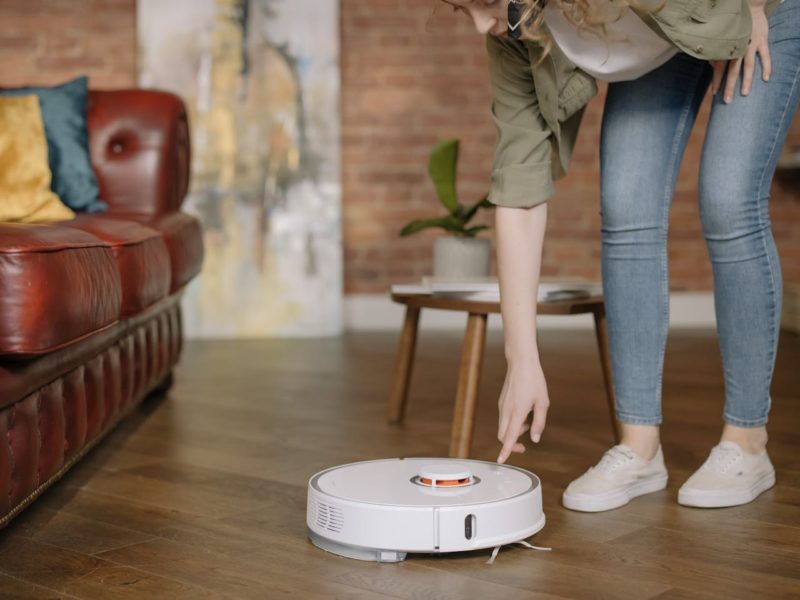
Robotic vacuum cleaners work by the use of sensors, motors, and onboard software to navigate, map, and clean floors with minimal human intervention. The majority rely on infrared or Lidar sensors to identify walls and objects, as well as cliff sensors to prevent stair falls. Small brush motors sweep dirt toward a suction inlet, while wheels adjust speed and direction. Later sections dissect each core component in more detail.
Core Mechanics
A modern robot vacuum, equipped with advanced sensors and smart features, operates as an embedded system. Its hardware modules for motion, suction mechanisms, and storage work under tight control of onboard software. A central microcontroller reads sensor data, plots efficient cleaning paths, drives the wheels and brushes, and ensures the cleaning performance remains high, allowing for a free cleaning experience.
The Chassis
The chassis of the robot vacuum cleaner is a low round plastic shell that nests motors, batteries, dustbins, wheels, brushes, and sensor blocks in one rigid frame. This design not only protects circuit boards from dust clouds, hair, and errant chair legs or dropped books but also ensures that air flows only where intended. With its low-profile design, frequently less than 10 cm tall, the unit can easily slip under beds and couches, while rounded corners enable it to rotate in cramped spaces without catching. The chassis also establishes the wheelbase and weight balance, crucial for maintaining stability when scaling rug edges or making quick turns near stairs.
The Brushes
In modern robotic vacuum cleaners, brushes do the initial stroke work before the suction mechanism kicks in. A main roller brush under the body effectively whips carpet fibers, while one or two side brushes extend out beyond the shell perimeter to swat dust from baseboards and room corners into the intake stream. Stiff bristle or rubber roller designs loosen and lift debris from carpets, while soft or hybrid brushes are gentler on wood and tile, reducing the chance of scuffing. The placement of brushes is close around the suction port, ensuring that loosened debris has a short distance into the bin, enhancing the cleaning performance of these intelligent cleaning devices.
The Suction
Suction in modern robot vacuums is provided by a small fan that draws air through the inlet, effectively scooping dust and grit into the dustbin. Most units toggle between standard and adaptive modes, cranking power on carpet or packed dirt while backing it off on hard floors to conserve energy and mitigate noise. Actual suction power is influenced by clean filters, sealed air channels, and an unclogged intake.
The Bin
The ejectable bin of a robot vacuum cleaner is a tiny plastic box that catches whatever the air current sweeps up. When it is half full or more, the air flow begins to choke, so dumping after one or two full home runs is a good habit for most users. Many mid-range and high-end robot vacuums will incorporate HEPA-grade filters in or adjacent to the bin, effectively catching fine dust and common allergens before air exits the machine. Bin volume is crucial as it determines how long the robot can run between user contact, especially in larger homes or for those seeking efficient cleaning.
The Wheels
Drive wheels and their motors comprise the primary locomotion system, providing the robot vacuum cleaner with forward motion, spin-on-the-spot rotation, and sufficient torque to traverse standard door thresholds and rug edges. Each wheel usually rests on a spring or pivot arm, creating a lightweight suspension that maintains body level as one side scales a 15 to 20 mm lip. Tire tread and rubber compound determine traction, which is essential for the cleaning performance of modern robot vacuums. Good grip is necessary for accurate path following so software can rely on distance and turn assumptions, whereas bad grip causes mapping and straight lines to wander.
The Digital Brain
At the heart of every robot vacuum cleaner is the digital brain, or control module, a compact computer that operates every function of a modern robot vacuum. It reads sensor data, runs advanced navigation systems, drives the motors, and manages the battery. In practice, it works like a small embedded system: a main processor, memory for maps and logs, wireless chips for the app, and firmware that you can update to add new smart features or fix bugs.
Navigation
Navigation begins at sensors in modern robot vacuums. Bump sensors inform the robot vacuum that it has encountered a chair leg. Infrared and ultrasonic sensors measure distance to walls, while cliff sensors detect sharp descents to prevent tumbles down stairs. Most advanced robot vacuums couple gyroscopes and accelerometers to monitor heading and tilt, ensuring the robot’s sense of direction remains stable.
Older, cheaper units often follow random patterns. They move straight until they hit something, turn at a semi-random angle, and repeat. Eventually, they do cover the room, but with multiple passes over the same areas and an increased likelihood of missed patches in corners.
Newer models utilize a more methodical approach to cleaning. They map direct, non-intersecting paths, clean edges of rooms, and record which areas have been completed. Under the hood, the intelligent cleaning device combines data from infrared, ultrasonic, and sometimes laser sensors to estimate its position in the room dozens of times per second.
Some robotic vacuum cleaners work by using sensor mapping, drawing a crude floor plan based solely on bump and proximity information. Others, however, employ Lidar technology, where a spinning laser head constructs a detailed 2D floor plan.
Mapping
Mapping converts raw sensor data into a digital map of your environment, significantly enhancing the performance of modern robot vacuums. Camera-based units observe ceilings, walls, and landmarks, while laser-based ones utilize Lidar technology to mop the room effectively. Most higher-end robotic vacuum cleaners work with SLAM (Simultaneous Localization and Mapping), allowing them to build the map while simultaneously figuring out their location on it.
With a detailed map, the robot vacuum can create room-by-room route plans instead of randomly navigating. It can perform perimeter passes initially and then fill in the middle areas in straight lines or prioritize high-traffic zones like hallways and entrances. This mapped cleaning process tends to appear more “human” and completes more efficiently, given the same floor space.
Most app-connected vacuums are equipped with smart features that allow them to retain multiple maps for larger properties and multi-level flats. Users can name rooms, specify no-go zones, and define distinct cleaning schedules for spaces like bedrooms and workshops. After moving furniture, it’s advisable to check the updated map within the app to ensure that walls, doors, and blocked zones remain accurate.
The mapping system falls short in some contexts. Camera-driven units often have difficulty at night or in extremely low light because the visual landmarks vanish. Laser-based and sensor-only systems retain more of their precision in darkness, but they can have less definition around soft or reflective surfaces.
Pathfinding
Pathfinding is a crucial component of the digital brain within a robot vacuum cleaner that determines the specific track the robot should take through the mapped space. The goal is straightforward: cover 100 percent of reachable floor with minimal overlap while staying within battery limits. In practice, the control module executes sophisticated navigation systems that divide rooms into logical zones, create efficient cleaning paths with regulated spacing, and inject wall-following segments to clean edges. The software continually cross-checks planned lines against the live map to bypass tight spaces that the robot cannot pass through, significantly enhancing the cleaning performance.
Real-time adjustment is essential for effective cleaning. If a dropped toy, shoes, or cable appears, the robot’s sensors identify a new obstacle, and the pathfinding routine re-routes. Some advanced robot vacuums even learn from their runs, tagging spots where they frequently encounter socks or cords, and adjusting their cleaning routes on subsequent passes. Over weeks, this can translate into fewer snarls and less hands-on untangling, providing a more free cleaning experience for users.
Software updates can also change performance: manufacturers often tweak pathfinding and SLAM logic over time, allowing a robot that was clumsy at launch to gain smarter room handling later.
Environmental Adaptation
Robotic vacuum cleaners work by scanning the room in real-time, adapting their suction mechanism, speed, and cleaning path to ensure effective cleaning as lighting, noise, and clutter fluctuate throughout the day. These intelligent cleaning devices monitor surface types, room layouts, and the amount of dirt they collect, optimizing for fewer back-to-back runs and energy savings. This prevents carpets and hard floors from accumulating grime between human cleaning sessions, making them an efficient cleaning solution for modern households.
Key environmental adaptation factors include light levels, floor materials, and obstacles like loose cords and toys. This adaptability is essential; it enables the same robot vacuum to clean a bright open-plan living room, a dimly lit hallway, and a space shared with kids and pets without constant hovering.
Light Conditions
A lot of cheaper robot vacuums use optical cameras that rely on ambient light, so really dim rooms or harsh glare can lead to bad mapping, missed areas, or baffled docking. Models built around infrared distance sensors or Lidar can navigate in almost complete darkness, which comes in handy if you operate the robot at night or in windowless corridors. They scan distances with unseen light instead of ‘viewing’ the room like a camera.
High-end robotic vacuum cleaners often combine camera, infrared, and floor tracking data, adjusting their cleaning performance when transitioning from a bright kitchen to a darker bedroom. While some mapping modes may initially require moderate light for home mapping, they effectively use Lidar or infrared for subsequent runs, ensuring a stable map even when the lights are off.
Floor Surfaces
Most multisurface robot vacuums detect floor transitions using integrated accelerometers and pressure sensors. They modify their suction mechanisms and primary-brush velocity when transitioning from hard tile or wood to rugs. On hard floors, they operate with lower suction and slower brushes to avoid sending dirt flying. Conversely, on medium or high-pile carpets, they ramp up power to effectively pull dust from deeper fibers, which reduces the need for multiple passes and enhances long-term energy efficiency. Certain models further enhance the cleaning experience by supporting quiet modes, enabling them to operate during the night with minimal disruption. This feature complements their capability to transition between floor types automatically.
Manufacturers typically list compatible surfaces such as sealed hardwood, laminate, vinyl, ceramic tile, low-pile carpet, and some rugs. If your home features a variety of these surfaces, it’s wise to look for intelligent cleaning devices with adaptive cleaning profiles and mopping modules equipped with adjustable water flow. This ensures better control of moisture, keeping wood or laminate safe while reducing water usage. Additionally, tough wheels and a strong climbing height rating are essential, as the robot needs to navigate transitions like 1 to 2 cm thresholds, rug edges, and cable covers without getting trapped.
Obstacle Types
Bumper sensors, infrared cliff sensors, and on higher-end models, vision-based object recognition help the robot slow down, steer around, or gently climb over small ledges instead of ramming or stalling, which protects furniture and reduces noise. Units with more robust compute and superior cameras can even identify obstacles like shoes, power strips or pet waste, then navigate around them while still retaining coverage and avoiding additional power-wasting passes.
Before the first run, it helps to scan each room and reduce a few high-risk items:
- Long or loose power cords and charger cables
- Thin or curled rug edges that can tangle brushes
- Very light floor mats that slide easily
- Pet bowls, food, and water dishes
- Small toys, building bricks, and craft items
- Plastic bags or thin fabric on the floor
- Low hanging bedspreads or curtains touching the floor
Self-Sufficiency
Self-governing robot vacuum cleaners seek to streamline day-to-day drudgery, allowing you to enjoy a free cleaning experience without monitoring each cleaning session. These advanced robot vacuums rely on sophisticated navigation systems, software, and smart charging docks to manage power, dirt storage, and customizable cleaning schedules with little intervention, which is significant if you balance long work hours, children, or shift work.
Power Management
Many modern robot vacuums rely on rechargeable lithium-ion packs in the 2,000 to 5,000 mAh range, providing a good balance of energy density, weight, and charge cycles. The usual runtime for these robot vacuum cleaners ranges between 60 and 200 minutes per charge, with high-end options capable of covering 120 to 150 m² on hard surfaces before they must dock for recharging.
Onboard battery management systems monitor cell voltage, temperature, and current draw in real time. If the charge nears the threshold, typically about 15 to 20 percent, the robot vacuum ceases cleaning and returns to the dock. It can resume its cleaning task once recharged if the software includes “recharge and resume” capabilities. Battery health significantly shapes long-term performance; after a few hundred cycles, runtime can drop, and suction power may throttle under load.
Auto-Docking
Auto-docking implies that the robot vacuum cleaner can identify and physically link up to its charging base unassisted, utilizing infrared beacons, radio beacons, or map-based navigation. This capability enables near-continuous cleaning cycles. Once the robot learns your floor plan, it can clean, recharge, and then continue the cleaning route without any intervention.
Dock placement is crucial for reliability. Most manufacturers recommend at least 0.5 to 1 meter of clear space on each side, no stairs in front, and a stable power outlet on a flat surface. If you hide the base behind furniture, under a coat rack, or in a narrow hallway, even premium robotic vacuum cleaners can struggle to find the station and waste time searching.
Self-Emptying
Self-emptying systems in advanced robot vacuums provide a second level of independence by transferring debris from the robot’s tiny onboard bin into a larger bag or canister in the base station. Once per run or when sensors detect a full bin, the robot docks on the base, activating a high-power vacuum in the station. This vacuum sucks debris through a short conduit from the robot into a 2 to 4 liter sealed container, often lasting several weeks of typical use in a medium-sized house, ensuring an efficient cleaning experience.
This innovative feature reduces in-run manual maintenance to every few weeks. Sealed bags and HEPA-grade filters in robot vacuum cleaners translate to less hands-on exposure to dust, pollen, and pet dander. Additionally, several bases vent air via secondary filters, ensuring that fine particles remain trapped during the dumping surge.
Self-emptying bases aren’t necessarily the lowest-energy choice either, as the brief, high-power suction bursts consume more energy than the robot on its own. However, in large homes, multi-pet households, or spaces with heavy foot traffic, these systems enhance the cleaning performance of robotic vacuum cleaners, bringing them closer to the practical idea of self-sufficiency while managing their own needs with minimal oversight.
Conclusion
Robotic vacuums occupy a sweet spot between dumb home gadgets and actual robot wizardry. Motors suck up dust. Wheels and gears drive the shell. Sensors sweep the floor. The chip in the middle connects it all and drives the map.
In everyday use, they swerve around chair legs, dive beneath beds and coast home to recharge with relative ease. For a lot of homes, they don’t replace a deep clean, but they do cut the grind and keep floors in decent shape day to day.
Frequently Asked Questions
How does a robotic vacuum cleaner navigate around a home?
The majority of modern robot vacuums utilize advanced sensors, cameras, or laser scanning (Lidar) to effectively map the room. By constructing a digital map, these intelligent cleaning devices can plan efficient cleaning paths in straight lines, allowing them to cover more floor space while evading obstacles and minimizing missed areas.
How do robotic vacuums adapt to different floor types?
Modern robot vacuums utilize advanced sensors to detect floor type and friction, automatically adjusting the suction mechanism for optimal cleaning performance. For instance, they increase suction on carpets while decreasing it on hardwood floors, ensuring thorough cleaning without damaging delicate surfaces.
Can a robotic vacuum clean without constant human input?
Yes. Robotic vacuums, equipped with advanced sensors and smart features, are autonomous devices that run on customizable cleaning schedules, return to the dock for smart charging, and sometimes resume cleaning where they left off.
How do robotic vacuums integrate with smart home systems?
Most modern robot vacuums connect to home Wi-Fi and integrate with apps, voice assistants, and other smart devices. This allows you to start, stop, schedule, or zone-clean from your phone, providing a free cleaning experience while receiving clean reports or notices about the cleaning performance.
Are robotic vacuums safe to use around kids and pets?
Most modern robot vacuums are equipped with advanced sensors, including obstacle and cliff sensors, to prevent falls and collisions. These intelligent cleaning devices typically move slowly and come to rest when lifted or obstructed. For homes with kids and pets, consider models featuring robust filtration and quiet operation for an efficient cleaning experience.
Would you like to receive similar articles by email?

Paul Tomaszewski
Paul Tomaszewski is a science & tech writer as well as a programmer and entrepreneur. He is the founder and editor-in-chief of CosmoBC. He has a degree in computer science from John Abbott College, a bachelor's degree in technology from the Memorial University of Newfoundland, and completed some business and economics classes at Concordia University in Montreal. While in college he was the vice-president of the Astronomy Club. In his spare time he is an amateur astronomer and enjoys reading or watching science-fiction. You can follow him on LinkedIn and Twitter.


You May Also Like
What Is Data Augmentation in Machine Learning?
How Vibe Coding Tools Are Changing the Way We Build Software