How Did Uranus’ Moon Umbriel Get Its Name
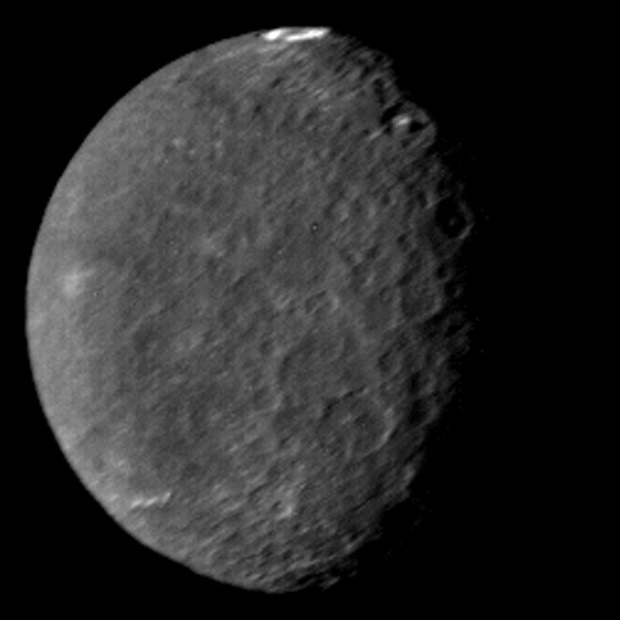
Umbriel takes its name from a gloomy, soot-covered gnome in Alexander Pope’s 1712 mock-epic The Rape of the Lock, and the man who suggested it was John Herschel, son of the astronomer who found Uranus in the first place. That’s the short answer. The longer one involves a Liverpool brewer with a private telescope, a Latin root meaning shadow, and one of the strangest naming traditions in the solar system.
The fit is almost too neat. Umbriel happens to be the darkest of the five main satellites of Uranus, reflecting barely a sixth of the sunlight that strikes it. A moon named after a shade, that turned out to be shaded. Herschel could not have known that when he wrote the name down.
Where does the name Umbriel come from?
Alexander Pope source
Pope was writing satire, not mythology. His poem skewers a real society quarrel over a lock of hair, inflating a trivial squabble into Homeric proportions, and to do that he populated the thing with a cast of airy spirits: sylphs, nymphs, gnomes. Umbriel is the sour one. The name derives from the Latin umbra, and Pope leaned hard on that etymology, casting him as a creature of shade and ill humor rather than air and light.
The Rape of the Lock
Canto IV opens with the gnome descending into the Cave of Spleen, a grotto of vapors and bad moods, where he collects a bag of sighs and sobs and a vial of tears to sprinkle over the mortals above. The Poetry Foundation’s edition of that canto gives you the whole descent, and it reads exactly as ridiculous and delicious as it sounds. He is described as “a dusky, melancholy sprite,” and the mood-manipulation angle is spelled out well in the LitCharts character breakdown of Umbriel’s errand. He is, functionally, the poem’s engine of misery.
John Herschel’s proposal
William Lassell found the moon. He did not name it. That job fell to John Herschel, who had already named Titania and Oberon after his father’s discoveries and who chose, in 1852, to keep the literary thread going. The decision broke with centuries of Greco-Roman convention.
Who discovered the moon and when?
William Lassell, 1851
October 24, 1851. Lassell, an English astronomer who made his money in brewing and spent it on optics, spotted both Ariel and Umbriel on the same night with a 24-inch reflector he had built himself.
Independent confirmation
Verifying faint objects near Uranus in the 1850s was miserable work. The planet sits far enough out that its moons crowd close to a bright disk, and Lassell’s own follow-up observations across later oppositions did most of the confirming. William Herschel had reported possible satellites decades earlier; none of those sightings held up.
Early designation as Uranus II
Before the names stuck, the moon carried the plain label Uranus II, counting outward. That ordering has survived in catalogs.
Naming conventions for Uranian moons
Every named moon of Uranus draws from Shakespeare or Pope. No other planet does this.
- Shakespeare-derived: Titania, Oberon, Miranda, Ariel, Puck, Portia, Juliet, Ophelia, Cordelia and dozens more
- Pope-derived: Umbriel and Belinda, both from The Rape of the Lock
- The oddity: Ariel appears in both The Tempest and Pope’s poem, so it counts twice
The International Astronomical Union now formally approves all planetary moon names, and its Working Group for Planetary System Nomenclature has stuck to the literary rule for every satellite found since Voyager.
Orbit and physical profile
| Property | Value |
|---|---|
| Mean distance from Uranus | 266,000 km |
| Orbital period | 4.14 days |
| Diameter | 1,170 km |
| Rotation | Synchronous, tidally locked |
Umbriel sits third out from the planet among the five large satellites, between Ariel and Titania. Its orbit is nearly circular and nearly coplanar with the Uranian equator, which matters more than it sounds, because Uranus has a large obliquity of roughly 98 degrees, meaning the whole system is tipped on its side. Each hemisphere gets 42 years of sunlight and 42 years of dark.
Tidal locking means one face permanently points inward. Same arrangement as our own Moon.
What is Umbriel made of?
Roughly equal parts water ice and rock by mass, with the rock likely concentrated in a core beneath an icy mantle. Bulk density comes in around 1.4 grams per cubic centimeter. Whether a subsurface ocean survives is unresolved; the moon lacks an obvious heat source, no strong orbital resonance driving tidal flexing, so most models say any liquid layer froze out long ago.
Surface features and the Wunda crater
Voyager 2 flew past in January 1986 and returned images of one hemisphere at modest resolution. What it showed was a heavily cratered surface, ancient, with almost no sign of geological activity since the late heavy bombardment. Observed crater diameters run large. The geological mapping from those frames is thin, honestly, and a future Uranus mission would fix that.
The exception is Wunda, a crater near the equator with a bright ring of frost deposits on its floor. Nobody is certain what the material is. It stands out sharply against dark grey terrain, and it remains the single most distinctive surface feature on an otherwise monotonous world.
Why Shakespearean names still matter for science outreach
Names do work that numbers cannot. Tell a classroom that Uranus II orbits at 4.14 days and eyes glaze; tell them a moon is named after a gnome who bottles up sorrows and you have their attention long enough to sneak in orbital mechanics. Teachers pair characters with moons, students argue about which fits, and the argument itself teaches the system. That’s not fluff. Engagement is the whole battle in astronomy education.
FAQ
Is Umbriel the darkest moon of Uranus?
Yes, among the five main satellites, with an albedo near 0.16.
Did anyone besides Lassell see it in 1851?
Not independently that night. Ariel and Umbriel were both his, discovered together.
Why is a Pope character mixed in with Shakespeare?
Herschel simply liked the poem. The EBSCO research summary of the mock-epic explains why The Rape of the Lock was still widely read in 1852.
Conclusion
A brewer with a homemade telescope found a grey rock in 1851, and an astronomer’s son gave it the name of a bad-tempered sprite from a satire about a haircut. The moon turned out dark. Sometimes the universe plays along.
Would you like to receive similar articles by email?

Paul Tomaszewski
Paul Tomaszewski is a science & tech writer as well as a programmer and entrepreneur. He is the founder and editor-in-chief of CosmoBC. He has a degree in computer science from John Abbott College, a bachelor's degree in technology from the Memorial University of Newfoundland, and completed some business and economics classes at Concordia University in Montreal. While in college he was the vice-president of the Astronomy Club. In his spare time he is an amateur astronomer and enjoys reading or watching science-fiction. You can follow him on LinkedIn and Twitter.


You May Also Like

The Future Is Personal: How Tech Is Bringing Personalized Health to Your Doorstep
How Did the Milky Way Galaxy Get Its Name