How Did Saturn’s Moon Titan Get Its Name
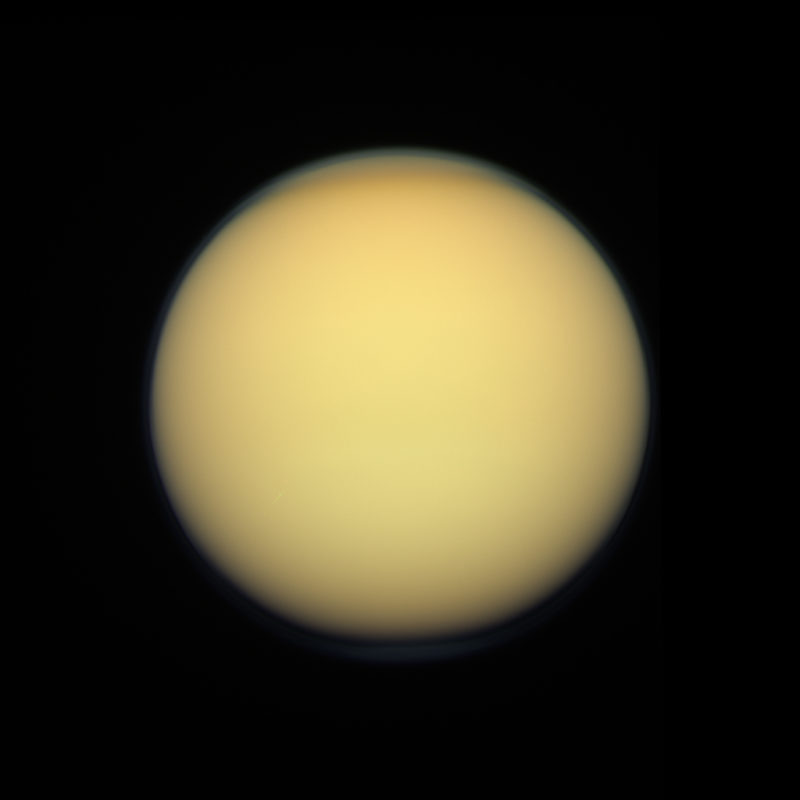
Ever caught yourself wondering why Saturn’s biggest moon carries such a dramatic, almost intimidating name? The short answer is that Titan was named after the Titans of Greek mythology, a race of colossal deities who ruled the cosmos before the Olympian gods took over. The English astronomer John Herschel formally proposed the name in 1847, roughly two centuries after the moon itself was first spotted through a telescope. But the story behind that choice, and the tangled web of discovery and mythology that wraps around it, is far richer than a single sentence can hold.
Who Named Titan and What Does It Mean?
Origin of the name
The word “Titan” pulls straight from ancient Greek myth. For nearly 200 years after its discovery, though, the moon didn’t have a proper name at all. It floated around scientific literature simply as “Saturn’s satellite” or, in the numbering system of the day, as Saturn VI. Astronomers cataloged moons by Roman numerals based on their distance from the parent planet, and frankly, it was a mess. Names got reassigned every time someone spotted a new moon closer in.
John Herschel’s proposal
That changed thanks to John Herschel, the son of William Herschel who himself discovered Uranus. In his 1847 work documenting astronomical observations made at the Cape of Good Hope, the younger Herschel suggested pulling names from mythology instead of relying on cold, shifting numerals. He picked “Titan” for the largest of Saturn’s moons, and the label stuck. What makes his proposal clever is that it wasn’t random. There was logic to it, a thematic thread that tied the moon to its planet.
Connection to Saturn
Here’s the elegant part. In Roman mythology, Saturn corresponds to the Greek god Cronus, who was himself a Titan and, more famously, the leader of them. So naming Saturn’s grandest moon “Titan” wasn’t just poetic. It genuinely honored the family relationship baked into the planet’s own name. The moon became a symbolic child, or sibling, of the deity it orbits.
When Was Titan Discovered and by Whom?
Christiaan Huygens
The Dutch astronomer Christiaan Huygens gets the credit for finding Titan, and he did it with instruments he built himself. Huygens was a serious tinkerer with optics, and his self-designed telescope outperformed most of what other observers were peering through at the time. He wasn’t just lucky. He was better equipped.
The 1655 discovery
Huygens first observed the moon on March 25, 1655. In his documentation, he didn’t reach for mythology at all. He called it “Luna Saturni,” Latin for “Saturn’s Moon,” or sometimes “Saturni Luna.” Practical, literal, no frills. He even published a small tract describing the observation. It would take Herschel’s later imagination to give the object something more evocative.
Early telescope observations
To appreciate why this mattered, remember the context. Galileo had discovered the four largest Jovian moons of Jupiter, the Galilean moons, back in 1610. Huygens finding a satellite around Saturn confirmed that Jupiter wasn’t unique, that these gas giants routinely commanded their own little systems of orbiting bodies. Early telescopes were crude by modern standards, so spotting a faint point of light near a bright, ringed planet was no small feat.
What Is the Mythological Meaning Behind Titan?
The Titans in Greek myth
The Titans were the children of Uranus (the sky) and Gaia (the earth), an older generation of immense deities who predated the Olympians. Think of them as the primordial power structure of the Greek cosmos. They were associated with raw, elemental force, which suits a moon this substantial.
Cronus and Saturn
Cronus led the Titans and later got equated with the Roman Saturn. Since the planet already borrowed its name from this mythological figure, Herschel’s naming scheme kept everything in the family, so to speak. It’s a naming convention that rewards a little mythological literacy.
Why the name fits
And honestly, the name fits Titan almost too well. This is a genuinely enormous world.
- It’s the second-largest moon in the entire solar system, beaten only by Jupiter’s moon Ganymede.
- Titan is bigger than the planet Mercury by volume, though less massive.
- It’s the only moon known to possess a thick, dense atmosphere, dominated by nitrogen much like our own primordial Earth.
A moon that outsizes a planet and wraps itself in a significant atmosphere deserves a name that carries weight. “Saturn VI” simply wouldn’t have done it justice.
How the Name Fits Saturn’s Family of Moons
Once Herschel opened the door to mythological naming, the rest of the Saturnian moons followed suit. He named the other six known satellites after the siblings of Cronus, other Titans and Titan progeny. Rhea, Tethys, Dione, and Iapetus all trace back to this same lineage. The result is a coherent thematic system where the entire Saturnian system reflects a single mythological family, orbiting a planet named for their leader.
This wasn’t just tidy bookkeeping. It gave astronomers a memorable, culturally rooted framework, one that’s endured for over 170 years.
Why the Name Titan Endures
Simple names age well, and “Titan” hits a sweet spot between simplicity and grandeur. It’s a single, punchy word that even a kid can remember, yet it carries genuine mythological heft. When the Cassini spacecraft arrived at Saturn and the Huygens probe descended through Titan’s orange haze in 2005, landing on hydrocarbon-rich terrain, the name gained even more resonance. Here was an actual ocean world, complete with methane lakes, a methane cycle mirroring Earth’s water cycle, and hydrocarbon seas of liquid methane pooling near the surface.
The Cassini radar mapped surface landforms, revealing equatorial dunes and polar hydrocarbon lakes. Suddenly the mythological giant had a face, a landscape, weather patterns, even methane rain. A flashier name might have felt gimmicky against such profound science. Titan doesn’t oversell. It just delivers.
FAQ
Did Huygens name the moon Titan?
No. Huygens discovered it in 1655 but called it “Luna Saturni,” meaning Saturn’s Moon in Latin. John Herschel supplied the name Titan in 1847.
Is Titan named after a person?
Not a single person. It’s named after the Titans, an entire race of deities in Greek mythology, though the connection to Cronus (Saturn) is what makes the choice so fitting.
Are all of Saturn’s moons named after Titans?
Many of the classical ones are, especially those Herschel named. Newer discoveries have expanded into broader Greco-Roman mythology, but the Titan theme anchored the original naming.
Conclusion
So the name Titan is really two stories braided together. There’s Huygens, the meticulous Dutch observer who found the moon through a telescope of his own making and gave it a plain Latin label. Then there’s Herschel, arriving two centuries later with a mythological imagination and a knack for naming schemes that honor Saturn’s own Cronus roots. The result is a name that has aged beautifully, one that suits a colossal, atmosphere-cloaked ocean world sitting nearly ten astronomical units from the Sun. Explore Titan a little, and you’ll find the name was earned, not just assigned.
Would you like to receive similar articles by email?

Paul Tomaszewski
Paul Tomaszewski is a science & tech writer as well as a programmer and entrepreneur. He is the founder and editor-in-chief of CosmoBC. He has a degree in computer science from John Abbott College, a bachelor's degree in technology from the Memorial University of Newfoundland, and completed some business and economics classes at Concordia University in Montreal. While in college he was the vice-president of the Astronomy Club. In his spare time he is an amateur astronomer and enjoys reading or watching science-fiction. You can follow him on LinkedIn and Twitter.


You May Also Like

Why Air Quality Matters for Employee Health
How Did Jupiter Get Its Name