How Did the Moon Get Its Name?
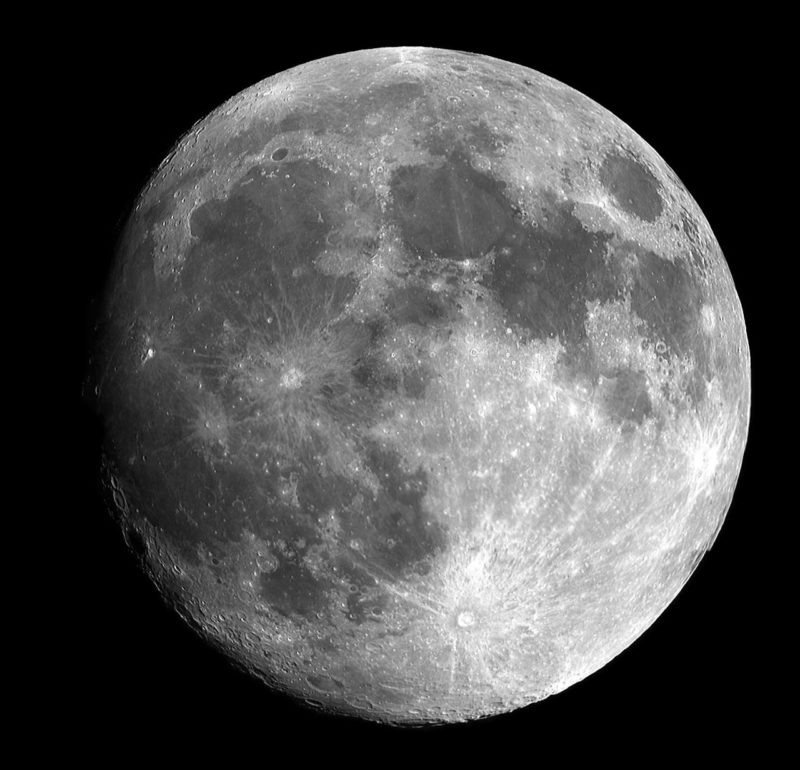
Our moon’s name comes from the Old English “mōna,” which leads back to the Proto-Germanic word “mēnô.” Early languages influenced how we came to call this large celestial body the Moon.
The word comes from the related Indo-European root “me-,” to measure. In ancient times, humans relied on the moon to keep time and develop some of the first calendars. For thousands of years, many cultures have given it specific names in their languages, yet “moon” became the default in English.
Etymological Roots of “Moon”
Ancient Language Origins
Early civilizations, including the Sumerians, referred to it as “Nanna.” The Greeks, in contrast, called it “Selene,” or “Mene,” reflecting their own cultural and mythological lens.
- Sumerian: Nanna
- Greek: Selene, Mene
- Latin: Luna
- Old English: Mona
These colloquial terms usually reflected the Moon’s significance in planting, harvesting, navigating, and ceremonial activities.
Evolution Through Time
Myths and legends evolved over time to scientific observations, laying the foundation for their different terminology.
For example, the replacement of godly references with scientific terms such as “lunar cycle” was a dramatic example of this. Our English moon comes from the Old English, “mona,” which is tied to the same timekeeping roots, with months.
Cultural Significance of Lunar Names
The Moon has played an important role in the development of cultural traditions and narratives for civilizations. Its names and symbolism richly display humanity’s ties to the tumultuous and beautiful celestial body, intertwining mythology, religion, and earthly need.
Moon in Ancient Civilizations
In early civilizations, exemplified by the Egyptians and Mayans, the spiritual and functional significance of the Moon was critical. The Egyptians associated lunar cycles with their agricultural calendar and timed planting and harvest cycles with its phases.
In the same way, the Mayans were able to use the Moon as a device for marking time, producing intricate calendars that harmonized lunar patterns. Lunar mythology was deeply embedded in cultures around the world.
The Mayans associated the Moon with Ix Chel, the goddess of fertility and medicine. In Egypt, the Moon was associated with Thoth, a god of wisdom. Celebrations like the Maya full-moon ceremonies brought this moon-driven power to the forefront.
Mythological Influences on Naming
In many cases, lunar names are based on myths with heavenly deities or tales representing the Moon’s characteristics. In ancient Greek mythology, the Moon was associated with Selene, and in Roman tradition, Luna.
These stories have influenced the ways that cultures honor the Moon, weaving its spirit through their languages and traditions.
Religious Beliefs and Lunar Titles
Many religions use the Moon in their rituals and calendars. Islamic and Hebrew calendars are purely lunar, and Christian tradition uses the Moon to help define the timing of Easter.
Names such as “Harvest Moon” highlight these agrarian connections, similar to the Chinese Moon Festival that celebrates the season’s abundance. The Moon’s constant ebb and flow usually represents rebirth, influencing ceremonies and festivals.
Ancient Calendars and the Moon
The Moon’s eightfold phases with their beauty and symmetry became the foundation for all lunar calendars, employed in Mesopotamia, China, and Mesoamerica. These calendars directed when to plant and when to harvest, emphasizing the Moon’s importance to agriculture.
Even across languages, “moon” is intimately tied to ideas of timekeeping, with its root even occurring in the word for “month.” Its visibility, as well, made it an anchor to a human norm.
Conclusion
The Moon’s name is a testimony to a long history of human wonder and relationship. Its tale intertwines culture and language with science and history, illuminating just how profoundly it has formed our world. Even in our modern times the Moon continues to inspire the arms of creativity and exploration.
It’s in our art, our music, and even our calendars. Its name holds a history of the intersection of tradition and discovery. The Moon continues to fascinate us with its beauty and mystique, lighting up our skies on clear nights.
Frequently Asked Questions
How did the Moon get its name?
Our word Moon actually comes from Old English mōna. Its etymology can be traced all the way back to the Proto-Germanic term mēnô and the Proto-Indo-European term mēns, both meaning “month” or “measure.” It’s a vestige of the Moon’s role as a chronological tracker.
What is the cultural significance of the Moon’s name?
In many cultures, the Moon’s name represents time, cycles, and femininity. Many ancient civilizations used the Moon’s phases to mark calendars and religious rituals.
Are there other names for the Moon?
Indeed, different cultures have specific names for the Moon. For instance, in Roman mythology, it is “Luna.” The Greeks, in contrast, called it “Selene.”
Would you like to receive similar articles by email?

Paul Tomaszewski
Paul Tomaszewski is a science & tech writer as well as a programmer and entrepreneur. He is the founder and editor-in-chief of CosmoBC. He has a degree in computer science from John Abbott College, a bachelor's degree in technology from the Memorial University of Newfoundland, and completed some business and economics classes at Concordia University in Montreal. While in college he was the vice-president of the Astronomy Club. In his spare time he is an amateur astronomer and enjoys reading or watching science-fiction. You can follow him on LinkedIn and Twitter.


You May Also Like

How To Make Shipping Container Structures More Sustainable
What Practical Value Did Astronomy Offer to Ancient Civilizations