How Did The Kuiper Belt Get Its Name
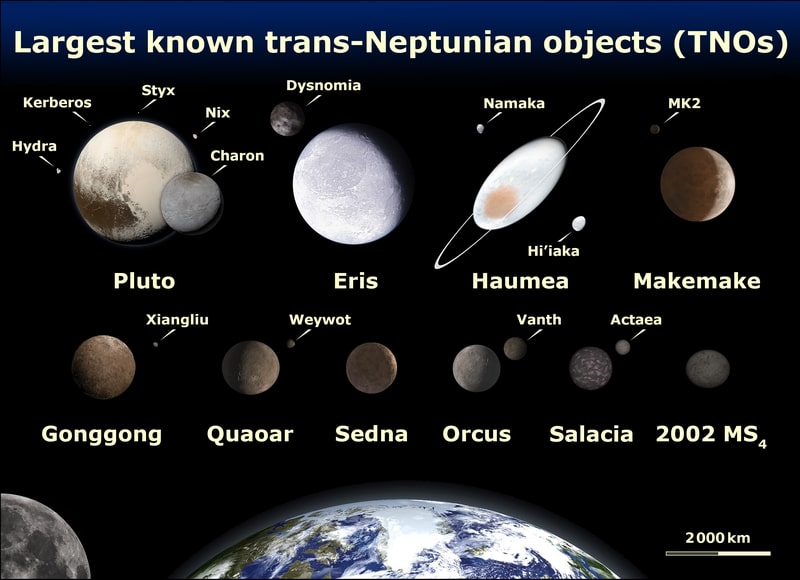
Ask ten astronomers where the Kuiper Belt got its name and you’ll get one answer with an asterisk attached. The short version: the region is named after Gerard Kuiper, the Dutch-American astronomer who, in a 1951 paper on the origin of the solar system, described a primordial disc of icy bodies forming beyond Neptune. The name entered common use in the late 1980s, popularized by dynamicists modeling short-period comets, and hardened into convention after 1992. The asterisk is the interesting part, because Kuiper argued that this disc no longer existed.
Who was the region named after?
Gerard Kuiper’s 1951 paper
Kuiper was, by any measure, a giant of mid-century planetary science. He discovered Miranda and Nereid, detected methane in Titan’s atmosphere, and effectively built the field as an institution. The archived Gerard P. Kuiper papers at the University of Arizona trace a career running from the late 1940s through 1973, including his founding of the Lunar and Planetary Laboratory. When a naming convention needs a patron saint, that resume does a lot of quiet work.
What he actually predicted
His 1951 contribution argued that the solar nebula would have condensed a swarm of small bodies out past Neptune, a natural extension of the accretion process that built the giant planets. So far, so prophetic. Then came the twist. Kuiper assumed Pluto was roughly Earth-sized, and reasoned that such a large planet would have gravitationally scattered the whole population into interstellar space or inward toward the sun. As David Jewitt lays out in his sharp essay on why we call it the Kuiper Belt, the paper effectively anti-predicted the belt we now observe.
When the name stuck
Nobody held a vote. The label spread through the comet dynamics literature of the 1980s, and the discovery of 1992 QB1 by Jewitt and Jane Luu, the result of a patient five-year sky survey, gave the phrase something real to point at. NASA’s own overview notes plainly that Kuiper neither discovered the belt nor correctly predicted its present population.
Which astronomers proposed icy bodies first?
Three names come up repeatedly, and each got there earlier than 1951:
- Frederick Leonard, 1930. Within months of Pluto’s discovery, he asked in print whether Pluto was simply the first of a series of ultra-Neptunian bodies waiting to be found.
- Armin Leuschner, 1932. He suggested Pluto might be one of many long-period planetary objects, essentially large comets on a similar orbit class.
- Kenneth Edgeworth, 1943 and 1949. The Irish theorist proposed that the outer nebula was too diffuse to build a single large planet and instead fragmented into a reservoir of small bodies, a source for periodic comets.
Britannica’s summary of the Edgeworth-Kuiper Belt gives Edgeworth independent billing for exactly this reason. His mechanism, unlike Kuiper’s, still holds up.
Why do some scientists reject the name?
Kuiper’s dispersed-belt argument
The core objection is simple. You cannot name a structure after the person who concluded it had been destroyed. Kuiper’s disc was a fossil, cleared out by a phantom Earth-mass Pluto.
Credit before Kuiper
Edgeworth published a workable comet belt hypothesis eight years earlier and got nothing. The pattern is depressingly familiar in astrophysics: the better-connected researcher at the larger institution becomes the eponym.
Discovery-based counterargument
The defense is more pragmatic than romantic. Neither man discovered anything out there. If attribution followed observation, we would be talking about the Jewitt-Luu belt. Names in this field are handles, not medals, and the American Museum of Natural History’s account of Kuiper and comets reasonably credits him with linking short-period comets to a trans-Neptunian zone at all.
| Name in use | Who prefers it | Reasoning |
|---|---|---|
| Kuiper Belt | NASA, ESA, popular media | Entrenched, unambiguous |
| Edgeworth-Kuiper Belt | Irish and European journals, many dynamicists | Restores earlier credit |
| Trans-Neptunian region | Minor Planet Center, formal papers | Descriptive, avoids the dispute entirely |
Alternative names in scientific use
Working astronomers hedge. Papers speak of trans-Neptunian objects, TNOs, and the scattered disc, while individual classes picked up their own vocabulary: cubewanos for classical belt members named after 1992 QB1, Plutinos for bodies locked in Neptune’s 3:2 resonance. Academic overviews of the Kuiper Belt’s terminology catalog the whole messy pile, kuiperoids (a dated term for Kuiper Belt objects) included. ESA’s outreach material and NASA Space Place both stick with the familiar Kuiper Belt name for readers, which tells you the debate is mostly professional, not public.
Timeline from prediction to confirmation
- 1930: Pluto found; Leonard speculates about siblings
- 1943: Edgeworth’s diffuse-outer-nebula proposal
- 1951: Kuiper’s disc, and his conclusion that it dispersed
- 1988: dynamical simulations demand a flattened comet source
- 1992: 1992 QB1 (later named 15760 Albion in 2018) confirms the population, 62 years after Pluto
- 2002: Hubble surveys of binary objects at the solar system’s fringe strengthen the primordial planetesimal disc picture
- 2015 and 2019: the New Horizons spacecraft delivers the Pluto flyby, then Arrokoth
How naming conventions shaped the objects inside it
The International Astronomical Union tied classical Kuiper Belt objects to creation deities and resonant ones to underworld figures, which is cultural convention rather than physical law. Worth remembering when Pluto’s demotion to dwarf planet comes up. That reclassification tracked evolving criteria, not any change in Pluto itself.
Why the naming debate still matters for the outer solar system
Because the label implies a tidy belt, and the outer solar system is anything but. Neptune’s resonances truncate the classical belt near 50 astronomical units, past migrations stirred and ejected bodies, and the scattered disc bleeds outward toward the Oort cloud in fits rather than a smooth ramp. The word “belt” flattens all of that.
FAQ
Did Kuiper discover the Kuiper Belt?
No. He proposed a primordial disc and then argued it was gone.
Is Edgeworth-Kuiper Belt correct?
It is widely accepted and arguably fairer. Education resources on the belt’s attribution history use both.
What is the neutral term?
Trans-Neptunian region, which distinguishes these icy bodies from the rocky main asteroid belt.
Conclusion
The name Kuiper Belt honors a brilliant man for an idea he partly disowned, over a colleague who got the mechanism right first. Astronomy is full of such accidents. Explore the history and the region gets stranger, not simpler, which is usually the sign you’re looking at something real.
Would you like to receive similar articles by email?

Paul Tomaszewski
Paul Tomaszewski is a science & tech writer as well as a programmer and entrepreneur. He is the founder and editor-in-chief of CosmoBC. He has a degree in computer science from John Abbott College, a bachelor's degree in technology from the Memorial University of Newfoundland, and completed some business and economics classes at Concordia University in Montreal. While in college he was the vice-president of the Astronomy Club. In his spare time he is an amateur astronomer and enjoys reading or watching science-fiction. You can follow him on LinkedIn and Twitter.


You May Also Like
How Did The Centaurs Get Their Names

The Best Glasses for Working from Home