How Did Dwarf Planet Salacia Get Its Name
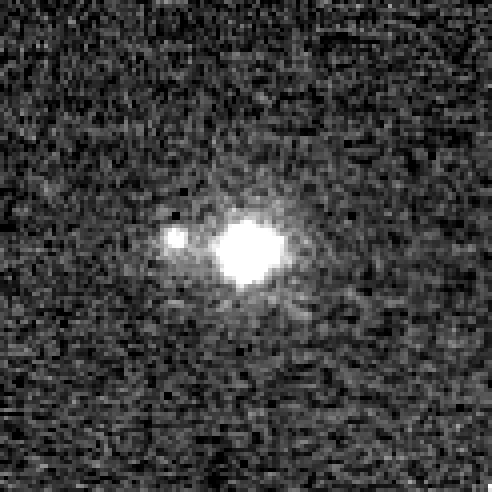
Salacia takes its name from the Roman goddess of saltwater, the consort of Neptune, and the choice was deliberate: a distant planetoid orbiting out past Neptune deserved a name pulled from Neptune’s own household. The naming citation ran in the Minor Planet Circulars on 18 February 2011, roughly six and a half years after the object was first spotted.
What follows is the longer version of that story, including how the moon got its own matching name, and why the “dwarf planet” label attached to this body still hasn’t stuck properly.
Where Does the Name Salacia Come From?
Roman sea goddess
In Roman mythology, Salacia is the goddess of saltwater, and her name comes down from the Latin sal, meaning salt. Classical compendiums describe her as the ancient goddess of saltwater presiding over the wide open sea, often personified as the calm, sunlit ocean surface rather than the storm.
Link to Neptune
She is Neptune’s wife. That relationship is the whole point of the naming choice. Salacia orbits in the trans-Neptunian region, so borrowing the name of Neptune’s queen puts the object in the right mythological neighborhood. The Greek tradition has a parallel figure in Amphitrite, consort of the god Poseidon, though the Roman version won out here.
Why the water theme fits
Naming conventions for large trans-Neptunian objects lean on creation deities and mythological figures of the underworld or sea, as the international scientific body’s guidelines lay out. Orcus got an underworld name. Salacia got the ocean. Frankly, it’s one of the tidier naming decisions in modern planetary science.
How Did the Discovery Lead to a Name?
2004 detection at Palomar
Three American astronomers, Henry G. Roe, Michael E. Brown, and Kristina Barkume, picked it up on 22 September 2004 using the Hale reflector at Palomar Observatory, part of the same survey push that turned up Eris and Haumea. Earlier images helped: precovery frames going back to July 1982 let orbit-fitters lock down the path with far more confidence.
Provisional label 2004 SB60
The Minor Planet Center issued the provisional designation 2004 SB60. That string is just bookkeeping. Year, half-month letter, sequence.
Minor planet number 120347
Once the orbit was secure across enough oppositions, permanent numbering followed. Number 120347. Only then does a name become possible.
Who Approves Names Like This?
The IAU working group on small body nomenclature holds the final say, and here’s roughly how the chain runs:
- Discoverers hold proposal rights for ten years after permanent numbering.
- The proposed name goes to the committee for review against existing minor planets and thematic rules.
- Approval gets published as a formal citation in the Minor Planet Circulars, which is what happened on 18 February 2011 in MPC 73984.
Names get rejected for being too similar to existing ones, for commercial overtones, or for thematic mismatch. Salacia sailed through.
Actaea, the Moon That Got a Matching Name
Actaea is a Nereid, one of the sea nymphs of ancient Greek myth, and the name was approved on the same day as the parent planetoid. The satellite was found in 2006 in Hubble Space Telescope imaging. Formally, it reads as (120347) Salacia I Actaea.
Orbit and Classification Context Behind the Name
Salacia sits in the Kuiper Belt at roughly 42 astronomical units on average, with a moderate eccentricity and a large inclination near 24 degrees off the ecliptic. One correction worth making: it is not locked in a Neptune resonance the way Orcus is. It’s a non-resonant object.
Physical Traits Astronomers Measured
| Property | Value |
|---|---|
| Diameter | ~846 km |
| Albedo | ~0.04 (very low) |
| Orbital period | ~276 years |
| Moon | Actaea, ~290 km |
The low albedo is the interesting part. A dark surface reflecting maybe four percent of sunlight suggests little fresh resurfacing, no obvious geological activity, and only faint water ice absorption bands. Research notes on the Kuiper Belt candidate put the bulk density above water ice, hinting at a thick mantle of ice over rock. The low light curve amplitude points toward a roughly spherical shape.
Why the Dwarf Planet Label Remains Unsettled
I’m not neutral on this. NASA’s official count still sits at five: Ceres, Pluto, Haumea, Makemake, Eris. Everything else, Salacia included alongside Gonggong and Sedna, floats in candidate limbo because hydrostatic equilibrium is fiendishly hard to prove at these distances. The candidate classifications and albedo debates are a living taxonomy, not settled law. My take: the candidate label has outlived its usefulness. Either measure the shape or admit the criterion isn’t operational.
What This Naming Case Reveals About Future Discoveries
Names arrive late. The physics arrives later still. Expect more sea and creation deities as surveys deepen, and expect more objects stuck in the same classification purgatory Salacia occupies now.
FAQ
Does Salacia have a moon?
Yes, Actaea, named for a Nereid.
When was Salacia officially named?
18 February 2011.
Is Salacia a dwarf planet?
A candidate, not officially recognized.
Conclusion
The name of Salacia traces straight back to Roman mythology and Neptune’s queen, approved through the Minor Planet Center after seven years of orbit refinement. The classification question is the part still waiting on better telescopes.
Would you like to receive similar articles by email?

Paul Tomaszewski
Paul Tomaszewski is a science & tech writer as well as a programmer and entrepreneur. He is the founder and editor-in-chief of CosmoBC. He has a degree in computer science from John Abbott College, a bachelor's degree in technology from the Memorial University of Newfoundland, and completed some business and economics classes at Concordia University in Montreal. While in college he was the vice-president of the Astronomy Club. In his spare time he is an amateur astronomer and enjoys reading or watching science-fiction. You can follow him on LinkedIn and Twitter.


You May Also Like
Cepheus Constellation Guide

What Makes a Great Nurse Beyond Clinical Skills