How Did Saturn’s Moon Rhea Get Its Name
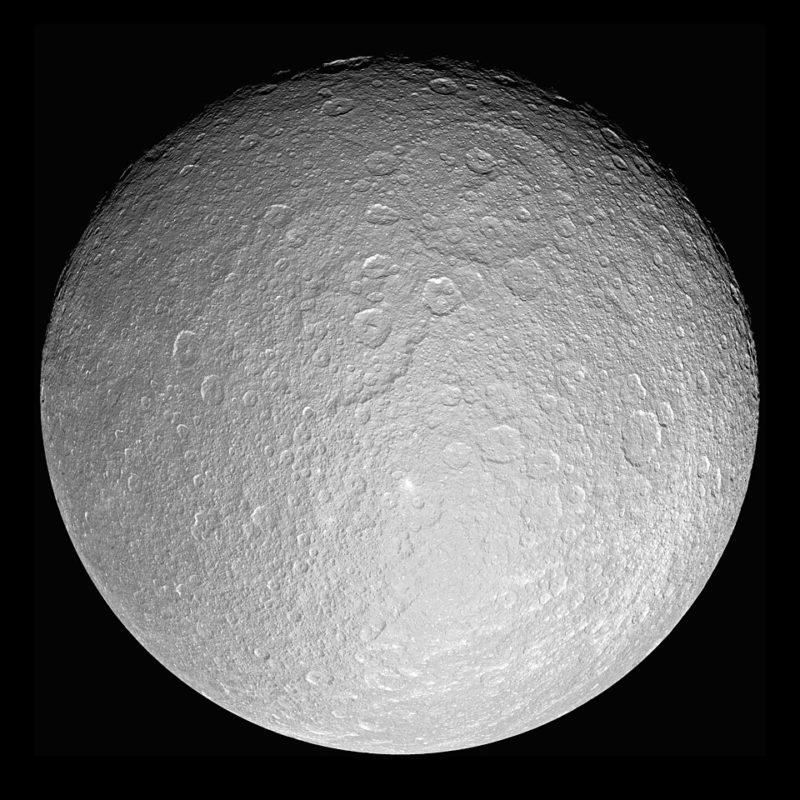
Ask most stargazers where the name Rhea comes from, and you’ll get a shrug or a vague nod toward “some Greek thing.” Fair enough. But the story behind Saturn’s second-largest moon is stranger and slower than you’d expect. Rhea got its name from the Titaness of Greek mythology, mother of the Olympian gods, though the moon waited nearly 175 years after its discovery before anyone officially called it that.
This guide unpacks the mythological roots, the discovery timeline, and the naming convention that ties the whole Cronian system together.
How Did the Moon Rhea Get Its Name?
Here’s the short version. The moon Rhea was discovered by Giovanni Cassini in 1672, but it didn’t carry the name Rhea until John Herschel proposed it in 1847. Cassini himself never called it Rhea. He lumped it in with a batch of Saturnian moons he’d spotted and named them collectively after the reigning French king, Louis XIV. The mythological name we use today came much later, and it stuck because it fit a naming pattern that astronomers were building around the ringed planet.
Who Was Rhea in Greek Mythology?
Rhea wasn’t a minor figure. She sat near the top of the divine hierarchy, and understanding her role explains why her name landed on a moon orbiting Saturn.
Mother of the Gods
In Greek mythology, Rhea was the mother of the first generation of Olympians, including Zeus, Hades, and Poseidon. She married her own brother, Cronus, who had a nasty habit of swallowing his children to prevent a prophecy about his overthrow. Rhea saved Zeus by hiding him and handing Cronus a stone wrapped in cloth. That single act of maternal defiance set the stage for the entire Olympian order.
Titaness Lineage
She belonged to the Titans, the older generation of deities born from Uranus (the sky) and Gaea (the earth). This lineage matters. The Titans predate the Olympians, and their names carry a certain gravity, ancient, foundational, cosmic. Astronomers latched onto this generational structure when it came time to organize Saturn’s growing family of moons.
Link to Saturn
The connection is almost poetic. In Roman mythology, Cronus was equated with Saturn. So the planet itself carries the name of Rhea’s husband. Naming her moon Rhea places the wife in orbit around the husband, a mythological family portrait sketched across the outer solar system.
Who Discovered Rhea and When?
Giovanni Cassini
The astronomer behind the discovery was Giovanni Domenico Cassini, the Italian-French observer whose name now graces the spacecraft that mapped Saturn in stunning detail centuries later. Cassini spent years peering at Saturn through telescopes that, by modern standards, were laughably primitive. He still managed to spot four moons.
The 1672 Observation
Rhea entered the record on December 23, 1672. It was the second moon Cassini found around Saturn, after Iapetus. Rather than give it a mythological name, he grouped his discoveries under the label Sidera Lodoicea, the “Stars of Louis,” flattering his royal patron. Practical, if not exactly romantic.
Early Telescope Limits
Consider what he was working with. Seventeenth-century optics smeared faint objects, and Rhea, roughly 1527 km in diameter, sat over 527,000 km from Saturn’s cloud tops. Catching that pinprick of light against the glare of the planet and its rings took real skill. The moon’s low surface gravity and icy surface made it reflective enough to notice, but only just.
How Did Rhea Get Its Official Name?
John Herschel’s Proposal
The name we use came from John Herschel, son of the man who discovered Uranus. In his 1847 treatise on astronomical observations, Herschel suggested naming Saturn’s moons after the Titans and their siblings, the mythological brothers and sisters of Cronus.
The 1847 Naming
His logic, laid out in Herschel’s naming proposal, was clean. Since Saturn corresponds to Cronus, populate his orbit with his kin. Rhea, as Cronus’s wife and sister, fit perfectly. The name replaced the older numbering system that had labeled the moons by their distance from the planet.
IAU Confirmation
Today the International Astronomical Union confirms Rhea as the approved designation. The IAU also governs how surface features get named. Craters on Rhea, for instance, borrow names from creation myths worldwide, extending the mythological theme right down to individual impact craters.
Why Are Saturn’s Moons Named After Titans?
Cronus and Saturn
Because Saturn is the Roman Cronus, the naming logic almost writes itself. Surround the father-figure planet with his mythological relatives and you get a night sky that tells a story rather than just cataloging rocks.
Consistency Across Moons
That consistency isn’t just tidy. It matters for exploration. A shared naming thread anchors a sprawling, sometimes overwhelming catalog of worlds into something we can narrate and discuss. Lose that thread, and you lose a shared mental map of where to look and what to expect out there in the Cronian system.
How Rhea Fits Within Saturn’s Moon Family
Rhea is the second-largest of Saturn’s moons, trailing only the massive Titan. It’s an icy body with a rocky core, cratered heavily across both hemispheres, and it even carries a tenuous atmosphere of oxygen and carbon dioxide detected by the Cassini spacecraft. A few things set Rhea apart within the family:
- It may host a faint ring system of its own, hinted at by the Cassini orbiter’s magnetospheric imaging instrument, though a debris disc has never been directly confirmed.
- Its heavily cratered surface preserves a record of ancient bombardment, giving planetary science a window into the early solar system.
Why the Naming Tradition Still Matters for Exploration
I’ll say this plainly. Saturn’s moon system is underrated compared to Jupiter’s flashier lineup. Enceladus vents water into space. Titan has hydrocarbon lakes. Rhea teases us with oxygen and possible ring material. Naming these worlds after a mythological family doesn’t just satisfy tradition. It keeps a wildly complicated catalog legible, which frankly helps when you’re planning the next mission or explaining why any of this deserves attention.
FAQ
Who named the moon Rhea?
John Herschel proposed the name in 1847, borrowing from Greek mythology.
When was Rhea discovered?
Giovanni Cassini first observed it on December 23, 1672.
Why is Saturn’s moon called Rhea?
Because Saturn is the Roman Cronus, and Rhea was Cronus’s wife, so her name fits the Titan theme.
Is Rhea the largest moon of Saturn?
No, that’s Titan. Rhea is the second-largest.
Conclusion
The name Rhea carries roughly 175 years of astronomical history and a few thousand years of myth. Cassini found the moon, Herschel named it, and the IAU keeps the tradition alive. Next time you glimpse Saturn through a telescope, remember there’s a Titaness circling out there, still orbiting the husband who tried to swallow their children.
Would you like to receive similar articles by email?

Paul Tomaszewski
Paul Tomaszewski is a science & tech writer as well as a programmer and entrepreneur. He is the founder and editor-in-chief of CosmoBC. He has a degree in computer science from John Abbott College, a bachelor's degree in technology from the Memorial University of Newfoundland, and completed some business and economics classes at Concordia University in Montreal. While in college he was the vice-president of the Astronomy Club. In his spare time he is an amateur astronomer and enjoys reading or watching science-fiction. You can follow him on LinkedIn and Twitter.


You May Also Like
704 Interamnia: A Giant Asteroid
Eta Eridanid Meteor Shower Guide