How Did Dwarf Planet Pluto Get Its Name
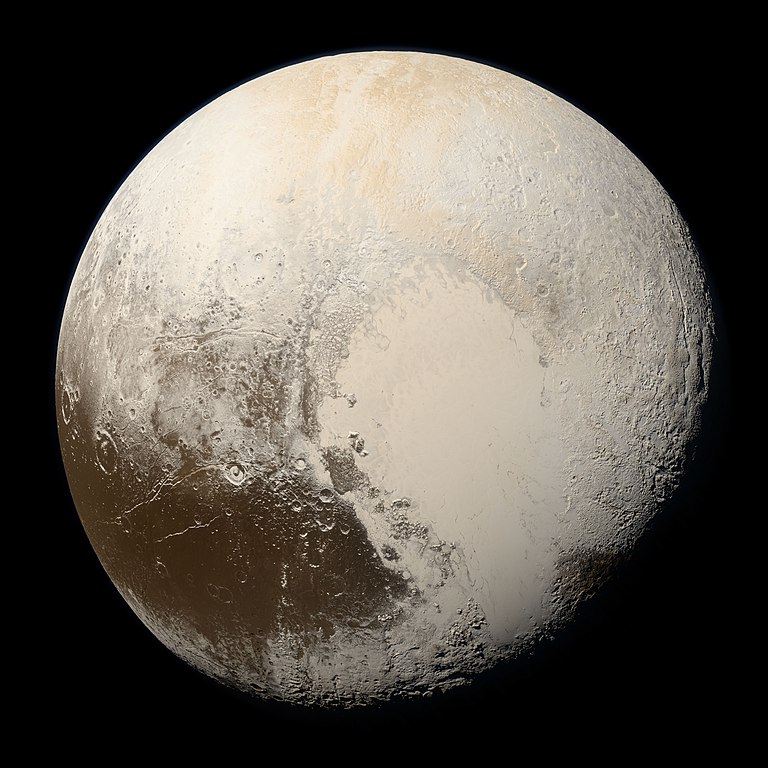
A schoolgirl in Oxford, England, named Pluto. That’s the short answer, and it’s stranger than most people expect. On the morning of March 14, 1930, eleven-year-old Venetia Burney suggested at the breakfast table that the newly found world beyond Neptune should carry the name of the Roman god of the underworld. Her grandfather passed it along. Weeks later, Lowell Observatory in Flagstaff, Arizona, made it official. No Disney dog was involved, which we’ll get to.
Who Named Pluto?
Venetia Burney, age 11
Venetia was reading about mythology and geography, and the logic came fast: a cold, unlit world at the edge of the solar system deserved the god who ruled a realm nobody could see. NASA’s biographical profile of Venetia Burney Phair records the moment plainly, and she never claimed it was more than a child’s quick association. Oddly enough, that’s what made it durable.
Oxford to Flagstaff
Her grandfather Falconer Madan, retired librarian of the Bodleian, mentioned it to astronomer Herbert Hall Turner, who cabled the suggestion across the Atlantic. The full chain of events, breakfast to telegraph, has been retold in careful detail by Astronomy magazine’s account of that Oxford morning.
Vote and announcement
Lowell Observatory was drowning in proposals. The Library of Congress notes that over a thousand name suggestions arrived from around the world. Staff voted unanimously. The name was announced May 1, 1930.
Why the Roman God of the Underworld Fits
Dark, distant orbit
Pluto sits an average of about 3.7 billion miles from the Sun, on an eccentric orbit that occasionally brings it inside Neptune’s path near perihelion. Sunlight there is a rumor. The underworld analogy practically wrote itself.
Mythological family ties
Jupiter, Neptune, Pluto: three brothers dividing sky, sea, and the dead. The new planet slotted into an existing family tree, which mattered to astronomers who’d already committed to Roman deities for everything from Mercury to Uranus (Greek, technically, but nobody’s perfect).
Rejected alternatives
Among the contenders that lost:
- Minerva, already taken by an asteroid
- Cronus, pushed by an astronomer with a reputation problem
- Zymal, Atlas, and other names TIME’s chronicle of the March 1930 naming scramble mentions in passing
- Percival, honoring Lowell directly, which felt too self-serving
How Pluto Was Discovered Before It Was Named
Percival Lowell’s Planet X
Lowell spent his final years hunting a trans-Neptunian body he called Planet X, convinced that residual wobbles in the orbits of Uranus and Neptune betrayed something massive. He died in 1916 without finding it. The perturbations turned out to be measurement error.
Clyde Tombaugh’s plates
A Kansas farm kid with homemade telescopes got the job. Tombaugh photographed the same star fields days apart using the observatory’s 13-inch astrograph, then compared plates on a blink comparator, flicking between images looking for one dot that shifted against fixed stars. The American Physical Society’s review of the 1930 discovery describes just how numbing that work was.
February 18, 1930
He found it. Lowell Observatory still marks the anniversary week each February. The object was far too faint to be the Planet X anyone imagined.
The PL Monogram and Pluto’s Symbol
Lowell’s initials
Here’s the elegant part. Pluto’s first two letters are Percival Lowell’s initials. The American Astronomical Society has documented how the PL monogram honored Lowell without naming the planet after a living reputation.
Traditional astronomical glyph
The classical symbol is a stylized P and L bound together, used widely in twentieth-century almanacs and star charts.
Modern IAU usage
The International Astronomical Union prefers a circled bident in current planetary nomenclature, though both survive in print.
Why the Disney Dog Story Is Backwards
| Event | Date |
|---|---|
| Venetia Burney proposes the name | March 14, 1930 |
| Lowell Observatory announces “Pluto” | May 1, 1930 |
| Disney’s dog first appears unnamed | 1930 |
| Disney’s dog named Pluto | 1931 |
The naming came first. Disney’s animators, working in a year when the discovery was front-page news everywhere, borrowed from the sky. Not the reverse. Venetia said as much for decades, and her New York Times obituary recorded her mild exasperation with the rumor.
How Pluto’s Moons Got Their Names
Charon, found in 1978, ferries souls across the Styx, which keeps the underworld theme intact. Nix and Hydra arrived in 2005, their initials nodding again at New Horizons. Kerberos and Styx followed, one a three-headed guard dog, the other a river. NASA later approved surface names too, including Tombaugh Regio and Burney Crater, after the New Horizons spacecraft flyby in 2015 mapped that heart-shaped nitrogen and methane ice plain.
How Dwarf Planet Status Changed Pluto’s Identity
The 2006 IAU resolution demoted Pluto to dwarf planet because it hasn’t cleared its orbital neighborhood of Kuiper Belt objects. The name never wavered. Whatever the classification says, “Pluto” carries more cultural weight than most terrestrial planets do.
What the Naming Story Reveals About Scientific Tradition
Astronomy has always let outsiders in through the side door. A retired librarian, a schoolgirl, a farm boy with a blink comparator. The encyclopedic record of Venetia Burney shows she received no prize, just a five-pound note from her grandfather.
FAQ
Did Venetia Burney get credit during her lifetime?
Yes. She lived to 90 and saw the New Horizons mission launch.
Was Pluto ever officially the ninth planet?
For 76 years, absolutely.
Conclusion
An eleven-year-old’s mythology lesson outlived a planetary classification. That’s the story about Pluto’s name worth keeping.
Would you like to receive similar articles by email?

Paul Tomaszewski
Paul Tomaszewski is a science & tech writer as well as a programmer and entrepreneur. He is the founder and editor-in-chief of CosmoBC. He has a degree in computer science from John Abbott College, a bachelor's degree in technology from the Memorial University of Newfoundland, and completed some business and economics classes at Concordia University in Montreal. While in college he was the vice-president of the Astronomy Club. In his spare time he is an amateur astronomer and enjoys reading or watching science-fiction. You can follow him on LinkedIn and Twitter.


You May Also Like
Northern Taurid Meteor Shower Guide
How Did Uranus’ Moon Oberon Get Its Name